wayground logo

Free Printable Worksheets

Font size

S
M
L
XL
Worksheets

Year 8 Term 2 Revision

Total questions: 74

Worksheet time: 54mins

Name
Class
Date
1.

Which is the esophagus?

a)

A

b)

B

c)

C

d)

D

2.

Which parts of the diagram is the small and large intestine?

a)

A~ small intestine

E~ large intestine

b)

D~ small intestine

E~ large intestine

c)

C~ large intestine

B~ small intestine

d)

A~ large intestine

C~ small intestine

e)

E~ small intestine

D~ large intestine

3.

Where does the digestive system start?

a)

The liver

b)

The throat

c)

The stomach

d)

The mouth

4.

What part(s) of the digestive system mechanically and chemically break(s) down food?

a)

mouth

b)

stomach

c)

both the mouth and stomach

d)

small intestine

5.

What are the rhythmic muscular contractions of your esophagus called to help food move along?

a)

swallowing

b)

peristalsis

c)

inertia contractions

d)

paralysis

6.

What is the main function of the (hilly) villi?

a)

They move food from the stomach to the small intestine

b)

They absorb nutrients into the bloodstream

c)

They absorb water from chyme

d)

They move food from the small intestine to the large intestine

7.
Which of the following is the smallest unit of life that can carry out all life functions?
a)
the mitochondria
b)
the vacuoles
c)
the nucleus
d)
the cell
8.
Which structures are found in every living cell?
a)
cell membrane and cytoplasm
b)
chloroplasts and mitochondria
c)
a cell wall and nucleus
d)
chloroplasts and cell wall
9.
Which cell structure is found in plant and animals cells and controls what can come into or leave a cell?
a)
cell membrane
b)
cytoplasm
c)
nucleus
d)
vacuole
10.
What is the function of the cell nucleus found in both plant and animal cells?
a)
to produce energy
b)
to control cell activity
c)
to remove waste products
d)
to allow molecules to enter the cell
11.
What is one basic function of the vacuoles?
a)
circulating oxygen
b)
producing food
c)
controlling cell processes
d)
storing water
12.
Chloroplasts in plant cells allow the plant to perform a function that animal cells cannot do.  What is the main function of the chloroplasts found in plant cells?
a)
to absorb light energy and manufacture food
b)
to remove waste materials by active transport
c)
to manufacture chemical energy from food
d)
to control the shape of the cell
13.
All cells need energy to function.  Which cell organelle is responsible for producing energy in the cell?
a)
chloroplasts
b)
mitochondria
c)
nucleus
d)
vacuoles
14.
What is the function of a cell wall?
a)
to protect and support the cell
b)
to perform different functions in each cell
c)
to prevent water from passing through it
d)
to prevent oxygen from entering the cell
15.
In what part of the plant cell does the process of photosynthesis take place?
a)
nucleus
b)
mitochondria
c)
chloroplasts
d)
vacuoles
16.
Cells with a nucleus and membrane-bound organelles are called ____________________.
a)
prokaryotes
b)
eukaryotes
c)
bacteria
d)
protists
17.

Plants make their own food through a process called what?

a)

photosynthesis

b)

ATP

c)

chlorophyll

d)

structure and support

18.
Xylem is 
a)
another name for roots
b)
is a vascular tissue that carries water and minerals from the root up to the plants.
c)
carries food from the leaves to the root.
19.
phloem is 
a)
a vascular tissue that carries water and nutrients from the roots up to the stem and leaves.
b)
a vascular tissue that carries food from leaves to the the roots.
c)
another name for leaf.
20.

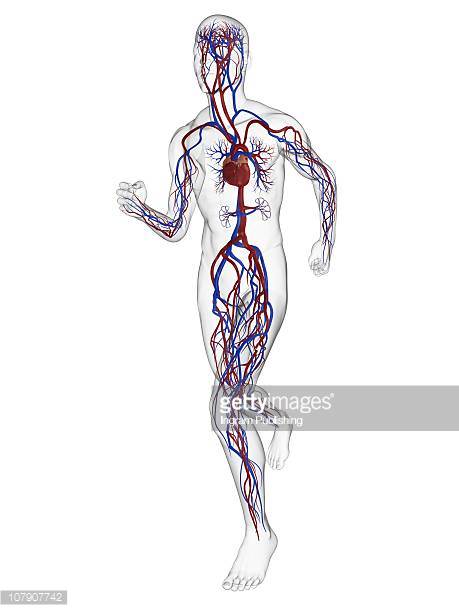
What is the main organ of the circulatory system?

a)

small intestine

b)

bone

c)

lungs

d)

heart

21.

The job of the heart is to . . .

a)

pump blood around the body.

b)

send food to the small intestines.

c)

break down food.

d)

give energy to the body.

22.

What takes blood back to the heart?

a)

arteries

b)

veins

c)

capillaries

23.

The main artery in the heart is the

a)

aorta

b)

vena cava

c)

pulmonary artery

d)

pulmonary flow

24.

What are the super small blood vessels called that let the Oxygen out of the blood to the tissues that need it?

a)

capillaries

b)

worm holes

c)

arteries

d)

veins

25.
Name this part.
a)
Right atrium
b)
Left ventricle
c)
Right ventricle
d)
Left atrium
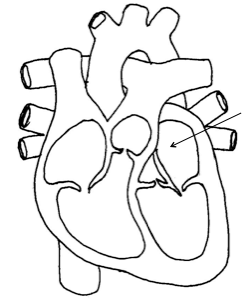
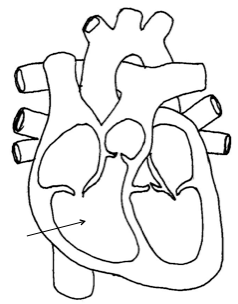
26.
Name this part.
a)
Left ventricle
b)
Pulmonary artery
c)
Right atrium
d)
Pulmonary veins
27.
Name this part.
a)
Right ventricle
b)
Pulmonary artery
c)
Left ventricle
d)
Right atrium
28.

______ carry blood TOWARDS the heart.

a)

Arteries

b)

Veins

c)

Capillaries

d)

Vena Cava

29.

_____ carries blood AWAY from the heart.

a)

Blood cells

b)

Veins

c)

Capillaries

d)

Arteries

30.

what is the part as labeled num 1

a)

aorta

b)

lung

c)

hart

31.
A flap of tissue that prevents blood from flowing backward
a)
Aorta
b)
Atrium
c)
Septum
d)
Valve
32.

What charge does a proton have?

a)

positive

b)

negative

c)

neutral

33.

What charge does a neutron have?

a)

positive

b)

negative

c)

neutral

34.

What charge does an electron have?

a)

positive

b)

negative

c)

neutral

35.

There are equal numbers of ___ and ___ in an atom (if it's neutral)

a)

protons and neutrons

b)

protons and electrons

c)

neutrons and electrons

36.

What two particles are in the nucleus of an atom?

a)

protons and electrons

b)

electrons and neutrons

c)

protons and neutrons

37.
What subatomic particle(s) would be found orbiting the nucleus?
a)
Neutrons only
b)
Electrons only
c)
Protons and Neutrons
d)
Protons and Electrons
38.

Talc is the softest mineral on Mohs Hardness Scale.

a)

True

b)

False

39.

If a mineral is scratched by talc, what must its hardness rating be?

a)

1

b)

3

c)

6

d)

10

40.

What is # 4 on the MOH's scale?

a)

Fluorite

b)

Feldspar

c)

Quartz

d)

Calcite

41.

Which mineral is HARDER than quartz?

a)

Topaz, Corundum, and Diamond

b)

Feldspar. Apatite, and Talc

c)

Talc, Gypsum, Topaz

d)

Diamond, Calcite, Fluorite

42.
How a mineral reflects light from its surface
a)
crystal
b)
luster
c)
streak
d)
refraction
43.
The property of splitting easily along flat surfaces
a)
fracture
b)
hardness
c)
cleavage
d)
streak
44.
The color of a minerals powder
a)
luster
b)
streak
c)
hardness
d)
texture
45.
Minerals are the building blocks of _____________.
a)
elements
b)
atoms
c)
fossils
d)
rocks
46.
A rock which contains a useful mineral is call a/an
a)
gem
b)
quarry
c)
ore
d)
alloy
47.
By definition, a mineral has which of the following characteristic(s)?
a)
definite chemical composition
b)
crystal structure
c)
naturally occuring
d)
all of the above
48.
The solid, geometric form of a mineral produced by a repeating pattern of atoms
a)
crystal
b)
density
c)
element
d)
fracture 
49.
Energy of motion is which type of energy?
a)
Potential
b)
Kinetic
c)
Sound
d)
Gravitational
50.
What type of energy is in this picture?
a)
Kinetic
b)
Potential
c)
Chemical
d)
Sound
51.
When plants convert the sun's energy into food, which type of energy is it?
a)
kinetic
b)
chemical
c)
thermal
d)
radiant
52.
What kind of energy is represented in this picture?
a)
Thermal
b)
Potential
c)
Nuclear
d)
Mechanical
53.
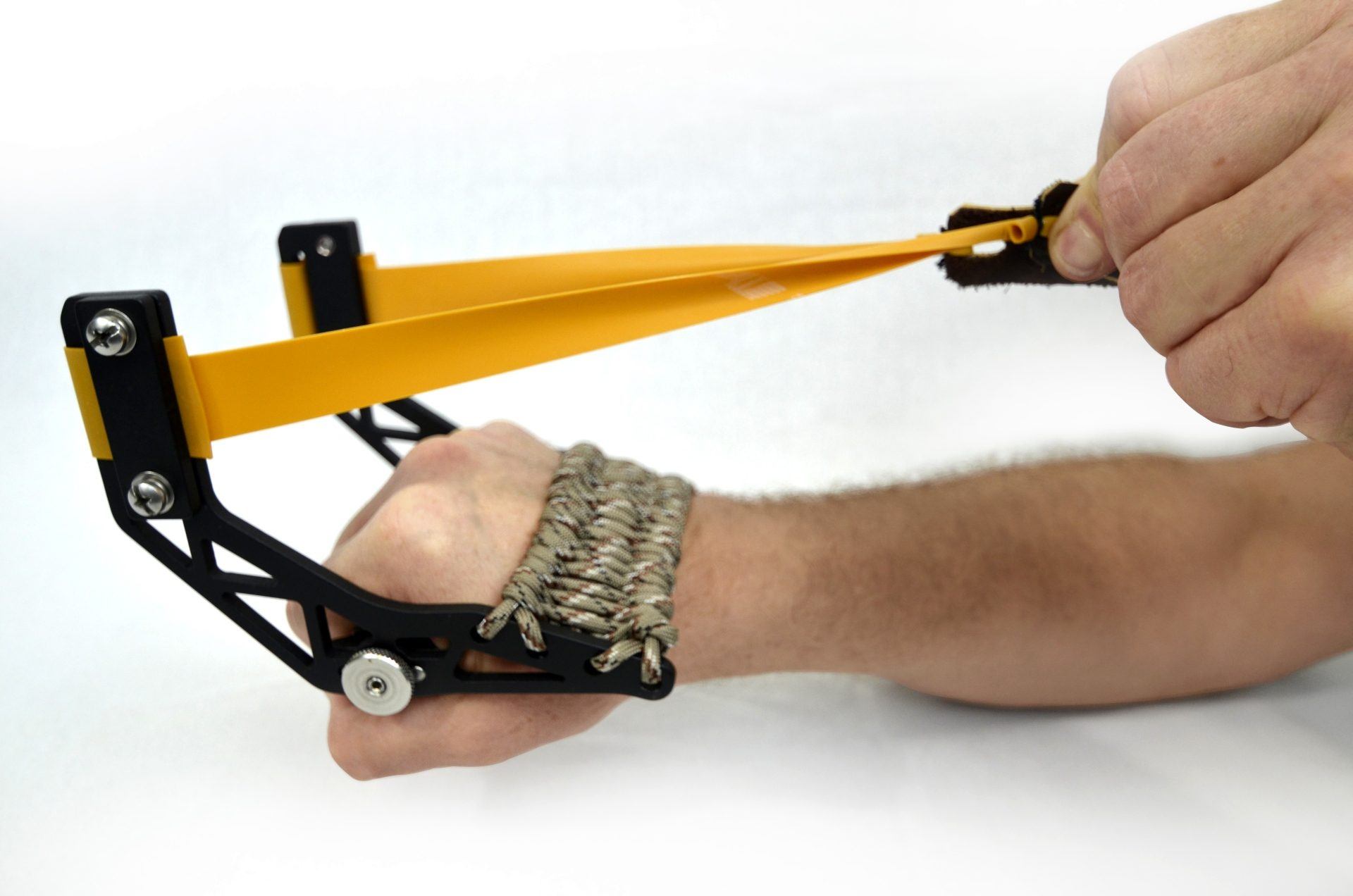
What kind of energy does this device use?
a)
Chemical
b)
Electrical
c)
Thermal
d)
Chemical
54.
A battery converts what type of energy to another?
a)
sound to kinetic
b)
light to heat
c)
mechanical to electrical
d)
chemical to electrical
55.
Wind turbines and windmills convert what energy to another?
a)
Kinetic to electric
b)
Gravitational potential to electric
c)
Mechanical to potential
d)
Thermal to sound
56.

The roller coaster cart has the most kinetic energy at position-

a)

W

b)

X

c)

Y

d)

Z

57.

Where is the kinetic energy the greatest?

a)

A

b)

B

c)

C

d)

D

58.
According to the Law of Conservation of Energy, energy cannot be _________ or ____________. 
a)
destroyed, destroyed
b)
created, saved
c)
created, destroyed
d)
lost, found
59.

A ____________ is a push or a pull on an object.

a)

friction

b)

force

c)

magnet

d)

gravity

60.

When we throw anything in air it always falls down because of _____

a)

Friction

b)

Gravity

c)

Solid

d)

motion

61.

What force ultimately slows the roller coaster to a stop?

a)

Applied

b)

Normal

c)

Friction

d)

Gravitational

62.

An object is falling downward through Earth's atmosphere. In which direction is the air resistance force?

a)

Down

b)

Up

c)

Around the object

d)

Through the object

63.

Find the weight of a 20g object

a)

200N

b)

20g

c)

0.2N

d)

0.02kg

64.

You have a ball with a weight of 76N. What is the mass of the ball?

a)

76N

b)

76kg

c)

7.6kg

d)

7.6N

65.

What statement is true?

a)

Mass never changes. Weight does.

b)

Weight never changes. Mass does.

c)

Both mass and weight change because they are affected by gravity.

d)

Neither mass nor weight change. They are always the same.

66.

What is power measured in?

a)

Joules (J)

b)

Watts (W)

c)

Kiliwatt-hours (kWh)

d)

Volts (V)

67.

How do we calculate percentage efficiency?

a)

(useful energy out ÷ total energy in) × 100

b)

(useful energy in ÷ total energy out) x 100

c)

(total energy out ÷ useful energy in) x 100

68.

Calculate the efficiency of a bulb with an input energy of 50J, which outputs 40J of thermal energy and 10J of light energy.

a)

10%

b)

20%

c)

25%

d)

50%

69.

Efficiency is a measure of

a)

how much work is done per second

b)

how much work is output versus to how much work is input

c)

how much power is used per second

d)

how much power is output versus how much power is input
70.
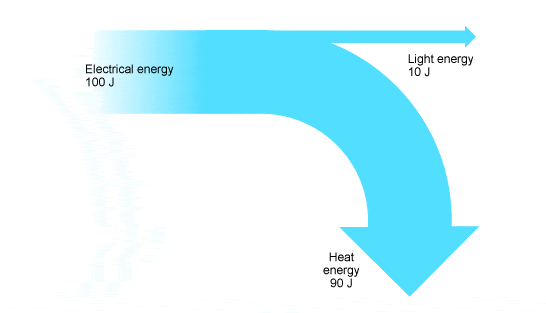
Where does most of the energy go in this transformation.
a)
Electrical energy
b)
Light
c)
Heat
d)
other
71.

Which of these equations is correct?

a)

efficiency = useful energy transferredtotal energy transferredefficiency\ =\ \frac{useful\ energy\ transferred}{total\ energy\ transferred}  

b)

efficiency = total energy transferreduseful energy transferredefficiency\ =\ \frac{total\ energy\ transferred}{useful\ energy\ transferred}  

c)

energy = efficiency ×100%energy\ =\ efficiency\ \times100\%  

d)

efficiency = wasted energy transferredtotal energy tranferredefficiency\ =\ \frac{wasted\ energy\ transferred}{total\ energy\ tranferred}  

72.

What is useful energy?

a)

The total amount of energy put into a system.

b)

The energy that is lost to heat or other energy types that aren’t useful.

c)

The energy that is created or destroyed.

d)

The energy that is used to achieve the desired outcome or do work.

73.

What is the definition of power?

a)

Power is a comparison of how much energy is used to do work versus how much is lost or wasted to the environment.

b)

Power means that you are in charge.

c)

Power is the ability to lift things up and put them down.

d)

Power is the rate at which someone, or something, uses energy.

74.

What is the equation for power?

a)

EnergyTime\frac{Energy}{Time}  

b)

WorkEnergy\frac{Work}{Energy}  

c)

mass×gravity×heightmass\times gravity\times height  

d)

Energy×TimeEnergy\times Time