wayground logo

Free Printable Worksheets

NEW

Font size

S
M
L
XL
Worksheets

Unit 13 + Unit 10 - Classifying Reactions + Temperature & Heat

Total questions: 74

Worksheet time: 6hrs 10mins

Name
Class
Date
1.
If you place some Gatorade in a cooler with ice...
a)
It's particles will speed up.
b)
It's particles will slow down.
2.
A measure of the average kinetic energy of the individual particles in an object is called:
a)
thermal energy
b)
conduction
c)
convection
d)
temperature
3.
To turn a liquid into a gas, you _____ energy.
a)
Add
b)
Remove
4.

Observe the diagram. Which statement is true about the kinetic energy of the molecules in the containers?

a)

The molecules are moving faster in Diagram A

b)

The molecules are moving slower in Diagram A

c)

The molecules are moving at the same rate in both diagrams

5.
Which of the following containers of sand has atoms/molecules with the greatest average kinetic energy?  
a)
1 kg at 20oC
b)
2 kg at 20oC
c)
4 kg at 20oC
d)
none has a greater amount because all have the same average kinetic energy
6.
What would be the effect on the particles if more heat is supplied to the system?
a)
They would slow down
b)
They would stop moving
c)
They would speed up
d)
There would be no effect
7.
There are four cups of hot cocoa. The cup sizes are shown. The temperature of the cocoa in each cup is 25 degrees celsius. Which cup has the MOST thermal energy?
a)
Large cup (Trenta)
b)
Small cup (Tall)
c)
Venti
d)
All three are the same temperature so they have same thermal energy
8.

Which description defines heat?

a)

total thermal energy of an object or substance

b)

change in the temperature of a substance in degrees Celsius

c)

energy transferred between objects at different temperatures

d)

average kinetic energy of the particles that make up a substance

9.
Water has a specific heat of 4184 J/KgºC.  Wood has a specific heat of 1760 J/KgºC.  What material needs more energy to raise the temperature 1ºC
a)
Wood
b)
Water
c)
Both are the same
10.
A high specific heat means...
a)
It heats up quickly with energy added
b)
It requires more energy to change temperature
11.
Which direction will the heat flow while this person holds a hot cup of tea?
a)
from the cup to her hand
b)
from her hand to the cup
c)
no heat is transferred
12.
Blow drying your wet hair.
a)
conduction
b)
convection
c)
radiation
13.
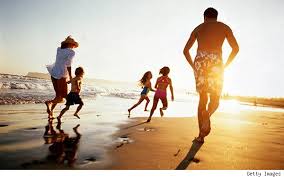
The sun shines down on this family as the play on the beach.
a)
conduction
b)
convection
c)
radiation
14.
What is the definition of CONDUCTION?
a)
When heat is transferred from objects like rays of light or electromagnetically.
b)
a  hot liquid or air that  expands, becomes less dense, and rises or becomes more dense, and sinks.
c)
When heat transfers from objects that are touching.
d)
When heat transfers through the heater or AC in your house.
15.
What kind of heat transfer happens when the sun is heating your body?
a)
Conduction
b)
Radiation
c)
Convection
d)
Density
16.
Ironing a shirt is an example of...
a)
condensation
b)
conduction
c)
convection
d)
radiation
17.
Warm air is __________ dense than cold air and rises creating convection currents.
a)
more
b)
less
18.
 How many joules of heat are needed to raise the temperature of 10.0 g of aluminum from 22°C to 55°C, if the specific heat of aluminum is 0.90 J/gx°C?    
a)
297 Joules
b)
0.003 Joules
c)
297 J/gx°C
d)
0.003 J/gx°C
19.
A 15.75-g piece of iron absorbs 1086.75 joules of heat energy, and its temperature changes from 25°C to 175°C.  Calculate the specific heat capacity of iron.    
a)
0.46 J/gxoC
b)
1.654 J/gxoC
c)
2,567,446.875 J/gxoC
20.
A 0.3 g piece of copper is heated and fashioned into a bracelet.  The amount of energy transferred by heat to the copper is 66,300 J.  If the specific heat of copper is 390 J/g 0C, what Is the change of the copper's temperature? 
a)
566.7 °C
b)
77,571,000 Joules
21.
When a  piece of aluminum foil is taken out of the oven and cools from 100° to 50°, What is the change in temperature?
a)
50°
b)
c)
100°
d)
150°
22.
The symbol for specific heat is .......
a)
c
b)
Q
c)
m
d)
t
23.
What  is the formula to calculate heat energy required to raise the temperature of any substance?
a)
Q=mc∆t
b)
Q=mc
c)
Q= ½mv
d)
m=QC
24.
Specific heat is....
a)
The measure of kinetic energy of an objects particles
b)
A measure of the energy needed to increase the average kinetic energy of the particles
c)
The heating caused by the motion of flluid due to temperature difference
d)
The transfer of energy by electromagnetic radiation
25.
How many Joules of energy are required to change 10 gram of liquidwater from 20 C to 90 C?
a)
1400 J
b)
2800 J
c)
210,000 J
d)
1,400,000 J
26.
A high specific heat means...
a)
It heats up quickly with energy added
b)
It requires more energy to change temperature
27.
The specific heat of aluminum is 0.21 J/g°C.  How much heat(Q) is released when a 10 g piece of aluminum foil is taken out of the oven and cools from 100° to 50°?
a)
105 J
b)
10.5 J
c)
1.05 J
28.
For a skillet, used for cooking, do you want a high or low specific heat
a)
High, so that it will need more energy to heat up
b)
Low, so that it will change temperature quickly
29.
20 g of water. specific heat of water is 4.18 J/x°C.  temperature changes from 25° C to 20° Chow much heat energy (Q) moves from the water to the surroundings?
a)
418 Joules
b)
209 J
c)
83 J
d)
4.18 J
30.
Which of the following is NOT true about heat? 
a)
Heat moves from hot to cold
b)
Heat is a form of energy
c)
Heat cannot be transferred
d)
Heat makes molecules speed up 
31.
The minimum average kinetic energy of the molecules in a substance occurs at which temperature? Make sure you pay attention to the units.
a)
0°C
b)
−273 K
c)
0 K
d)
273°C
32.
Which of the following best describes absolute zero?
a)
The temperature at which water is at its triple point
b)
The temperature at which the molecules of a substance have maximum kinetic energy
c)
The temperature at which water freezes at standard pressure
d)
The temperature at which the molecules of a substance have minimum kinetic energy
33.
A hot marble is dropped into a container of cool water.  Which of the following statements most accurately describes the molecular motion of molecules.
a)
Both the marble molecules and the water molecules will slow down until they eventually come to rest.
b)
The marble molecules will slow down while the water molecules speed up until they reach reach the same average kinetic energy.
c)
The marble molecules will speed up while the water molecules will slow down until they reach nearly identical speeds.
d)
Both the marble molecules and the water molecules will speed up until they reach nearly identical speeds.
34.
A student is investigating the best method for heating marshmallows using an open flame as shown below.
The student quickly discovers that placing the marshmallow over the flame is more effective than heating the marshmallow on the side of the flame. 
What type of heat transfer is present when the marshmallow is above the fire that is not present when the marshmallow is on the side of the fire?
a)
Radiation
b)
Convection
c)
Conduction
d)
Entropy
35.
NASA developed a reflective foil barrier to help shield spacecraft from heat transfer in space.  These reflective barriers are now used in homes to prevent heat transfer by the same method.  
What method of heat transfer is being prevented by the reflective barrier?
a)
Radiation
b)
Convection
c)
Entropy
d)
Conduction
36.
Which of the following describes a key difference between radiation and convection?
a)
Unlike convection, radiation does not require a medium.
b)
Unlike radiation, convection transfers heat with waves.
c)
Unlike convection, radiation warms liquids and gases.
d)
Unlike radiation, convection only occurs in solids.
37.
The air consists of a variety of substances at room temperature. 
 
Assuming each substance has exactly the same temperature, which molecule will have the greatest magnitude of velocity?
a)
Methane
b)
Nitrogen
c)
Oxygen
d)
Argon
38.
The air pressure inside an automobile tire is lower during cold weather than during warm weather. The lower air pressure is most likely due to which of the following? (Think about what temperature the question is talking about and how the molecules move at that temperature)
a)
A decrease in the speed of the air molecules in the tire
b)
Salt on the roads producing a decrease in tire volume
c)
An increase in molecular potential energy of the air molecules in the tire
d)
Cold air in the tire producing an increase in tire volume
39.

There are four main processes in changing of phase, and they are

a)

Melting

b)

Boiling

c)

Condensation

d)

All the above

40.
What is the equation to measure change in Thermal Energy?
a)
Q=mc∆t
b)
Q=mc
c)
Q= ∆mct
d)
m=QC
41.
The amount of energy required to raise the temperature 1ºC for every kilogram is called____?
a)
Thermal Energy
b)
Specific Heat
c)
Temperature
d)
Kinetic Energy
42.

Water molecules have the greatest kinetic energy in

a)

Ice at 0 ⁰C

b)

Water at 90 ⁰C

c)

Water at 373 K

d)

Steam at 150 ⁰C

43.
What would be the effect on the particles if more heat is supplied to the system?
a)
They would slow down
b)
They would stop moving
c)
They would speed up
d)
There would be no effect
44.
The lowest possible temperature is
a)
0 F
b)
0 K
c)
0 C
d)
273 K
45.
How heat is transfered?
a)
From high to low temperature
b)
From low to high
c)
Up to down
d)
Left to right
46.

How much heat is required to raise the temperature of a sample of copper from 10.0°C to 55.0°C, if its mass is 10.00 g? specific heat of copper is 0.385 J/(g∙°C).

a)

1881 J

b)

250. J

c)

173 J

d)

359 J

47.

Heat is defined as

a)

the transfer of thermal energy from one object to another due to temperature difference

b)

the temperature of a solid, liquid, or gas

c)

The kinetic energy of a solid, liquid, or gas.

48.
A high specific heat means...
a)
It heats up quickly with energy added
b)
It requires more energy to change temperature
49.
CxHy +O--> H2O + CO2
a)
Decomposition
b)
Double replacement
c)
Combustion
d)
Single Replacement
50.
One reactant into several products.
a)
Decomposition
b)
Synthesis
c)
Combustion
d)
Single Replacement
51.
One element replaces another in a compound.
a)
Synthesis
b)
Combustion
c)
Single Replacement
d)
Double Replacement
52.
This pictures simulates what type of reaction?
a)
Synthesis
b)
Decomposition
c)
Single Replacement
d)
Double Replacement
53.
KOH + H3PO4 --> K3PO4 + H2O
a)
Synthesis (combination)
b)
Decomposition
c)
Single replacement
d)
Double replacement
54.
Si + S8 --> Si2S4
a)
Synthesis (combination)
b)
Decomposition
c)
Single replacement
d)
Double replacement
55.
Pb(NO3)2 --> PbO + NO2 + O2
a)
Synthesis (combination)
b)
Decomposition
c)
Single replacement
d)
Combustion
56.
What is the left part of a chemical equation called?
H2 + O → H2O
a)
Reactants
b)
Products 
c)
Yields 
d)
Chemical Equation 
57.

3 Pb + 2 H3PO4 ----> 3 H2 + 1 Pb3(PO4)2

a)

Synthesis (or combination)

b)

Decomposition

c)

Single replacement

d)

Double replacement

58.

Combustion reactions will always involve

a)

Oxygen and a solid

b)

Liquid nitrogen and heat

c)

Oxygen and heat/energy

d)

CO and H2O

59.

A pure substance that is made up of only one type of atom is a(n)...

a)

element

b)

colloid

c)

compound

d)

solution

60.

Matter that has the same composition all the time is called...

a)

Colloid

b)

Mixture

c)

Pure Substance

d)

Suspension

61.

What words best describe tap water?

a)

pure substance, compound

b)

pure substance, element

c)

homogeneous mixture, solution

d)

homogeneous mixture, colloid

62.

What words best describe distilled water?

a)

pure substance, compound

b)

pure substance, element

c)

homogeneous mixture, solution

d)

homogeneous mixture, colloid

63.

What words best describe gold?

a)

pure substance, compound

b)

pure substance, element

c)

homogeneous mixture, solution

d)

homogeneous mixture, colloid

64.

What words best describe aluminum?

a)

pure substance, compound

b)

pure substance, element

c)

homogeneous mixture, solution

d)

homogeneous mixture, colloid

65.

What words best describe silicon dioxide?

a)

pure substance, compound

b)

pure substance, element

c)

homogeneous mixture, solution

d)

homogeneous mixture, colloid

66.

What words best describe salsa?

a)

mixture, heterogeneous mixture

b)

mixture, pure substance

c)

mixture, homogeneous mixture, solution

d)

mixture, homogeneous mixture, colloid

67.

What words best describe sand?

a)

mixture, heterogeneous mixture

b)

mixture, pure substance

c)

mixture, homogeneous mixture, solution

d)

mixture, homogeneous mixture, colloid

68.

What words best describe mixed nuts?

a)

mixture, heterogeneous mixture

b)

mixture, pure substance

c)

mixture, homogeneous mixture, solution

d)

mixture, homogeneous mixture, colloid

69.

What words best describe sugar?

a)

pure substance, compound

b)

pure substance, element

c)

homogeneous mixture, solution

d)

homogeneous mixture, colloid

70.

How would you classify the color of a rose?

a)

chemical change

b)

physical property

c)

physical change

d)

chemical property

71.

Which of the following is not an element?

a)

water (H2O)

b)

hydrogen (H)

c)

carbon (C)

d)

oxygen (O)

72.

Matter is defined as anything that _____

a)

can be weighted

b)

contains kinetic energy

c)

has mass and take up space

d)

many colors

73.

Compounds are made from the atoms of two or more _______.

a)

solutions

b)

mixtures

c)

carbs

d)

elements

74.

Magnesium chloride (MgCl2) is an example of a(n)...

a)

element

b)

compound

c)

heterogeneous mixture

d)

suspension