
 Worksheets
RATE OF REACTION
Total questions: 199
Worksheet time: 3hrs 25mins
Increase in temperature causes the particles to
slow down
move faster
stay apart from each other
move in the correct order
Why does a higher concentration increase the rate of reaction?
it increases the amount of reactants
it lowers the activation energy
it increases the energy of reactant particles
it increases the frequency of collision
Why does a higher temperature increase the rate of a reaction?
It increases both the frequency collision and energy of reactant particles
It only increases the frequency of collision
It only increases the energy of reactant particles
It reduces the activation energy of the reaction
Grinding an effervescent tablet into powder increases the rate of reaction due to increase of
concentration
total surface area
temperature
size

Which factors increase the rate of a reaction?
increasing temperature
increasing concentration
increasing total surface area
All of these
Increasing pressure causes the reacting particles
to bond together
to repel from each other
gain more kinetic energy
to move closer together
Increasing the temperature gives particles more __________.
time
energy
space
frequency
As the frequency of ________________ collision increases, the rate of reaction increases.
time
speed
effective
efficient
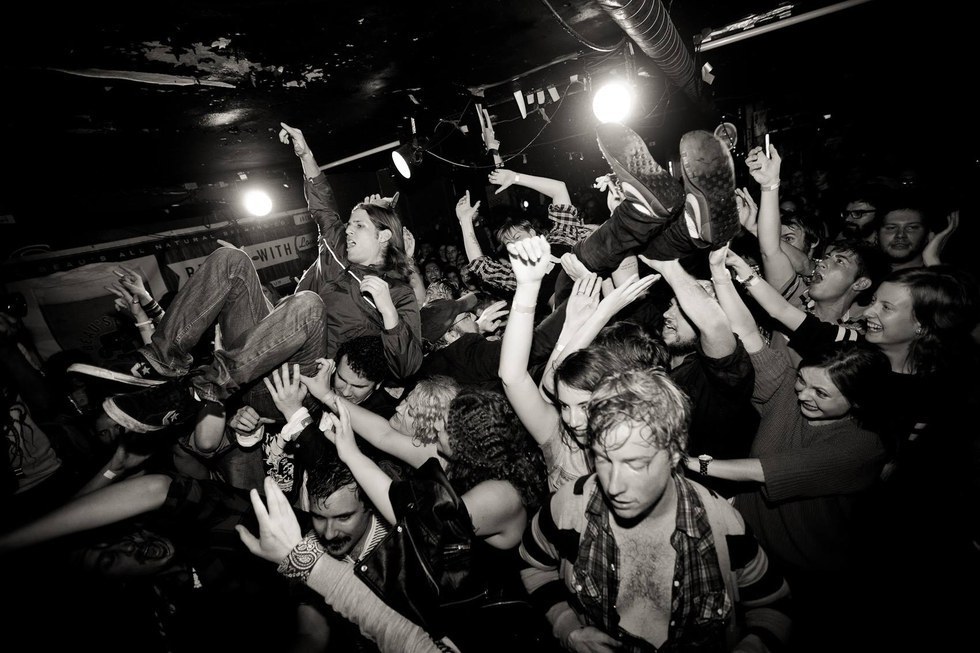
You add more bodies into a "mosh pit" to hope for more collisions. You have increased
temperature
concentration
pressure
catalyst
Why does a higher concentration increase the rate of reaction?
it increases the amount of reactants
it lowers the activation energy
it increases the energy of particle collisions
it increases the frequency of collisions
Which one shows that a chemical reaction has occurred?
dissolving
melting
formation of a gas
bending

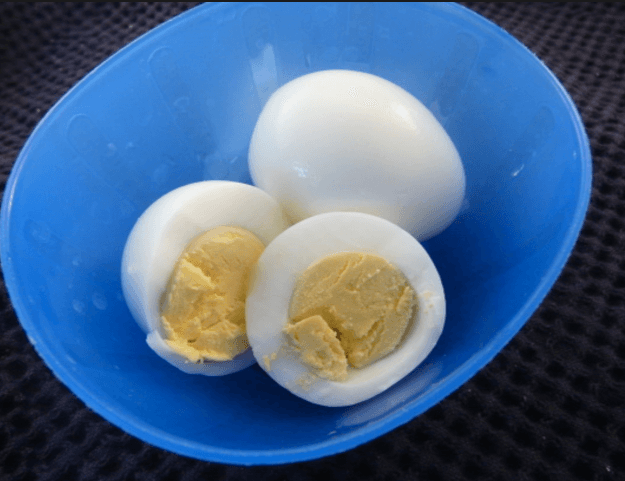
Hard-boiled eggs are the a result of a chemical change because
the eggs are the same size before vs after.
the eggs have different properties (smell, taste, color) before vs after.
the eggs weigh the same before vs after.
the eggs went through a phase change.
On a camping trip, Mr. Markowitz roasts a marshmallow in the campfire. He notices that the roasted marshmallow smells and tastes differently than the uncooked marshmallows. What change has taken place AND how does Mr. Markowitz know?
A chemical change because the marshmallow changed in taste, color, and smell
A chemical change because the marshmallow was heated up.
Only a physical change because the marshmallow changed in size
No change because the marshmallow is not a new substance
Which of the following is a clue that a chemical change has occurred? (Choose all correct answers.)
Formation of a gas (bubbles)
Color change
Phase change
Produces light or heat
Which of these is NOT a chemical reaction?
Single displacement
Synthesis
Decomposition
Stratification
Increase in temperature causes the particles to
slow down
move faster
stay apart from each other
move in the correct order
Why does a higher concentration increase the rate of reaction?
it increases the amount of reactants
it lowers the activation energy
it increases the energy of reactant particles
it increases the frequency of collision
Why does a higher temperature increase the rate of a reaction?
It increases both the frequency collision and energy of reactant particles
It only increases the frequency of collision
It only increases the energy of reactant particles
It reduces the activation energy of the reaction
Grinding an effervescent tablet into powder increases the rate of reaction due to increase of
concentration
total surface area
temperature
size
Which factors increase the rate of a reaction?
increasing temperature
increasing concentration
increasing total surface area
All of these
Increasing pressure causes the reacting particles
to bond together
to repel from each other
gain more kinetic energy
to move closer together
Increasing the temperature gives particles more __________.
time
energy
space
frequency
As the frequency of ________________ collision increases, the rate of reaction increases.
time
speed
effective
efficient
You add more bodies into a "mosh pit" to hope for more collisions. You have increased
temperature
concentration
pressure
catalyst
Why does a higher concentration increase the rate of reaction?
it increases the amount of reactants
it lowers the activation energy
it increases the energy of particle collisions
it increases the frequency of collisions
Which one shows that a chemical reaction has occurred?
dissolving
melting
formation of a gas
bending
Hard-boiled eggs are the a result of a chemical change because
the eggs are the same size before vs after.
the eggs have different properties (smell, taste, color) before vs after.
the eggs weigh the same before vs after.
the eggs went through a phase change.
On a camping trip, Mr. Markowitz roasts a marshmallow in the campfire. He notices that the roasted marshmallow smells and tastes differently than the uncooked marshmallows. What change has taken place AND how does Mr. Markowitz know?
A chemical change because the marshmallow changed in taste, color, and smell
A chemical change because the marshmallow was heated up.
Only a physical change because the marshmallow changed in size
No change because the marshmallow is not a new substance
Which of the following is a clue that a chemical change has occurred? (Choose all correct answers.)
Formation of a gas (bubbles)
Color change
Phase change
Produces light or heat
Which of these is NOT a chemical reaction?
Single displacement
Synthesis
Decomposition
Stratification
To calculate rate of a reaction: change in quantity of substance ÷ ____ taken
time
mass
volume
concentration
Choose the unit of rate.
s
g/s
s/g
g
In order to react particles must _______ with sufficient energy.
pass
bounce
meet
collide
The minimum energy required for particles to react when they collide is the __________ energy.
physical
activation
minimum
collision
What happens to particles when their temperature increases?
move slower
move at the same speed
move faster
Why does increasing temperature cause the rate of a reaction to increase? [Choose 2]
Particles move faster
Particles move slower
Particles collide with less energy
Particles collide with more energy
Which piece of marble has the highest surface area - assuming they all have the same volume?
A single piece
powder
chips
Increasing the surface area of solid reactants increases the rate of reaction as more particles are _______ so more collisions can take place per second.
second
exposed
open
closer together
Increasing the surface area of solid reactants increases the rate of reaction as more particles are exposed so more collisions can take place per ______.
second
exposed
time
collision
How does increasing concentration change the arrangement of particles?
Particles move faster
Particles are further apart
Particles move slower
Particles are closer together
How does increasing pressure change the arrangement of particles?
Particles move faster
Particles are further apart
Particles move slower
Particles are closer together
When particles are closer together (by increasing concentration of aqueous solutions and increasing pressure of gases) why does rate of reaction increase?
More collisions take place
More collisions take place per second
The particles have more energy
The particles move faster
What is a catalyst?
A substance that lowers activation energy by providing an alternative pathway for the reaction.
A substance that increases activation energy by providing an alternative pathway for the reaction.
A substance that lowers activation energy by providing an output for the reaction.
To calculate rate of a reaction: change in quantity of substance ÷ ____ taken
time
mass
volume
concentration
Choose the unit of rate.
s
g/s
s/g
g
In order to react particles must _______ with sufficient energy.
pass
bounce
meet
collide
The minimum energy required for particles to react when they collide is the __________ energy.
physical
activation
minimum
collision
What happens to particles when their temperature increases?
move slower
move at the same speed
move faster
Why does increasing temperature cause the rate of a reaction to increase? [Choose 2]
Particles move faster
Particles move slower
Particles collide with less energy
Particles collide with more energy
Which piece of marble has the highest surface area - assuming they all have the same volume?
A single piece
powder
chips
Increasing the surface area of solid reactants increases the rate of reaction as more particles are _______ so more collisions can take place per second.
second
exposed
open
closer together
Increasing the surface area of solid reactants increases the rate of reaction as more particles are exposed so more collisions can take place per ______.
second
exposed
time
collision
How does increasing concentration change the arrangement of particles?
Particles move faster
Particles are further apart
Particles move slower
Particles are closer together
How does increasing pressure change the arrangement of particles?
Particles move faster
Particles are further apart
Particles move slower
Particles are closer together
When particles are closer together (by increasing concentration of aqueous solutions and increasing pressure of gases) why does rate of reaction increase?
More collisions take place
More collisions take place per second
The particles have more energy
The particles move faster
What is a catalyst?
A substance that lowers activation energy by providing an alternative pathway for the reaction.
A substance that increases activation energy by providing an alternative pathway for the reaction.
A substance that lowers activation energy by providing an output for the reaction.
Which of the following increase the reaction rate?
less surface area
lower temperature
increasing pressure
low concentration
Which of the following are the factors that affecting the rate of reactions?
Size of reactants
Concentration of reactants
Temperature
Presence of catalyst
All of above
Which factor can only affects the rate of reaction when involved gases as the reactant?
Concentration of reactants
Pressure
Temperature
Size of reactants
Which of the following statement is correct?
Smaller size of reactants, smaller total surface area, higher reaction rate
Larger size of reactants, smaller total surface area, higher reaction rate
Smaller size of reactants, larger total surface area, higher reaction rate
Larger size of reactants, larger total surface area, higher reaction rate
_____________ concentration of reactants by adding solute; ______________ concentration of reactants by adding solvent.
Increase; Increase
Decrease; Decrease
Increase; Decrease
Decrease; Increase
Does the presence of catalyst will change the amount of product?
Yes
No
If the temperature is reduced, a reaction rate will ______
increase
decrease
stay the same
How does temperature increase the rate of a chemical reaction?
Provides lower energy route for the reaction so that a greater number of particles have enough energy to react.
Increased number of collisions increases the chance of a 'successful collision'
Particles collide faster and harder so a larger proportion have greater energy than the required activation energy.
Greater number of 'active sites' available for a reaction to take place (referring to solids)
How does concentration increase the rate of a chemical reaction?
Provides lower energy route for the reaction so that a greater number of particles have enough energy to react.
Increased number of collisions increases the chance of a 'successful collision'
Particles collide faster and harder so a lagrer proportion have greater energy than the required activation energy.
Greater number of 'active sites' available for a reaction to take place (referring to solids)
Which of the following will lower the rate
of reaction?
adding an enzyme to the reaction
decreasing the temperature from 40°C to
10°C
breaking a chunk of calcium up into
smaller pieces
increasing the amount of solute
dissolved in a solution
Which of the following increase the reaction rate?
less surface area
lower temperature
increasing pressure
low concentration
Which of the following are the factors that affecting the rate of reactions?
Size of reactants
Concentration of reactants
Temperature
Presence of catalyst
All of above
Which factor can only affects the rate of reaction when involved gases as the reactant?
Concentration of reactants
Pressure
Temperature
Size of reactants
Which of the following statement is correct?
Smaller size of reactants, smaller total surface area, higher reaction rate
Larger size of reactants, smaller total surface area, higher reaction rate
Smaller size of reactants, larger total surface area, higher reaction rate
Larger size of reactants, larger total surface area, higher reaction rate
_____________ concentration of reactants by adding solute; ______________ concentration of reactants by adding solvent.
Increase; Increase
Decrease; Decrease
Increase; Decrease
Decrease; Increase
Does the presence of catalyst will change the amount of product?
Yes
No
If the temperature is reduced, a reaction rate will ______
increase
decrease
stay the same
How does temperature increase the rate of a chemical reaction?
Provides lower energy route for the reaction so that a greater number of particles have enough energy to react.
Increased number of collisions increases the chance of a 'successful collision'
Particles collide faster and harder so a larger proportion have greater energy than the required activation energy.
Greater number of 'active sites' available for a reaction to take place (referring to solids)
How does concentration increase the rate of a chemical reaction?
Provides lower energy route for the reaction so that a greater number of particles have enough energy to react.
Increased number of collisions increases the chance of a 'successful collision'
Particles collide faster and harder so a lagrer proportion have greater energy than the required activation energy.
Greater number of 'active sites' available for a reaction to take place (referring to solids)
Which of the following will lower the rate
of reaction?
adding an enzyme to the reaction
decreasing the temperature from 40°C to
10°C
breaking a chunk of calcium up into
smaller pieces
increasing the amount of solute
dissolved in a solution
what is the collision theory?
chemical reactions can only take place when the reacting particles collide with each other. the collisions must not have sufficient energy.
the speed at which a chemical reaction takes place this is defined as proportional to increase in concentration
physical reactions can only take place when the reacting particles collide with each other. the collisions must have sufficient energy.
chemical reactions can only take place when the reacting particles collide with each other. the collisions must have sufficient energy.
The higher the concentration, the more _______ in a given volume
solvent only
particles only
molecules only
all of the above
The _____ of a chemical reaction _____when the_____ of one or more of the reactants increases
rate, increases, concentration
particles, increases, concentration
rate, decreases, concentration
particles, decreases, concentration
the more particles, the higher the _____-
collisions
frequency of collisions
activation energy
temperature
the higher the frequency of collisions, the higher the ____
chance of collision
chance of unsuccessful collisions
chance of successful collisions
chance of energetic collisions
if the concentration of reactants is increased, there are more reactant particles moving together.
true
false
concentration is not from the factors that affect the rate of reaction.
true
false
decreasing the concentration of a reactant in a solution, will decrease the rate of a reaction
true
false
what is the collision theory?
chemical reactions can only take place when the reacting particles collide with each other. the collisions must not have sufficient energy.
the speed at which a chemical reaction takes place this is defined as proportional to increase in concentration
physical reactions can only take place when the reacting particles collide with each other. the collisions must have sufficient energy.
chemical reactions can only take place when the reacting particles collide with each other. the collisions must have sufficient energy.
The higher the concentration, the more _______ in a given volume
solvent only
particles only
molecules only
all of the above
The _____ of a chemical reaction _____when the_____ of one or more of the reactants increases
rate, increases, concentration
particles, increases, concentration
rate, decreases, concentration
particles, decreases, concentration
the more particles, the higher the _____-
collisions
frequency of collisions
activation energy
temperature
the higher the frequency of collisions, the higher the ____
chance of collision
chance of unsuccessful collisions
chance of successful collisions
chance of energetic collisions
if the concentration of reactants is increased, there are more reactant particles moving together.
true
false
concentration is not from the factors that affect the rate of reaction.
true
false
decreasing the concentration of a reactant in a solution, will decrease the rate of a reaction
true
false
Adding a catalyst ___________ the activation energy.
Raises
Lowers
Doesn't affect
Inreases
The minimum amount of energy needed for colliding particles to react is called
Chemical Energy
Kinetic Energy
Activation Energy
Potential Energy
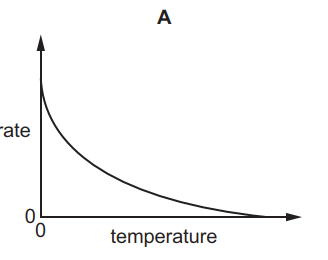
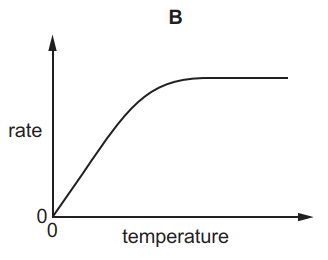
Which graph shows the effect of increasing temperature on the rate of reaction of calcium carbonate with dilute hydrochloric acid?
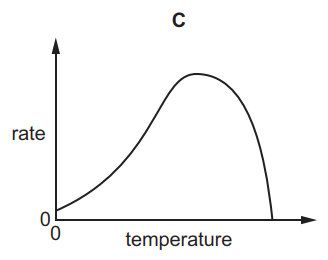
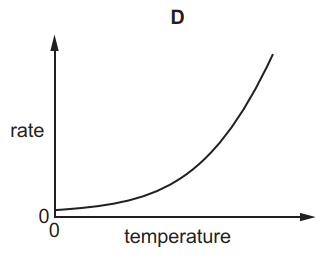
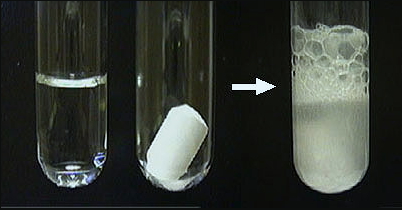
How could we make this reaction happen more quickly?
Decrease the concentration of the acid
crush the chalk to increase the surface area
Put the test tube in an ice bath
The major theory of reaction rate is called
Collision theory
Crash theory
Newton's laws
Thermodynamics
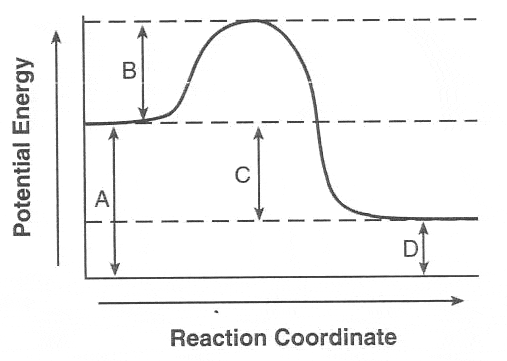
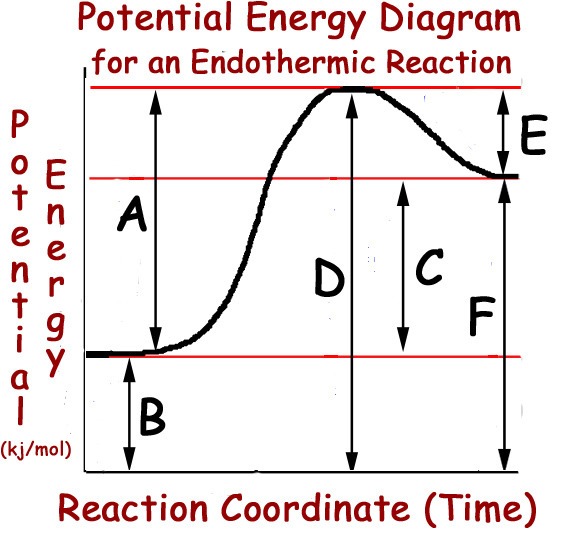
What type of reaction is this?
Endothermic
Exothermic
A chemical reaction in which energy is absorbed is ______________.
an endothermic reaction
an exothermic reaction
a single replacement reaction
a double replacement reaction
List four factors that affects the rate of a reaction
temperature
concentration
surface area
volume
catalysts
How does a catalyst work in speeding up a reaction?
By lowering the activation energy or reaction
by giving them more energy
by making them more available
Why does a higher concentration increase the rate of reaction?
it increases the amount of reactants
it lowers the activation energy
it increases the energy of particle collisions
it increases the frequency of particle collisions
Why does a higher temperature increase the rate of a reaction?
it increases both the frequency and energy of particle collisions
it only increases the frequency of particle collisions
it only increases the energy of particle collisions
it reduces the activation energy of the reaction
what factors can affect the value of the activation energy of a reaction?
The presence of a catalyst
changes in temperature
changes in concentration of the reactants
changes in pressure
Grinding a effervescent tablet into powder increases the rate of reaction due to increased
concentration
surface area
temperature
reactants
The ______________is required to break the bonds of the reactants.
Carbonic energy
Activation energy
Plutonic energy
Energi Gaib
What type of reaction is this?
Endothermic
Exothermic
A chemical reaction in which energy is absorbed is ______________.
an endothermic reaction
an exothermic reaction
a single replacement reaction
a double replacement reaction

Table 4 shows the total volume of gas evolved at different intervals for the dissociation of hydrogen peroxide.
What is the average rate of reaction in the second minute?
14.0 cm3 min-1
16.0 cm3 min-1
18.0 cm3 min-1
28.0 cm3 min-1
When we investigate the rate of reaction we are looking at the...
amount of product formed
speed of reaction
concentration of reacting particles
combining reactants with products
What is the overall order of reaction?
What will happen to the rate of reaction if the concentration of A is doubled and the concentration of B is tripled?
Reaction order defines...
how many reactions a reactant can do
how the rate is affected by the concentration of that reactant
the weight of reactants of a chemical reaction
the order in which the reactants line-up to react and form products
What is the letter used to represent the Specific rate constant?
t
p
k
l
To find the reaction order of a reactant we...
look at the superscript number
look at the big numbers
add all the subscripts up together
How do we find the overall order of a chemical reaction?
Add all the reaction orders of each reactant
Subtract all the reaction orders of each reactant
Multiplyall the reaction orders of each reactant
We need to find moles, add them all together and multiply by 100
If the concentration of [A] is doubled, and the rate of the reaction also doubles. What reaction order is [A]?
Zero-order
First-order
Second-order
Triple-order
Look at the rate equation: Rate=k[H2O][HCl]
What is the overall order of the reaction?
first-order
second-order
third-order
fourth-order
How does a catalyst work in speeding up a reaction?
By lowering the activation energy or reaction
by giving them more energy
by making them more available
The minimum amount of energy needed for colliding particles to react is called the
Chemical Energy
Kinetic Energy
Activation Energy
Potential Energy
A substance that increases the rate of a reaction without being used up during the reaction is called a
catalyst
product
reactant
solute
What is the name given to a catalyst in the human body?
Biology
Catalyst
Chemical
Enzyme

Which of the reaction pathway shows the catalysed reaction?
1
2
When a catalyst is added to a reaction the rate of reaction,,,
Increases
Decreases
Does not change
How does a catalyst work in speeding up a reaction?
By lowering the activation energy or reaction
by making them more available
by giving them more energy
A catalyst increases the efficiency of collisions between reactants.
true
false
A catalyst
is used up
is nevr used up
A catalyst be regenerated or used again and again
False
True
A catalyst changes the mechanism of the reaction
True
False
What has to happen before a reaction takes place?
Product molecules must collide
Product molecules must collide with enough power
Reacting molecules must collide with enough energy
Molecules must collide with enough power
Explain how increasing concentrations increases the rate of a reaction
Less collisions occur
More movement
More collisions occur
Less movement
What change in condition increases the speed of the reacting molecules?
Decreasing temperature
Increasing temperature
Decreasing energy
Increasing power
How can you increase the surface area of a solid?
Divide the solid into smaller pieces
Get more solid
Turn it into a gas
Which change in condition only affects reactions involving gases?
Temperature
Surface area
Pressure
Concentration
What is the activation energy in a reaction?
The energy needed for products to be formed
The energy needed to break products into reactants
The minimum energy needed to make products
The minimum energy needed by reactants for them to react
What does a catalyst do?
Speeds up reactants
Speeds up a chemical reaction
Speeds up products
Speeds up particles
What do you call a biological catalyst?
Product
Reactant
Biological reaction
Enzyme
What is/are the catalyst(s) in catalytic converters in cars?
Platinum
Phosphorous
Palladium
Phosphorous and platinum
Platinum and palladium
The graph that shows how catalysts lower activation energy is known as what?
Reaction profile
Energy graph
Catalysing reaction graph
Overall change of energy grapg

