
 Worksheets
Ch. 4 - Atoms
Total questions: 59
Worksheet time: 36mins
Whose series of experiments identified the nucleus of the atom?
Bohr
Rutherford
Dalton
Newton
Subatomic particles with a negative charge
Electrons
Neutrons
Protons
Quarks

The smallest particle of an element.
Element
Molecule
Atom

Atoms of the same element that have different numbers of neutrons
Ion
Isotope
Proton
Electron
A charged atom
Ion
Isotope
Proton
Electron
O2

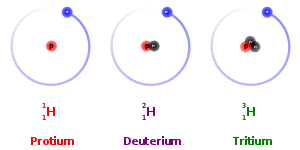
Different isotopes have...
different masses
different protons
different electrons
Which answer choice correctly describes the location and charge of electrons in an atom.
negative and inside the nucleus
negative and outside the nucleus
postitive and inside the nucleus
no charge and inside the nucleus

How many electrons does a sodium atom have?
23
11
12
34


What is the mass number of this atom of Chlorine?
17
18
35
35.453
Experiments with cathode rays led to the discovery of the
proton
neutron
electron
In Rutherford's experiments, most of the particles
were absorbed by the foil
passed through the foil
combined with the foil
didn't make it to the foil
An atom is electrically neutral because
the number of protons and neutrons are equal
the numbers of protons and electrons are equal
neutrons balance the protons and electrons
they don't have any electrons
The atomic mass of an element listed in the periodic table is the
average atomic mass for the element as found in nature.
relative atomic mass of the most abundant radioactive isotope.
mass number of the least abundant isotope.
average number of electrons.
An aluminum isotope consists of 13 protons, 13 electrons, and 14 neutrons. Its mass number is
40
13
27
14
Chlorine has atomic number 17 and mass number 35. It has
35 protons, 35 electrons, and 17 neutrons.
18 protons, 18 electrons, and 17 neutrons.
17 protons, 17 electrons, and 18 neutrons.
35 protons, 17 electrons, and 35 neutrons.
Carbon-14 (atomic number 6), the radioactive nuclide used in dating fossils, has
10 neutrons
14 neutrons
8 neutrons
20 neutrons
Neon-22 contains 12 neutrons. It also contains
12 protons
22 electrons
34 electrons
10 protons
According to the Bohr model of the atom, electrons of an atom circle the nucleus
in specific, allowed orbits.
in one fixed orbit at all times.
at any of an infinite number of distances, depending on its energy.
jumping from one orbit to the next at all times.
The region outside the nucleus where an electron can most probably be found is the
s sublevel
electron configuration
f sublevel
electron cloud
The main energy level that can hold only two electrons is the
second
first
third
fourth
A sodium atom, which has 11 electrons, has _______ electrons in its third energy level.
0
1
2
8
A three-dimensional region around a nucleus where an electron may be found is called a(n)
electron path
spectral line
wavelength
orbital
Which of the following is NOT a type of orbital?
s
d
p
x
An electron jumps to a new energy level when
the atom becomes charged.
the atom becomes unstable.
the atom gains or loses energy.
the electron’s location is pinpointed.
Which of the following statements is NOT true?
An s orbital can hold two electrons.
An f orbital can hold up to three electrons.
A d orbital can hold up to two electrons.
A p orbital can hold two electrons.
What is found in the outer energy level of an atom?
valence electrons
photon
excited state
orbital
Electrons gain energy by absorbing a particle of light called a(n) ________.
orbital
photon
valence electron
excited state
What happens to an electron when it gains energy?
orbitals
photons
valance electrons
excited state
Avogadro’s number is useful for
counting atoms.
counting large objects.
locating an atom’s electrons.
none of the above
The charge of an atom is
positive
negative
neutral
unbalanced
An iron atom has an atomic mass of 56. Its atomic number is 26. How many neutrons does the iron atom have?
56
30
26
82
How much effect do commonly found isotopes have on the average atomic mass of an element?
less than rarely found isotopes
same as rarely found isotopes
no effect on atomic mass
more than rarely found isotopes
An element’s atomic number is equal to its number of
protons
valence electrons
neutrons
protons and neutrons
Two different isotopes of an element have different
atomic numbers.
numbers of protons.
numbers of neutrons.
numbers of electrons.
Carbon has 6 protons. How many valence electrons does Carbon have?
2
4
6
12
What is the amount of nickel, which has an average atomic mass of 58.7 u, present in 525 g nickel?
28.0 mol
8.90 mol
525 mol
58.7 mol
What is the mass of 2.5 mol of Ca, which has a molar mass of 40 g/mol?
2.5 g Ca
20.0 g Ca
40.0 g Ca
100.0 g Ca
The number of energy levels filled in an atom is determined by
protons
neutrons
electrons
photons
Generally, the number of neutrons ____ the number of protons in an atom.
=
<
>

Where is the element's atomic NUMBER located?
the top
the bottom
the top + the bottom
the number of protons + the number of neutrons

Where is the element's atomic MASS located?
at the top
at the bottom
the top number + the bottom number
the number of protons + the number of neutrons

What is the mass number of the atom shown in the Bohr model?
11
12
23
Can't be determined

What is the atomic number of this atom shown in the Bohr model?
11
12
13
can't be determined
pure, made of only one type of atom

