
 Worksheets
Macromolecules & Enzymes
Total questions: 52
Worksheet time: 1hrs 5mins

A ______________ is a large molecule.
Micromolecule
Polymer
Amino Acid
Macromolecule
Which of the following elements are found in all macromolecules? (Select all that apply).


Which of the following is not one of the four major classes of macromolecules?
Lipids
Carbon
Protein
Carbohydrates
Nucleic Acid
Which macromolecule is used as our main source of energy?
Lipids/Fats
Nucleic Acids
Proteins
Carbohydrates
Which macromolecule stores energy?
Carbohydrates
Proteins
Lipids/Fats
Nucleic Acids
Nucleic acids make up which of the two molecules listed below?
FDA
RNA
DNA
FDR
This macromolecule breaks down into sugars such as glucose.
Lipids/Fats
Nucleic Acids
Protein
Carbohydrates
Which of the following are almost always hydrophobic?
carbohydrates
lipids
proteins
nucleic acids
Most enzymes are composed of .....
Lipids
Carbohydrates
Proteins
Nucleic Acids
Why do we need proteins?
various cell structures
main source of energy for the body
important component of our DNA
main component of our cell membranes
The most important element that is the backbone of all biological molecules

cell are called ____________________.
What would be the best thing to eat if you were going to run a race in an hour
a jolly rancher
grilled chicken
a salad with olive oil dressing
pasta
Which of the following are almost always hydrophobic?
carbohydrates
lipids
proteins
nucleic acids

Which macromolecule is shown?
lipid
protein
nucleic acid
carbohydrate

Which macromolecule is shown?
lipid
protein
nucleic acid
carbohydrate
Monomers are put together to form a _____________.
polymer (macromolecule)
element
compound
organelle

What macromolecule is shown above?
Carbohydrate
Lipid
Protein
Nucleic Acid
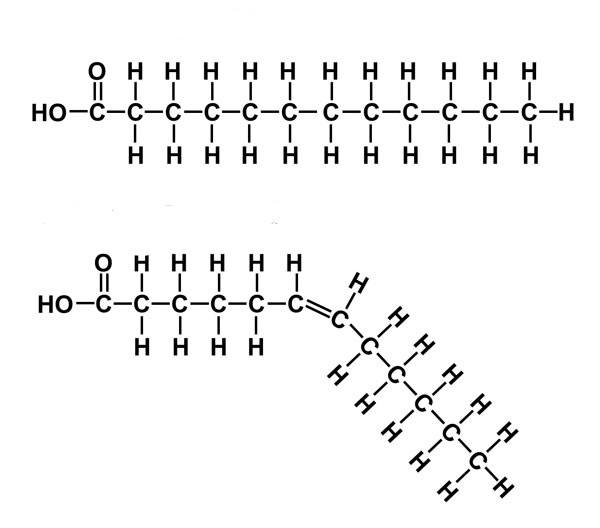
What macromolecule is shown above?
Carbohydrate
Lipid
Protein
Nucleic Acid
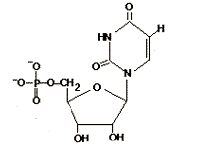
What macromolecule is shown above?
Carbohydrate
Lipid
Protein
Nucleic Acid
A _________ reaction removes a molecule of water to bond molecules together to create a polymer.
hydrolysis
water
dehydration synthesis
magical
In order to break apart a polymer ________ must be added.
carbon
water
oxygen
hydrogen

What type of reaction is shown?
Dehydration synthesis
Hydrolysis

Which type of reaction is shown?
Dehydration Synthesis
Hydrolysis

Specialized proteins known as ___________________ act as catalysts in living things by breaking down substances like food molecules and by lowering the activation energy needed for biochemical reactions.
Substrates
Nucleotides
Cellulose
Enzymes

Enzymes are made up of _____________________.
Monosaccharides
Fatty Acids
Amino Acids
Nucleotides

Which of the following is most likely an Enzyme?
Amylase
Glucose
Lactose
Fructose

Iron is known to rust faster in salt water. Salt acts as a _________________ because it speeds up the chemical reaction between iron and oxygen.
Polymer
Catalyst
Product
Covalent Bond

What letter corresponds to the Active Site in this diagram?
A
B
C
None of the Above
What letter corresponds to the Substrate in this diagram?
A
B
C
None of the Above

When a Enzyme becomes __________________ it loses its shape and ceases to function effectively because the substrate no longer fits well into the active site
Acidic
Neutral
Catalyzed
Denatured

Enzymes need to have the right shape and right fit. However, Enzymes also work best at a specific ____________________ and ____________________
Protein / Sugar
Temperature / Polarity
Temperature / pH
Density / pH

The optimal pH for the enzyme to work the best is 6.6.
This enzyme works best in Basic environments (pH 8-14)
The enzyme’s activity increases as pH increases from 7.0 to 9.0
The enzyme’s activity is best around pH of 8.0 .
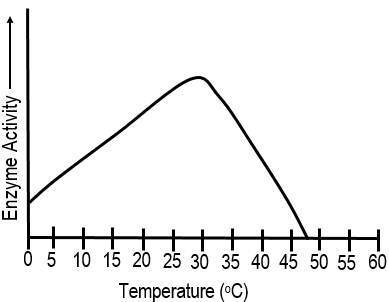
Based on the graph, what is the optimal temperature for this Enzyme?
30 C
35 C
0 C

Catalase is able to break down Hydrogen Peroxide (2H2O2) into Water (H2O) and Oxygen (O2). What is the Substrate?
Catalase
Water (H2O)
Oxygen (O2)
Hydrogen Peroxide (2H2O2)

