
Font size
 Worksheets
Unit 2 Review
Total questions: 105
Worksheet time: 1hrs 6mins
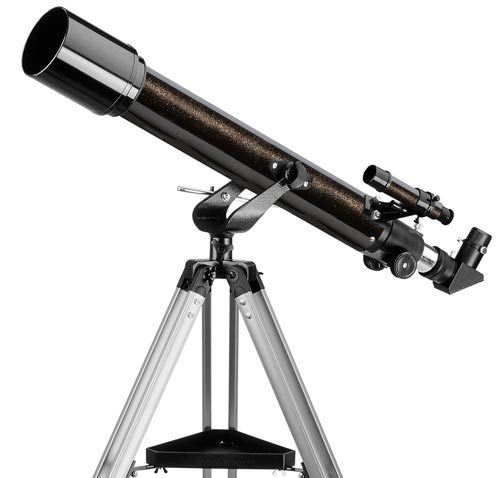
A refracting telescope uses _______ to focus light.
Lenses
Mirrors
Lasers
Water
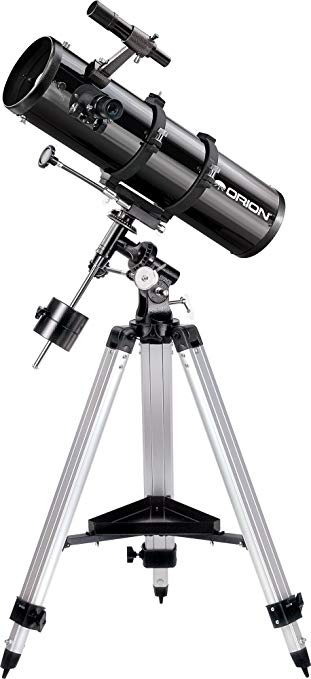
Reflecting telescopes use _______ to focus light.
Lenses
Flat mirrors
Curved Mirrors
A lens and lasers

Which of these light types cannot be captured by a telescope?
Radio waves
Microwaves
Ultraviolet
All of them can be captured


Modern telescopes don't use film to capture images, instead they use:
CCDs
USBs
HDDs
CD-ROMs

Shortest wavelength, highest frequency wave
UV
Radio
Microwave
Gamma
The main advantage of using orbital observatories like the Hubble Space Telescope is that __________.
they are easier to use than land-based telescopes.
they are cheaper to build than land-based telescopes.
they can look anywhere in the universe at any time.
they avoid the distortion and absorption of electromagnetic waves by the atmosphere.
The interpretation of patterns and brightness of waves of light.
Law of matter
Spectroscopy
Law of Light
Astronomy
Which reaches the surface of Earth easily?
X-ray
Gamma ray
Infrared
Radio wave
Which of the following has the longest wavelength?
yellow
orange
violet
red
Which of the following has the largest frequency?
yellow
orange
violet
red
Chandra collects which of the following wavelengths of light?
visible light
X-ray
Radio waves
Gamma rays
Waves transfer matter
True
False
Waves transfer energy
True
False
Light pollution is a concern for astronomers
True
False
X-rays have longer wavelengths than gamma rays
True
False
Which wavelength of light is responsible for your sunburn?
Ultraviolet
Visible
Infrared
X-Ray
A twinkling star is caused by turbulent air flow in the Earth's atmosphere
True
False
Spectral lines are considered the ______ of an astronomical object.
brain
strength
fingerprint
birth
The James Webb Space Telescope collects ______ light.
visible
infrared
ultraviolet
microwave
What are some disadvantages refracting telescopes?
expensive
large lens can be deformed by its own weight.
flaws in glass
chromatic aberration
What are some of the characteristics of a good location for building a telescope?
Calm air
Clear skies (few clouds for most of the year)
Dark skies (far from cities)
Dry
A star moving away from the Earth would appear to be...
red shifted.
blue shifted.
A galaxy moving toward the Earth would appear to be...
red shifted.
blue shifted.
When an electron "drops down" to a lower energy orbit around an atom, it emits a ________.
proton
neutron
electron
photon
When you look at a galaxy that is 2 billion light years away, you see the galaxy as it was ___________ years ago.
2 billion
2 million
zero
20 billion
Modern telescopes are reflecting because: (Choose all that apply)
Lenses are difficult to manufacture
Lenses are heavy and fragile
lenses absorb light that passes through them
Lenses require only 1 perfect surface

One of the issues created by the air surrounding us is:
Interferometry
Reflection
Interference
Atmospheric blurring
What are disadvantages of refracting telescopes (choose all)
images are wrong color
images are more blurry
gravity can distort the lens
images may be too big
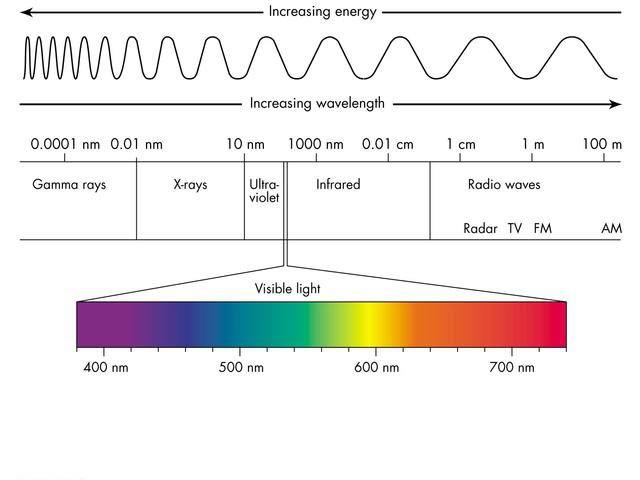
What is the correct order of the visible light spectrum?
Red, yellow, orange, blue, violet, indigo
Violet, purple, indigo, blue, green, yellow, orange
Green, yellow, blue, indigo, red, orange,
Red, orange, yellow, green, blue, indigo, violet
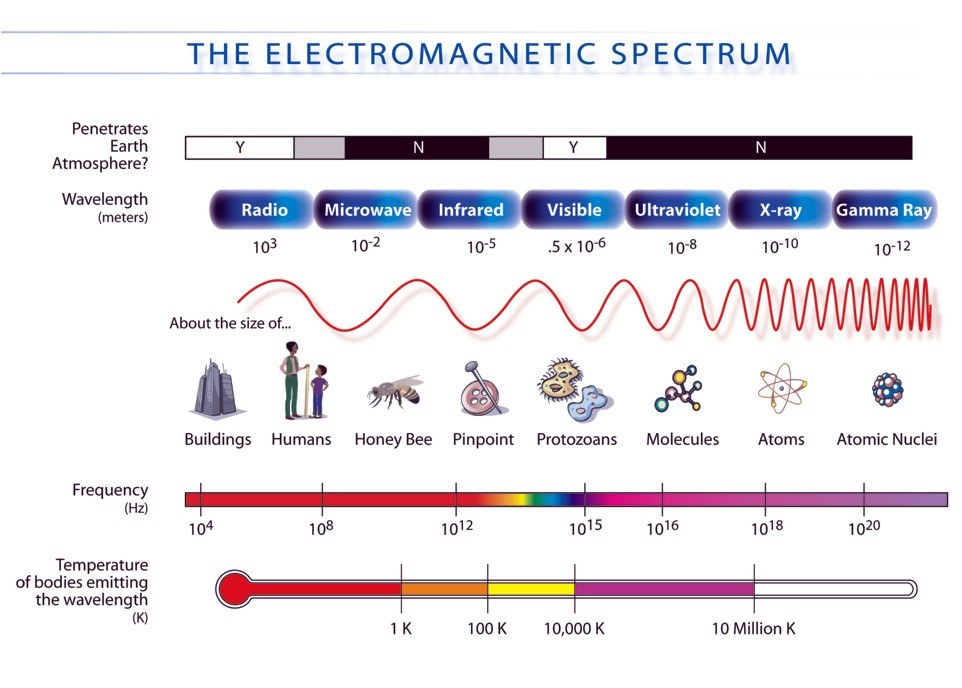
What wave has the longest wavelength and lowest energy?
Gamma rays
Infrared
Radio
Visible light
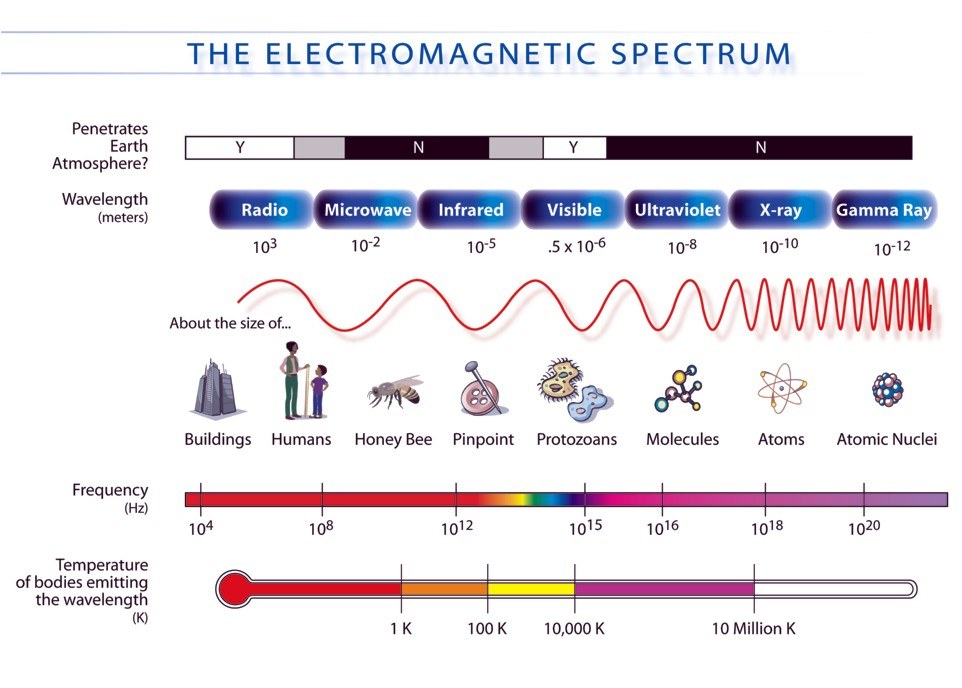
An example of a wave with a short wavelength and high energy is a
Gamma Ray
Microwave
Visible light wave
Infrared wave
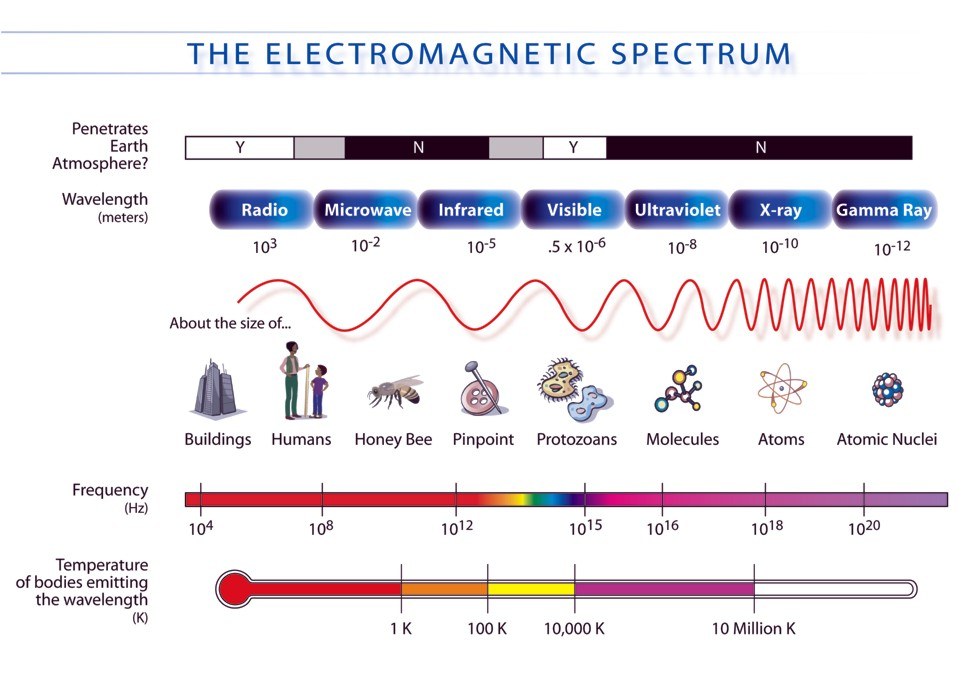
What kind of electromagnetic radiation do we feel as heat?
Gamma rays
Visible light waves
Infrared waves
X rays
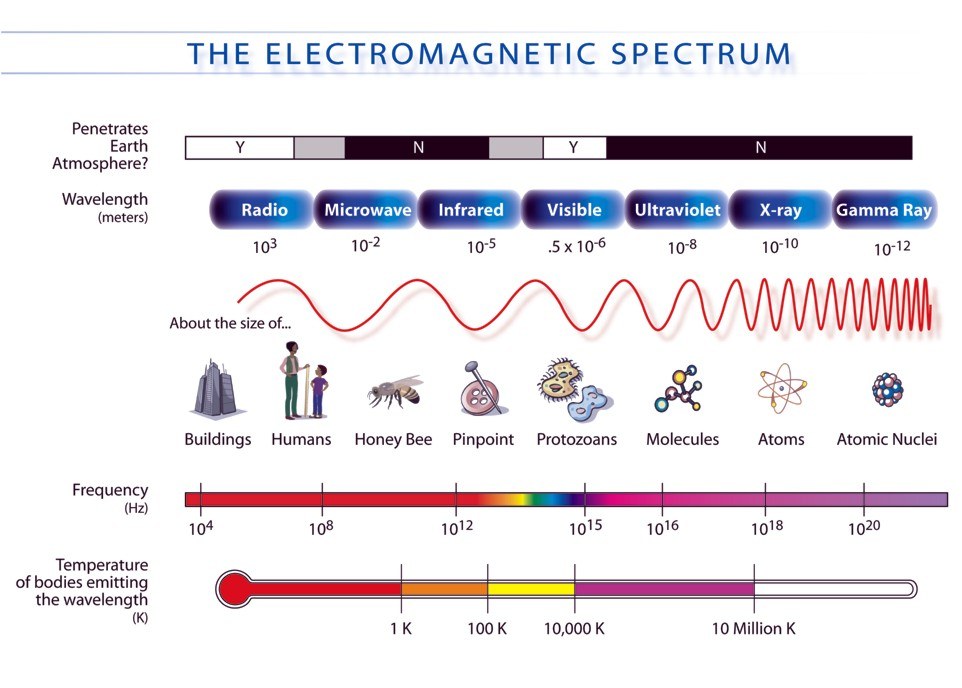
Which of the following electromagnetic waves do we use to heat our food and for cellular phones?
Radio Waves
Microwaves
Visible Light
Gamma Rays
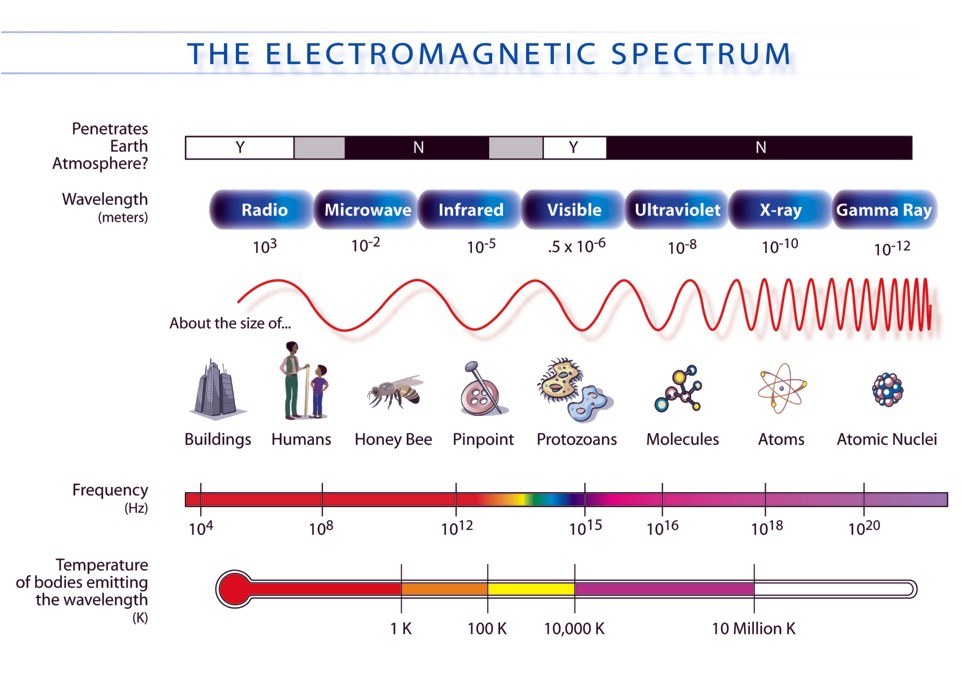
Which electromagnetic waves help doctors detect broken bones inside your body?
gamma rays
x-rays
ultraviolet rays
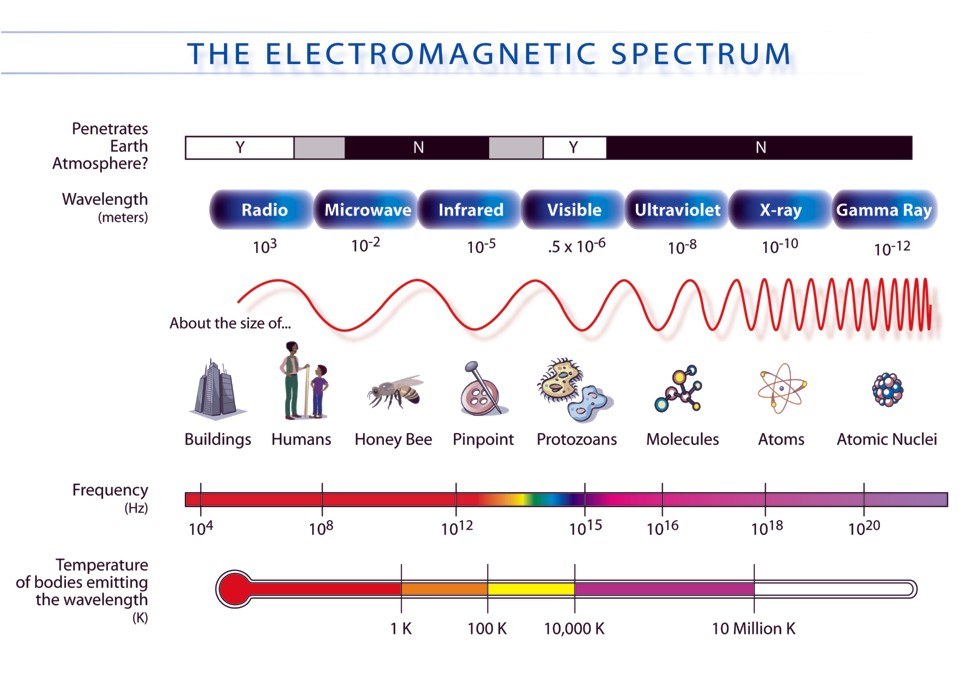
How much of the electromagnetic spectrum is made up of visible light?
only a small portion
a very large portion
about half
When you put light through a prism it separates into different colors called a
spasm
special
spectrum
spork
The distance from the top of one wave to the top of the next is
wavelength
wash line
frequency
amplitude

Only waves the eye can detect
UV
Microwave
Visible Light
Infrared
All electromagnetic waves travel at the same speed in the same medium.
true
false
3 m/s
spectrum
Particles of light are called photons.
true
false

Telescopes are only able to detect visible light.
True
False
Which of these improve the image quality of a telescope?
Decreasing the size of the aperture
Increasing the size of the aperture
Placing the telescope higher up in the atmosphere
Placing the telescope in space
Decreasing light pollution
X-rays are absorbed by the atmosphere. Where is the best location for an x-ray telescope?
On top of a mountain
At sea level
In space
Underground

What is the time taken for the light to travel between the Sun and Earth?
2 minutes
4 minutes
8 minutes
12 minutes
Why do we use light years and astronomical units to measure distances in space?
Scientists want to sound smart.
Hubble discovered these units and wanted to use them.
Space is too small to use km, it wouldn't make sense.
Space is too big, vast, enormous to use traditional units, like miles or kilometres.
How long is an Astronomical Unit?
3.0x10⁸ miles
93,000,000 miles
3 miles
8 miles
Which process produced Star’s energy?
combustion
decomposition
nuclear fission
nuclear fusion
What term below is defined as the process of linking several telescopes together so they can function as one telescope?
Hubble Space Telescope
Interferometry
Refracting Telescope
Reflecting Telescope

Which of these is a process that is unique to radio telescopes?
Spectrometry
Inferferometry
Photometry
Photography
It looks like a W or M depending on the time of the year.
Cassioppeia
Casioppeia
Cassiopeia
Casopeia
There are _____ constellations named by early astronomers.
78
88
68
98


These constellations circle the North Star and never appear to go below the horizon.
Circumpolar Constellations
Northern Constellations
Southern Constellations
Zodiac Constellations
These constellations lie on the ecliptic and for about month, the sun hides one of the constellation.
Circumpolar Constellations
Northern Constellations
Southern Constellations
Zodiac Constellations

Which of the following instrument is used to analyze and view the stars and constellations?
Microscope
Telescope
Binoculars
If you are located at the North Pole, where will you see the Polaris?
Overhead
Just above the horizon
Around 45° from the horizon
Polaris will not be seen in the North Pole
Why are some constellations not seen in certain months?
Because the earth revolves around the sun.
Because the brightness of the sun outshines their visibility.
Because of the gravity that affects the rotation and revolution of the earth.
Because of the tidal waves attracting each other, creating a huge tsunami that washed out the constellation.
Why does Polaris not seem to move during the night?
Because it is located directly above the North Pole
Because it is fixed in the sky
Because Ursa Minor does not move
Because it revolves around the Sun with Earth
The Big Dipper is an asterism of what constellation?
Cassiopeia
Pegasus
Centaurus
Ursa Major
Asterisms contain constellations, but constellations don't contain asterisms.
True
False

1. Which type of constellation appears to move in circle around the night sky and are always above the horizon?
Zodiacal
Circumpolar
Seasonal
Stars are still in the sky during the day, we just can't see them because of the sun's light.
True
False
We see different stars in the sky depending on the season.
True
False
If you live in the Southern Hemisphere, at what time of year can you see Polaris, the north star? Choose the best answer.
People in the Northern Hemisphere see all of the same constellations as the people in the Southern Hemisphere.
True
False

The slow process traces out a cone in the sky over many years which causes the North Star to change every 13000 years. It has a small affect on climate change.
eccentricity
precession
nutation
perihelion
They lie on either side of the celestial equator which is the projection of the Earths equator to the sky.
North Circumpolar Constellation
South Circumpolar Constellation
Equation Constellation
Equatorial Constellation
The Circumpolar Constellations travel around
Polaris
the sky
the big dipper
the earth
What do you call constellations that are only visible during certain seasons?
The Major Constellations
Northern Constellations
Southern Constellations
Seasonal Constellations
What do you call constellations that can be seen year round?
Seasonal Constellations
Circumpolar Constellations
Minor Constellations
Draco's Constellations
The Big Dipper is a(n) __.
constellation
asterism
both
neither



