
 Worksheets
Ultimate Practice Quiz for Earth Science
Total questions: 100
Worksheet time: 50mins
Hubble's Law, which states that the universe is expanding, provides evidence for which scientific theory?
Steady State Theory
Theory of General Relativity
Bigbang Theory
Nebular Theory
Which planets are known as the gas giants?
Jupiter and Saturn
Earth and Mars
Mercury and Venus
Venus and Pluto
What is a nebula?
A cloud of gas and dust in space.
A type of black hole.
A planet in our solar system.
A dense cluster of stars.
Law can mathematically describe a phenomenon.
True
False
What scientific and cultural factors influenced the acceptance of the heliocentric model over the geocentric model?
Religious beliefs and political pressure
Philosophical theories and artistic trends
Geographical location and planetary alignment
Observational evidence and mathematical calculations
Compare and contrast the Big Bang Theory and the Steady State Theory in the context of the origin and evolution of the universe. How do these theories differ in their explanations of cosmic microwave background radiation, the expansion of the universe, and the abundance of light elements?
Both theories propose a steady-state universe.
Both theories support the idea of a sudden explosive origin.
The Steady State Theory suggests a continuous expansion of the universe.
The Big Bang Theory explains the presence of cosmic microwave background radiation.
Considering the unique conditions within our solar system, what factors contribute to the existence of life specifically on Earth?
A thick layer of ice on the surface
The presence of liquid water on Earth's surface.
The constant influx of new life forms from distant galaxies.
The absence of any other celestial bodies in our solar system.
What does the Steady State Theory propose regarding the universe's origin and evolution?
The universe has always existed in its current state and neither expands nor contracts.
The universe originated from a Big Bang event and is continuously expanding.
The universe is in a state of constant expansion but has a finite beginning.
The universe will eventually contract and collapse in a 'Big Crunch'
Steady State Theory is proposed by the following figures except:
Hermann Bondi
Fred Hoyle
Thomas Gold
Edwin Hubble
Which of the following describes the nitrogen cycle?
Describes the conversion of atmospheric nitrogen into various forms, including ammonia and nitrate, which are essential for plant growth
A process by which carbon atoms are exchanged and recycled between the atmosphere, biosphere, geosphere, and hydrosphere, primarily through photosynthesis, respiration, and decomposition.
It involves the continuous movement of oxygen between the atmosphere, biosphere, and geosphere, driven by photosynthesis, respiration, and chemical reactions.
It is the continuous movement of water between the atmosphere, surface waters (rivers, oceans, lakes), the geosphere (groundwater), and the biosphere (plants and animals).
The decomposition of organic matter contributes to the cycling of which element?
Nitrogen
Phosphorus
Carbon
All of the above
The water cycle includes all the following processes EXCEPT:
Transpiration
Combustion
Precipitation
Condensation
How might the construction of a revetment project along Silang's river systems negatively impact groundwater recharge?
By increasing the surface runoff, which decreases the amount of water that infiltrates into the soil.
By enhancing infiltration rates, leading to excessive groundwater levels.
By reducing the rate of evaporation, thereby limiting water availability for recharge.
By increasing soil erosion, which enhances the porosity of the soil for better infiltration.
If human activities continue to increase carbon dioxide emissions, what could be a potential long-term impact on the Earth's climate system?
A stabilization of global temperatures due to increased carbon absorption by plants.
A gradual decrease in global temperatures as the carbon cycle adjusts.
An acceleration of global warming, leading to more extreme weather patterns.
A reduction in atmospheric carbon dioxide as more is sequestered in the oceans.
What is not considered as a mineral?
Diamond
Gold
Pearl
Calcite
Despite both being composed of carbon atoms, diamond and graphite differ significantly in their atomic structure, physical properties, and practical applications. What term best describes minerals like diamond and graphite that have the same chemical composition but different crystal structures?
Polymorph
Polymerase
Metamorphic
Metal
Sedimentary rocks are made out of sediments that are compacted and cemented. What is the process of turning sediments into sedimentary rocks called?
Lithosphericification
Lithification
Litosfication
Sublimation
What are the two most common elements found on Earth's surface?
Sodium and Chlorine
Carbon and Silicon
Iron and Nickel
Silicon and Oxygen
What type of rock forms from the cooling and solidification of magma or lava?
Sedimentary
Metamorphic
Igneous
Fossilized
How does the rate of crystallization in a molten substance change with varying rates of cooling?
Slower cooling generally leads to larger crystals.
Slower cooling results in fewer crystals.
Faster cooling typically results in larger crystals.
Rate of cooling does not affect crystallization.
Which of the following is not a characteristic of a mineral?
Naturally occurring
Organic composition
Inorganic
Definite chemical composition
Which of the following is an example of Oxide?
Quartz (SiO3)
Pyrite (FeS2)
Calcite (CaCO3)
Magnetite (Fe3O4)
Why does fluorite not share the same level of popularity in the jewelry industry, and what factors contribute to these contrasting roles?
Fluorite's rarity compared to Quartz makes it less suitable for jewelry.
Fluorite's lower hardness compared to Quartz affects its durability in jewelry.
Quartz's unique optical properties make it more attractive for jewelry use.
Fluorite's cost of extraction and processing is higher than that of Quartz.
What does the Big Bang Theory propose?
The universe has always existed
The universe began as a point of infinite density and temperature
Stars are the first objects formed in the universe
The universe is shrinking over time
Which discovery provided strong evidence for the Big Bang Theory?
Redshift of galaxies
Cosmic microwave background radiation
Abundance of hydrogen in stars
Presence of dark matter
Who first proposed that the universe is expanding?
Edwin Hubble
Isaac Newton
Albert Einstein
Fred Hoyle
What is the Steady State Theory's main argument?
The universe had a beginning but will never end
New matter is continuously created as the universe expands
The universe collapses and forms again in cycles
The universe was formed by a large explosion
What is the approximate age of the universe according to the Big Bang Theory?
5 billion years
13.8 billion years
20 billion years
100 billion years
Which scientist's work on general relativity influenced the development of the Big Bang Theory?
Georges Lemaître
Niels Bohr
Charles Darwin
Galileo Galilei
What phenomenon supports the idea that galaxies are moving away from each other?
Blue shift
Redshift
Dark energy
Nebula formation
What event is hypothesized to have triggered the Big Bang?
A collision of galaxies
The collapse of a previous universe
Expansion of a black hole
A supernova explosion
Which element was most abundantly produced during the first few minutes after the Big Bang?
Oxygen
Nitrogen
Hydrogen
Iron
What is the 'cosmic microwave background radiation'?
Light from distant stars
The leftover energy from the Big Bang
Heat produced by black holes
The effect of redshift on galaxy motion
What is the main process by which carbon enters the atmosphere?
Photosynthesis
Respiration
Combustion of fossil fuels
Nitrogen fixation
Which of the following is a key component of the water cycle?
Nitrogen fixation
Erosion
Precipitation
Photosynthesis
Nitrogen fixation is primarily carried out by:
Plants
Animals
Bacteria
Fungi
What drives the water cycle?
Solar energy
Earth's rotation
Magnetic fields
Volcanic activity
How do plants contribute to the oxygen cycle?
By taking in oxygen during photosynthesis
By releasing oxygen during photosynthesis
By taking in nitrogen and converting it to oxygen
By converting carbon dioxide into oxygen
Which of the following processes releases carbon dioxide back into the atmosphere?
Nitrification
Combustion
Decomposition
Both B and C
Phosphorus in ecosystems mainly comes from:
The atmosphere
Weathering of rocks
Combustion of fossil fuels
Photosynthesis
In the nitrogen cycle, nitrification is the process of converting:
Nitrogen gas to ammonia
Ammonia to nitrites
Nitrites to nitrogen gas
Ammonia to nitrogen gas
Which human activity has significantly altered the carbon cycle?
Deforestation
Mining
Agriculture
Urbanization
Why is the phosphorus cycle slower than the carbon and nitrogen cycles?
Phosphorus is only found in the atmosphere
It lacks a gaseous phase
Plants do not absorb phosphorus
Phosphorus is stored in oceans
Which of the following is NOT a characteristic of a mineral?
Solid state
Organic origin
Crystalline structure
Specific chemical composition
The hardness of a mineral is measured using the:
Richter scale
Mohs scale
Streak test
Cleavage test
Which mineral property is determined by the color of its powdered form?
Luster
Streak
Hardness
Cleavage
What type of rock forms from cooling magma?
Sedimentary
Igneous
Metamorphic
Fossilized
Which process is responsible for the formation of sedimentary rocks?
Cooling and solidification
Compaction and cementation
Melting and recrystallization
Erosion and deposition
What type of rock is marble classified as?
Sedimentary
Igneous
Metamorphic
Fossilized
Quartz is an example of a:
Silicate mineral
Carbonate mineral
Oxide mineral
Sulfide mineral
What is the process called when metamorphic rock forms?
Weathering
Metamorphism
Erosion
Deposition
Which of the following is a clastic sedimentary rock?
Limestone
Sandstone
Basalt
Slate
Which rock type is most likely to contain fossils?
Igneous
Sedimentary
Metamorphic
Volcanic
Which layer of the Earth contains the tectonic plates?
Atmosphere
Lithosphere
Hydrosphere
Asthenosphere
The atmosphere is composed mainly of which gas?
Oxygen
Carbon dioxide
Nitrogen
Hydrogen
What is the primary source of water in the hydrosphere?
Glaciers
Oceans
Lakes
Rivers
What process leads to the movement of tectonic plates?
Solar radiation
Convection currents in the mantle
Erosion
Ocean currents
The ozone layer is primarily located in which part of the atmosphere?
Troposphere
Stratosphere
Mesosphere
Which of the following is an example of mechanical weathering?
Hydrolysis
Carbonation
Frost wedging
Oxidation
What type of erosion occurs when wind transports and deposits sediment?
Fluvial erosion
Aeolian erosion
Glacial erosion
Which process is primarily responsible for the breakdown of rocks due to temperature changes?
Exfoliation
Salt wedging
Abrasion
What is the term for the downhill movement of weathered materials under the influence of gravity?
Erosion
Deposition
Mass wasting
Imagine a region where seabed quarrying has increased. What long-term effects might this have on coastal erosion and local ecosystems?
It will increase deposition rates and build up beaches.
It could lead to increased coastal erosion and loss of habitats.
It will have no effect on erosion or ecosystems.
It will only affect underwater ecosystems without impacting the coast.
How does the process of frost wedging contribute to the formation of talus slopes in mountainous regions?
By depositing fine sediment at the base of mountains.
By creating underground caves through chemical reactions.
By breaking rocks into angular fragments that accumulate at the base.
By pushing large boulders downhill.
Compare the roles of weathering and erosion in shaping a landscape. Why is it important to distinguish between the two processes?
Weathering moves material, while erosion breaks it down.
Both weathering and erosion break down rocks and transport them.
Weathering breaks down material, while erosion transports it.
Erosion forms rocks, while weathering transports them.
If a coastal area experiences high rates of wind erosion and deposition, what types of landforms would you expect to find there?
River deltas and floodplains
Sand dunes and barrier islands
Glacial valleys and moraines
Mountain ranges and talus slopes
Which of the following is an example of mechanical weathering?
Hydrolysis
Frost wedging
Carbonation
Oxidation
What type of erosion occurs when wind transports and deposits sediment?
Fluvial erosion
Aeolian erosion
Glacial erosion
Mass wasting
Which process is primarily responsible for the breakdown of rocks due to temperature changes?
Exfoliation
Frost wedging
Salt wedging
Abrasion
What is the term for the downhill movement of weathered materials under the influence of gravity?
Erosion
Weathering
Deposition
Mass wasting
Which of the following processes is considered part of chemical weathering?
Abrasion
Salt wedging
Carbonation
Creep
What kind of rock is most likely to dissolve due to solution weathering?
Granite
Limestone
Basalt
Sandstone
Which type of mass wasting occurs when large amounts of soil and rock move rapidly down a slope, often triggered by rainfall?
Slump
Rockfall
Mudflow
Creep
What natural agent is most responsible for the formation of sand dunes?
Rivers
Glaciers
Wind
Tides
In which environment would you expect salt wedging to be most effective?
Tropical rainforest
Coastal deserts
Glacial valleys
Temperate forests
Which process results in the gradual breakdown of rocks due to living organisms such as plant roots and burrowing animals?
Biological weathering
Chemical weathering
Mechanical weathering
Mass wasting
Which of the following is a key agent in mechanical weathering?
Acid rain
Wind
Rust
Lichen
What type of weathering involves the breakdown of rocks through chemical reactions?
Biological weathering
Mechanical weathering
Chemical weathering
Physical weathering
Which of the following statements about mass wasting is true?
It is a form of chemical weathering.
It is the movement of material downslope due to gravity.
It involves the transportation of materials by wind or water.
It only occurs during earthquakes.
What is the process by which rocks are physically broken into smaller pieces without changing their chemical composition?
Erosion
Mechanical weathering
Chemical weathering
Deposition
Which of the following is a result of biological weathering?
The expansion of rock due to freezing water
Rust formation on iron-rich rocks
Plant roots breaking rocks apart
Water dissolving minerals from limestone
The movement of rock fragments by water, wind, ice, or gravity is called:
Weathering
Deposition
Erosion
Chemical reaction
Which of the following is an example of chemical weathering?
Water freezing and expanding in cracks
Carbon dioxide reacting with minerals to form carbonic acid
Rocks falling from a cliff
Sand abrasion by wind
What landform is typically created by fluvial deposition?
Mountain peak
River delta
Sand dune
Glacier
Which type of erosion is primarily responsible for shaping glacial valleys?
Fluvial erosion
Aeolian erosion
Glacial erosion
Mass wasting
What is the term for the buildup of sediment in new locations after it has been transported?
Erosion
Weathering
Deposition
Creep
Evaluate the impact of human activities such as construction and deforestation on mass wasting events. How might these activities increase the likelihood of landslides
They increase vegetation, stabilizing the slope.
They reduce soil erosion and improve slope stability.
They remove vegetation and disturb soil, making slopes more unstable.
They have no impact on mass wasting events.
If a coastal area experiences high rates of wind erosion and deposition, what types of landforms would you expect to find there?
River deltas and floodplains
Sand dunes and barrier islands
Glacial valleys and moraines
Mountain ranges and talus slopes
Compare the roles of weathering and erosion in shaping a landscape. Why is it important to distinguish between the two processes?
Weathering moves material, while erosion breaks it down.
Both weathering and erosion break down rocks and transport them.
Weathering breaks down material, while erosion transports it.
Erosion forms rocks, while weathering transports them.
How does the process of frost wedging contribute to the formation of talus slopes in mountainous regions?
By depositing fine sediment at the base of mountains.
By creating underground caves through chemical reactions.
By breaking rocks into angular fragments that accumulate at the base.
By pushing large boulders downhill.
Imagine a region where seabed quarrying has increased. What long-term effects might this have on coastal erosion and local ecosystems?
It will increase deposition rates and build up beaches.
It could lead to increased coastal erosion and loss of habitats.
It will have no effect on erosion or ecosystems.
It will only affect underwater ecosystems without impacting the coast.
A process that happens on the Earth's surface that makes the surface wear away. This statement related to
Endogenic process
Exogenic process
A process that is originated from the interior of the Earth, forms and changes the earth's surface. This statement related to
Endogenic process
Exogenic process
It refers to an endogenic process where magma are released through the process of eruption.
Tsunami
Tectonic Plates Movement
Volcanic Eruption
Mass Wasting
• Happen on Earth's surface
• EXamples are weathering, erosion, mass and land depletion, transport and sedimentation
Process above is referring to ....
Endogenic
Endegonic
Exogenic
Exegonic

Diagram above shows an exogenic process known as ...
Weathering
Erosion
Mass wasting
Transport and sedimentation

Diagram shows a process of rock fragmentation and decomposition. It is known as
Erosion
Weathering
Mass and land depletion
Transport and sedimentation

Diagram refers to..
strike-slip fold
dip-slip fold
anticline fold
syncline fold
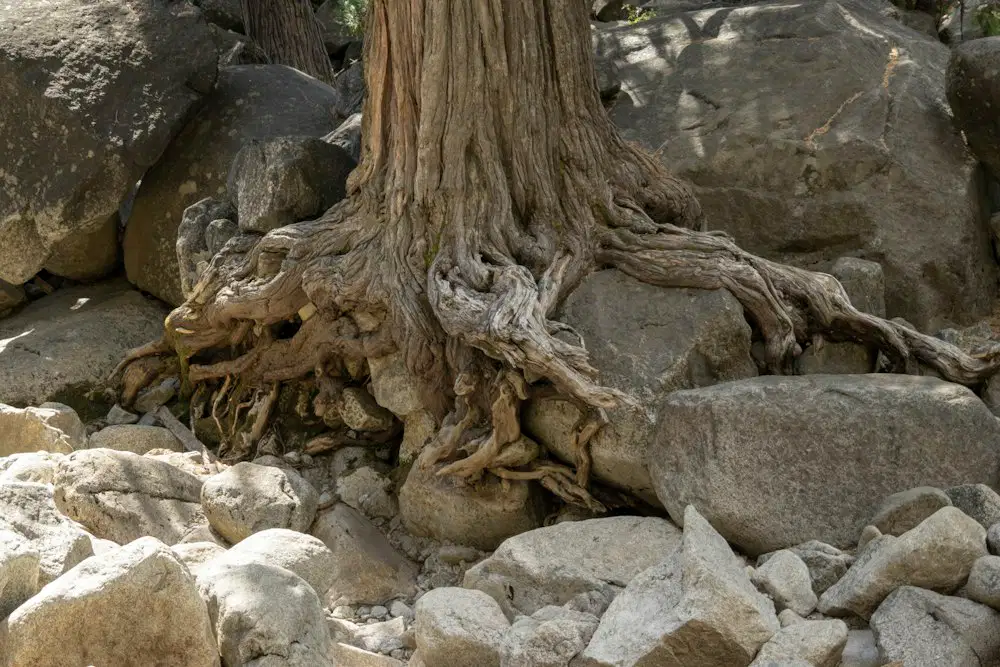
What kind of weathering is happening in the diagram?
Mechanical
Biological
Chemical
Differential
Which of the following is the slowest form of mass wasting?
Creep
Slump
Rock Fall
Landslide

