
 Worksheets
📚RMS: HW12 (9.18)
Total questions: 55
Worksheet time: 34mins

A student stirs together salt crystals and sugar crystals. The crystals are the same size and color. Together the salt and sugar make a _____.
solution
compound
mixture
molecule

Students heated a white solid. The solid produced a flame during the heating process. The product cooled into a black solid. which statement best classifies this change?
The change was only physical because the heat produced a color change.
The change was only physical because the properties of the substance were permanently changed.
The change was only chemical because the substance remained in its original state.
The change was only chemical because a flame was produced.

Particles in a substance are widely separated from each other and move independently from place to place. The substance could be a ____.
solid only.
gas only.
gas or sold only.
gas, liquid, or solid.


The mass number of an element that has
18 protons, 18 electrons, and 19 neutrons is _____.


Which statement best describes an element?
any combination of two or more atoms of different types
a pure substance made up of only one kind of atom
a substance containing only carbon atoms
any kind of crystal

An atom with atomic number 6 would have how many protons?
6
12
3
cannot be determined

Classify:
Sulfur, S
metal
non-metal
metalloid

An element can be identified by its unique number of ____.
ions
electrons
protons
neutrons

Most of the elements on the Periodic Table are classified as?
metalloids
nonmetals
metals

Is Helium (He) metal, non-metal, or metalloid?
metal
non-metal
metalloid

What is the atomic number for an element with 3 protons?
2
1
3
6

In the modern periodic table, elements are arranged by:
atomic mass
atomic number
valence electrons
number of isotopes

If an atom has 10 protons, 10 neutrons, and 10 electrons, what is the mass of the atom?
10
20
30

Electrons are___________
Extremely small even in comparison to protons.
part of the nuclues.
Super Positive, like cheerleaders!
very large

An atoms overall charge is
positive
depends on its mood
neutral
negative

Isotopes are elements with a different amount of ___.


How many elements are in this chemical formula?
HCl
1
2
3
4

What does the subscript in a chemical formula tell you?
How many molecules are present
How many atoms are present
How many elements are present
How many neutrons are present

Identify the shaded region.
Metalloids

Identify the shaded region.
Metalloids

The atoms along the staircase are called ___.


The horizontal row on the periodic table is
called a ___.

The vertical (up and down) columns in the Periodic Table are called ___.
groups
towers
periods
atomic numbers

Who is the most important person responsible for your academic success?

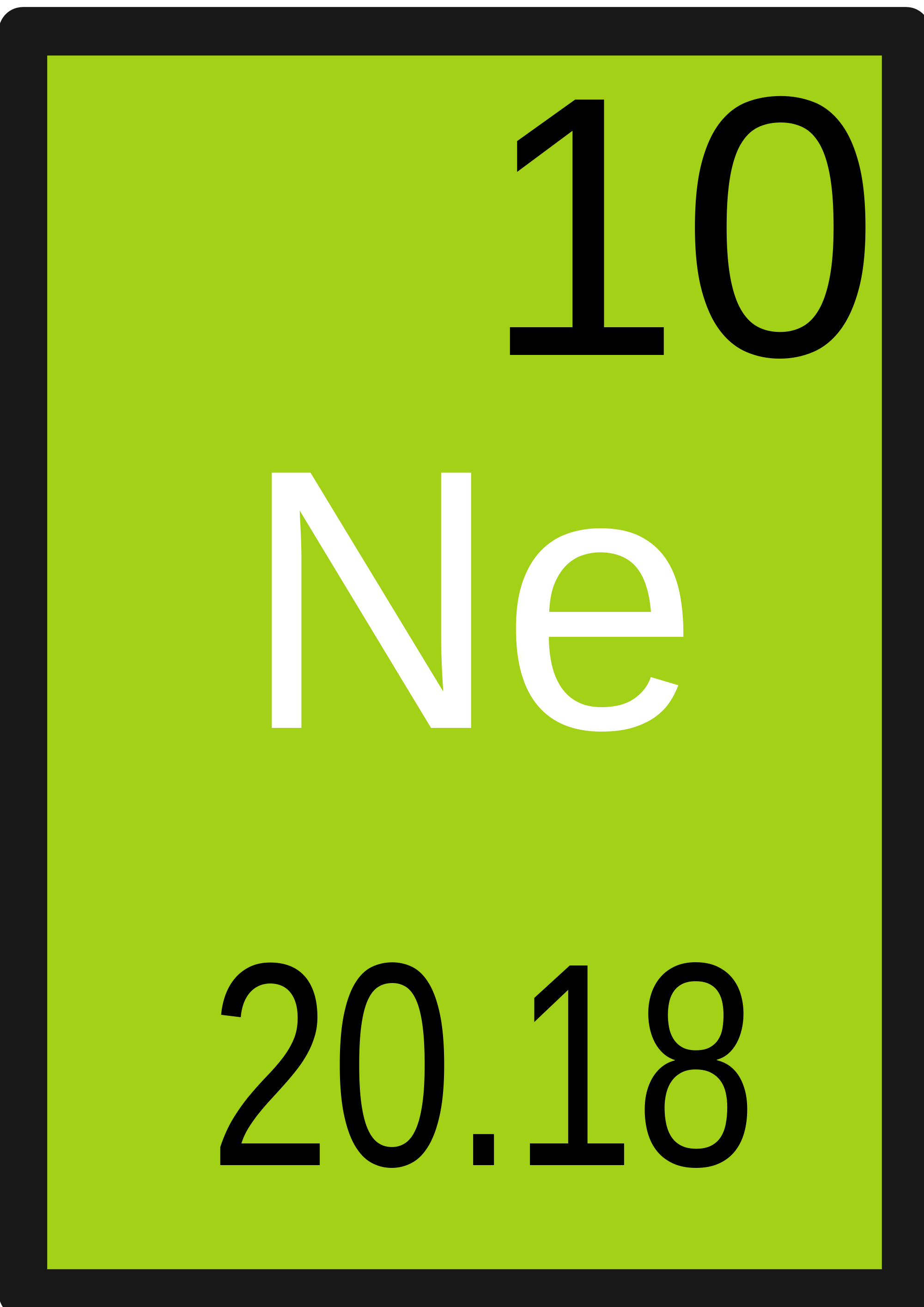
What is the mass number of Neon?
10
20.18
10.18
30.18

Describe an Electron Cloud.
the mist outside of an atom
home of the protons
where electrons are located
nucleus

At the center of every atom lies a small, dense ______ that is positively charged.
neutron
cloud
nucleus
orbital

Mass Number + Atomic Number= Neutrons
Mass Number x Atomic Number = Neutrons
Mass Number - Atomic Number = Neutrons
Mass Number + Number of Protons = Neutron

Match the following.
Subatomic particle with +1 Charge.
Proton
Subatomic particle with -1 Charge.
Electron
Subatomic particle with 0 Charge.
Neutron
Center Region of Atom, Positively Charged.
Nucleus
Outer Region of Atom, Negatively Charged.
Electron Cloud
Match the following.
Center Region of Atom, Positively Charged.
Nucleus
Outer Region of Atom, Negatively Charged.
Electron Cloud
The Number of Protons.
Atomic Number
The amount of Nucleons.
Mass Number
Occurs with different amounts of Neutrons.
Isotope
Match the following.
Class of Element, Shiny, Ductile, Malleable, and Great Electrical Conductor.
Metal
Class of Element, Dull, Brittle and Poor Electrical Conductor.
Non-Metal
Class of Element, Properties in Between M+ and NM-, Semi-Conductors.
Metalloid
Small number in chemical formula, indicates the number of atoms present for the element it follows.
Subscript
Large number in FRONT of chemical formula, used as a multiplier for the ENTIRE compound.
Coefficient

Identify each element as Metal (M+), Non-Metal (NM-) or Metalloid (ML).
B
ML
Ca
M+
He
NM-
Identify each element as Metal (M+), Non-Metal (NM-) or Metalloid (ML).
Si
ML
H
NM-
K
M+
Identify each element as Metal (M+), Non-Metal (NM-) or Metalloid (ML).
O
NM-
Al
M+
Po
ML
Match each Element with its correct atomic number.
Ne
10
Na
11
N
7
Ti
22
F
9
Match each Element with its correct atomic number.
Rh
45
Xe
54
Mg
12
He
2
Kr
36

Determine the number of neutrons for this element. Use the mass number (round to the nearest whole number), minus the atomic number.
17
18
35.453
35

Determine the number of neutrons for this element. Use the mass number (round to the nearest whole number), minus the atomic number.
1
0
1.0079
2

Determine the number of neutrons for this element. Use the mass number (round to the nearest whole number), minus the atomic number.
136
87
223
223.020

Determine the number of neutrons for this element. Use the mass number (round to the nearest whole number), minus the atomic number.
48
16
32
32.066

Determine the number of neutrons for this element. Use the mass number (round to the nearest whole number), minus the atomic number.
4
3
7
6.941
Determine the number of electrons for these neutral elements.

6

54

22

8

7
Determine the number of electrons for these neutral elements.

1

16

20

14

13


If a sulfur atom has 16 protons, 16 electrons, and 16 neutrons,
its mass number is ____.

What is the difference between Neon-20 and Neon-22?
They have different numbers of electrons.
They have different numbers of neutrons.
They have different numbers of protons.
No difference.

