wayground logo

Free Printable Worksheets

Font size

S
M
L
XL
Worksheets

TYPES OF CHEMICAL REACTION AND FORMULAE OF COMPOUNDS

Total questions: 114

Worksheet time: 2hrs 48mins
Name
Class
Date
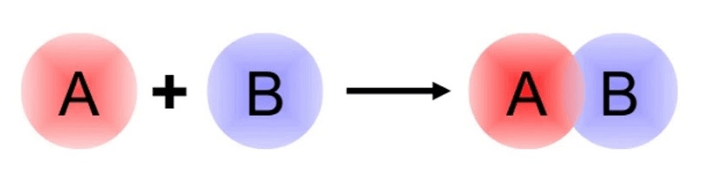
1.

What is the type of reaction shown above?

a)

Synthesis

b)

Double Replacement

2.
What type a reaction is taking place in this picture?
a)
Single Replacement
b)
Double Replacement
3.
A decomposition reaction can be represented as _____________________.
a)
AB  → A + B
b)
A + B → AB
4.
What is the product in the following chemical equation? 
H2 + O2   -->  
a)
H2 + O2
b)
H2O
5.
Which of the following is the general formula for a Single replacement reaction?
a)
AB → A + B
b)
AB + C → AC + B
6.
Which type of reaction has the following general pattern?
ABC → A + B + C
a)
decomposition
b)

synthesis

7.
This pictures simulates what type of reaction?
a)
Single Replacement
b)
Double Replacement
8.
What does (l) mean when seen in a reaction equation?
a)
Light
b)
Liquid
c)
Laugh
d)
Long
9.

One element trades places with another element in a compound.

a)

Single Replacement

b)

Double Replacement

10.

AB + CD --> CB + AD

a)

Synthesis

b)

Double Replacement

11.
What are the reactants in the chemical equation pictured?
a)
CH4 and O2
b)
CO2 and H2O
12.
The red numbers in the image below represent ________
a)
subscripts
b)
coefficients
c)
I don't know, and don't want to try
13.
Is this balanced?...
Fe + S --> FeS
a)
YES!
b)
NO!
14.
Is this balanced?...
Al + O2 --> 2Al2O3
a)
Yes!
b)
NO!
15.

The small blue numbers in the image represent ________

a)
subscripts
b)
coefficients
c)
I don't know, and don't want to try
16.

compound ---> element + element

a)

synthesis

b)

decomposition

c)

combustion

d)

single replacement

17.

What reaction has the following general formula:

A + CD --> C + AD

a)

Combination

b)

Decomposition

c)

Single Replacement

d)

Double Replacement

e)

Combustion

18.

What reaction has the following general formula:

A + B --> AB

a)

Combination

b)

Decomposition

c)

Single Replacement

d)

Double Replacement

e)

Combustion

19.

What reaction has the following general formula:

AB + CD --> CB + AD

a)

Combination

b)

Decomposition

c)

Single Replacement

d)

Double Replacement

e)

Combustion

20.

What reaction has the following general formula:
CxHy + O2 >CO2 + H2OC_xH_y\ +\ O_2\ ->CO_{2\ }+\ H_2O  

a)

Combination

b)

Decomposition

c)

Single Replacement

d)

Double Replacement

e)

Combustion

21.

What is the general reaction scheme for a combination reaction?

a)

A + B --> AB

b)

AB --> A + B

c)

A + CD --> C + AD

d)

AB + CD --> CB + AD

e)

CxHy+O2 > CO2+H2OC_xH_y+O_2\ ->\ CO_2+H_2O

22.

What is the general reaction scheme for a decomposition reaction?

a)

A + B --> AB

b)

AB --> A + B

c)

A + CD --> C + AD

d)

AB + CD --> CB + AD

e)

CxHy+O2 > CO2+H2OC_xH_y+O_2\ ->\ CO_2+H_2O

23.

What type of reaction is the following:
BaCl2+2KI > 2KCl + BaI2BaCl_2+2KI\ ->\ 2KCl\ +\ BaI_2  

a)

Combination

b)

Decomposition

c)

Single Replacement

d)

Double Replacement

e)

Combustion

24.

What type of reaction is the following:
C11H24+17O2> 11CO2 + 12H2OC_{11}H_{24}+17O_2->\ 11CO_2\ +\ 12H_2O  

a)

Combination

b)

Decomposition

c)

Single Replacement

d)

Double Replacement

e)

Combustion

25.

What type of reaction is the following:
2KI > 2K + I22KI\ ->\ 2K\ +\ I_2  

a)

Combination

b)

Decomposition

c)

Single Replacement

d)

Double Replacement

e)

Combustion

26.

What type of reaction is the following:
2NaHCO3> Na2CO3+CO2+H2O2NaHCO_3->\ Na_2CO_3+CO_2+H_2O  

a)

Combination

b)

Decomposition

c)

Single Replacement

d)

Double Replacement

e)

Combustion

27.

What type of reaction is the following:
Zn + 2HCl > ZnCl2+H2Zn\ +\ 2HCl\ ->\ ZnCl_2+H_2

a)

Combination

b)

Decomposition

c)

Single Replacement

d)

Double Replacement

e)

Combustion

28.

What type of reaction is the following:
3CuS +2Al > Al2S3+3Cu3CuS\ +2Al\ ->\ Al_2S_3+3Cu

a)

Combination

b)

Decomposition

c)

Single Replacement

d)

Double Replacement

e)

Combustion

29.

What type of reaction is the following:
2C4H10 +13O2 > 8CO2+10H2O2C_4H_{10}\ +13O_2\ ->\ 8CO_2+10H_2O

a)

Combination

b)

Decomposition

c)

Single Replacement

d)

Double Replacement

e)

Combustion

30.

What type of reaction is the following:
Na2S +2HCl > H2S+2NaClNa_2S\ +2HCl\ ->\ H_2S+2NaCl

a)

Combination

b)

Decomposition

c)

Single Replacement

d)

Double Replacement

e)

Combustion

31.

What type of reaction is the following:
Ag3N + 3HBr>3AgBr+H3NAg_3N\ +\ 3HBr->3AgBr+H_3N

a)

Combination

b)

Decomposition

c)

Single Replacement

d)

Double Replacement

e)

Combustion

32.

Identify the following chemical reaction.

3 HBr + 1 Al(OH)3 ----> 3 H­2O + 1 AlBr3

a)

Synthesis (or combination)

b)

Decomposition

c)

Single displacement

d)

Double displacement

33.

Identify the following chemical reaction.

Pb + FeSO4 ----> PbSO4 + Fe

a)

Synthesis (or combination)

b)

Decomposition

c)

Single displacement

d)

Double displacement

34.
Coal contains carbon and other elements. Carbon dioxide forms when coal burns in the presence of oxygen. Which of these is the best evidence that a chemical reaction occurs when coal burns?
a)
The shape of the coal changes
b)
Oxygen is present
c)
A new substance is produced
d)
Coal is made up of more than one element
35.

Which of the following is a compound?

a)

zinc (Zn)

b)

magnesium (Mg)

c)

sodium chloride (NaCl)

d)

potassium (K)

36.

Which of the following is an element?

a)

potassium chloride (KCl)

b)

water (H2O)

c)

carbon (C)

d)

calcium carbonate (CaCO3)

37.
The following is what type of reaction:
PbCl2 + AgNO3 → Pb(NO3)2 + AgCl
a)
Synthesis
b)
Decomposition
c)
Single Replacement
d)
Double Replacement
38.
The following is what type of reaction:
NH3 + HCl  → NH4Cl
a)
Synthesis
b)
Decomposition
c)

Single Replacement

d)

Double Replacement

39.
What is decomposition?
a)
putting substances together
b)
breaking substances apart
c)
element replacing another element in a compoud
d)
burning of a subtance
40.
What type of chemical reaction is this?
Al(OH)3 → Al2O3  + H2O
a)
Decomposition
b)
Combustion
c)
Synthesis
d)
Single Replacement 
41.

In this type of reaction, ions in two compounds switch. 

a)
Synthesis
b)
Combustion
c)
Single Replacement
d)
Double Replacement
42.

Ca + AlCl3 --> CaCl2 + Al

a)
Synthesis
b)
Decomposition
c)

Single Replacement

d)

Double Replacement

43.

In this type of reaction, one element replaces another in a compound.

a)
Synthesis
b)
Combustion
c)
Single Replacement
d)
Double Replacement
44.

In this type of reaction, one reactant turns into several different products.

a)
Decomposition
b)
Synthesis
c)
Combustion
d)
Single Replacement
45.

This reaction always starts with a hydrocarbon that reacts with oxygen and produces carbon dioxide and water. 

a)
Decomposition
b)
Synthesis
c)
Combustion
d)
Single Replacement
46.
Two Reactants and One Product
a)
Decomposition
b)
Synthesis
c)
Combustion
d)
Single Replacement
47.

What type of reaction is being demonstrated in this picture?

a)
Synthesis
b)
Decomposition
c)
Single Replacement
d)
Double Replacement
48.

Si   + S8   -->   Si2S4

a)
Synthesis
b)
Decomposition
c)
Single Displacement
d)
Double Displacement
49.
C4H12 + O2 → CO2 + H2O
a)
Synthesis
b)
Combustion
c)
Single Replacement
d)
Double Replacement
50.

Pb(NO3)2   -->   PbO +  NO2  +  O2

a)
Synthesis
b)
Decomposition
c)
Single Displacement
d)
Combustion
51.

KOH + H3PO4 --> K3PO+ H2O

a)
Synthesis 
b)
Decomposition
c)

Single replacement

d)

Double replacement

52.
The following is what type of reaction:
PbCl2 + AgNO3 → Pb(NO3)2 + AgCl
a)

Combination/Synthesis

b)
Decomposition
c)

Single Displacement

d)

Double Displacement

53.
The following is what type of reaction:
NH3 + HCl  → NH4Cl
a)

Combination/Synthesis

b)
Decomposition
c)

Single Displacement

d)

Double Displacement

54.
What is decomposition?
a)
putting substances together
b)
breaking substances apart
c)

element displacing another element in a compound

d)

burning of a substance

55.
What type of chemical reaction is this?
Al(OH)3 → Al2O3  + H2O
a)
Decomposition
b)
Combustion
c)

Combination/Synthesis

d)

Single Displacement 

56.
Ions in two compounds switch. 
a)

Combination/Synthesis

b)
Combustion
c)

Single Displacement

d)

Double Displacement

57.
3Ca + 2AlCl3 --> 3CaCl2 + 2Al
a)
Synthesis
b)
Decomposition
c)
Single Displacement
d)
Double Displacement
58.
One element replaces another in a compound.
a)

Combination/Synthesis

b)
Combustion
c)

Single Displacement

d)

Double Displacement

59.
Two Reactants and One Product
a)
Decomposition
b)

Combination/Synthesis

c)
Combustion
d)

Single Displacement

60.

What type of reaction is taking place in this picture?

a)

Combination/Synthesis

b)
Decomposition
c)

Single Displacement

d)

Double Displacement

61.
4Si   + S8   -->   2Si2S4
a)

Combination/Synthesis

b)
Decomposition
c)
Single Displacement
d)
Double Displacement
62.
3KOH + H3PO4 --> K3PO4 + 3H2O
a)

Combination/Synthesis

b)
Decomposition
c)
Single displacement
d)
Double displacement
63.
Which of the following is the general formula for a decomposition reaction?
a)
A + B  → AB
b)
AB → A + B
c)
AB + C → AC + B
d)
AB + CD → AC + BD
64.
At the end of chemical reactions, what is the total mass of the reactants compared to the total mass of the products?
a)
the product is doubled
b)
the product is half the mass of the reactants
c)
the mass is the same
d)
the mass changes depending on the reaction
65.

What reaction has the following general formula:

A + B --> AB

a)

Combination/Synthesis

b)

Decomposition

c)

Single Displacement

d)

Double Displacement

e)

Combustion

66.

What reaction has the following general formula:

AB + CD --> CB + AD

a)

Combination/Synthesis

b)

Decomposition

c)

Single Displacement

d)

Double Displacement

e)

Combustion

67.

What reaction has the following general formula:

A + CD --> C + AD

a)

Combination/Synthesis

b)

Decomposition

c)

Single Displacement

d)

Double Displacement

e)

Combustion

68.

Combining substances to form a one new substance

a)
Displacement
b)
Synthesis
c)
Decomposition
d)
Oxidation
69.
Breaking down a substance into simpler substances
a)
Displacement
b)
Synthesis
c)
Decomposition
d)
Oxidation
70.
What type of reaction is the equation 2NaCl →2Na +Cl2?
a)
Synthesis Reaction
b)
Decomposition Reaction
c)
Single Displacement Reaction
d)
Double Displacement Reaction
71.
Cu + 2Ag(NO3) → 2Ag + Cu(NO3)
a)
Synthesis Reaction
b)
Decomposition Reaction
c)
Single Displacement Reaction
d)
Double Displacement Reaction
72.
Ca3(PO4)2 + 3 H2SO4 + 3 CaSO4 + 2 H3(PO4)
a)
Synthesis Reaction
b)
Decomposition Reaction
c)
Single Displacement Reaction
d)
Double Displacement Reaction
73.
Which of the following is an example of a chemical change?
a)
melting a stick of butter
b)
dissolving salt in water
c)
using magnesium to displace hydrogen gas from water
74.
Consider the chemical equation CH4 + 2 O2 → CO2 + 2 H2O. In this equation, CH4 is a
a)
product
b)
reactant
c)
displacement
75.
During an endothermic reaction, what happens to energy in relation to the surroundings?
a)
released to
b)
absorbed from
c)
 mixed with
76.
CxHy +O--> H2O + CO2
a)
Decomposition
b)
Double replacement
c)
Combustion
d)
Single Replacement
77.
Si + S8 --> Si2S4
a)
Synthesis (combination)
b)
Decomposition
c)
Single replacement
d)
Double replacement
78.

Which chemical reaction always starts with a hydrocarbon that reacts with oxygen and produces carbon dioxide and water?

a)

Decomposition

b)

Synthesis

c)

Combustion

d)

Single Replacement

79.
Based on the activity series, will this reaction occur?
Ni (s) + H2O (l) →
a)
Yes
b)
No
80.
Which metal is more reactive than calcium?
a)
magnesium
b)
potassium
c)
silver
d)
aluminum
81.

Which metal is more reactive than calcium?

a)

magnesium

b)

potassium

c)

silver

d)

aluminum

82.

Predict the product(s) of this reaction (don't worry about balancing):

SrI2 +Br2

a)

Sr + I2Br2

b)

SrBr + I2

c)

SrBr2 + I2

d)

Sr + IBr2

83.
What is the correct formula for the compound, lithium oxide?
a)
LiO
b)
Li2O
c)
LiO2
d)
Li2O2
84.
What is the formula for manganese(III) oxide?
a)
MgO
b)
Mg2O3
c)
MnO
d)
Mn2O3
85.
From the following ionic compounds, choose the name-formula pair that is not correctly matched.
a)
sodium sulfide  Na2S
b)
ammonium nitrate 
NH4NO3
c)
sodium sulfate 
Na2SO3
d)
calcium oxide  CaO
86.

Name the following ionic compound: MgSO4

a)

magnesium sulfoxide

b)

magnesium sulfide

c)

magnesium sulfate

d)

magnesium oxide

87.
Name the following ionic compound: Cr(NO2)3
a)
chromium nitrite
b)
chromium nitride
c)
chromium III nitride
d)
chromium III nitrite
88.
The chemical formula of Iron (III)bromide is
a)
FeBr
b)
Fe(III)Br
c)
FeBr₃
d)
Fe₂Br₃
89.
How do the following two elements bond together?
Na1+  F1-         
a)
NaF
b)
NaF3
c)
Na3F
d)
Na1F2
90.
How do the following two elements bond together?
Cr3+  O2-         
a)
CrO
b)
Cr3O2
c)
Cr2O3
d)
CrO3
91.
How do the following two elements bond together?
K1+  S2- 
a)
KS
b)
K8S
c)
K6S3
d)
K2S
92.
How do the following two elements bond together?
Al3+  O2-         
a)
AlO
b)
Al2O3
c)
Al3O6
d)
Al3O2
93.
Cu +2  and  OH -
a)
CuOH2
b)
Cu2OH
c)
Cu(OH)2
d)
correct answer is not given
94.
When adding a subscript to a polyatomic ion, you should...
a)
multiply any subscripts on the polyatomic ion by the subscript you are adding
b)

put parentheses (brackets) around the polyatomic ion before adding a subscript

c)
write the new subscript next to any subscripts on the polyatomic ion
d)
put the polyatomic ion in square brackets before adding the subscript
95.

Sodium Chloride

(a)  

96.

Magnesium Oxide

(a)  

97.

Sodium Hydroxide

(a)  

98.

Magnesium Hydroxide

(a)  

99.

Magnesium Chloride

(a)  

100.

Zinc Sulphate

(a)  

101.

Copper(II) Nitrate

(a)  

102.

Silver Nitrate

(a)  

103.

Lead(II) Iodide

(a)  

104.

Calcium Carbonate

(a)  

105.

Calcium Chloride

(a)  

106.

Iron(II) Hydroxide

(a)  

107.

Copper(II) Oxide

(a)  

108.

Silver Chloride

(a)  

109.

Iron(III) Oxide

(a)  

110.

Aluminium Oxide

(a)  

111.

Ammonium Nitrate

(a)  

112.

Copper(II) Sulphate

(a)  

113.

Lead(II) Sulphate

(a)  

114.

Ammonium Sulphate

(a)