wayground logo

Free Printable Worksheets

Font size

S
M
L
XL
Worksheets

ICP Semester 2 Final Exam

Total questions: 116

Worksheet time: 4hrs 50mins

Name
Class
Date
1.

Group 1 on the periodic table is known as

a)

Alkali Metals

b)

Transition Metals

c)

Halogens

2.

The Alkali metals have ___ valence electron

a)

1

b)

2

c)

8

3.
Name group 18 on the periodic table.
a)
alkali metals
b)
alkaline earth metals
c)
transition metals
d)
noble gases
4.
Name group 17 on the periodic table.
a)
transition metals
b)
metalloids
c)
halogens
d)
alkali metals
5.
What is Left of the zig zag line on the periodic table
a)
Non-Metals
b)
Metals
c)
Metalloids
d)
anions
6.

What is gold?

a)

Metal

b)

Nonmetal

c)

Metalloid

7.

Sulfur is found on the right-hand side of the periodic table. It is bright yellow, but isn't very shiny. It is brittle and doesn't conduct electricity. What type of element is sulfur?

a)

Metal

b)

Metalloid

c)

Nonmetal

d)

Mixture

8.

Using your Periodic Table, select all of the Non-Metals below!

a)

Hydrogen (H)

b)

Antimony (Sb)

c)

Krypton (Kr)

d)

Phosphorus (P)

e)

Calcium (Ca)

9.
Which group of elements have the most reactive metals?
a)
metalloids
b)
halogens
c)
alkali metals
d)
noble gases
10.
Which group of elements have the most stable, nonreactive elements (will not bond with others)?
a)
metalloids
b)
halogens
c)
alkali metals
d)
noble gases
11.
Which is a metalloid?
a)
Boron
b)
Aluminum
c)
Lead
d)
Bismuth (Bi)
12.
Neon is part of the _ family.
a)
alkali metals
b)
alkaline earth metals
c)
halogens
d)
noble gases
13.
What are ionic bonds?
a)
valence electrons transferred between atoms
b)
Inner most electrons transferred between atoms
14.
Why do ionic bonds form?
a)
so the number of protons equals the number of electrons
b)
to fill the outermost energy level
c)
so an atom can become unstable
15.
An atom that has gained or lost electrons is called ...
a)
a winner
b)
an isotope
c)
an ion
d)
a loser
16.
How do positive ions form?
a)
by gaining electrons
b)
getting compliments
c)
by losing electrons
d)
gaining more protons
17.
If an aluminum atom has 13 protons (+) and 10 electrons (-), what is it's charge?
a)
Al3+
b)
Al13+
c)
Al10+
d)
Al10-
18.
If an oxygen atom has 8 protons (+) and 10 electrons (-), what is it's charge?
a)
O10-
b)
O8+
c)
O2-
d)
O10+
19.
Covalent bonds are between...
a)
Metal and Non-metal
b)
Non-metal and Non-metal
c)
Metal and Metal
20.
Ionic bonds are between...
a)
Metal and Non-metal
b)
Non-metal and Non-metal
c)
Metal and Metal
21.
What is a valence electron?
a)
The sum of neutrons and protons.
b)
The # of electrons in the last shell.
c)
A type of bond.
d)
A popular compound.
22.

Zinc fluoride

a)

ZnF2

b)

Zn2F

c)

ZnF

d)

Zn2F4

23.

How many Aluminum atoms are in Al2O3?

a)

3

b)

5

c)

2

d)

1

24.

Write the correct formula for Sodium Chloride.

a)

SC

b)

SCl

c)

NaCl

d)

NaCl2

25.

How many valence electrons does hydrogen have?

a)

1

b)

2

c)

3

d)

4

26.

What is the proper name for CH4?

a)

Monocarbon hydride

b)

Carbon tetrahydride

c)

Monocarbon tetrahydride

27.

What is the proper name for S2O2?

a)

Sulfur oxide

b)

Sulfur dioxide

c)

Sulfur (II) oxide

d)

Disulfur dioxide

28.

Will a chlorine atom gain or lose electrons?

a)

gain

b)

lose

29.

Will a sodium atom gain or lose electrons?

a)

gain

b)

lose

30.

How does oxygen become an oxide ion?

a)

it loses 2 electrons

b)

it gains 2 electrons

31.
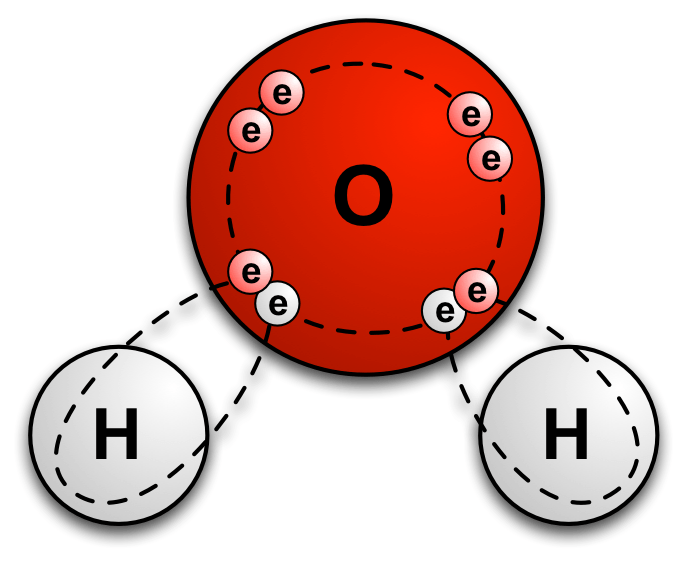
What would you name this molecule?
a)
SNa3
b)
H3O
c)
NaCl
d)
H2O
32.
What molecule is this?
a)
CO
b)
CO2
c)
C2O
d)
C2O2
33.
Write the formula when S and K bond?
a)
SK
b)
KS
c)
K2S
d)
S2K
34.
3Ca + 2AlCl3 --> 3CaCl2 + 2Al
a)
Synthesis
b)
Decomposition
c)
Single diplacement
d)
Double displacement
35.
4Si + S8 --> 2Si2S4
a)
Synthesis
b)
Decomposition
c)
Single displacement
d)
Double displacement
36.
3KOH + H3PO4 --> K3PO4 + 3H2O
a)
Synthesis 
b)
Decomposition
c)
Single displacement
d)
Double displacement
37.
2NO2 --> N2 + 2O2
a)
Synthesis
b)
Decomposition
c)
Single displacement
d)
Combustion
38.
Which reaction type is the following: C5H10O4 + O2 --> CO2 + H2O
a)
Decomposition
b)
Single Replacement
c)
Combustion
d)
Double Replacement
39.
Which of the following is the general formula for a decomposition reaction?
a)
A + B  → AB
b)
AB → A + B
c)
AB + C → AC + B
d)
AB + CD → AC + BD
40.
When balancing equations a ____ can be placed to the left of a formula of a substance to make the equations balanced
a)
charge
b)
subscript
c)
random number
d)
coefficient
41.
What coefficient should be used to make the following equation balanced?
N2+O2--> _NO 
a)
1
b)
2
c)
3
d)
4
42.
Balance this equation:
 __Li + __Cl2 -> __LiCl
a)
2Li + Cl2 -> 4LiCl2
b)
2Li + Cl2 -> LiCl2
c)
2Li +  Cl2 -> 2LiCl
43.
At the end of chemical reactions, what is the total mass of the reactants compared to the total mass of the products?
a)
the product is doubled
b)
the product is half the mass of the reactants
c)
the mass is the same
d)
the mass changes depending on the reaction
44.
Which of the following shows the correct way to balance the chemical equation?
Fe + O2 -> Fe2O3
a)
4Fe + 3O2 -> 2Fe2O3
b)
2 Fe + 3O2 -> Fe2O6
c)
4 Fe + O6 -> 2Fe2O3
d)
None of the options are correctly balanced.
45.
What is the left part of a chemical equation called?
2H2 + O2 --> 2H2O
a)
Reactants
b)
Products 
c)
Yields 
d)
Chemical Equation 
46.
What does the Law of Conservation of Mass state?
a)
Matter cannot be gained or lost in a chemical reaction.
b)
Matter can only be lost in a chemical reaction.
c)
Matter can only be gained in a chemical reaction.
d)
Matter can be gained and lost in a chemical reaction. 
47.
What is the right part of a chemical equation called...
2H2 + O2 --> 2H2O
a)
Reactants
b)
Products 
c)
Yields 
d)
Chemical Equation 
48.
What is the total number of atoms present in 5Na3PO4
a)
5
b)
40
c)
55
d)
8
49.
What is the little number after an element in a chemical equation called.
Example: H2
a)
Coefficient 
b)
Subscript
c)
Atom
d)
Equation
50.
What is the number before a chemical formula called?
Ex: 2H2 + O2 --> 2H2O
a)
Coefficient
b)
Subscript
c)
Atom
d)
Equation
51.
Is the following equation balanced?
2C2H2 + 5O2 --> 4CO2 + 2H2O
a)
yes
b)
no
52.
Is the following equation balanced?
4Fe + 3O2 --> 2Fe2O3
a)
yes
b)
no
53.
Balance this equation
_Al +_HCl --> _H+_AlCl3
a)
2, 6, 3, 2
b)
it is already balanced
c)
4, 12, 3, 4
d)
2, 1, 4, 5
54.
Balance this equation-
__P+ __O--> __P2O3
a)
it is already balanced
b)
2, 1, 3
c)
1, 2, 3
d)
1, 3, 2
55.
Balance this equation.
_Mg + _Cl--> _MgCl2
a)
1, 2,1
b)
already balanced
c)
2,1,1
d)
1,1,2
56.
Heat transfer by conduction occurs when...
a)
particles bump into each other
b)
large numbers of atoms move from place to place
c)
atoms give off heat in the form of electromagnetic waves
d)
electromagnetic waves travel from place to place through a vacuum
57.
Heat transfer by convection occurs when...
a)
electrons bump into other electrons
b)
large numbers of atoms move from place to place
c)
atoms give off heat in the form of electromagnetic waves
d)
electromagnetic waves travel from place to place through a vacuum
58.
Heat travels from the sun to the earth by the process of...
a)
conduction
b)
convection
c)
radiation
d)
insulation
59.
A substance with a high specific heat:
a)
Is always extremely hot.
b)
Requires a lot of energy to become hot.
c)
Is not heavy.
d)
Does not requires a lot of energy to become hot.
60.
Thermal energy always moves:
a)
From a high temperature object to a lower temperature object.
b)
From a lower temperature object to a higher temperature object.
c)
From an object with lower kinetic energy to an object with higher kinetic energy.
d)
From an object of higher mass to an object of lower mass.
61.

Do molecules generally move faster at 45 C or 106 C?

a)

45 C because molecules have more energy than in 106C

b)

106 C because molecules have more energy than in 45C

c)

106 C because molecules have less energy than in 45C

d)

45C because molecules have less energy than in 106 C

62.

YOU HAVE TIME!

How much energy is needed to raise the temperature of a 20.0g piece of copper from 15.0 degrees Celsius to 25.0 degrees Celsius? (The specific heat of copper is 0.385 J/g C)

a)

20 X (25-15) =70 J

b)

20 X .385 X (25-15)= 77 J

c)

20 X .385 X (15-25)= 62 J

d)

20 X .385 X (15-0)= 77 J

63.

Select the correct SI unit for Heat

a)

calorie

b)

joule

c)

kelvin

d)

celsius

64.

Select the correct SI unit for temperature

a)

calorie

b)

joule

c)

kelvin

d)

celsius

65.

Select the correct symbol for Heat

a)

H

b)

t

c)

Q

d)

E

66.

What method of heat transfer is causing heat to flow from the tip of the spoon to the handle of the spoon?

a)

Conduction

b)

Convection

c)

Radiation

d)

Erosion

67.
The amount of energy required to raise the temperature 1ºC for every kilogram is called____?
a)
Thermal Energy
b)
Specific Heat
c)
Temperature
d)
Kinetic Energy
68.
What is the equation to measure change in Thermal Energy?
a)
Q=mc∆t
b)
Q=mc
c)
Q= ∆mct
d)
m=QC
69.
Water has a specific heat of 4184 J/KgºC.  Wood has a specific heat of 1760 J/KgºC.  What material needs more energy to raise the temperature 1ºC
a)
Wood
b)
Water
c)
Both are the same
70.
A material was cooled from 100ºC to 40ºC.  What is the temperature change?
a)
60ºC
b)
40ºC
c)
-60ºC
d)
-40ºC
71.
What does temperature measure?
a)
Heat
b)
ºC
c)
Kinetic Energy
d)
Thermal Energy
72.
A 15.75-g piece of iron absorbs 1086.75 joules of heat energy, and its temperature changes from 25°C to 175°C.  Calculate the specific heat capacity of iron.    
a)
0.46 J/gxoC
b)
1.654 J/gxoC
c)
2,567,446.875 J/gxoC
73.
The symbol for specific heat is .......
a)
c
b)
Q
c)
m
d)
t
74.
Specific heat is....
a)
The measure of kinetic energy of an objects particles
b)
A measure of the energy needed to increase the average kinetic energy of the particles
c)
The heating caused by the motion of flluid due to temperature difference
d)
The transfer of energy by electromagnetic radiation
75.
How many Joules of energy are required to change 10 gram of liquidwater from 20 C to 90 C?
a)
1400 J
b)
2800 J
c)
210,000 J
d)
1,400,000 J
76.
Which of the following is an example of nuclear fusion? 
a)
A plutonium atom is used to start a chain reaction that detonates a nuclear weapon 
b)
A uranium atom is split apart into lighter elements
c)
 Two hydrogen atoms are combined to form a helium atom
d)
Two hydrogen atoms bond with an oxygen atom to form a water molecule 
77.
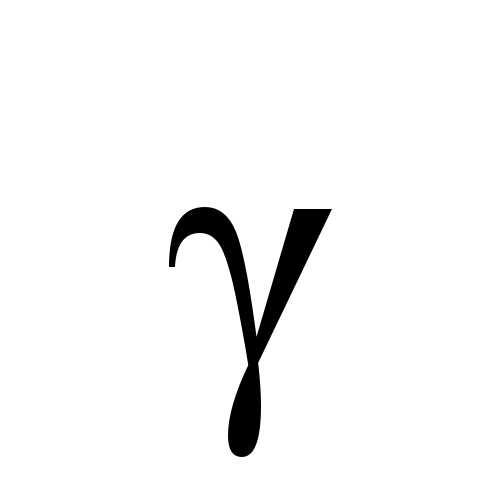
Has the symbol
a)
Alpha
b)
Beta 
c)
Gamma
d)
electron
78.
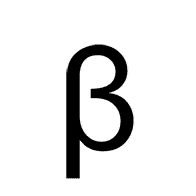
Has the symbol
a)
Alpha
b)
Beta
c)
Gamma
d)
proton
79.
Has the symbol
a)
Alpha
b)
Beta
c)
Gamma
d)
neutron
80.
Has a mass of 4 and a charge of +2
a)
Alpha
b)
Beta
c)
Gamma
d)
neutron
81.
Which type of nuclear radiation is being emitted here along with Rn
a)
alpha
b)
beta
c)
gamma
d)
none
82.
This is an example of...
a)
Fission  reaction
b)
Fusion reaction
c)
Decomposition reaction
d)
Combustion
83.
The technetium-99 isotope has a half-life of 6.0 hours. If 100.0 mg were injected into a patient how much remains after 18 hours?
a)
33.0 mg
b)
12.5 mg
c)
.33 mg
d)
15.8 mg
84.
Balance the following equation:
146C --> 0-1e + ________
a)
145B
b)
146C
c)
147N
d)
42He
85.

In the symbol 167N what the 7 stand for?

a)

Mass number

b)

Atomic number

c)

Atomic mass

d)

Number of neutrons

86.
The half life of Thorium-234 is 24 days. What fraction of the element remains after 96 days
a)
1/2
b)
1/4
c)
1/8
d)
1/16
87.
Alpha particles have a _____ charge.
a)
+2
b)
0
c)
+1
d)
-1
88.
What does it mean when an element is radioactive?
a)
atom emits radiation
b)
nucei unstable due to uneven p to n ratio
c)
nuclei changes to become stable
d)
all of the above
89.
What is the missing isotope that will balance the following nuclear equation?
94Be  +  11H →  _____  +  42He
a)
105B
b)
105Ne
c)
63Li
d)
63C
90.
If Thorium-234 undergoes a beta decay, What element will be left in its place?
a)
Actinium-234
b)
Thorium-233
c)
Protactinium-234
d)
Radium-230
91.

Which of the following statements is true concerning acids and bases?

a)

acids and bases don't react with each other

b)

acids mixed with bases neutralize each other

c)

acids mixed with bases make stronger bases

d)

acids mixed with bases make stronger acids

92.

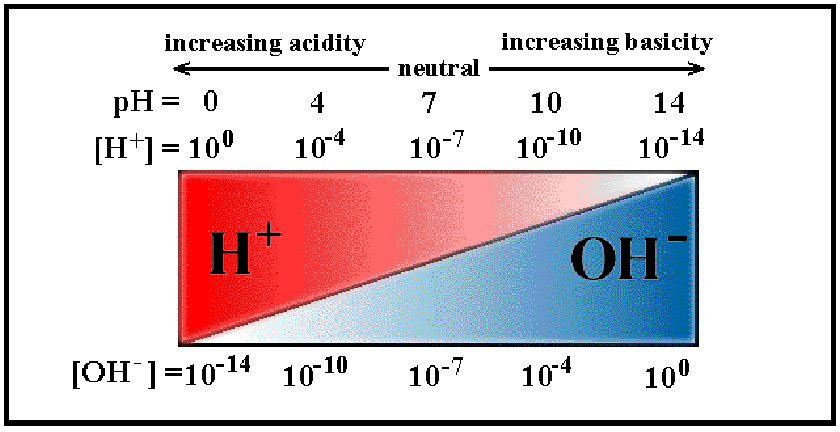
Neutral solutions have a pH of:

a)

0

b)

1

c)

7

d)

14

93.

True or false: a neutral solution has equal amounts of H+ and OH-.

a)

True

b)

False

94.

Which is true?

a)

pH of less than 7 is basic; pH of more than 7 is acidic

b)

pH of less than 7 is acidic; pH of more than 7 is basic

95.
What would be considered the weakest base? 
a)
8
b)
14
c)
7.8
d)
11.6
96.
Pure water has a pH of 7. Pure water _______.
a)
is a base
b)
is a neutral substance
c)
could be either an acid or a base
d)
is an acid
97.
Ammonia has a pH of 12.  Ammonia is __________.
a)
an acid
b)
a base
c)
an element
d)
a metal
98.
When dissolved in water, bases produce:
a)
acids
b)
salts
c)
hydrogen ions
d)
hydroxide ions
99.
Ranging from 0 to 14, a pH value indicates how acidic or basic a solution is.  Which of these pH values would be a strong acid?
a)
2
b)
6
c)
9
d)
13
100.
When dissolved in water, acids produce:
a)
bases
b)
salts
c)
hydrogen ions
d)
hydroxide ions
101.

Which two pH values would neutralize to form a salt and water?

a)

pH 1 and pH 2

b)

pH 0 and pH 14

c)

pH 1 and pH 9

d)

pH 6 and pH 7

102.
If [H3O+]=1.7 x 10⁻³ M, what is the pH of the solution?
a)
2.13
b)
1.81
c)
2.77
d)
2.42
103.
What is the pH of a 1 x 10⁻⁸ solution of H3O+?
a)
8
b)
6
c)
7
d)
7.5
104.
The [H+] is orange juice is
0.00020 M.  FInd the pH of orange juice.
a)
1
b)
3.7
c)
10.3
d)
13
105.
A  pH and a pOH will add up to:
a)
0
b)
7
c)
14
d)
1.0 x 10⁻¹⁴
106.
If the [H3O+] of a solution is 1 x 10⁻⁸ mol/L the [OH-] is
a)
1.0 x 10⁻⁶
b)
1.0 x 10⁶
c)
1.0 x 10⁻⁸
d)
1.0 x 10⁸
107.
if a solution has a pOH of 5.2 the [OH-] of the solution is
a)
6 x 10 -6 M
b)
6.3 x 10 -6 M
c)
1.58 x 10⁻⁵ M
d)
2 x 10⁻⁵ M
108.
Hydrochloric acid is a strong acid. A 50cm3 sample would have a pH of (approximately)
a)
1-2
b)
3-4
c)
5-6
d)
7
109.

what is formed by a salt derived from a strong base and a weak acid?

a)

basic solution

b)

acidic solution

110.

what makes a strong acid?

a)

has a very high pH

b)

fully dissociates in a base

c)

does not dissociate in water

d)

fully dissociates in water

111.
Which of the following is a conjugate acid/base pair?
a)
HCl/OCl-
b)
H2SO4/SO42-
c)
NH4+/NH3
d)
H3O+/OH-
112.
Which of the following is NOT a Bronsted acid?
a)
OH-1
b)
H3O+1
c)
HNO3
d)
CH3COOH
113.
Zn(OH)2 is an example of a...
a)
acid
b)
base
c)
salt
114.

Complete the following reaction:

HCl + Mg(OH)2 -->

a)

MgCl2 + H2O

b)

Mg +H2O

c)

MgCl2 + H2

d)

MgCl2 + H2O + CO2

115.

What is the molarity of a 30 mL HCl which is neutralized by 48 mL of 0.1 M NaOH?


HCl + NaOH --> H2O + NaCl

a)

0.16 M

b)

6.25 M

c)

0.063 M

116.
What are the products of the following reaction?
H2SO4  +  KOH  -->  
a)
HK  +  HSO4
b)
H2O  +  KSO4
c)
H2O  +  K2SO4
d)
H2  +  K2SO4