wayground logo

Free Printable Worksheets

Font size

S
M
L
XL
Worksheets

Chemistry Final Practice

Total questions: 113

Worksheet time: 14hrs 8mins

Name
Class
Date
1.
What is this?
a)
Measuring tube
b)
Test tube
c)
Graduated Cylinder
d)
Pipette
2.
What is used to protect your eyes from chemicals, broken glass, and fire?
a)
Fire blanket
b)
Eye wash
c)
Goggles
d)
Flask
3.
What is used to hold test tubes?
a)
Test tube rack
b)
Magnifying glass
c)
Petri dish
d)
Funnel
4.
Identify the equipment shown here:
a)
striker
b)
test tube holder
c)
flame snuffer
d)
utility clamp
5.
Identify the equipment shown here:
a)
beaker
b)
volumetric flask
c)
cylinder
d)
Erlenmeyer flask
6.
Identify the equipment shown here:
a)
test tube holder
b)
iron rod
c)
iron ring
d)
ring stand
7.
Identify the equipment shown here:
a)
wire gauze
b)
flame spreader
c)
sieve
d)
mesh
8.
Identify the equipment shown here:
a)
test tube clamp
b)
iron ring
c)
utility clamp
d)
test tube holder
9.
Identify the equipment shown here:
a)
concave glass
b)
convex glass
c)
watch glass
d)
glass plate
10.
Identify the equipment shown here:
a)
ring stand
b)
utility clamp
c)
buret clamp
d)
iron ring
11.
Name this item 
a)
Ring stand 
b)
Graduated cylinder 
c)
Evaporating dish 
d)
Watch glass
12.
Name this item
a)
weighing boat 
b)
funnel 
c)
wash bottle 
d)
Erlenmeyer flask 
13.
Identify the equipment shown here:
a)
beaker
b)
Erlenmeyer flask
c)
Florence flask
d)
volumetric flask
14.
What is this called?
a)
Beaker
b)
Triple Beam Balance
c)
Flask
d)
Scale
15.
What is the volume of the blue liquid?
a)
6 mL
b)
7mL
c)
6.4 mL
d)
6.6 mL
16.

What is the volume of the blue liquid?

a)

24 grams

b)

25 grams

c)

24 mL

d)

24 gL

17.
Identify the equipment shown here:
a)
scoopula
b)
ring stand
c)
beaker
d)
crucible
18.
Something that takes up space and has mass.
a)
volume
b)
matter
c)
mass
d)
density
19.
A state of matter that has a definite volume and shape.
a)
solid
b)
liquid
c)
gas
d)
matter
20.
Shape is a ____ that helps identify an object.
a)
physical property
b)
chemical property
c)
mass
d)
matter
21.
Iron + oxygen = rust is an example of a ___________.
a)
physical property/change
b)
chemical property/change
c)
mass
d)
volume
22.
What are the three states of matter?
a)
solid, volume, mass
b)
density, volume, mass
c)
solid, liquid, gas
d)
density, gas, volume
23.
__________ are the building blocks of life.
a)
solids
b)
gases
c)
atoms
d)
nutrients
24.
Chopping wood is an example of a:
a)
Physical change
b)
Chemical change
25.
Water freezing to ice is an example of a:
a)
Physical change
b)
Chemical change
26.
Which of the following could be a characteristic that changes in matter during a PHYSICAL CHANGE?
a)
Size
b)
State
c)
Texture
d)
All of the above
27.
An example of a physical property is 
a)
flammability
b)
acidic
c)
color
d)
ability to rust
28.
Lucky Charms and milk is an example of a...
a)
Mixture
b)
Solution
29.
Lemonade is an example of a...
a)
Mixture
b)
Solution
30.
True or False: A PHYSICAL CHANGE does NOT create a different kind of matter.
a)
True
b)
False
31.
True or False: A CHEMICAL CHANGE is a change in some properties of matter WITHOUT forming a different kind of matter.
a)
True
b)
False
32.
Baking a cake is an example of a...
a)
Physical Change
b)
Chemical Change
33.
Blue Color: Chemical or Physical Property
a)
Chemical Property
b)
Physical Property
34.
Density: Chemical or Physical Property
a)
Chemical Property
b)
Physical Property
35.
Solubility (dissolves): Chemical or Physical Property
a)
Chemical Property
b)
Physical Property
36.
Reacts with Acid: Chemical or Physical Property
a)
Chemical Property
b)
Physical Property
37.
Ability to rust is this type of property:
a)
Physical property
b)
Chemical property
38.
Two or more substances that are mixed together but not chemically combined is a ___
a)
compound
b)
mixture
c)
keratin
d)
chromatography
39.
Two or more substances that are chemically combined is a ___
a)
compound
b)
mixture
c)
solvent
d)
solute
40.
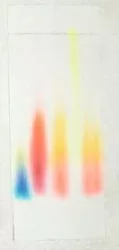
Dyes in water soluble markers may be separated by means of..
a)
crystallization
b)
sublimation
c)
chromatography
d)
sedimentation
41.
Ink can be separated by a method of -----------------------------------------------
a)
distillation
b)
filtration
c)
chromatography
d)
sedimentation
42.
Two or more substances mingled together, but not chemically combined are known as a
a)
residue
b)
solution
c)
distillate
d)
mixture
43.
The separation technique that involves heating a solution until the liquid changes into a gaseous state, leaving behind a solid is known as
a)
decanting
b)
 evaporation
c)
loading
d)
chromatography
44.
The first step in dimensional analysis
a)
Find the target
b)
Determine what you know
c)
Solve
d)
Run Screaming
45.
What is this process called?
a)
Torture
b)
Circular Addition
c)
Dimensional Analysis
d)
Math
46.
What does this chart show?
a)
Conversion Factors
b)
American Units
c)
Conversities
d)
Physical Change
47.
What is the conversion factor for kilometers to miles?
a)
1 m = 100 cm
b)
3 ft = 1 yd
c)
2.54 cm = 1 in
d)
0.621 mi = 1 km
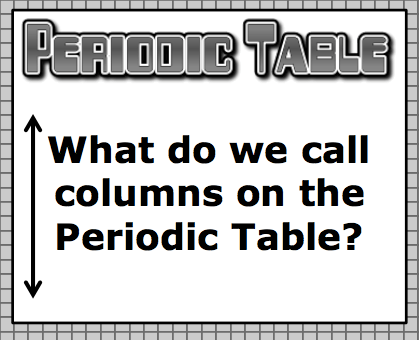
48.
a)
Periods
b)
Groups
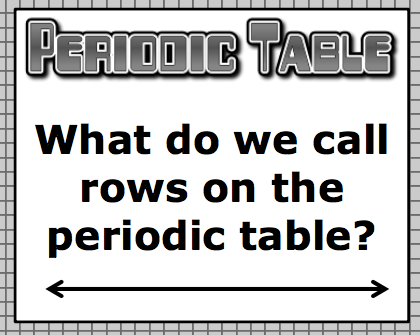
49.
a)
Periods
b)
Groups
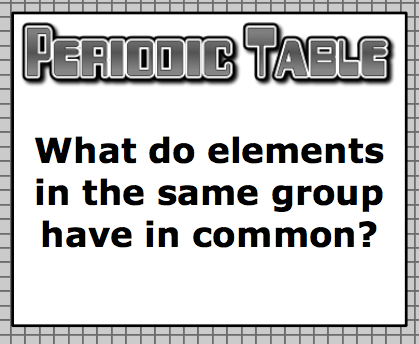
50.
a)
energy levels
b)
valence electrons
c)
protons
d)
neutrons
51.
a)
energy levels
b)
valence electrons
c)
protons
d)
neutrons
52.
a)
Group 1
b)
Group 17
c)
Group 18
d)
Group 2
53.
a)
Metals
b)
Nonmetals
c)
Metalloids
54.
a)
Metals
b)
Nonmetals
c)
Metalloids
55.
a)
Metals
b)
Nonmetals
c)
Metalloids
56.
How did Mendeleev arrange the elements?
a)
alphabetical 
b)
density
c)
melting point
d)
atomic mass
57.
The number at the bottom of each square on the periodic table is the ...
a)
atomic number
b)
atomic mass
c)
chemical symbol
d)
element name
58.
The number at the top of each square on the periodic table is the ...
a)
atomic number
b)
atomic mass
c)
Chemical Symbol
d)
Element Name
59.
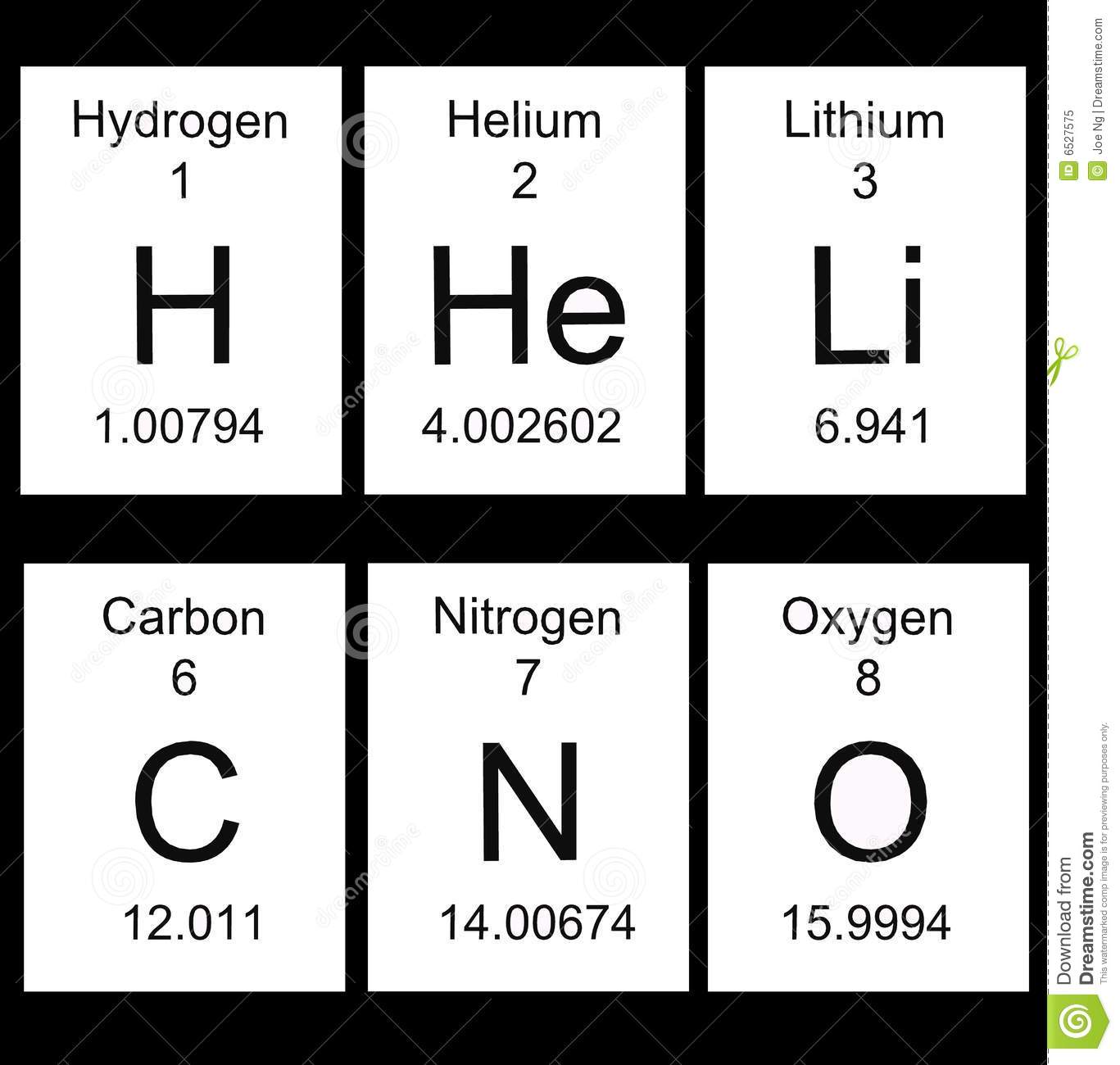
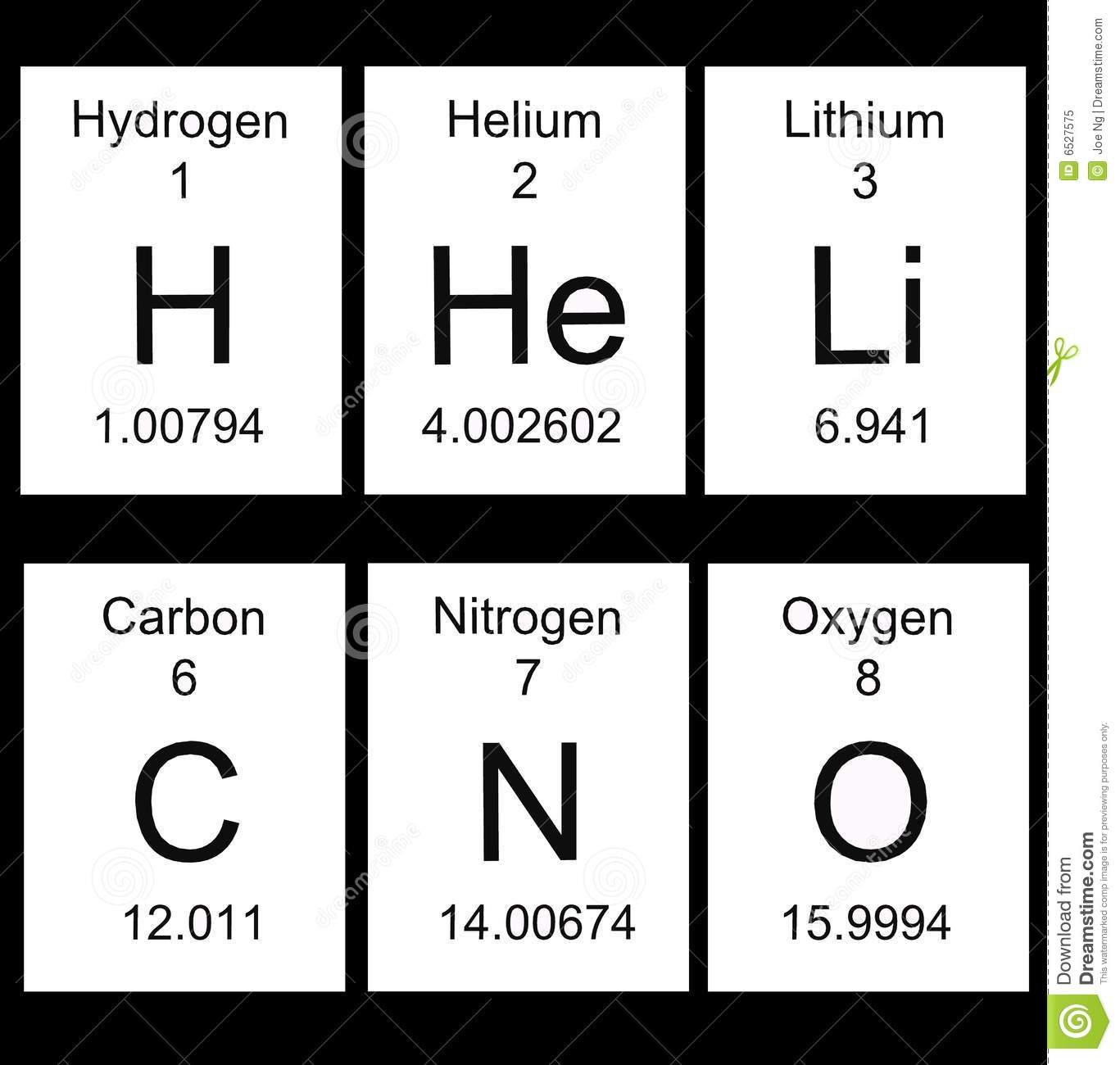
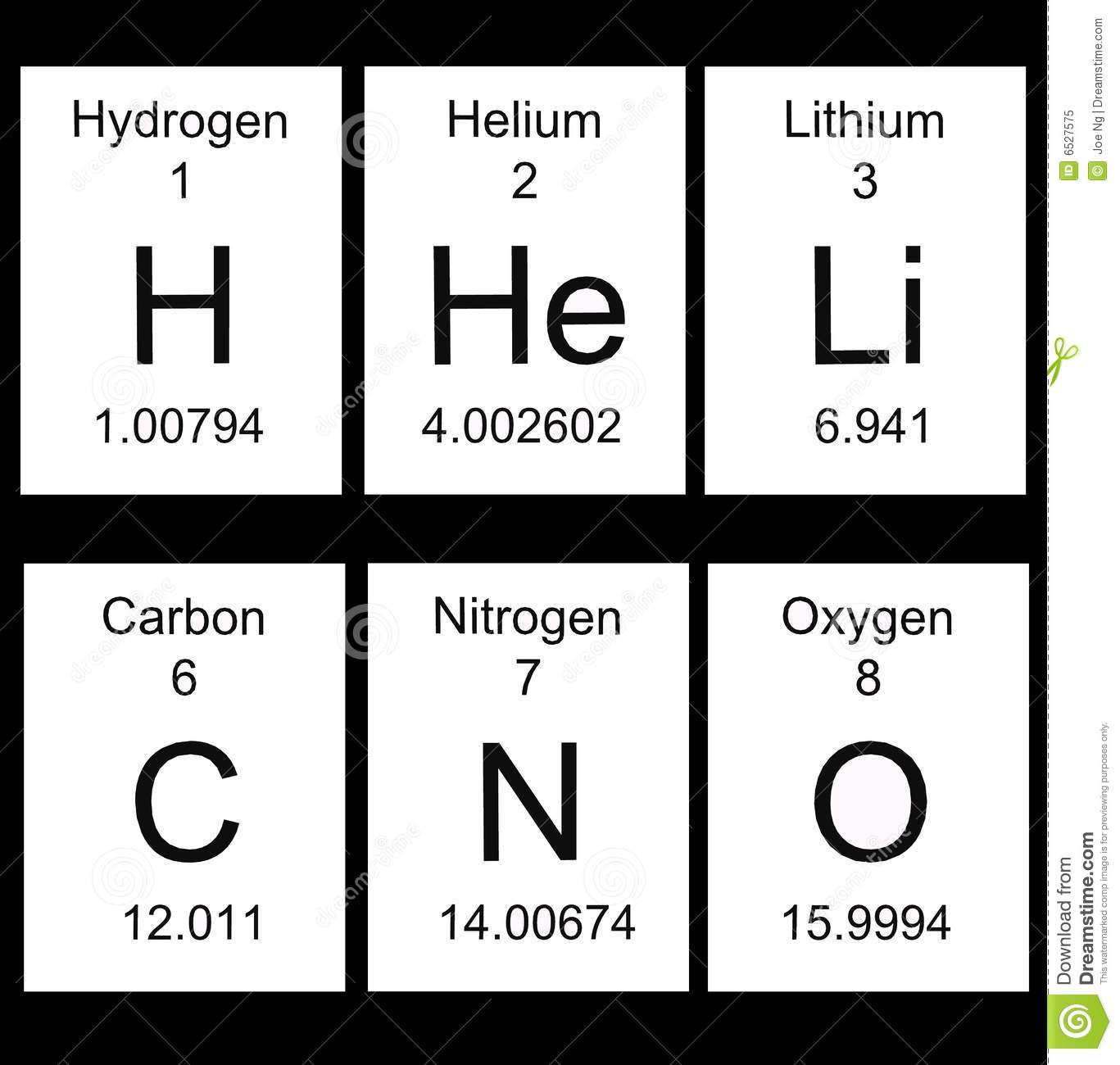
What is the chemical symbol for Lithium?
a)
H
b)
He
c)
Li
d)
N
60.
All of the actinides are ___________.
a)
stable
b)
radioactive
c)
shiny
d)
named after scientists
61.
Most of the elements on the periodic table are classified as _____.
a)
Metals
b)
Nonmetals
c)
Metalloids
d)
Periods
62.
The atomic number tells you what?
a)
number of electrons
b)
number of protons
c)
number of neutrons
d)
both electrons and protons in an atom.
63.
Which is an alkali metal?
a)
Magnesium
b)
Iron
c)
Sodium
d)
Europium
64.
A proton is....
a)
A negatively charged subatomic particle
b)
A positively charged subatomic particle
c)
A neutrally charged subatomic particle
d)
The only subatomic particle located in the nucleus
65.
A neutron has a charge of
a)
+2
b)
No charge
c)
-1
d)
+1
66.
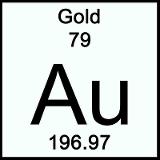
Which number is the atomic mass?
a)
79
b)
196.97
67.

Elements on the left side of the periodic table are

a)

metals

b)

nonmetals

c)

metalloids

d)

noble gases

68.

In the modern periodic table elements are arranged by:

a)

atomic mass

b)

atomic number

c)

valence electrons

d)

number of isotopes

69.

Which of the following is a negatively charged subatomic particle?

a)

Electron

b)

Proton

c)

Neutron

d)

Quark

70.

All matter is made of what?

a)

energy

b)

atoms

c)

electrons

d)

compounds

71.

The particles that are found in the nucleus of an atom are

a)

neutrons and electrons

b)

electrons only

c)

protons and neutrons

d)

protons and electrons

72.

Covalent bonds "share" electrons?

a)

true

b)

false

73.

What's a valence electron?

a)

electrons in the second energy level

b)

electrons in the outermost energy level

c)

the atomic number

d)

electrons in the first level

74.

This is a correct dot diagram for nitrogen (N)

a)

true

b)

false

75.
The periodic table has __ groups.
a)
8
b)
7
c)
18
d)
2
76.
The positive particles of an atom are 
a)
electrons 
b)
positrons 
c)
neutrons 
d)
protons 
77.
Particles in an atom that are neutral and have no charge are 
a)
negatrons 
b)
electrons 
c)
neutrons 
d)
protons 
78.
The electrons of an atom are found...
a)
in the outer "cloud" surrounding the atom.
b)
in the nucleus of the atom.
c)
in the cloud and in the nucleus.
79.

He is the symbol

a)

Hydrogen

b)

Neon

c)

Helium

d)

Mercury

80.

Atomic number #1

a)

hydrogen

b)

Helium

c)

Sodium

d)

Lithium

81.
What is the mass of an atom if it has 11 protons, 12 neutrons, and 11 electrons?
a)
22
b)
11
c)
34
d)
23
82.
What subatomic particle(s) would be found orbiting the nucleus?
a)
Neutrons only
b)
Electrons only
c)
Protons and Neutrons
d)
Protons and Electrons
83.
What particle uniquely identifies an element?
a)
Number of Valence Electrons
b)
Number of Protons
c)
Number of Electrons
d)
Atomic Mass
84.
What is the atomic number for an element with three protons?
a)
2
b)
1
c)
3
d)
6
85.
What is the number of protons that the element in this image contain?
a)
14
b)
7
c)
15
d)
18
86.
What are the 3 particles that make-up the atom?
a)
protons, neutrons, and isotopes
b)
neutrons, isotopes, and electrons
c)
positives, negatives, and electrons
d)
protons, neutrons, and electrons
87.
This is an atom with the same number of protons and different number of neutrons:
a)
isostope
b)
nucleus
c)
electron
d)
element
88.
What is the atomic number of this atom?
a)
2
b)
4
c)
6
d)
none of the above
89.
a)
2
b)
3
c)
5
90.
?
a)
Lithium
b)
Boron
c)
Carbon
d)
Neon
91.
How many dots would a Lewis Dot structure of Helium have?
a)
1
b)
2
c)
8
d)
0
92.
This is a correct dot diagram for magnesium (Mg)
a)
true
b)
false
93.
This is a correct dot diagram for carbon (C)
a)
true
b)
false
94.
This is a correct dot diagram for neon (Ne)
a)
true
b)
false
95.
This could be the dot diagram of
a)
O
b)
B
c)
Li
d)
Ne
96.
In sodium chloride, sodium gives an electron to chlorine.
a)
True
b)
False
97.
Nonmetals tend to 
a)
gain electrons
b)
lose electrons
98.
If my charge becomes 2+ what does that say about me?
a)
I am stealing 2 electrons
b)
I am losing 2 electrons
c)
I am in period 2
d)
I have an atomic # of 2
99.
When metals bond with non-metals they form what type of bonds
a)
covalent
b)
ionic
c)
cooperative
d)
lewis
100.
Covalent compounds
a)
Share electrons
b)
transfer electrons
c)
contain a sea of electrons
d)
conduct electricity
101.
What two types of atoms make a covalent bond?
a)
2 Nonmetals
b)
1 Nonmetal and 1 Metal
c)
2 Metals
d)
2 Noble Gases
102.
How are covalent bonds explained?
a)
When one atom takes the other atom's electron
b)
When the atom shares an electron with an another atom
c)
When the two nucleus merge
d)
When the neutrons leave the nucleus
103.
Ca3N2
a)
calcium nitrogen
b)
carbon nitrogen
c)
calcium nitride
d)
carbon nitrate
104.
Rb3N
a)
rubidium nitride
b)
rubidium nitrogen
c)
rubidium nitrate
d)
rubidium nitrite
105.
MgSe
a)
magnesium selenium
b)
magnesium sulfate
c)
magnesium selenide
d)
magnesium selenate
106.
CO
a)
Carbon oxide
b)
Cobalt
c)
Carbon monoxide
d)
Carbonate
107.
CO2
a)
Carbon oxide
b)
Cobalt
c)
Carbon monoxide
d)
Carbon dioxide
108.
potassium triiodide
a)
KI
b)
K3I
c)
KI3
d)
3K3I
109.
xenon tetrafluoride
a)
XeF4
b)
XeF
c)
Xe4F
d)
XeFO4
110.
dinitrogen tetrachloride
a)
N2Cl4
b)
NCl
c)
NCl3
d)
NClO4
111.
SO4
a)
sulfate
b)
sulfite
c)
sulfide
d)
sulfur oxygen
112.
KNO3
a)
potassium nitrate
b)
potassium nitrite
c)
potassium nitride
d)
potassium nitrogen
113.
K3N
a)
potassium nitrate
b)
potassium nitrite
c)
potassium nitride
d)
potassium nitrogen