
 Worksheets
7th L1 Living Things, Cells, Viruses, Bacteria
Total questions: 34
Worksheet time: 9hrs 30mins

What is the difference between unicellular and multicellular organisms?
Unicellular do not respond to their environment. Multicellular organisms do respond to stimuli in the environment.
Unicellular organisms are producers, multicellular are consumers.
Unicellular organisms perform all functions for life with one cell. Multicellular organisms have many cells that work together to keep them alive
Unicellular organisms are autotrophs and multicellular are heterotrophs.
the basic unit of structure and function in living things
tissue
vertebrate
cell
convergent evolution
the condition in which an organisms internal environment is kept stable in spite of changes in the external environment
homeostasis
mammal
organ
species
a tiny, nonliving particle that enters and then reproduces inside a living cell
vaccine
parasite
species
virus
a substance used that consists of pathogens that have been weakened or killed but can still trigger the body to produce chemicals that destroy the virus.
organ
virus
vaccine
tissue
single celled organisms that lack a nucleus are
prokaryotes
species
mammal
parasite

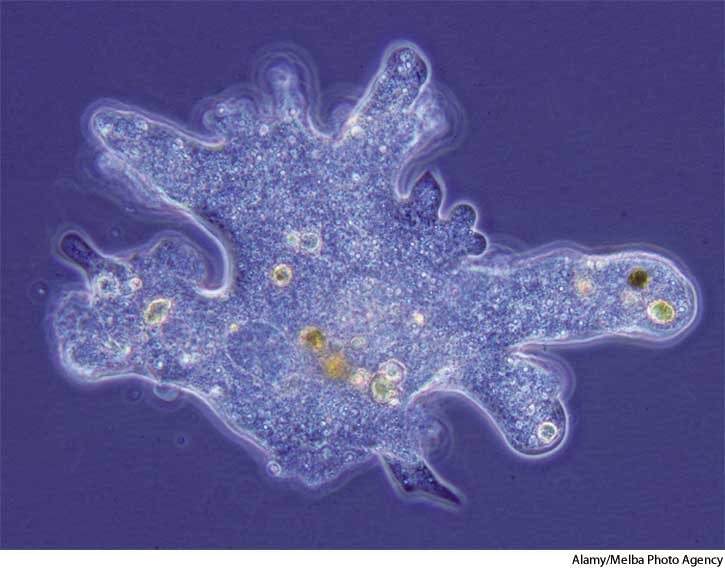
Which characteristic of living things is represented in the picture?
Respond to stimuli
Grow and develop
Evolution
Made of cells
What tool is needed to see microorganisms?
Telescope because they are too far away
Microscope because they are too small to see
Which of the following are statements of the cell theory? (choose all that apply)
All living things are made of cells.
All living things have DNA inside a nucleus.
Cells are the basic unit of life.
Cells come from other living cells.
All living things require energy.
Cells that have a nucleus are
Prokaryotic
Eukaryotic
Both
A plant growing towards a light source is an example of which of the following?
attracting a mate
destroying infectious germs
responding to a stimuli
obtaining moisture from the air
Identify all of the following that are living.
Volcano
Tree
Sun
Fungus
Maintaining a stable internal environment is called
Comfortable
Cellular
Homeostasis
Breathing
Which of the following is NOT a characteristic of life
All living things reproduce
All living things grow
All living things speak
All living things adapt to their enviorment
Every living thing changes and grows.
TRUE
FALSE
the cell is the basic unit of all living things
cell theory
unicellular
organelles
levels of organization
Type T for True OR F for False.
Viruses do not require living cells to reproduce.
(a)
Type T for True OR F for False.
Cell Theory:
All living things are made up of cells.
The cell is the basic unit of life.
All cells come from preexisting cells.
(a)
Where is the DNA in a cell?
mitochondria
nucleus
cell plane
cytoplasm
Although bacteria are the largest group of organisms on earth, what percent are bad for us?
1%
3%
10%
20%
What type of cells do humans have?
prokaryotic cells
plant cells
eukaryotic cells
mitochondria cells


Label the part of the microscope. What is part E?
stage
stage clips
focus knob
eyepiece tube
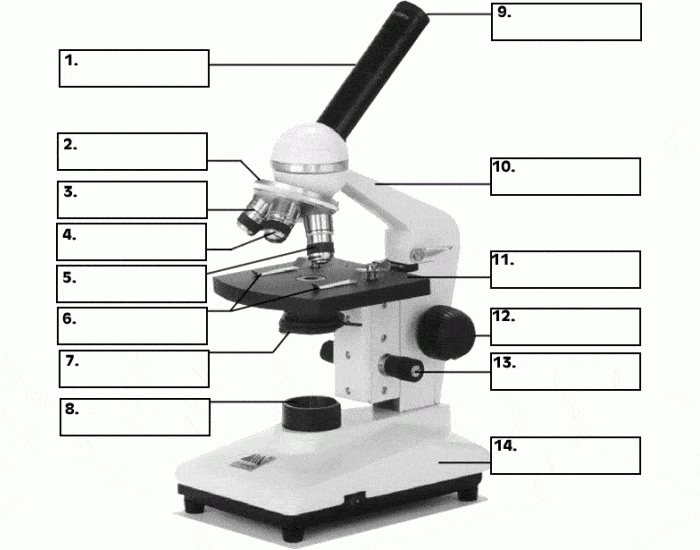
Which part of the microscope should you use to sharpen the image?
Diaphragm
Coarse adjustment
Stage
Fine adjustment

