
 Worksheets
Astronomy Unit A Test Review
Total questions: 100
Worksheet time: 8hrs 20mins

A theory that says the universe began as a small point that expanded rapidly about 13.7 billion years ago.
Big Bang Theory
Singularity Theory
Galaxy Theory

A large grouping of stars, planets, gas, and dust in space held together by gravity.
Universe
Galaxy
Space

The explosion of a massive star at the end of its life cycle
Galaxy
Milky Way Galaxy
Supernova
Universe
All space and the matter space contains
Universe
Galaxy
Super Nova
What do the initial moments after the Big Bang have in common with the universe as it exists now? Choose the best answer.
all the stars, galaxies, and planets that exist today were formed moments after the Big Bang
the universe could not sustain life back then, and it cannot sustain life now
the universe is extremely hot then, and it is still extremely hot now
the universe began expanding then, and it is still expanding now
According to the Big Bang theory, how old is the universe?
6,000 years
65 million years old
4.5 billion years
14.5 billion years
What is one major piece of evidence that the Big Bang theory is correct?
astronomers have detected leftover radiation from the Big Bang
everything in the universe has remained the in same location for billions of years
astronomers have detected that the universe is no longer expanding
astronomers have detected that the universe is contracting
Which statement is true?
The galaxies are moving toward us.
The galaxies are moving away from us.
The universe remains static or unchanged in motion.
None of the above

What Galaxy is Earth located?
Andromeda
Milky Way
Sagittarius
Snickers
Most scientists believe the Big Bang Theory explains which of the following questions?
How our planets and moons formed
How our universe began
How the sun turns hydrogen into helium
How fast light travels through space
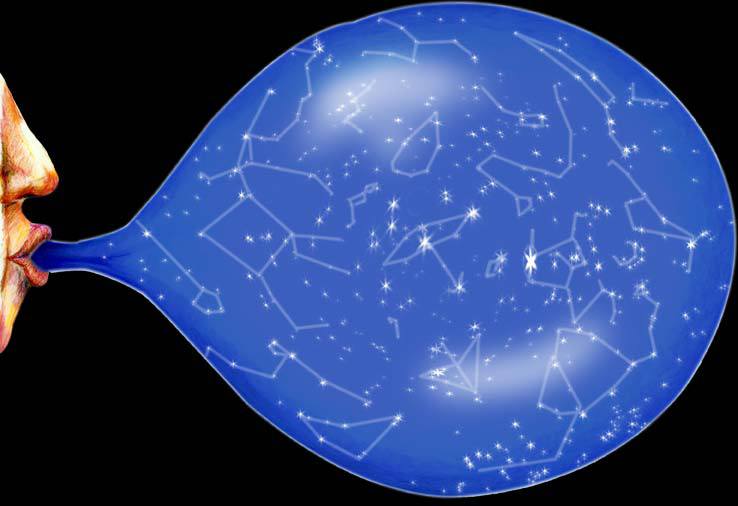
As galaxies move away from our galaxy
a shift on the electromagnetic spectrum is noticed. This phenomena is
called _____________.
redshift
blueshift
What is the heliocentric theory?
The model where the Earth revolves around the Sun.
The model where the Sun revolves around the Earth.
The model where no celestial bodies move.
The model where neither the Sun nor Earth revolve around each other.
Who was the first ancient Greek astronomer to propose heliocentric theory?
Pythagoras
Aristarchus
Copernicus
Johannes Kepler
In Ptolemy's 'geocentric' view of the universe the (a) is at the center of the universe.
Kepler finally concluded that the shape of planetary orbits is (a) .
What does the Heliocentric system look like?


Which scientific instrument did Galileo use to change the world?
telescope
spyglass
mirror
magnifying glass
Who supported Copernicus's Heliocentric Model
Galileo
Plato
Ptolemy
No one
Who were the people that popularized the geocentric model?
Galileo and kepler
Aristotle and Ptolemy
Copernicus and Aristarchus
Brahe and Kepler
Who discovered the shape of a planet's orbit is actually an ellipse?
Ptolemy
Copernicus
Kepler
Galileo
A Group of stars, and or star systems, dust and gas held together by gravity and isolated in space is known as:
Universe
Galaxy
Solar System
Planet
What are the 3 main types of galaxies?
spiral, round, triangular
irregular, rectangular, wide
elliptical, irregular, spiral
asymmetrical, round, circular
Where does our Milky Way belong?
Local Group and Virgo Supercluster
Virgo cluster and Local Group
Pleiades and Virgo cluster
Hyades and Virgo Supercluster
Which of the following correctly places these in order from LARGEST to SMALLEST?
galaxy -- local group/cluster -- planet -- solar system -- universe
universe -- local group/cluster -- galaxy -- solar system -- planet
planet -- solar system -- galaxy -- local group/cluster -- universe
universe -- galaxy -- solar system -- local group/cluster -- planet
What Galaxy is Earth located?
Andromeda
Milky Way
Sagittarius
Snickers
How many planets are there?
7
9
8
3
How many groups are the planets broken into?
3
2
1
4
What are the 4 inner planets?
Mercury, Jupiter, Saturn, Pluto
Earth, Venus, Mars, Neptune
Mercury, Venus, Earth, Mars
Jupiter, Saturn, Neptune, Uranus
What are the 4 outer planets?
Mercury, Venus, Earth, Mars
Uranus, Mercury, Earth, Mars
Jupiter, Uranus, Saturn, Neptune
Jupiter, Saturn, Earth, Mars
The inner planets share 2 qualities or characteristics
Humans can live on them, they all have water
They are rocky, and humans can find food on them
They are rocky and close to the Sun
They are close to the Sun, and humans can live on them
The second planet from the Sun, the atmosphere is made up of 96% carbon dioxide, extremely hot and the atmospheric pressure is bone crushing.
Earth
Venus
Mars
Saturn
What are the 2 characteristics of the 4 outer planets.
They are rocky and small in size
Larger planets and made of gas
Closer to the Sun and made of gas
Farther from the Sun and made of gas
1. Inner Planets are also called.
Terrace Planets
Terminal Planets
Terrestrial Planets
Treasure Planets
Inner planets are most likely ____
closer to the Sun and are smaller and made of gasses
away from the sun and made up mostly of rocks
closer to the Sun and are smaller and rockier
away from the sun and made up mostly of gasses
Which of the following is considered the 'Red Planet?
Mars
Earth
Venus
Mercury
Which statement about inner planets is true?
All inner planets are mostly covered with water.
The inner planets have common types of rocky land forms such as mountains and volcanoes
Earth is the hottest inner planets
All inner planets have thick and protective atmosphere.
Even though Mercury is the closest planet to the Sun, Venus is the hottest of all planets in the solar system.
Yes
No
Which of the following is a true statement?
The Sun is the center of the Milky Way Galaxy.
Our solar system is near the center of the Milky Way Galaxy.
The Sun is the center of the solar system.
The galactic center is the center of our solar system.
Which terrestrial planets have diameters that are nearly equal in size?
Earth and Mars
Mars and Venus
Earth and Venus
Mars and Mercury
Which of the following statements best describes the characteristics of the terrestrial planets?
small, dense, rocky surfaces
large, planetary rings; many moons
rocky cores; close to sun; surface craters
made up of hydrogen and helium; small; close to sun
Which of the following is the primary reason Venus is the hottest planet in the solar system?
The atmosphere of Venus reflects sunlight back into space.
The surface of Venus absorbs solar radiation from the sun.
The rotation of Venus affects how the sun’s rays penetrate its atmosphere.
The atmosphere of Venus radiates heat back down to the surface of the planet.
What is the order of the distances of the terrestrial planets from the Sun, from farthest to closest?
Mars, Venus, Earth, Mercury
Mars, Earth, Venus, Mercury
Mercury, Venus, Earth, Mars
Venus, Earth, Mars, Mercury
This planet is mostly covered by liquid water.
Mars
Venus
Earth
Mercury
Which is found in the belt between Mars and Jupiter
Comets
Asteroids
Meteors
Stars
I am a rock entering a planet's atmosphere.
meteor
moon
asteroid
comet
The shape of comet's paths are ________________.
circular
elliptical
irregular

Which object in space is larger?
Asteroid
Meteoroid

A meteor when it burns in the atmosphere is also known as a ____.
rock
shooting star
ball of ice
comet
When a meteoroid STRIKES the surface of the earth scientists refer to them as: ___
Asteroids
Comets
Meteors
Meteorites
Whose orbit (ellipse) moves the furthest away from the sun and sometimes past Neptune?
Comets
Asteoroids
What happens to a comet as it gets close to the Sun?
It forms long tails made of gas and dust
It melts and disappears
It explodes
ball of ice, rock, and frozen gases
Meteor
Asteroid
Comet
rock/metal
Meteor
Asteroid
Comet
smaller piece of rock/metal, smaller than an asteroid
Meteor
Asteroid
Comet
most found in the asteroid belt
Meteor
Asteroid
Comet
glows because heat from the sun melts the frozen gases, causing a glow
Meteor
Asteroid
Comet
Why does the comet's tail always point away from the sun?
because of opposite magnetic forces
because of solar wind
because you can't see it pointing toward the sun
because of gravity

Which of these objects is pictured in the diagram?
a meteoroid
a meteor
an asteroid
a meteorite
Where is the Oort cloud located?
between the sun and Mercury
within the asteroid belt
between the asteroid belt and the Kuiper Belt
beyond the orbit of Pluto
People sometimes talk about seeing shooting stars. What do they actually see?
a meteoroid traveling through space
a star that is moving through the galaxy
a meteoroid that burns up in Earth’s atmosphere
a comet that has come close enough to Earth’s atmosphere to be seen
Frozen ball of dust


Made up of rock
Originates from the Kuiper Belt or Oort Cloud on the edge of our Solar System
What is gravitational force?
the force of attraction between any two objects
the force that makes inert objects start moving
the only force that changes an object’s velocity
Where is an object’s center of gravity?
the part that is closest to the Earth
the exact center of its mass
all of the above
Why don’t we see the ground coming toward us?
We have less mass than the Earth.
We are already standing on the Earth.
We have more inertia than the Earth.
Why is it impossible to “defy gravity”?
Nothing has enough force to resist gravity.
You can’t defy gravity without going to another planet.
Gravitational force exists every place where there are two objects.
The force that pulls things down to the surface of the Earth and keeps them from floating away into space.
force
gravity
net force
inertia
An objects resistance to any change in motion.
gravity
net force
gravitational force
inertia

Which describes our solar system as we know it today?
Moon, planets, and the sun at the center, stars around the edge
Earth at the center, all other objects orbit the Earth
Sun at the center, all other planets revolve around teh sun
Sun and moon revolve around the Earth, planets revolve around the sun.
Larger masses have a
weaker gravitational force
stronger gravitational force
equal gravitational force
Holds the Earth and other planets in orbit around the Sun.
The Sun's gravitational force
The moon's gravitational force
The Earth's gravitational force
The lack of gravitational force
What two forces affect gravity?
mass and inertia
mass and distance
mass and force
mass and weight
As distance between objects increases, the pull of gravity...
increases
decreases
Stays the same
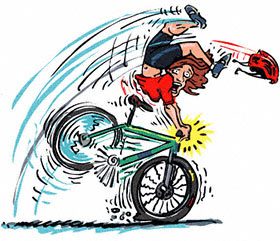
When Sean was riding his bike and braked suddenly, he kept moving forward due to
gravity
friction
inertia
weight
What is the best definition of inertia?
a force that pushes objects down
a property of matter that makes objects stop
a force that keeps objects from breaking down
a property of matter which resists change to the state of motion or rest
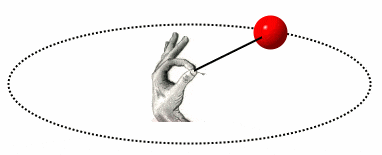
Which force in the Solar System is similar to the tension in the string?
What's the name of the Earth's natural satellite?
Moon
Sun
Planet
Star

