
 Worksheets
U1 Summative Review
Total questions: 77
Worksheet time: 52mins

A ______________ is a large molecule.
Micromolecule
Polymer
Amino Acid
Macromolecule
Which of the following elements are found in all macromolecules? (Select all that apply).


Which of the following is not one of the four major classes of macromolecules?
Lipids
Carbon
Protein
Carbohydrates
Nucleic Acid
Which macromolecule is used as our main source of energy?
Lipids/Fats
Nucleic Acids
Proteins
Carbohydrates
Which of the following are examples of carbohydrates? (Select all that apply).
Bread
Pasta
Olive Oil
Cheese
Which macromolecule stores energy?
Carbohydrates
Proteins
Lipids/Fats
Nucleic Acids
Nucleic acids make up which of the two molecules listed below?
FDA
RNA
DNA
FDR

An avocado is an example of a which macromolecule?
Carbohydrate
Lipid/Fat
Protein
Nucleic Acid
This macromolecule breaks down into sugars such as glucose.
Lipids/Fats
Nucleic Acids
Protein
Carbohydrates
A monosaccharide is....
carbohydrate
lipids
protein
nucleic acid
This macromolecule provides the major energy source used by mitochondria (and all living things)
carbohydrate
lipids
protein
nucleic acid
This macromolecule make up cell membranes, store energy, and provide insulation
carbohydrate
lipids
protein
nucleic acid
This macromolecule carries hereditary information and instructions for building molecules
carbohydrate
lipids
protein
nucleic acid
This macromolecule provides structural support and act as enzymes to catalyze metabolic reactions
carbohydrate
lipids
protein
nucleic acid
A macromolecule with C, H, O, and N only, is a.....
carbohydrate
lipid
protein
nucleic acid
Which statement is true?
Simple sugars are made of polysaccharides.
Glycerol is made of fatty acids.
RNA molecules are made of nucleotides.
Amino acids are made of proteins.
Plants build cellulose (a polysaccharide) to makeup their parts like leaves, roots, stems, etc. What monomer do plants use to build cellulose?
monosaccharides
disaccharides
amino acids
nucleotides
This group includes steroids like estrogen and testosterone
carbohydrate
lipid
protein
nucleic acid
One of the characteristics of life is that organisms must have genetic material. This genetic material is a ________.
carbohydrate
lipid
protein
nucleic acid
What is the term used to describe the energy needed to get a reaction started?
activation energy
adhesion energy
cohesion energy
chemical energy
Which of the following statements is true about catalysts (enzymes)?
Catalysts slow down the rate of chemical reactions.
Enzymes help regulate pH.
Catalysts are used up during a chemical reaction.
Catalysts lower the activation energy of a chemical reaction.
An enzyme and substrate can be compared to
lock and key
a faucet
a door hinge
light switch

Which macromolecule is shown?
lipid
protein
nucleic acid
carbohydrate
What is the function of a steroid?
send chemical signals
insulate organs
provide energy
build muscles
Proteins are made of many ____ bonded together.
amino acids
enzymes
polypeptides

All proteins
have a unique structure that determines their unique function.
are exactly the same in function but different in structure.
are exactly the same in structure but different in function.
are enzymes.

The order of amino acids determines the ______ and ultimately the function of a protein.
shape
color
flavor
texture
Enzymes are an example of
Lipids
Carbohydrate
Protein
Nucleic Acid
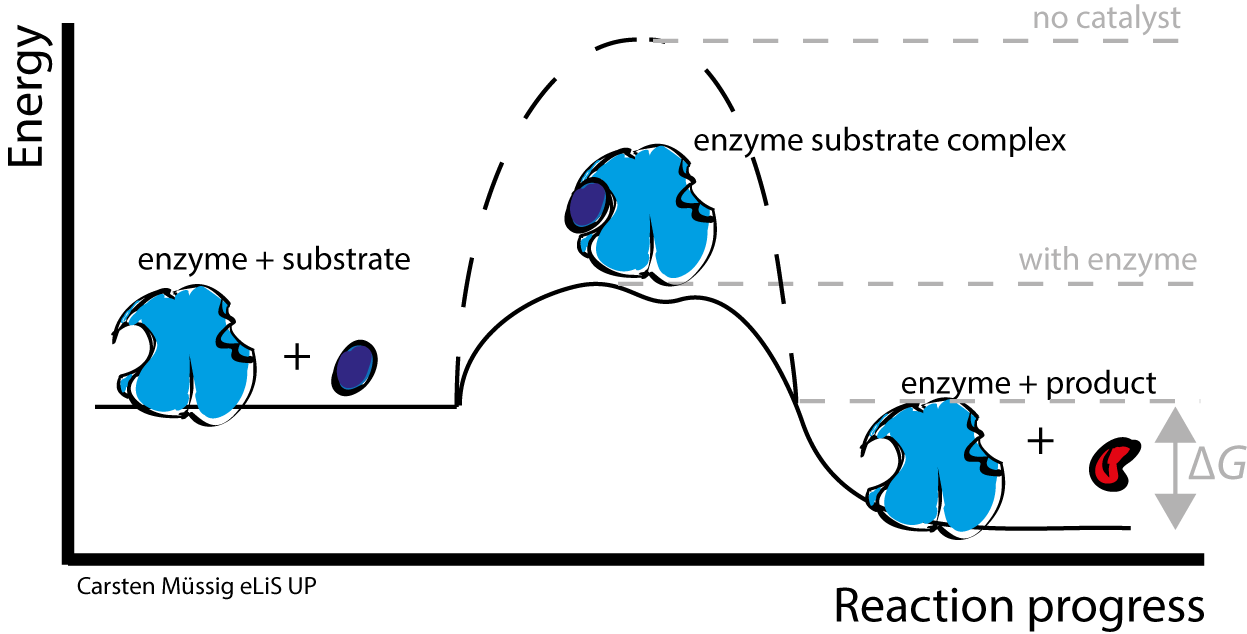
How does an enzymes shape relate to its function?
the shape of the enzyme has no relation to its function
the enzyme is shaped specially for certain substrates to perform a specific reaction
the enzyme shape acts as a receptor to certain products
the enzyme shape can fit into specific substrates to cease a reaction
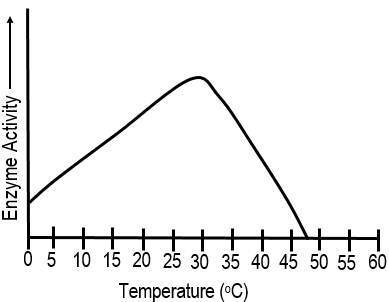
Changes in pH and temperature can ___________________ an enzyme which causes it to lose its shape and affects its function.
puncture
denature
double
delete

What is the optimum temperature for this enzyme?
25 degrees
45 degrees
40 degrees
32 degrees
An acid has a pH
higher than 7
lower than 7
7
greater than 14
if you add an acid to a base what will happen?
BOOM
it will neutralize
it wont mix

According to the pH range which substance is more acidic than lemon juice

What might happen if buffers did not exist within the human body?
Our blood and other bodily fluids might become too acidic or basic.
Our stomach acid would not be able to break down food.
We would not be able to process glucose within our cells.
We would not be able to inhale oxygen into our lungs.
Two beakers have liquids in them. When you add a base such as ammonia to beaker 1, the pH did not change. But when you add ammonia to beaker 2, the pH changes drastically. Choose the best explanation.
Beaker 1 had only water and Beaker 2 contained a buffer.
Beaker 1 contained a buffer and Beaker 2 contained only water.
Beaker 2 contained an acid.
The beaker that changed pH contained a buffer.
a base has a pH of
lower than 7
higher than 7
7
it only has a pOH
the more H+ ions the
stronger the acid
weaker the acid
it neutralizes
Large bodies of water, such as lakes and oceans, do not quickly fluctuate in temperature. What is the reason for this phenomenon?
Water is an acid.
Water is a versatile solvent.
Water has a high specific heat.
Water acts as a buffer.
Water is able to dissolve sodium chloride because
The polar areas of water molecules attract the oppositely charged ions of sodium chloride
The shape of the water molecules pushes the sodium and chloride ions apart
The oxygen in the water molecules reacts with the sodium and chloride ions
Water molecules and sodium chloride are covalently bonded
What is the chemical symbol of water?
H2O
CO2
O2
N2
What is cohesion?
The ability of a molecule to "stick" to itself
The ability of a molecule to "stick" to other molecules
Large amounts of energy are required to change the temperature of a substance
A well-organized and efficient team
What about the chemical structure of water causes many of the critical properties that support life on Earth?
Hydrogen Bonds
Cohesive behavior
Polarity
Expansion Upon Freezing

What characteristic is shown in the image?
Polarity
Hydrogen Bonds
Cohesion
Adhesion
What property of water results in the accumulation of small amounts of water into larger amounts of water? The results in the rivers, lakes, streams, and even the oceans.
Cohesive Behavior
Expansion Upon Freezing
Ability to Moderate Temperature
Universal Solvent

This individual is ice fishing. They cut through the top layers of ice to reach the water and fish below. What property of water allows for this to happen?
Expansion Upon Freezing
Universal Solvent
Ability to Moderate Temperature
Cohesive Behavior
What property of water allows for water to act as a temperature regulator for the world?
Cohesive Behavior
Expansion Upon Freezing
High Specific Heat
Universal Solvent

What property of water causes these Alka-Seltzer tablets to dissolve?
Universal Solvent
Expansion Upon Freezing
Cohesive Behavior
High Specific Heat
the substances present before a chemical reaction occurs; in a chemical reaction the arrow usually points away from the reactant(s)
reactant
product
compound
molecule
the substances that are formed during a chemical reaction; in a chemical reaction the arrows point toward the product
product
reactant
compound
molecule
What is a control group?
A group during an experiment that does not receive the experimental treatment
A group during an experiment that does receive the experimental treatment
A group in which the hypothesis does not apply
All of the things in an experiment that are kept the same.
The variable directly changed or manipulated by the experimenter.
Dependent variable
Independent variable
Control Group
Experimental Constant
The variable that is often measured at the end of an experiment
Independent variable
Dependent variable
To accurately test a hypothesis, one must be careful to eliminate all variables except for the one in which you are studying. What is the name for all of the parts of the experiment that are kept the same between the control group and the experimental group?
Controls
Variables
Experimental Constants
Peer groups
Showing inclination or prejudice towards one thing (for example, in science, having a preferred outcome of an experiment).
Bias
Fallacy
Hypothesis
Opinion
Which description best describes the differences in how we use the term “Theory” in science with how it is used in everyday vernacular?
The word “Theory” means essentially the same thing in both science and everyday vernacular. It means a guess or hunch.
The word “Theory” is defined the opposite in science versus everyday vernacular. Theories are just wild speculation in science and they mean the absolute truth in everyday vernacular.
The word “Theory” in science is an explanation that is supported by a vast amount of evidence, whereas we often use the word “Theory” as a hunch or a guess in everyday vernacular.
Scientific theories are rarely modified. If they are, it is likely due to...
the scientists lying and getting caught.
the development of a new technology or procedure that provides new evidence.
huge mistakes in the previous research.
Atoms with the same number of protons but different numbers of neutrons (Carbon 14 and Carbon 12) are called ___________.
Anion
Cation
Isotope

