wayground logo

Free Printable Worksheets

Font size

S
M
L
XL
Worksheets

Common Assessment -Cycle 1-Review

Total questions: 70

Worksheet time: 1hrs 15mins

Name
Class
Date
1.

The following statements describe a physical property EXCEPT one.

a)

Ice melts when heated

b)

Aluminum is a silver-colored metal

c)

The density of water is 1g/cm3

d)

An iron bar rusts

2.

A classification of matter that is made up on only 1 type of particle is called

a)

a heterogeneous mixture

b)

a pure substance

c)

a homogeneous mixture

d)

a blender

3.
Which is NOT a chemical change?
a)
Leaves changing colors in the fall
b)
Iron rusting
c)
Digesting Lunch
d)
Ice Melting
4.

Which of the following is a chemical property?

a)

Melting point

b)

Ductility

c)

Colour

d)

Flammability

5.

1.Particles cannot change position in a ________

a)

solid state

b)

liquid state

c)

gas state

6.

What kind of physical property is this? Volume of Milk

a)

intensive

b)

extensive

7.
Which of the following is NOT a pure substance?
a)
milk
b)
oxygen
c)
water
d)
carbon dioxide
8.

NH3 is a:

a)

Mixture

b)

Element

c)

Compound

d)

Particle

9.

Water and sugar dissolved is an example of:

a)

Compound

b)

Homogeneous mixture

c)

Substance

d)

Heterogeneous mixture

10.

The atmosphere is:

a)

Mixture

b)

Substance

c)

Element

d)

Compound

11.
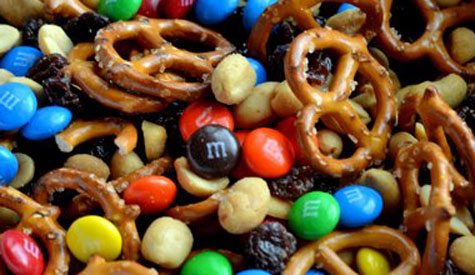
What type of mixture is this?
a)
homogenous mixture
b)
chemical
c)
heterogeneous mixture 
d)
solid mix
12.
Which of the following is a characteristic of a mixture?
a)
has varying properties
b)
has a fixed composition
c)
contains only pure substances
d)
does not reflect light
13.

How many sig figs are in this number: 9.09?

a)

1

b)

2

c)

3

d)

4

14.

How man sig figs are in this number: 1.004?

a)

1

b)

2

c)

3

d)

4

15.

How man sig figs are in this number: 0.003

a)

1

b)

2

c)

3

d)

4

16.

What is 25,000 in scientific notation? (With correct sig figs)

a)

2.5 ×1032.5\ \times10^3  

b)

  2.5 ×1042.5\ \times10^4  

c)

3 ×1043\ \times10^4  

d)

2.5000 ×1042.5000\ \times10^4  

17.

What is 0.000240 in scientific notation? (with correct number of sig figs)

a)

2.4 ×1052.4\ \times10^5  

b)

2.4 ×1042.4\ \times10^{-4}  

c)

2.40 ×1042.40\ \times10^{-4}  

d)

2.40 × 1042.40\ \times\ 10^4  

18.

Convert 7.1 ×1067.1\ \times10^6  to a decimal number.

a)

7,100

b)

7,100,000

c)

0.0000071

d)

7,100,000,000

19.

the speed of light is 3 ×1083\ \times10^8  meters per second. Convert that number to a decimal.

a)

38

b)

0.00000003

c)

300,000,000

d)

300,000

20.

Perform the following operation: 2.1 +23.02.1\ +23.0  

(your answer should reflect the appropriate number of sig figs)

a)

25.1

b)

25

c)

20.9

d)

48

21.

Perform the following operation: 2.30 ×0.712.30\ \times0.71  

(your answer should reflect the appropriate number of sig figs)

a)

16

b)

16.3

c)

16.33

d)

16.330

22.

Perform the following operation: 19.03.714\frac{19.0}{3.714}  

(your answer should reflect the appropriate number of sig figs)

a)

5.116

b)

5.12

c)

5.1

d)

5.1160

23.

If the accepted value for the density of ethanol is 0.789 g/mL and your group measured the density to be 0.80 g/mL what is your percent error?

(your answer should reflect the appropriate amount of sig figs)

%error = average  acceptedaccepted ×100\%error\ =\ \left|\frac{average\ -\ accepted}{accepted}\right|\ \times100  

a)

0.014%

b)

0.139%

c)

1.39%

d)

1.4%

24.

A 9 gram pebble has a volume of 0.5 cm^3. What is its density?

a)

18 g/cm^3

b)

4.5 g/cm^3

c)

9 g/cm^3

d)

36 g/cm^3

25.

A liquid has a volume of 37 mL and a density of 0.818 g/mL. What is its mass?

a)

37 g

b)

45.2 g

c)

30.3 g

d)

81.8 g

26.
What is the correct SI unit for mass?
a)
Kilograms
b)
newtons
c)
pounds
d)

ounces

27.
What is the volume of the liquid in the graduated cylinder?
a)
52.0 ml
b)
51.0ml
c)
51.8ml
d)
51ml
28.
What is the volume of the liquid in this graduated cylinder?
a)
58.8ml
b)
58.0ml
c)
58ml
d)
62ml
29.
You know 1000 mg = 1 g.  Convert 2.5 grams into milligrams.
a)
25 mg
b)
25,000 mg
c)
250 mg
d)
2500 mg
30.
Convert the following measurement:
7.25kg = ?g
a)
725g
b)
7250g
c)
.00725g
d)
7.250g
31.
Where do we read the level of liquid?
a)
The highest point the liquid touches
b)
The bottom of the meniscus
c)
Half way between, we make an educated guess and round it
d)
Somewhere about there
32.
The prefix kilo means x ____
a)
.001
b)
10
c)
1000
d)
200
33.
How many digits should you estimate in order to provide a valid measurement.
a)
One digit past the smallest increment.
b)
You should not estimate.
c)
2 digits past the smallest increment.
d)
1 digit before the smallest increment
34.
The length of a desk is 3.5 feet. How many centimeters is the length? 
(there are 2.54 cm in an inch)
a)
60
b)
120.23
c)
106.68
d)
117.12
35.
How many gallons are in a pool that holds 758,000 Liters?
(1 gallon = 3.79 Liters)
a)
200
b)
20,000
c)
200,000
d)
2,000,000
36.
Which lists metric units, in order, from smallest to largest?
a)
milligram, centigram, gram
b)
kilogram, gram, centigram
c)
decagram, hectogram, milligram
d)
kilogram, hectogram, decagram
37.
What is the atomic number of the atom pictured? 
a)
11
b)
12
c)
22
d)
23
38.
Oxygen’s atomic number is 8. This means that an oxygen atom must have
a)
8 electrons
b)
8 protons
c)
8 neutrons
d)
a mass number of 8
39.

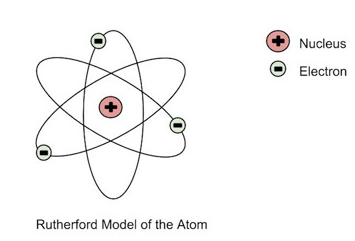
This is an example of which model of the atom?

a)

Rutherford's Model

b)

Plum Pudding Model

c)

Atomic Model

d)

Bohr's Model

40.

What experiment did J.J. Thomson run to develop his model of the atom?

a)

Gold-Foil Experiment

b)

Definite Proportion Experiment

c)

Cathode-Ray Tube Experiment

d)

No experimentation was done

41.

What particle was used in the gold foil experiment?

a)

Beta Particle

b)

Alpha particle

c)

Gamma ray

d)

High energy electron

42.

99.9% of the atom's mass is located in the

a)

electrons

b)

nucleus

c)

protons

d)

neutrons

43.

Where are electrons found?

a)

Outside the nucleus

b)

Under my bed

c)

Inside the nucleus

d)

Inside a proton

44.
All matter is made of what?
a)
energy 
b)
atoms 
c)
electrons 
d)
compounds 
45.
Rutherford's gold foil experiment provided evidence that...
a)
negative and positive charges are spread evenly throughout the atom.
b)
alpha particles have a positive charge.
c)
gold is not a dense as previously thought.
d)
there is a dense positively charged nucleus at the center of an atom.
46.
What type of particles exist within an atomic nucleus?
a)
Protons and Neutrons
b)
Neutrons and electrons
c)
Neutrons and Atoms
d)
Elements and Atoms
47.

Which 3 of the following are true? Pick three!

a)

Scientists continue to learn about the atom.

b)

Scientists have always known everything about the atom.

c)

Scientists have done experiments that reveal important clues about the structure of the atom.

d)

As technology is invented, scientists learn more about the structure and behavior of atoms.

48.
What is the atomic number of the atom pictured? 
a)
11
b)
12
c)
22
d)
23
49.
What is the atomic mass of the atom pictured? 
a)
11
b)
12
c)
22
d)
23
50.

How would you write the isotope name from this nuclide symbol?

a)

Sodium-23

b)

Sodium-11

c)

Sodium-12

d)

Sodium-22

51.

How many neutrons are in the isotope of sulfur,36S?

a)

16

b)

20

c)

24

d)

26

52.

How many neutrons are in the following atom?

a)

47

b)

61

c)

108

d)

155

53.

How many protons are in the following atom?

a)

82

b)

125

c)

207

d)

189

54.

What is the name of the isotope with 54 protons and 79 neutrons?

a)

Xenon-79

b)

Gold-79

c)

Gold-133

d)

Xenon-133

55.

The atomic mass of an element is the ___.

a)

average of the mass number and the atomic number for the element

b)

weighted average of the masses of the isotopes of the element

c)

total mass of the isotopes of the element

d)

total number of subatomic particles in the nucleus

56.

Chlorine has two naturally occurring isotopes, Cl-35 and Cl-37, The atomic mass of chlorine is 35.45. Which of these two isotopes of chlorine is more abundant?

a)

Cl-35

b)

Cl-37

c)

Cannot be determined from the information provided.

57.
An element has three different isotopes. One has a mass of 35.00 amu; another has a mass of 36.00  amu; and another has a mass of 38.00  amu. What is the average atomic mass of this element?
a)
36.33 amu
b)
37.00 amu
c)
12.11 amu
d)
impossible to tell
58.
Calculate the average atomic mass of silver.
a)
106.38649amu
b)
111.91896amu
c)
107.8677amu
d)
121
59.
What is the name of the atom pictured here?
a)
Nitrogen
b)
Nitrogen-15
c)
Nitrogen-7
d)
Nitrogen-8
60.

A radioactive isotope is a substance that

a)

will eventually gain electrons through bonding

b)

will become stable by cooling down

c)

is unstable and will 'decay' by losing particles

d)

is not found naturally on the Earth

61.

Which type(s) of radiation can pass through paper?

a)

alpha

b)

beta

c)

gamma

d)

alpha and beta

e)

beta and gamma

62.

When Uranium decays it emits an alpha particle, forming an isotope of Thorium. Which of the above decay equations is correct?

a)

A

b)

B

c)

C

d)

D

63.

In the above decay equation, what are the missing numbers x and y?

a)

A

b)

B

c)

C

d)

D

64.
What type of radioactive decay is shown here?
a)
Alpha decay
b)
Beta decay
c)
Gamma decay
65.
What type of radiation can be stopped by clothing or a piece of paper?
a)
Alpha radiation
b)
Beta radiation
c)
gamma radiation
66.
Which is NOT a characteristic of gamma radiation?
a)
High energized photon of light
b)
Can be stopped by a sheet of aluminum foil
c)
Is the most harmful type of radiation to humans
d)
Our use of protection is concrete, or several inches of lead
67.
What type of decay is shown here
a)
alpha decay
b)
beta decay
c)
gamma decay
68.
a)
Element
b)
Compound
c)
Mixture
69.
a)
Element
b)
Compound
c)
Mixture
70.
a)
Element
b)
Compound
c)
Mixture