
 Worksheets
College Biology Unit 2 Review
Total questions: 75
Worksheet time: 47mins
What are bacterial cell walls made of?
Glycerophospholipids
Peptidoglycans
Phospholipids
Chloramphenicol


how are bacteria becoming resistant to antibiotics?
bacteria does not become resistant to antibiotics.
by a genetic mutation/by acquiring resistance from another bacterium.
by wishing they were resistant.
antibiotic resistance does not exist.


Bacteria reproduce asexually by a process called
replication
meiosis
mitosis
binary fission

a form of asexual reproduction in which one cell divides, forming two identical cells.
binary fission
conjugation
decomposer
pasteurization
What is natural selection?
When reproduction occurs and mutations happen.
When a offspring has the traits from its parents.
When an organism is able to camoflauge in its environment.
the process whereby organisms that are better adapted to their environment tend to survive and reproduce more offspring.
Antibiotic resistant bacteria can
Survive
Reproduce
Pass on the resistant gene to their offspring
All of the above
A population of bacteria is treated with an antibiotic; however, a few remaining bacteria survive. How did this antibiotic resistance occur?
The bacteria acquired new traits that enabled them to survive the treatment.
The antibiotic was not strong enough.
The wrong antibiotic was used to treat the infection.
The bacteria possessed mutations that made them naturally resistant to the medicine.

How many antibiotics does this bacteria seem to be resistant to?
2
3
All of them
None of them
_______________ are chemicals produced by bacteria and fungi that inhibit or kill other microbes.
plasmas
disinfectants
antiseptics
antibiotics
Thick peptidoglycan in cell wall
Gram positive bacteria
Gram negative bacteria
Thin peptidoglycan in cell wall
Gram positive bacteria
Gram negative bacteria
Stained pink
Gram positive bacteria
Gram negative bacteria
Stains purple
Gram positive bacteria
Gram negative bacteria
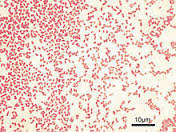
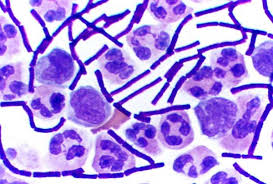

This is an example of -
Eukaryote Cell
Prokaryote Cell
Animal Cell
Plant Cell
Cell membranes are made of -
Carbohydrates
Proteins
Phospholipids
Nucleic Acids
Regulates the entering and exiting on materials in the cell
Cell Wall
Cell Membrane
Mitochondria
Endoplasmic Reticulum
Found in Eukaryotic cells only
Ribosomes
DNA
Cytoplasm
Nucleus
Creation of proteins, responsible for protein synthesis
Chloroplast
Cytoplasm
Mitochondria
Ribosomes
Breaks down glucose to make ATP
Chloroplast
Mitochondria
Nucleus
Lysosomes
Stores water and nutrients for the cell
Lysosomes
Vacuole
Chloroplast
Cytoplasm
Extra outside layer of protection
Cell Wall
Cell Membrane
ER
Chlorophyll
Converts light energy into food for the plant and carbon dioxide into oxygen through Photosynthesis.
Cytoplasm
Chloroplast
Mitochondria
Cell Wall
What is true of a prokaryotic cell?
they have a nucleus
they are NOT condiered to be alive
they reproduce by binary fission
they do not have a cell wall
1. Which of the following is a characteristic of a prokaryotic cell?
Cellulose cell wall
Mitochondrion
Absence of nucleus
Large subunit (80S) ribosome
Which is true of prokaryotic and eukaryotic cells?
Prokaryotic cells are larger than eukaryotic cells.
Eukaryotic cells do not have nuclei, and prokaryotic cells do have nuclei.
Prokaryotic cells lack membrane-bound organelles, and eukaryotic cells contain membrane-bound organelles.
Eukaryotic cells are simpler than prokaryotic cells.
A _____ is something in the environment that causes an organism to respond.
stimulus
response
cause
effect


Your body shivers when you are cold. This is because of the concept of (other than response to stimulus)...
Maintaining a stable internal environment is called
homeostasis
equilibrium
balance
evenness
Reproduction that only involves one parent and all offspring are identical; for example, binary fission of bacteria or amoebas.
Asexual
Sexual
Division
Addition
Occurs when an animal offspring grows from a piece of its parent. (like a starfish)
binary fission
budding
mitotic cell division
regeneration/fragmentation
Which of these is NOT an advantage of asexual reproduction.
Enables organisms to reproduce without a mate
Requires less time and energy
Results in little genetic variation
Enables organisms to produce large amounts of offspring

If pressure increases on a mothers cervix during childbirth then oxytocin increases, this is an example of ____ feedback?
Thermoregulation
Blood Pressure
positive
negative
Homeostasis
allows for a wildly fluctuating internal environment
is impossible in vertebrates
is the maintenance of a relatively stable internal environment and often incorporates a form of feedback regulation
Puritans left and colonized America. Most of the Puritans had a blood disorder. In the new American colony, 90% of children have the blood disorder. This is an example of
natural selection
bottleneck
founder effect
Wolves only hunt for orange foxes. Orange foxes go extinct, but white foxes stay alive. This is an example of
natural selection
bottleneck
founder effect
A hurricane wipes out an entire population of bees. This is an example of
natural selection
bottleneck
founder effect
According to natural selection, a being "fit" means..
you are strong
you are fast
you can survive and reproduce
you can eat more than others
Fill in the blank:
"_________________ are a measure of how common a particular allele is in the gene pool of a population."
Traits
Allele frequencies
Point mutations
Phenotypes
The variations of a gene are known as...?
Genotypes
Phenotypes
Alleles
Mutations
When new individuals join the population from a different gene pool or when some individuals leave a population, what is known as?
Gene flow
Genetic drift
Genetic variation
Adaptive value
The change in allele frequencies in a population due to random events is knows as...?
Environmental pressures
Gene flow
Genetic drift
Favourable phenotypes
What event can significantly reduce the size of the population and thus its genetic diversity?
(select all that apply)
Natural disasters
Individuals moving in and out
Land clearing
Inbreeding
If a small group of individuals move to a new location and establish a new population, this is known as...?
Genetic drift
Bottleneck effect
Founder effect
Random chance
A drastic reduction in the size of a population that can change allele frequencies is called
the bottleneck effect
the gene flow effect
the Thanos effect
the founder effect
A prolonged drought that lasted from 2017 to 2019 caused a reduction to the water level of a local lake. The lake serves as the habitat for a population of trout. Due to the reduced water levels, the trout were pushed closer to the surface of the water. This thereby allows birds, like bald eagles, to spot and grab the trout. A heavy rain season in 2020 brought the water levels of the lake back to normal, or pre-2017 levels. The population of trout, however, was significantly reduced. What does this example best represent?
Mutations
Bottleneck effect
Founder effect
Gene Flow
Natural Selection

Why are advantageous traits more likely to be passed onto offspring?
Because the offspring are more likely to survive and reproduce with these traits.
Because the offspring are less likely to survive and reproduce with these traits.
This statement is false; all traits are equal.
Because the trait is an acquired phenotype.

An inherited trait that helps those organisms that have it to survive
niche
structure
characteristic
adaptation

This is the organisms with traits best suited to their environment are more likely to survive and reproduce.
Variation
Mutation
Natural Selection
Gradualism

A trunk-crown anole has larger toe pads, which means it is better _____ to live high up in the canopy.
adapted
evolved
selected
raised

Organisms that live in similar habitats and have similar body types are referred to as...
ecomorphs
species
common ancestors
adaptations
the differentiation of roles in a given space that enables similar species to coexist in a community
character displacement
climax community
resource partitioning
pioneer species

