wayground logo

Free Printable Worksheets

NEW

Font size

S
M
L
XL
Worksheets

CIS Unit 3 Practice Test

Total questions: 70

Worksheet time: 2hrs 43mins

Name
Class
Date
1.
Approximately how many inches of rain did Anqing receive in June?
a)
5 inches
b)
7 inches
c)
10 inches
d)
12 inches
2.
Which city has the highest rainfall in July? 
a)
Iquitos ( Graph on Left)
b)
Monrovia (Middle Graph)
c)
Normanton (Graph on Right)
d)
None of the above
3.
Which city has the lowest rainfall in July? 
a)
Iquitos ( Graph on Left)
b)
Monrovia ( Middle Graph)
c)
Normanton (Graph on Right)
d)
None of the above
4.
This city is in what climate zone?
a)
Tropical
b)
Temperate
c)
Frigid
d)
Lousiana 
5.
How much rainfall does Anqing recieve in September?
a)
10 inches
b)
80 inches
c)
4 inches
d)
1 inches
6.
Which month has the lowest average temperature?
a)
December
b)
November
c)
January
d)
February 
7.
This climate zone is located on the equator and is the hottest climate zone.
a)
Tropic
b)
Temperate
c)
Frigid
8.
The climate zone has mild temperatures and a half year long growing season.
a)
Tropic
b)
Temperate
c)
Frigid
9.
What is the average amount of precipitation in the month of June?
a)
less than 50 mm
b)
about 125 mm
c)
about 100 mm
d)
about 200 mm 
10.
What month has the lowest average precipitation in Dublin?
a)
March
b)
May
c)
April
d)
February
11.

A climate graph measures:

a)

Temperature (A)

b)

Precipitation (B)

c)

Landforms

d)

A and B

12.
In a climate graph, what does the bar graph represent?
a)
high temperatures
b)
amount of precipitation all year
c)
average temperatures
d)
average amount of precipitation
13.
In a climate graph, what does the line graph represent?
a)
high temperatures
b)
amount of precipitation all year
c)
average temperatures
d)
average amount of precipitation
14.
Which hemisphere would you predict the city of Sockhold is located in?
a)
Northern
b)
Southern
c)
Western
d)
Eastern
15.
Based on the climate graph, which hemisphere is Sydney located in?
a)
Northern
b)
Southern
c)
Western 
d)
Eastern
16.
Which hemisphere would you predict Copenhagen is located in based on the climate graph?
a)
Northern
b)
Southern
17.
Which hemisphere would you predict the city is located in based on the climate graph?
a)
Northern
b)
Southern
18.
Which hemisphere would you predict Johannesburg is located in based on the climate graph?
a)
Northern
b)
Southern
19.
Which zone is the city in the climate graph most likely located in?
a)
polar
b)
temperate
c)
tropical
20.
Which zone is the city in the climate graph most likely located in?
a)
polar
b)
temperate
c)
tropical
21.
What is ecological succession?
a)
A slow change in an environment
b)
A change that takes days in an environment
c)
No change
d)
Abiotic change
22.
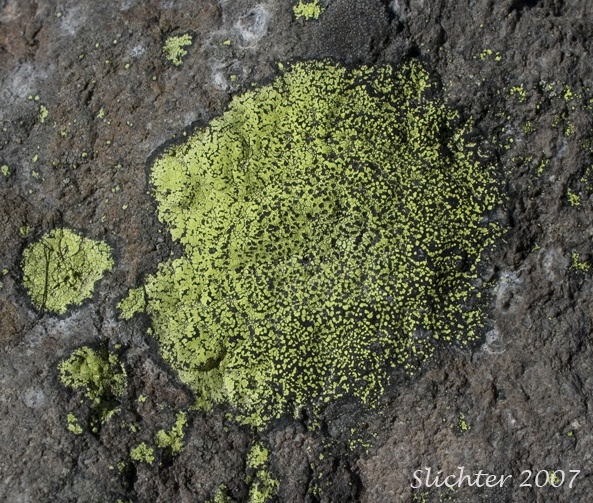
What are examples of pioneer species in a primary succession?
a)
Bushes and Shrubs
b)
Oak trees
c)
Mossess and Lichens 
d)
A rose Bush
23.
A pioneer species is...
a)
a large organism
b)
the first organisms to adapt to a new environment 
c)
The best organism 
d)
Abiotic organisms 
24.
What is the most important function of pioneer species?
a)
To create rocks
b)
To create soil and add nutrients to the environment 
c)
To look nice
d)
Food for animals 
25.
A climax community is ….
a)
the beginning of a new ecological succession.
b)
the rocks in a new environment.
c)
the fire that will cause destruction.
d)
an area that reaches its greatest growing potential.
26.
What is the difference between primary and secondary succession?
a)
Primary succession already has soil.
b)
Primary has soil and secondary does not
c)
soil is present in both
d)
primary has no soil and secondary has soil
27.
Why does primary succession take longer to reach climax community?
a)
Because trees do not perform photosyntheses.
b)
Because climax community is in a forrest.
c)
Because primary succession already has soil
d)
Because primary succession does not have soil
28.
Which is the correct order in primary succession?
a)
Rocks, Lichens & Mosses, Bushes & Shrubs, Trees
b)
Lichens & Mosses, Rocks, Trees, Bushes & Shrubs 
c)
Trees, Bushes and Shrubs, Lichens & Mosses, Lichens & Mosses
d)
Rocks, Grass, Trees, Bushes & Shrubs
29.

An area that begins with bare rock and takes longer to become a forest is ...

a)

Primary Succession

b)

Secondary Succession

30.

An area that is faster to become a forest due to the presence of soil is ...

a)

Primary Succession

b)

Secondary Succession

31.

A farmer abandons his farm. A a short time a forest begins to grow on his abandoned farm. What type of succession would this be considered?

a)

Primary Succession

b)

Secondary Succession

32.

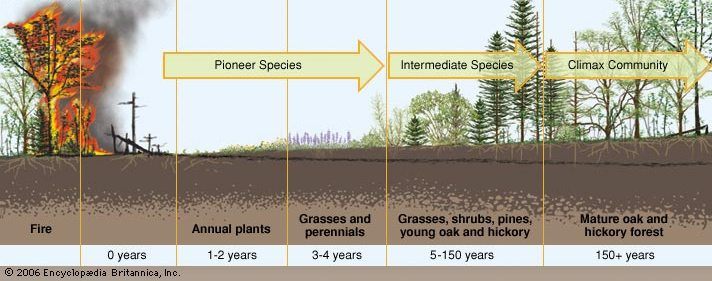
During a forest fire most vegetation (plants) burn. Which ecological succession will take place after a forest fire?

a)

Primary

b)

Secondary

33.

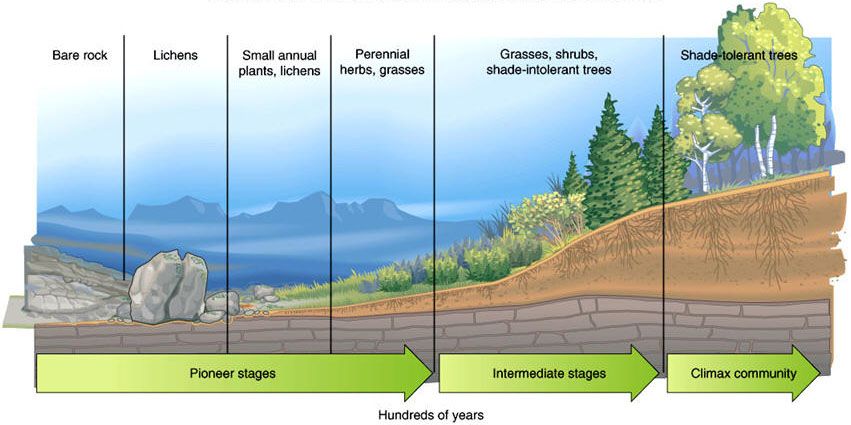
The picture display which type of succession?

a)

primary

b)

secondary

c)

tertiary

d)

all of the above

34.

The picture displays which type of succession?

a)

primary

b)

secondary

c)

tertiary

d)

all of the above

35.

What is the name given to lichen/algae during primary succession?

a)

pioneer species

b)

volunteer species

c)

founder species

d)

conqueror species

36.

After a volcanic eruption, volcanic rock is present (but no soil). Which of the following states the most likely order of succession that would be seen?

a)

Lichens → Shrubs → Grasses → Trees

b)

Lichens → tree → shrubs→Grasses

c)

Grasses → Lichens → Shrubs → Trees

d)

Lichens → Grasses → Shrubs → Trees

37.

Natural disasters such as flooding,forest fires, and tornadoes are associated with which type of succession?

a)

primary

b)

secondary

c)

Gordito

d)

ecosystem

38.

What is an example of an area that is likely to undergo primary succession?

a)

Glaciers melt and leave exposed rock

b)

Plants die from drought and decompose

c)

Land is bulldozed and soil remains

d)

A forest fire occurs

39.

The final stage of ecological succession can typically be observed when evidence of a _____________________ is present.

a)

Mature Tree Growth

b)

Climax Community

c)

Pioneer Community

d)

housing community

40.

Primary or secondary ecological succession?

a)
b)
41.

Primary or secondary ecological succession?

a)
b)
42.

Primary or secondary ecological succession?

a)
b)
43.

Which of the following statements about primary succession is true?

a)

it begins with a climax community

b)

small mammals are first to inhabit the area

c)

it only occurs after glaciers retreat

d)

it begins with bare rock

44.

Pioneer species are the first

a)

trees to grow in an area that has been disturbed

b)

trees that replace the original trees after a forest fire

c)

organisms to live in previously uninhabited areas

d)

organisms to live in a forest canopy

45.

The reestablishment of a damaged ecosystem in an area where the soil is intact is called...

a)

primary succession

b)

secondary succession

c)

pioneer succession

d)

symbiotic succession

46.

In 1988 several large forest fires occurred in Yellowstone National Park. What process occurred after these fires?

a)

primary succession

b)

secondary succession

c)

pioneer succession

d)

symbiotic succession

47.

A sequence of biotic changes that regenerate or create an ecological community is known as

a)

migration

b)

factors

c)

succession

d)

erosion

48.
What is the order of succession shown in this figure?
a)
A, B, C, D
b)
B, A, D, C
c)
C, D, A, B
d)
D, A, B, C
49.

What is a climax community?

a)

An ecosystem that is just beginning to grow.

b)

An ecosystem that is stable and mature and has reached the final stages of succession.

c)

An ecosystem that is damaged by a forest fire.

d)

An ecosystem that is damaged by a landslide.

50.
A change that a living thing goes through so it fits in better with its environment
a)
Adaptation
b)
Drought
c)
Range of tolerance
d)
Chlorophyll
51.
What is the most important function of pioneer species?
a)
To create rocks
b)
To create soil and add nutrients to the environment 
c)
To look nice
d)
Food for animals 
52.
Which is the correct order in primary succession?
a)
Rocks, Lichens & Mosses, Bushes & Shrubs, Trees
b)
Lichens & Mosses, Rocks, Trees, Bushes & Shrubs 
c)
Trees, Bushes and Shrubs, Lichens & Mosses, Lichens & Mosses
d)
Rocks, Grass, Trees, Bushes & Shrubs
53.

An area that begins with bare rock and takes longer to become a forest is ...

a)

Primary Succession

b)

Secondary Succession

54.

An area that is faster to become a forest due to the presence of soil is ...

a)

Primary Succession

b)

Secondary Succession

55.

During a forest fire most vegetation (plants) burn. Which ecological succession will take place after a forest fire?

a)

Primary

b)

Secondary

56.

After a volcanic eruption the lava cools and becomes rock. Which succession must take place in order for vegetation (plants) to return?

a)

Primary Succession

b)

Secondary Succession

57.
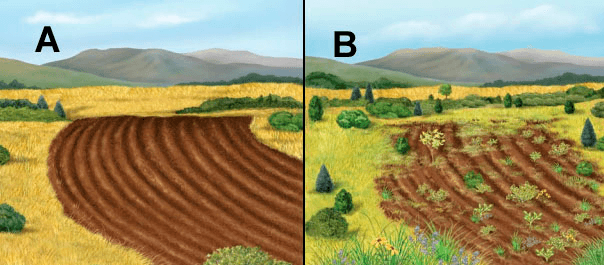
What type of succession is shown going from figure A to figure B?
a)
primary succession
b)
ecological succession
c)
secondary succession
d)
intermediate
58.
The picture shows what type of succession?
a)
primary
b)
secondary
c)
tertiary
d)
quadanary
59.
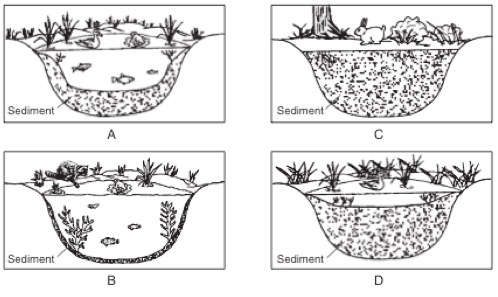
What is the correct order from oldest (happened first) to youngest (happened last) in this pond succession?
a)
A, B, C, D
b)
D, C, B, A
c)
B, A, D, C
d)
C, D, A, B
60.
Succession type?
a)
primary succession
b)
secondary succession
c)
tertiary succession
d)
variable succession
61.
First species occuring in areas of primary succession are mosses and
a)
grasses
b)
wildflowers
c)
trees
d)
lichens
62.
Plant life starting to grow on a volcano
a)
primary succession
b)
secondary succession
c)
tertiary succession
d)
variable succession
63.
Which habitat exhibits the greatest biodiversity?
a)
A habitat with 15 different species with about 300 individuals each
b)
A habitat with 10 different species with about 75 individuals each
c)
A habitat with 4 different species with about 150 individuals each
d)
A habitat with only one species with about 2000 individual
64.
Why is biodiversity so important?
a)
Because all species depend on each other to survive, so if one becomes extinct another species that relies on it could go extinct as well
b)
Because it’s better to have only one variation of each species.
c)
Because it better to only have a few species on Earth.
d)
Honestly, I have no idea what biodiversity is!
65.
What factor does NOT affect biodiversity?
a)
Urbanization
b)
Planting Native Plants
c)
Overfishing
d)
Pollution
66.
Which of the following is NOT related to biodiversity?
a)
species diversity 
b)
genetic diversity 
c)
climate diversity 
d)
ecosystem diversity 
67.
What is Species diversity?..?...
a)
the number or variety of species in the word or in a particular region 
b)
The range of genetic material present in a gene pool or population of a species.
c)
The variety of ecosystems that are present in the biosphere.
d)
A species whose numbers are so small that the species is at risk of extinction.
68.
What is ecosystem diversity...??..
a)
Number of different species in the biosphere.
b)
Regional extinction.
c)
A species whose numbers are so small that the species is at risk of extinction.
d)
The variety of ecosystems that are present in the biosphere.
69.

An invasive species is an species that...

a)

is non-native and causes harm

b)

could be native and causes harm

c)

is non-native

d)

all are incorrect

70.

True or False

Invasive Species have enemies in their new environments

a)

True

b)

False