
 Worksheets
Chemistry unit 1
Total questions: 147
Worksheet time: 1hrs 14mins
A substance made up of atoms of two or more different elements joined by chemical bonds
Compound
Heterogeneous Mixture
Homogeneous Mixture
Solution
Pure substance that consists entirely of one type of atom.
Solution
Mixture
Compound
Element
Elements have the most similar properties if they are in the same _______?
Periods
Groups
Rows
Blocks

What type of elements does the image show?
Metals
Nonmetals
Gases
Metalloids
Which physical property would most likely be a nonmetal
Good conductor
Ductile
Brittle
Shiny
When an atom loses an electron, it becomes a
positive ion
negative ion
neutral ion
neutral atom
How does oxygen become an oxide ion?
it loses 2 electrons
it gains 2 electrons
it shares electrons
it releases energy
Valence electrons are found
in the innermost energy level of an atom
in the middle energy levels of an atom
in the outermost energy levels of an atom
Cations
Gain electrons, has an overall positive charge
Lose electrons, has an overall positive charge
Lose electrons, has an overall negative charge
Gain electrons, has an overall negative charge
Anions
Gain electrons, has an overall positive charge
Lose electrons, has an overall positive charge
Lose electrons, has an overall negative charge
Gain electrons, has an overall negative charge
How does calcium become an calcium ion?
it loses 2 electrons
it gains 2 electrons
In a covalent bond, electrons are
Gained
Pulled apart
Shared
In the nucleus
In ionic bonds, electrons are
Gained or lost
Shared
Mixed randomly
Negatively charged
A pure substance that cannot be broken down into any other substance.
Elements
Compounds
Mixtures
A(n) ______________ is formed when two or more elements chemically combine.
Compound
Element
Mixture
What are the three main groups of the periodic table?
groups
metal
nonmetals
metalloids
periods
What are the vertical columns on the periodic called?
groups
periods
nonmetals
metals
metalloids

Use the periodic table in the picture to help you answer the question. Which element would have similar properties to Lithium (Li)?
Beryllium (Be)
Copper (Cu)
Sodium (Na)
Boron (B)
Has a definite mass and volume, but not a definite shape
solid
liquid
gas
ice
Liquids take the shape of their
container
mass
matter
water
When water vapor changes back into a liquid, which process does it go through
Condensation
Evaporation
Freezing
Melting
When water gets heated, it becomes water vapor through which process
Condensation
Evaporation
Freezing
Melting
When ypu put water in the freezer and it becomes a solid, it goes through which process
Condensation
Evaporation
Freezing
Melting
Which is an example of a gas?
car
water
carbon dioxide
In which form of matter do the atoms freely move around?
solid
liquid
gas
Why does ice stay at the top of oceans instead of sinking to the bottom?
Ice is colder than liquid water
Ice is less dense than liquid water
Ice is more dense than liquid water
Ice is warmer than liquid water
Why does ice float?
As water freezes, it expands and its density decreases.
As water freezes, air becomes trapped between the hydrogen bonds of water molecules.
As water freezes, it takes up more hydrogen from the atmosphere, causing it to have greater buoyancy (floating ability).
As water freezes, it takes up more oxygen from the atmosphere, causing it to have greater buoyancy.
Mixtures are created when two or more ______ are mixed together.
liquids
changes
substances
rocks

How many atoms of Iron are in this compound?
1
2
3
4
How many atoms of hydrogen are in
C6H12O6
6
12
18
2
How many atoms of oxygen are in this compound?
2Ca(OH)2
1
2
3
4


How many valence electrons are in an atom of each element in Group 15 in the periodic table?
(a)

Which pair of properties describes the elements in Group 18?
They are chemically stable and liquid at room temperature.
They have eight valence electrons and are flammable.
They are magnetic and boil at low temperatures.
They are gaseous at room temperature and chemically stable.
You can't live without water! What is its chemical formula?
H2
O2
H2O
H2O2

Who is credited with the invention of the modern periodic table?
Mendel
Mendeleev
Nobel
Newland
The symbol Ag stands for which element?
Silver
Gold
Aluminium
Antimony
Elements in modern periodic table is arranged in basis of (a)
Group 1 elements are very reactive
false
true
Group 1 elements have exciting reactions with water.
false
true
The following elements are members of group 7 EXCEPT for one.
chlorine
hydrogen
fluorine
iodine
Which of the following can be compressed easily?
stone
iron
steel
gas
Which of the following is transparent?
wood
stone
glass
both (1) and (2)
When sand is added to water.
It will dissolve water
it does not dissolve in water and settles down
it does not dissolve in water and floats on top
None of these

What elements generally make an ionic bond ?
Metal and nonmetal
2 or more nonmetals
2 or more metals
2 elements

An ionic bond is formed when
Valence electrons are shared.
Valence electrons surround the cations.
Valence electrons are transferred between atoms.
Valence electrons are completely transferred between two metals.

Predict the bond formed between Be and F
Covalent-bond
Ionic-bond
Metallic-bond
Hydrogen-bond
The symbol Au stands for :
Gold
Cadmium
Zinc
Krypton
What do we call an atom that has more protons than electrons
An anion
A molecule
A cation
An isotope
Tin
(a)
Potassium
(a)
Sodium
(a)
Which subatomic part of an atom gives it a positive charge?
Neutron
Proton
Electron
Nucleus
anything that occupies space and has mass
chemistry
weight
object
matter
It is the ability of a material to be easily drawn into wires.
malleability
solubility
ductility
conductivity
●semiconductors
metals
nonmetals
metalloids
plasma
A __________ goes up and down on the periodic table.
Group
Period
A _________ goes side to side on the periodic table.
Group
Period
What properites do nonmetals have in common?
Poor conductor of electricity
Good conductor of thermal energy
Soft and Malleable
Shiny, lustrous surface

Where are the nonmetals located on the Periodic Table?
On the right
On the left
On the ZigZag Line
Silicon has a dull, metallic luster, conducts heat well, and is brittle. What is it?
Nonmetal
Metal
Metalloid
None of the above
What are electrons on the outermost energy level of an atom?
Atomic
Subscript
Electron
Valence
What are two or more atoms held together by covalent bonds?
Molecule
Mineral
Compound
Element
What is the quality of giving off light, brightness, glitter, brilliance?
Brittle
Luster
Ductile
Malleable
What is the physical property that is capable of being changed; easily shaped?
Ductile
Brittle
Malleable
Luster
What is a number in front of a chemical formula in an equation that indicates how many molecules or atoms of each reactant and product are involved in a reaction?
Subscript
Coefficient
Atomic Number
What is a number written slightly below and to the right of a chemical symbol that shows how many atoms of an element are in a compound?
Subscript
Coefficient
Atomic Number
Characteristics that can be observed without changing the substance.
Chemical Change
Physical Change
Chemical Property
Physical Property
An element that is an insulator, dull, and brittle.
Metal
Nonmetal
Metalloid
An element that has properties of metals and nonmetals, is a semiconductor.
Metal
Nonmetal
Metalloid

How many Protons does a Carbon atom have?
12
6
18
14
What is a "Valence Shell"
The first electron shell
Something you would find on the beach
The outermost electron shell
Any full electron shell
How many valence electrons does Magnesium(Mg) have?
1
2
3
4
How many valence electrons does Xenon(Xe) have?
1
4
8
18

How many valence electrons does this Nitrogen atom have?
15
5
2
3
Which is NOT a chemical property?
rusting
flammability
color
oxidization

The picture represents which of the following?
Compound
Element
Mixture

The picture represents which of the following?
Mixture
Element
Compound

The picture represents which of the following?
Element
Mixture
Compound

The picture represents which of the following?
Mixture
Element
Compound

Is salt (NaCl) an element, compound, or mixture?
Element
Mixture
Compound
The atoms in a molecule are held together by:
Gravitational forces
Chemical bonds
Friction
Physical bonds
An atom that has gained or lost one or more electrons
ion
electron
neutron
bond

Democritus
Thomson
Dalton
Rutherford

Dalton
Bohr
Thomson
Shrodinger

Bohr
Shrodinger
Chadwick
Rutherford
Which group in the periodic table is called the alkaline earth metals?
Group 1
Group 2
Group 17
Group 18
Sodium has atom number 11 and a mass of 23 u.
What is the atom build like?
p: 11
e: 11
n: 1
p: 11
e: 12
n: 11
p: 12
e: 12
n: 11
p: 11
e: 11
n: 12

What could be the salt shown in the diagram?
Sodium carbonate
Copper (II) sulphate
Iron (II) sulphate
Iron (III) nitrate

What does this picture represent?
Element
Compound
Mixture
Is combining magnesium metal and acid to produce hydrogen gas a physical or chemical change?
Physical
Chemical
Is mixing paint colours a physical or chemical change?
Physical
Chemical
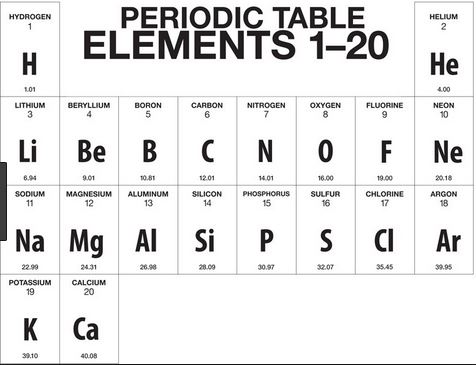
How many valence electrons does Nitrogen Have?
1 Valence electron
2 Valence electron
3 Valence electron
4 Valence electron
5 Valence electron
The number of protons in the nucleus of an atom?
Isotope
Atomic mass
Atomic number
Element
An atom of iodine has 7 valence electrons. What will an atom of iodine MOST likely do to be stable?
Lose 1 electron
Lost 7 electrons
Gain 1 electron
Neither gain nor lose any valence electrons
An atom of neon has 8 valence electrons. What will an atom of neon MOST likely do to be stable?
Gain 1 electron
Lose 2 electrons
Lose 8 electrons
Neither gain nor lose any valence electrons
Which of the following statements correctly differentiates pure substances from mixtures?
Pure substances do not produce new substances when combined together, unlike mixtures that form a new material with different properties.
Pure substances may be broken down into simpler forms through physical means, while mixtures have components that are inseparable.
Pure substances have fixed composition, while components of mixtures vary.
Pure substances and mixtures are both made up of similar kinds of atoms all throughout.
What type of bond is formed when ions of opposite charges are attracted to one another?
covalent
ionic
hydrogen
What particles move around the nucleus of the atom and are negatively charged ?
Protons
Neutrons
Electrons
Positrons
Which of the following is not a metal ?
Gold
Silver
Copper
Carbon
What is the chemical name of water?
The mole ratio of hydrogen and oxygen gases liberated during electrolysis of water is
1:1
2:1
4:1
1:2
Q. 1 How many rows and columns are in the modern form of the periodic table?
a) 7 & 18
b) 18 & 7
c) 9 & 18
d) 18 & 9
Q.2 Inert gases are placed in which group of the periodic table?
a)18th group
b) Zeroth group
c) VIII A
d) all of these
Q.4 Which group elements are called halogens?
a) 17th
b) VII A
c) fluorine family
d) All of the above
What is Flammability?
Substances that range from being stable to being highly reactive depending on the presence of other substances or particular conditions.
Whether a substance will burn or not.
How much damage a substance will do to a particular organism.
What is an element?
A pure substance that consists of two or more kinds of atoms
A pure substance that consists of only one kind of atom
A mixed substance with only one kind of atom
The smallest particle in an element
What is conductivity?
Materials that can be drawn into long, thin wires
Materials that can transfer heat and electricity from one particle to another
Materials that can be hammered easily into shapes
The amount of matter packed into a given value
An atom with 1 valence electron 'needs' a full shell, so it can either gain 7 electrons or lose 1. Which is more likely to occur?
nothing
gain 7
lose 1
Ionic bonds are between
metals and nonmetals
2 metals
2 nonmetals
How are ionic bonds formed?
transfer of electrons
sharing of electrons
Salt is an example of what?
ionic compound
covalent compound

What type of bonding does this picture show?
Ionic
Covalent

What type of bonding does this picture show?
Ionic
Covalent
Valence electrons are transferred
Ionic bonds
Covalent bonds
Valence electrons are shared
Ionic bonds
Covalent bonds

The positive ions tend to _____________ electrons.
lose
gain
The negative ions tend to _____________ electrons.
lose
gain

What type of elements form cations?
metals
nonmetals
metalloids?
How does calcium become a calcium ion?
it loses 2 electrons
it gains 2 electrons
Name the following ionic compound: NaCl
sodium chloride
sodium chlorine
nitrogen chlorine
nitrogen chloride
written above the line to indicate the charge (oxidation number) of the ion.
Superscript
Anion
IUPAC
Product

How many VALENCE ELECTRONS does Chlorine have?
2
7
8
10
17

Ionic bonds are formed when electrons get
Shared between two atoms
Removed from both atoms
Transferred from one atom to another
Added to both atoms

What is the correct formula for Sodium Chloride?
SCl
NaCl
SC
NaCl2

Write the chemical formula for K and Br (potassium bromide).
KBr
K2Br
KBr3
KBr2

How many valence electrons does hydrogen have?
1
2
3
4
Sodium and Bromine will make a _____ bond
Ionic
Hydrogen
Covalent
Exploding
Why do all bonds form?
filling the outermost energy level
to win
to make other atoms unstable
to be famous
NaCl
metallic
covalent
Ionic
Hydrogen and Chlorine will from a ____ bond
Unique
bestie
Covalent
Ionic

How many valence electrons in this structure ?
4
5
6
7
Predict the bond formed between Be and F
Covalent-bond
Ionic-bond
Metallic-bond
Hydrogen-bond
Metals make _____ ions.
positive
negative
neutral
When an ionic bond is formed, electrons are _____.
gained
lost
shared
gained or lost

What happens when two negatively charged ions are pushed together?
they will repel (move apart)
they will be attracted to each other (move together)
Will a chlorine atom gain or lose electrons?
gain
lose
Will a sodium atom gain or lose electrons?
gain
lose
Why are sodium and chlorine attracted to each other?
they have opposite charges
they both have negative charges
they both have positive charges

