
 Worksheets
PS Unit 3 Test Review
Total questions: 64
Worksheet time: 34mins
The change of state from a gas to a liquid.
Melting
Sublimation
Evaporation
Condensation
Freezing
The change of state from a liquid to a gas.
Melting
Freezing
Evaporation
Condensation
Sublimation
The laws that state the mathematical relationships between the volume, temperature, pressure, and quantity of gas.
Archimedes's Laws
Pascal's Principle
Gas Laws
Amendment Laws
The SI unit of pressure.
Archimedes
Newton
Einstein
Pascal
A state of matter that consists of free-moving ions and electrons.
Solid
Liquid
Gas
Plasma
The amount of force exerted per unit of surface.
Buoyant Force
Pressure
Density
Weight
The process in which a solid changes directly into a gas.
Melting
Freezing
Evaporation
Condensation
Sublimation
A measure of how hot or cold something is.
Temperature
Thermal Energy
Kinetic Energy
Potential Energy
The temperature at which a solid becomes a liquid.
Melting Point
Boiling Point
Malleable
Ductile
The temperature at which a liquid becomes a gas.
Melting Point
Boiling Point
Malleable
Ductile
State of matter in which particles have a definite volume but no definite shape.
Solid
Liquid
Gas
Plasma
State of matter in which particles have no definite shape and no definite volume.
Solid
Liquid
Gas
Plasma
State of matter in which particles have a definite shape and a definite volume.
Solid
Liquid
Gas
Plasma

Freezing
F
C
A
D
Gas to liquid
vaporization
melting
condensation
sublimation

Sublimation
A
B
C
F
Condensation
endothermic
exothermic
Solid to liquid
freezing
melting
sublimation
condensation

Vaporization
B
E
D
F
Freezing
endothermic
exothermic

Deposition
A
C
B
F
The change of one state of matter to another is called
Osmosis
Phase Change
Matter
Energy
Transition from a liquid to a gas
Condensation
Freezing
Evaporation
Melting
Gas condenses to a liquid
Evaporation
Melting
Freezing
Condensation
What happens to molecules when their kinetic energy increases?
The molecules move slower
The molecules move faster
The molecules get heavier
It depends on the type of molecule

Three containers with the same amount of the same material are shown below. Which container has the substance with the highest amount of energy?
The container on the left
The middle container
The container on the right
All have an equal amount of energy
Three containers with the same amount of the same material are shown below. Which container has the substance with the lowest amount of energy?
The container on the left
The middle container
The container on the right
All have an equal amount of energy
Amy was sitting outside on a hot, summer day, enjoying a glass of sweet iced tea. She notices some water droplets on the outside of her glass. What is causing those water droplets?
The outside air is heating up the ice, causing it to melt into a liquid.
The cold liquid in the glass is cooling the air around it, making it condense into a liquid.
The outside air is heating up the liquid in the glass, causing it to evaporate.
The liquid in the glass is cooling the air around it, causing it to evaporate.
Which statement best describes what happens when heat is added to a substance?
Energy moves out of the substance causing the molecules to slow down.
Energy moves out of the substance causing the molecules to speed up.
Energy moves into the substance causing the molecules to slow down.
Energy moves into the substance causing the molecules to speed up.
What happens to molecules when their kinetic energy increases?
The molecules move slower
The molecules move faster
The molecules get heavier
It depends on the type of molecule
Change of a gas directly into a solid
Sublimation
Condensation
Evaporation
Deposition

This is an example of
Condensation
Evaporation
Sublimation
Melting

This is an example of
Deposition
Condensation
Melting
Evaporation

This is an example of
(Hint: Dry Ice)
Deposition
Sublimation
Freezing
Melting

This is an example of
Melting
Sublimation
Deposition
Condensation

The temperature at which a liquid evaporates to a gas is called
freezing point
boiling point
melting point
condensation point
The temperature at which a liquid freezes to a solid is called
Freezing Point
Melting Point
Boiling Point
Condensation Point
The temperature at which a solid melts to a liquid is called
Boiling Point
Freezing Point
Condensation Point
Melting Point
The temperature at which a gas condenses to a liquid is called
boiling point
condensation point
melting point
freezing point
The SI unit of pressure is the (a)
When a fluid fills a closed container, it exerts pressure
only on the bottom of the container
only on the sides of the container
only on particles within the fluid
everywhere inside the container
Two ways to increase pressure are:
Increase force and increase surface area
Decrease force and increase surface area
Decrease force and decrease surface area
Increase force and decrease surface area
FORCE ACTING ON PER UNIT AREA IS CALLED:
FORCE
NON-CONTACT FORCE
PRESSURE
CONTACT FORCE
if the temperature increases, then vapor pressure will
increase
decrease
cannot tell
stay the same
What do you mean by "absolute zero"?
The coldest possible temperature.
The hottest possible temperature.
The mean or average of the hottest possible temperatures in the world.
The mean or average between hottest and coldest possible temperature in the world.
What happens when molecules reach absolute zero?
The molecules move and stop alternately.
The molecules stop moving.
The molecules start moving.
The molecules continue to move.
The Kelvin temperature scale (at absolute zero) reflects the complete absence of thermal energy
True
False
a description of a change in which a system absorbs energy from its surroundings
Charle's Law
Boyle's Law
Fulayter's Law
None of the choices are correct.
This is when heat is absorbed, it is an
Exothermic reaction
endothermic reaction
both
none
the energy a substance must absorb in order to change from a solid to a liquid
Thermal Energy
Heat Energy
Heat of Fusion
Solar Energy
When heat is released it is an
exothermic reaction
endothermic reaction
both
none
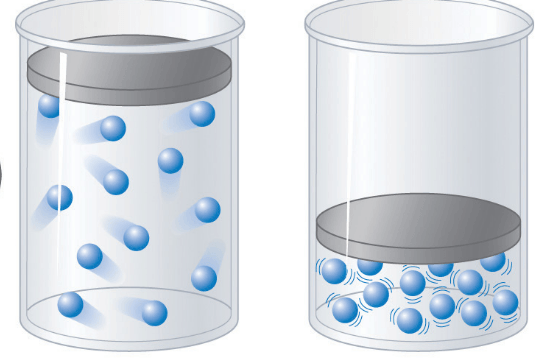
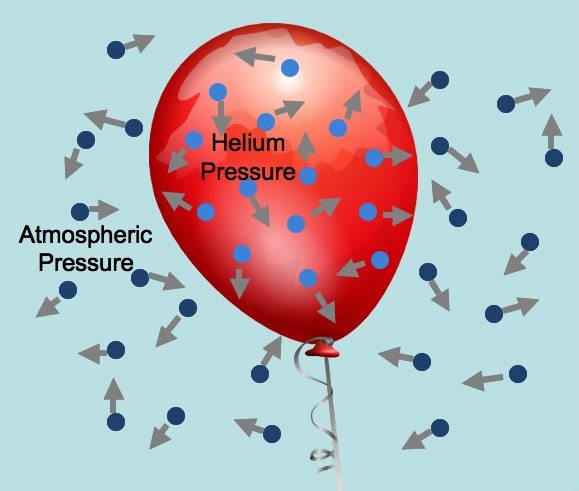

This is when heat is absorbed, it is an
Exothermic reaction
endothermic reaction
both
none
When heat is released it is an
exothermic reaction
endothermic reaction
both
none

