
 Worksheets
peering into the invisible world, importance of cells
Total questions: 69
Worksheet time: 54mins
Prokaryotes are also known as...
Smelly
Bacteria
Viruses
Germs
What is considered multicellular?
Animals
Bacteria
Plants
All of the above
There are _________ basic types of cells
Two
Three
Four

This organism is a _________________
Prokaryote
Eukaryote
Yeast
Amoeba
Something that was not alive, was never alive, and will never be alive is called ____.
biotic
dead
living
non-living

Which one is not a part of the cell theory?
All living things are made of one or more cells
The cell is the building block of life
Cells come from pre-existing cells
Plants are the only things made of cells

Who came up with the term "cell"?
Robert Hooke
Charles Darwin
Gregor Mendel
Anton Van Leeuwenhoek
An organism with more than one cell is known as a/an
organ system
multicellular organism
unicellular organism
When an organism has many organs working together for the same purpose, they form a/an
tissue
organ
organ system
multicellular organism
Which level of organization is missing?
- organism
- organ system
- organs
- __________
- cell
- organelle
tissue
prokaryotic
multicellular
eukaryotic
What is a tissue
Groups of similar types of cells that work together to carry out a specific task
The smallest unit of life
Groups of different tissues working together to perform a particular job
Groups of different organs working together to complete a series of tasks

The widely accepted explanation of the relationship between cells and living things is known as:
cell formation
cell theory
biology
cell function
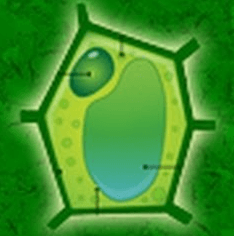
There are ______parts to the Cell Theory.
3
2
5
6

What is one way in which all living things on Earth are alike?
All living things have hair.
All living things are made of cells.
The cells of all living things have chloroplast.
All living things can move.
________________ have the ability to conduct photosynthesis.
fungi
bacteria
virus
algae
Covid-19 can be grouped into which type of microorganisms?
Algae
Bacteria
Protozoa
Virus
What type of an organism is a mushroom
Bacteria
Fungus
Virus
None of the above

Organisms that cannot be seen with naked eyes are?
Micrones
Worm
Microbials
Microorganisms
The smallest microorganism that invades and then reproduces inside a living cell.
A bacteria responsible for curdling of milk is:
Lactobacillus
Rhizobium
Oscillatoria
Plasmodium
Bacteria is known as__________________ in an ecosystem when feeding on dead organisms.
Decomposers
Herbivore
Pathogens
Infections
Penicillium is a
Algae
Fungus
Bacteria
Yeast
Malaria is caused by
Protozoa
Virus
Algae
Bacteria
Amoeba belongs to
Algae
Fungi
Virus
Protozoa

The group of microorganism which help converting milk into curd is _________________
virus
bacteria
protozoa
algae
Yeast, mold, and mushrooms are part of which category of microorganisms?
Bacteria
Viruses
Fungi
Protists
Which statement is NOT true?
Microorganisms help dead things decay.
Microorganisms only live in soil.
Microorganisms cause disease.
Microorganisms are used to make cheese.
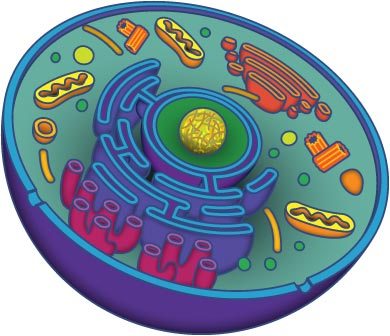

Robert Hooke
Matthias Schleiden

There are three parts to the cell theory. Which is NOT one of those parts?
All organisms are composed of one or more cells.
The cell is the basic unit of structure and organization in organisms.
Cells spontaneously arise from carbon and nutrients carried in the bloodstream.
All cells come from pre-existing cells.
What is NOT part of the modern cell theory?
all cells contain a nucleus
metabolism (processing energy) occurs in cells
genetic (hereditary) info is passed from one cell to another
all cells have the same basic composition (a cell membrane, cytoplasm, cytoskeleton, ribosomes, etc).
Cells come from______.
other preexisting cells
cytoplasm
organelles
prokaryotes
The cell theory states that_________
cells come from cells
all organisms are made of cells
cells are the basic unit of structure and function for life
all of the above
________ is the scientist who saw small chambers when looking at cork, and named them “cells”.
Newton
Hooke
Carson
Manning
The cell theory is a result of the work of one very important scientist name Hooke.
True
False
Regardless of type, all cells
have a cell membrane
have cytoplasm
Have DNA
all of the above
What type of cell lacks a nucleus?
eukaryotic
prokaryotic
human
animal
A cell in which the genetic material is enclosed within a nucleus is a
eukaryotic cell
prokaryotic cell
human cell
animal cell
Single celled organisms are called
unicellular
multicellular
bicellular
tricellular
Which of the following statements is part of the cell theory?
All living things are made up of one or more cells.
Cells are the basic units of living things.
All cells come from pre-existing cells.
All of these
"Small organs" of the cell that carry out specific functions
Organelles
Organs
Cell Wall
Cell
The protective layer around all cells, allows nutrients in and waste out is called the…
Cell Wall
Cell Membrane
Endoplasmic Reticulum
Ribosomes
These make proteins in the cell.
Ribosomes
Nucleus
Vacuole
Golgi Body
Gel-like material, where organelles are located
Cytoplasm
Nucleus
Vacuole
Mitochondria
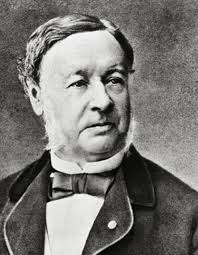

What was Schleiden convinced of?
All plants are made of cells
All animals are made of cells
All cells are prokaryotic
None of the above
Who discovered that all cells come from other living cells and had research that lead to the last major principle of cell theory?
Matthias Schleiden
Theodore Schwann
Robert Hooke
Rudolf Virchow

