
 Worksheets
A & P/Nervous System (Mod. 7-9)
Total questions: 68
Worksheet time: 56mins
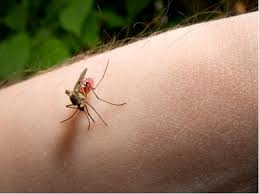
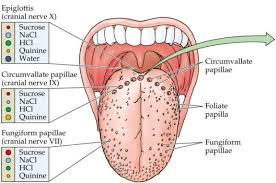
Taste and smell are similar because:
They are both located on the face
They both detect chemicals
They both require conscious effort to detect
They both bypass the brain
The human eye can focus objects at different distances by adjusting the focal length of the eye lens . This is due to
Presbyopia
Accommodation
Near-sightedness
Far-sightedness
What kind of neuron carries information from our eyes to our brain?
Motor neuron
Sensory neuron
Nerve
Spinal neuron
The two major parts of the nervous system are the
brain and spinal cord
central and somatic nervous systems
sympathetic and parasympathetic systems.
peripheral and central nervous systems
The speed of neural conduction between neurons will result in difficulties in speaking, vision, and balance if the ________________ insulating the axons is damaged or removed.
Axon
Myelin Sheath
Nucleus
Brain
Neurotransmitters are ______________ that travel across the ______________ to another cell.
electrical signals; receptors
electrical signals; synapse
chemicals; receptors
chemicals; synapse
Our ______ receive messages and send them to the brain. The brain sends messages to our body on how to respond.
heart
lungs
nerves
What does the cerebellum do?
function in arousing and maintaining consciousness
processes inputs of cerebral cortex and sensory receptors
deficiency of the neurotransmitters dopamine
What part of the brain controls movement of the skeletal muscles?
cerebellum
diencephalon
medualla oblengata
What do Axons do?
carry information to the cell body
carry information away from the cell body
What is the surface of the cerebrum called?
cerebral cortex
medulla
axon
Which part of the brain is responsible for sensation, thought, movement, awareness, and memory??
Brainstem
Cerebellum
Cerebrum
Which part of the brain is responsible for movement and coordination?
Brainstem
Cerebellum
Cerebrum
What are the divisions of the ANS?
parasympathetic & sympathy
sympathetic & peripheral
pathetic & sympathy
parasympathetic & sympathetic
Which of the following systems controls smooth muscle, cardiac muscle & the glands?
somatic nervous system
autonomic nervous system
Which division of the ANS regulates resting & nutrition-related functions?
parasympathetic nervous system
sympathetic nervous system
Which type of receptor responds to heat or cold?
thermoreceptors
chemoreceptors
nociceptors
mechanoreceptors
What type of receptors are cutaneous & proprioceptors?
chemoreceptors
photoreceptors
thermoreceptors
somatic
What is the sense of body position?
gustation
olfaction
proprioception
audition
What is the scientific term for smell?
redaction
olfaction
refraction
perception
Which sense is also called the gustatory sense?
balance
taste
smell
sight
The five taste sensations are sweet, salty, sour, bitter, & ___.
umami
tsunami
unbelievable
outstanding
Where is the sense of balance located?
outer ear
middle ear
inner ear
Which of the following allows us to maintain our balance as we are moving?
static equilibrium
dynamic equilibrium
The ear distinguishes two main parts of sound waves, which are ___.
frequency & amplitude
frequency & wavelength
amplitude & period
wavelength & period
Which structure of the ear contains the organ of hearing called the spiral organ or the organ of Corti?
tympanic membrane
semicircular canals
ampullae
cochlea
Which of the following is NOT an example of a medium that sound can travel through?
sand
air
metal
water
Palpebrae & tears are the two structures that protect the ___.
eye
ear
nose
tongue
The ___ division of the ANS is responsible for decreasing the size of the pupil, called constriction.
sympathetic
parasympathetic
What is the point at which blurring starts?
far point of vision
middle point of vision
near point of vision
What allows both of your eyes to see the same object at the same time & improve your depth perception?
convergence
accommodation
constriction
The somatic nervous system is the system that transmits action potentials from the CNS to the ___.
brain
skeletal muscles
smooth muscles
ganglia
The sympathetic division is the division of the ANS that generally prepares the body for ___.
digestion
sleep
physical activity
depolarization
Collections of neuron bodies that are outside of the CNS are called ___.
afferent
ganglia
myelin
Nodes of Ranvier
What type of neuroglia forms the blood-brain barrier?
ganglia
neurons
astrocytes
epithelial cells
What is the fatty wrapping that speeds up the transmission of action potentials down the axon?
ganglia
oligodendrocytes
astrocytes
myelin sheath
What is the ability to undergo an action potential in response to a stimulus?
potential difference
excitability
irritability
saltatory
What is the system that transmits action potentials from the CNS to the skeletal muscles?
central nervous system
autonomic nervous system
automatic nervous system
peripheral nervous system
What kind of cells insulate PNS axons?
absolute
Schwann
oligodendrocytes
myelin
What are neurons that transmits action potentials from sensory receptors to the CNS?
afferent neurons
efferent neurons
effervescent neurons
activity neurons
What is the division of ANS that regulates resting & nutrition-related functions like digestion, defecation, & urination?
ciliated ependymal cells
sympathetic division
parasympathetic division
association division
___are neuroglia that are only found in the CNS.
saltatory
oligodendrocytes
ganglia
Schwann cells
Efferent neurons are neurons that transmits action potentials from the CNS to the ___.
motor neurons
effector organs
digestive organs
glial cells
Which type of neuroglia bind CNS neurons together & insulate the axon?
Schwann cells
ganglia
oligodendrocytes
saltatory
Which part of the brain stem controls the vital functions of the body like heartbeat & breathing?
midbrain
pons
medulla oblongata
What is the anatomical crossing over of neurons from left to right?
decussation
commissures
What are connections of neuron axons that allow the two hemispheres of the brain to communicate with one another?
decussation
commissures
What condition is not having enough oxygen in the blood, that can be dangerous for the brain because it kills neurons?
hypoglycemia
hypoxia
hypertension
hypertonic
The major components of the ___ are the thalamus & hypothalamus.
diencephalon
corpus callosum
cerebrum
cerebellum
What is the major structure of the brain which is considered the control center for the subconscious motor functions?
diencephalon
corpus callosum
cerebrum
cerebellum
What are the nerves that enable communication between the right & left cerebral hemispheres?
diencephalon
corpus callosum
cerebrum
cerebellum
What is the area of the brain responsible for all voluntary activities of the body, the largest part of the brain that contains the cerebral cortex, limbic system, & basal ganglia?
diencephalon
corpus callosum
cerebrum
cerebellum
Which of the ventricles produce the majority of cerebrospinal fluid in the brain?
third ventricle
fourth ventricle
lateral ventricles
What is the function of the cerebrospinal fluid?
to keep the brain from drying out
to separate the lobes of the brain
to cushion & protect the brain
to control the temperature of the brain
Which functional area of the brain initiates basic skeletal muscle movements?
primary motor cortex
premotor area
prefrontal area
taste area
Which functional area of the brain interprets taste?
primary motor cortex
premotor area
prefrontal area
taste area
Which functional area of the brain is responsible for motivation & insight, regulates mood & emotion, & inhibits impulsive behavior?
primary motor cortex
premotor area
prefrontal area
taste area
Which functional area of the brain initiates muscle movement for speech?
Broca's area
Wernicke;s area
visual cortex
primary auditory area
Which functional area of the brain is responsible for the comprehension of speech?
Broca's area
Wernicke;s area
visual cortex
primary auditory area
Which functional area of the brain interprets basic visual information like color, shape, & size?
Broca's area
Wernicke;s area
visual cortex
primary auditory area
Which functional area of the brain interprets basics of sound such as pitch & volume?
Broca's area
Wernicke;s area
visual cortex
primary auditory area
Which layer of the meninges is named because the tissue resembles thick webbing like old dusty cobwebs that are formed in barns?
dura mater
pia mater
arachnoid mater

