wayground logo

Free Printable Worksheets

NEW

Font size

S
M
L
XL
Worksheets

Physical Science Midterm Exam

Total questions: 60

Worksheet time: 5hrs 0mins

Name
Class
Date
1.
Identify this type of reaction,
Cl2 + 2KI -->  I2 + 2KCl
a)
Synthesis
b)
Single displacement
c)
Double displacement
d)
Decomposition
2.
2 C5H5 + Fe --> Fe(C5H5)2 
a)
single displacement
b)
double displacement
c)
decomposition
d)
synthesis
3.
NO2 →N2 + O2
a)
Synthesis (combination)
b)
Decomposition
c)
Single replacement
d)
Combustion
4.
2 RbNO3 + BeF2 --> Be(NO3)2 + 2 RbF
a)
single displacement
b)
double displacment
c)
decomposition
d)
synthesis
5.
A chemical reaction is...
a)
when a substance is mixed with another substance
b)
when a substance undergoes a change to form a new substance
c)
when a substance is dissolved into another substance
d)
when a substance is heated or exposed to another substance
6.
What is the left part of a chemical equation called?
2H2 + O2 --> 2H2O
a)
Reactants
b)
Products 
c)
Yields 
d)
Chemical Equation 
7.
What is the right part of a chemical equation called...
2H2 + O2 --> 2H2O
a)
Reactants
b)
Products 
c)
Yields 
d)
Chemical Equation 
8.
Which type of reaction takes place in the presence of oxygen and produces carbon dioxide and water?
a)
double replacement 
b)
decomposition 
c)
combustion 
d)
single replacement
9.
What does the Law of Conservation of Mass state?
a)
Matter cannot be gained or lost in a chemical reaction.
b)
Matter can only be lost in a chemical reaction.
c)
Matter can only be gained in a chemical reaction.
d)
Matter can be gained and lost in a chemical reaction. 
10.
Balance this equation:
P4+O2  -->  P2O3
a)
3 P4+ O--> 2 P2O3
b)
 P4+ O--> 2 P2O3
c)
 P4+ 3 O2 --> 2 P2O3
d)
 P4+ 2 O--> 3 P2O3
11.
Balance this equation
_N+ _H--> _NH3
a)
1,2,3
b)
1,3,2
c)
1,1,2
d)
2,1,1
12.
Which of these is covalent?
a)
NaCl
b)
Pb(NO3)2
c)
CO2
d)
AlCl3
13.

The octet rules states that most elements want to have _____ valence electrons.

a)

2

b)

4

c)

6

d)

8

14.
What elements generally make a covalent bond?
a)
metal and nonmetal
b)
2 or more nonmetals
c)
metal
d)
none of the above
15.

What is the chemical formula for Phosphorous trichloride

a)
PCl3
b)
P3Cl
c)
P3Cl3
d)
PCL
16.
What is the formula of Sodium oxide?
a)
Na2O
b)
NaO2
c)
Na2O2
d)
Na2O
17.

For nonmetals (grousp 5-7), its easier to _____ electrons to have a full outer shell.

a)

gain

b)

lose

c)

share

18.

For metals (groups 1-3), its easier to _____ electrons to have a full outer shell.

a)

gain

b)

lose

c)

share

19.
Valence electrons are the...
a)
Innermost electrons
b)
Middle electrons
c)
Outermost electrons
d)
Any electrons
20.
What is ionization energy?
a)
Energy needed to destroy an atom
b)
Energy required to remove an electron
c)
Energy needed to split an electron
d)
Energy required to add an electron
21.
Electronegativity __________ from left to right within a period and __________ from top to bottom within a group.
a)
decreases, increases 
b)
increases, increases
c)
increases, decreases 
d)
stays the same, increases
22.
Atomic radius generally increases as we move __________.  
a)
down a group and from right to left across a period 
b)
up a group and from left to right across a period 
c)
down a group and from left to right across a period 
d)
up a group and from right to left across a period 
23.
As you move down the periodic table atoms get bigger.  This is because ____________.
a)
The atoms have more mass.
b)
The atoms have more protons.
c)
The atoms have more energy levels
d)
The atoms have more nuetrons
24.
Which atom has the largest atomic radius?
a)
potassium
b)
rubidium 
c)
francium
d)
cesium
25.
Which of the following will have a lower ionization energy than Scandium (Sc)?
a)
Helium (He)
b)
Titanium (Ti)
c)
Calcium (Ca)
d)
Magnesium (Mg)
26.
Which of the following will have a higher electronegativity than arsenic (As)?
a)
Carbon (C)
b)
Neon (Ne)
c)
Antimony (Sb)
d)
Germanium (Ge)
27.

When two atoms form a chemical bond with one another, which subatomic particles are involved?

a)

electrons

b)

protons

c)

neutrons

28.

What is the significance of valence electrons?

a)

Valence electrons are involved in forming chemical bonds.

b)

Valence electrons contribute significantly to the mass of an atom.

c)

Valence electrons cause an atom to move very rapidly when it is in its gaseous state.

d)

Valence electrons have a different charge than those electrons that are closer to the nucleus.

29.

The atomic number of iron (Fe) is 26. What does this tell you about an atom of iron?

a)

An atom of iron has 26 protons.

b)

The sum of protons and neutrons in an atom of iron is 26.

c)

An atom of iron has 26 neutrons.

d)

The sum of protons, neutrons, and electrons in an atom of iron is 26.

30.

Use the periodic table to answer the following question. Which element has 50 protons?

a)

tin (Sn)

b)

vanadium (V)

c)

cesium (Cs)

d)

carbon (C)

31.

Which of the following BEST describes the location of electrons within the atom?

a)

in an electron cloud around the nucleus

b)

in orbits around the nucleus

c)

outside of the nucleus

d)

in the nucleus

32.

Which of the following subatomic particles are located in the nucleus of the atom?

a)

protons and neutrons

b)

protons only

c)

neutrons only

d)

electrons only

e)

protons, neutrons, and electrons

33.

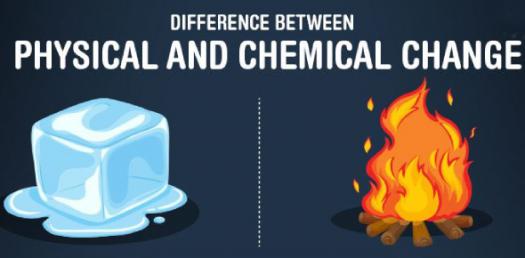
Which of these observations would likely be an indication of a chemical change?

a)

A change in odor when two substances are mixed

b)

A change in temperature when a hot substance is left standing in air

c)

A change in volume as a substance is heated

d)

The disappearance of a liquid as it boils
34.

What happens to the atoms of a substance in a chemical change?

a)

Atoms get bigger

b)

Atoms change their arrangement and motion

c)

Atoms get smaller

d)

Atoms bond together differently

35.

What happens to the atoms of a substance in a physical change?

a)

Atoms get bigger

b)

Atoms change their arrangement and motion

c)

Atoms get smaller

d)

Atoms bond together differently

36.

What is a sign of a chemical change?

a)

Stretching

b)

Tearing

c)

Compressing

d)

Bubbles

37.

What is a sign of a physical change?

a)

Bubbles forming

b)

Color changing

c)

Stretching

d)

Producing heat

38.

Which state of matter has the most energy?

a)

Solid

b)

Liquid

c)

Gas

d)

California

39.

Which state of matter has the least energy?

a)

Solid

b)

Liquid

c)

Gas

d)

Wyoming

40.

Which state of matter has definite shape and definite volume?

a)

Solid

b)

Liquid

c)

Gas

d)

Arkansas

41.

Which state of matter has indefinite shape and definite volume?

a)

Solid

b)

Liquid

c)

Gas

d)

Alaska

42.

Which state of matter has indefinite shape and indefinite volume?

a)

Solid

b)

Liquid

c)

Gas

d)

Idaho

43.

Dry ice changing from solid to gas is called

a)

diffusing

b)

melting

c)

condensation

d)

sublimation

44.

Is NaCl an element or a compound?

a)

Element

b)

Compound

45.
Two classifications of a pure substance are
a)
homogeneous and heterogeneous
b)
atoms and elements
c)
elements and compounds
d)
solutions and colloids
46.
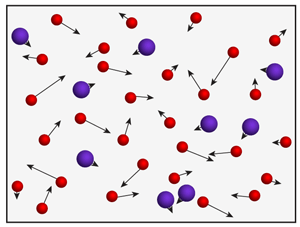
What type of mixture is this?
a)
heterogeneous 
b)
homogeneous
47.
What type of mixture is this?
a)
heterogeneous 
b)
homogeneous
48.
What is a mixture?
a)
elements chemically combined
b)
a combination of different things
c)
it is found on the Periodic Table 
d)
it is made of chemical
49.
The technetium-99 isotope has a half-life of 6.0 hours. If 100.0 mg were injected into a patient how much remains after 18 hours?
a)
33.0 mg
b)
12.5 mg
c)
.33 mg
d)
15.8 mg
50.
The half life of Thorium-234 is 24 days. What fraction of the element remains after 96 days
a)
1/2
b)
1/4
c)
1/8
d)
1/16
51.
Barium-122 has a half-life of 2 minutes. A fresh sample weighing 80 g was obtained. If it takes 10 minutes to set up an experiment using barium-122, how much barium-122 will be left when the experiment begins?
a)
0.25g
b)
2.5g
c)
25g
d)
80g
52.
What does it mean when an element is radioactive?
a)
atom emits radiation
b)
nucei unstable due to uneven p to n ratio
c)
nuclei changes to become stable
d)
all of the above
53.
Which of the following is an example of nuclear fusion? 
a)
A plutonium atom is used to start a chain reaction that detonates a nuclear weapon 
b)
A uranium atom is split apart into lighter elements
c)
 Two hydrogen atoms are combined to form a helium atom
d)
Two hydrogen atoms bond with an oxygen atom to form a water molecule 
54.
When nuclei decay, massive amounts of __________ is released.
a)
energy
b)
jello
c)
protons
d)
neutrons
55.
Which process involves the splitting of large nuclei?
a)
Beta decay
b)
Alpha decay
c)
Nuclear fission
d)
Nuclear fusion
56.

When an equal strength acid and base are mixed, what kind of chemical reaction occurs?

a)

Neutralization

b)

Combustion

c)

Oxdation

d)

Decomposition

57.
Which of these pH values would indicate that a solution is a weak base?
a)
4
b)
5.6
c)
8
d)
13
58.
The pH of vinegar is 2.5.  Vinegar is a _____________.
a)
strong acid
b)
strong base
c)
weak base
d)
weak acid
59.

KOH is ...

a)

an acid

b)

a base

c)

a salt

d)

an ionic compound

60.

HNO2

a)

a base

b)

a salt

c)

an acid

d)

an ionic compound