
 Worksheets
Electricity Magnets Review
Total questions: 56
Worksheet time: 46mins
The rate of electron flow in a circuit
Voltage
Resistance
Current
Energy used or gained across two points in a circuit
Current
Voltage
Resistance
Opposition to the flow of electrons
Current
Voltage
Resistance
Measured using an ammeter
Voltage
Current
Resistance
Measured using a Voltmeter
Voltage
Current
Resistance
Unit is Ohms Ω
Current
Resistance
Voltage
Unit is Amps (A)
Current
Voltage
Resistance
Unit is Volts (V)
Current
Voltage
Resistance
Splits down different paths in parallel circuits
Current
Resistance
Voltage
Stays the same no matter where you measure it in series circuits
Current
Resistance
Voltage
Flows down the path of least resistance
Current
Voltage
Resistance
Increases as you add more bulbs to a series circuit
Resistance
Current
Voltage
Decreases as you add more pathways in a parallel circuit
Resistance
Voltage
Current
Is shared when you add two or more bulbs in series
Voltage
Current
Resistance
These particles have a positive charge?
Protons
Neutrons
Electrons
Megatrons
These particles have a negative charge.
Protons
Electrons
Neutrons
Comicons
These particles have no charge.
Protons
Electrons
Neutrons
Tron
When electrons move between objects they have a _______.
Charge
Change
Chug
Chime
Forces between charged particles are called________.
Electric force
Static force
Magnetic force
Electric field

Opposite charged particles always ______ and like charged particles always_____.
attract, repel
repel, repel,
attract, attract
repel, attract
An electric charge has an invisible electric ______around it.
force
field
fence
feirce

Electric fields can be represented by ____ _____.
fells indie
field lines
force lines
fencer oils
A circuit is a path that runs in a ____.
loop
pool
polo
path

Current flows from ____potential energy to ____ potential energy.
lower, higher
higher, lower
girl here who
glow her her I
_____ do not allow charge/current to flow.
Coconut Drs
Insulators
Insult oars
Conductors
_____ allow the charge/current to flow.
Coconut Drs
Insulators
Latin sours
Conductors
Objects can become charged by these three methods


Magnets attract these metals only.
Iron & steel
Brass & Aluminum
Nickel & Copper
Gold & Silver

The area of force that surrounds a magnet.
Magnetic field
Celt magnified
Magnetic force
Force magnetic

A compass has a ____ & ____ pole just like the earth.
north & south
east & west
top & bottom
left & right

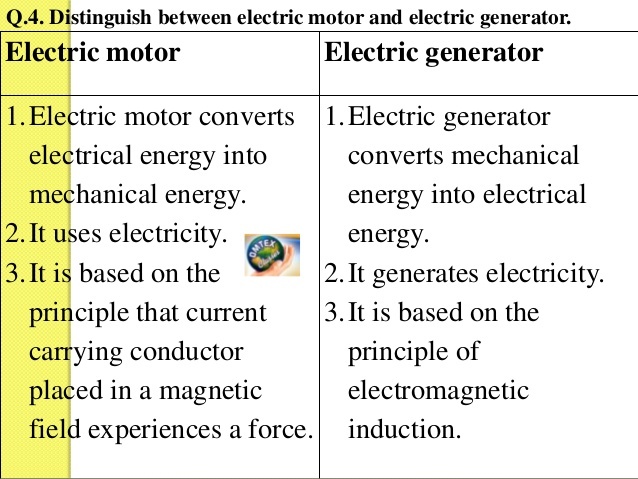
An electric motor
does not involve magnetic fields
does not require a voltage source
takes electrical energy and transfers it into mechanical energy
takes mechanical energy and transfers it into electrical energy.

An electric motor changes electrical energy to _________ energy.
mechanical
chemical
potential
electrical

What must the student do in the picture, in order to induce electricity and move the the galvonometer
nothing
move the magnet
add more loops of wire
unplug the galvnonmeter
What must the student do in the picture, in order to induce electricity and move the the galvonometer
nothing
move the magnet
add more loops of wire
unplug the galvnonmeter
Generators generate
electricity
mechanical energy
heat
chemical energy

Which electromagnet is stronger?
A
B

Which electromagnet is stronger?
A
B

Static electricity is an excess build up of __________.
protons
neutrons
electrons

An object becomes electrically charged when the atoms in the object gain or lose
electrons
protons
neutrons
all of the above

The force that causes objects with mass to attract one another.
Weight
Gravity
Mass
Magnetism
A device that transfers energy by providing a path for an electric current is known as what?
Electric Circuit
Electromagnetism
Force Fields
Magnetic Pathway

Which part of an electric circuit provides the energy for the circuit?
wire
light builb
battery (voltage source)
switch
What particles flows through an electric circuit?
proton
neutron
electron
none of the above

Which statement is true about the picture?
The circuit will work because the switch is open.
The circuit won't work because the switch is open.
The circuit will work becasue electrons can flow through freely.
There is no break along this circuit pathway.

What type of circuit is shown?
series circuit
parallel circuit
broken circuit
force field circuit

What type of circuit is shown?
series circuit
parallel circuit
broken circuit
force field circuit
If I remove the middle light bulb, will the other two light bulbs work?
maybe?
Yes - this is a parallel circuit. The other light bulbs still have a direct pathway to the energy source.
No - you remove one lightbulb and the whole thing doesn't work.
Yes - this is a series circuit. The other light bulbs still have a direct pathway to the energy source.
If one of the lightbulbs is broken (meaning it won't light) will the other light bulb work?
Maybe?
Yes - this is a series circuit. Even though there is a break within the cirucit, electrons can flow freely.
No - this is a series circuit. The broken lightbulb leaves a break along the circuit not allowing electrons to flow freely, breaking the pathway from the lightbulb to the energy source.
I do not know.
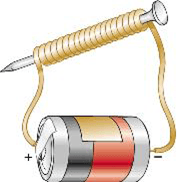
Which items below would be needed to create an electromagnet?
a battery (power source)
a magnetic material (iron)
a light bulb
wire
Which circuit will light the bulb?



