
 Worksheets
attempts to classify elements
Total questions: 53
Worksheet time: 55mins
Which of the following elements is located in the same period of silicon 14Si
11Na
21Sc
38Sr
32Ge
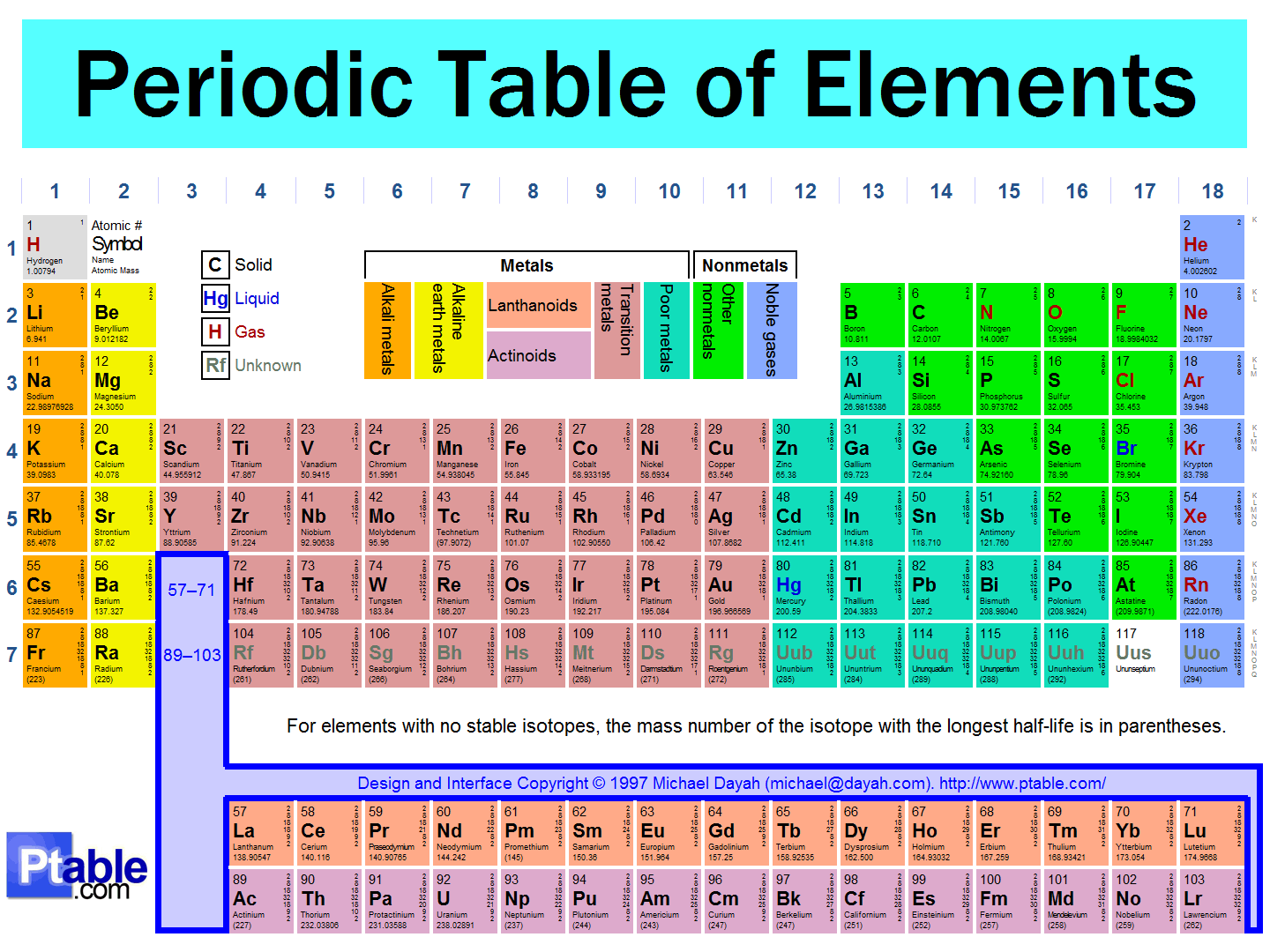
The vertical (up and down) columns in the Periodic Table are called
groups
towers
periods
atomic numbers
The atomic number tells you what? READ THE ANSWERS CAREFULLY
only the number of electrons
only the number of protons
only the number of neutrons
the number of both electrons and protons in an atom.
period
Elements that occur in vertical columns on the periodic table.
A horizontal row of elements in the periodic table
Found in group two of the periodic table; highly reactive
A subatomic particle that has a negative charge
All elements in the same row have the same number of energy levels
True
False
Sometimes

Elements in the same group or column have the same ...
no. of electrons in outermost
no. of energy levels
no. of protons
Mass Number
Elements in the same period or rows have the same ...
no. of electrons in outermost
no. of energy levels
no. of protons
Mass Number

Mendeleev predicted that the spaces in his periodic table represented
isotopes.
radioactive elements.
unstable elements.
undiscovered elements.
Mendeleev noticed that properties of elements usually repeated at regular intervals when the elements were arranged in order of increasing
atomic number.
density.
reactivity.
atomic weight.
The chemical properties of calcium
(20 Ca) are similar to those of .......................
19K
12Mg
25Mn
3Li
The element (12X) is located in ................. in the periodic table.
period (2) and group (2A)
period (2) and group (3A)
period (3) and group (2A)
period (3) and group (4A)
The atomic number of an element that exists in group (7A) and period (2) is .........................
12
7
9
17
The atomic number of an element that exists in group (3A) and period (3) is .........................
12
7
13
5
The element whose atomic number (18) is .........................
transition element
inert gas
metallic element
halogen element
In the periodic table, the elements which are similar in their properties and located in the same ................
period
group
nucleus
energy level
Elements of d-block are arranged in ..................... groups.
2
5
6
10
Elements of p-block are arranged in ..................... groups.
2
5
6
10
The block which contains the group (1A) and (2A) in the periodic table is ......... block.
s
p
d
f
The transition elements start to appear from the beginning of the ................. period.
second
third
forth
fifth
The scientist, who discovered that the nucleus of atom contains positively charged protons is .............
Bohr
Mendeleev
Rutherford
Moseley
In Mendeleev’s table,the properties of elements were repeated periodically by the beginning of each new (a)
positively charged particles found inside the nucleus of the atom (a)
The scientist Mendeleev arranged the elements ascendingly according to (a)
The number of elements in Mendeleev’s periodic table is …………. elements
92
118
67
76
The chemical elements have been categorized in a table to ease its study????
true
false
the modern periodic table is the first real table for classifying elements..........???
true
false
the number of recorded elements in Mendeleev’s table is about 103 elements????
true
false
Mendeleev’s discovered that the properties of elements were repeated periodically by the beginning of each new group????
true
false
Mendeleev put more than one element in the same place like nickel and cobalt...????
true
false
They are indicated by the letters K,L,M,N,O,P,Q??/
energy levels
energy sublevels
In the modern periodic table, elements are classified in ascending order according to.........
atomic number
atomic weight
the way of filling their energy sublevels
number of neutrons
Rutherford specified a place below the table for lanthanides and actinides elements
True
False
--- discovered after studying x-rays
that the properties of elements are
related to their atomic numbers and
not their atomic weights.
Bohr
Mendeleev
Rutherford
Mosely
The _________ indicates us how many electrons in outermost an element has.
Group
Period
Atomic Number
Element

What group and period does this element belong in? *
period 1 and group 3
period 3 and group 1
period 2 and group 3
period 3 and group 2
Atoms of elements in group 1 have ____________.
one electron in their outermost energy level
two electrons in their outermost energy level
seven electrons in their outermost energy level
eight electrons in their outermost energy level
The atom of an element has electronic con-figuration 2, 8, 7. To which of the following elements would it be chemically similar?
(a) N(7)
(b) P(15)
(c) Na(11)
(d) F (9)
The elements, which occupy the middle block (d) in the periodic table are called ________elements.
transition
alkali
alkaline earth
noble gases
If the atomic number of an element is 15. so its group is located in _______ block.
f
d
p
s
Lanthanides and actinides are located in the ______ block
f
d
p
s
The atomic number of an element located in period (4) and group (2A) is ________
4
8
12
20
Mendeleev discovered that the atomic weights of elements increase on moving from______ side of the table to the _____ side in horizontal rows .
right - left
left - right
middle - left
middle - right
One advantage of Mendeleev's table is correcting the wrongly estimated ________ of some elements.
atomic weight
atomic number
atomic radius
none
discovered that the periodic properties of elements are related to their atomic numbers
mendleev
mosly
bohr
faraday
added inert gases to the periodic table.
mendleev
mosly
bohr
faraday

