
NEW
Font size
 Worksheets
Unit 4 Earth Through Time
Total questions: 77
Worksheet time: 1hrs 17mins
The dodo bird is ___. It no longer lives anywhere on Earth.
mutated
extinct
camouflaged

Select the word that goes best with the image
fossil
natural selection
evolution
The scientist found a (n) ___ in the rock. She studied it to learn more about what animals used to live here.
extinct
theory
fossil
Select the right word for this definition:
"in biology, changes that happen over time in the gene pool of a population."
evolution
extinction
mutation
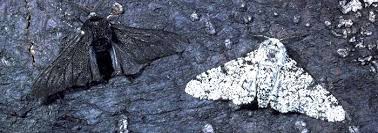

What could cause a species to go extinct?
Food becomes more plentiful.
The environment changes drastically and no-one can adapt.
There is less competition for resources.
Members of a species have adaptations to enhance survival.
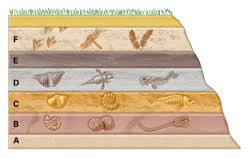
Which rock layer contains the newest fossils?

Images of the embryo and adult stages of three different organisms are shown.
Which of the following is the best conclusion that can be drawn from this evidence?
Having similar embryos indicates that these organisms eat the same types of food.
Having similar embryos indicates that these organisms live in a similar environment.
Having similar embryos indicates that these organisms share a recent common ancestor.
Having similar embryos indicates that a certain protein controls how many legs the adult organisms will have.
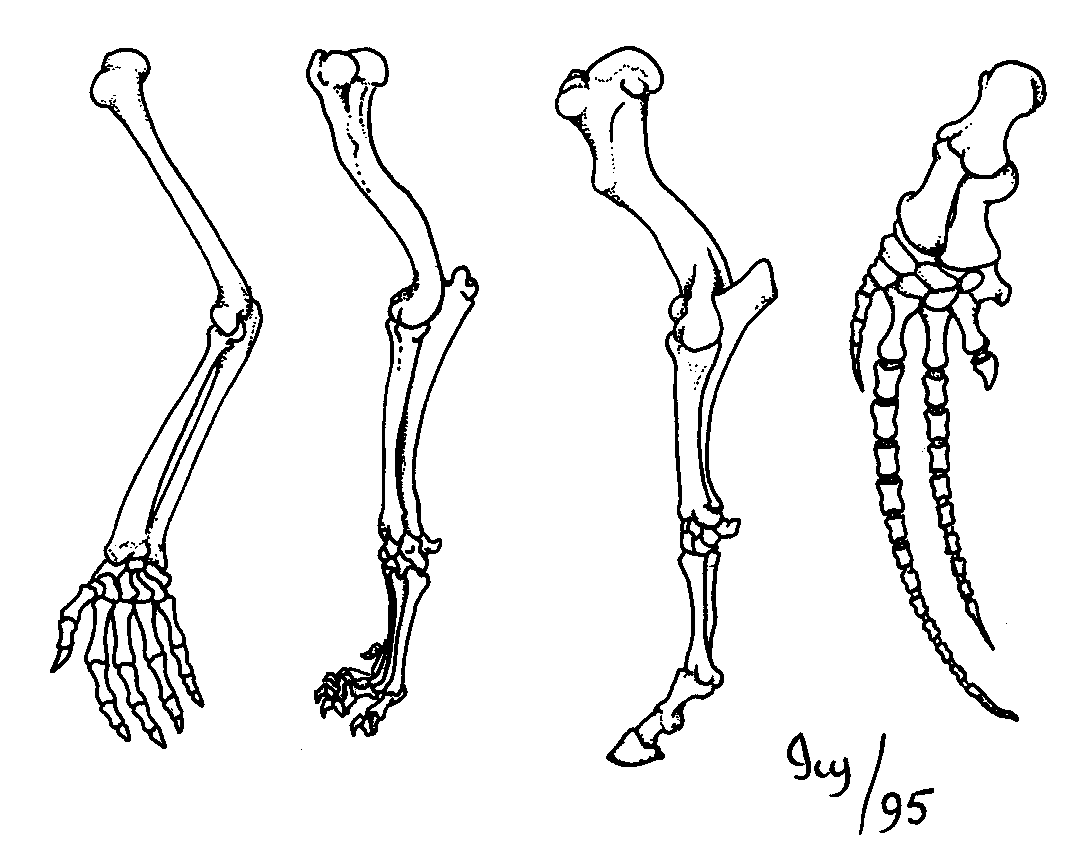


Which of the following can be determined by observing the embryos shown in the diagram

shows that groups of organisms have changed over time
intrusion
fossil record
radioactive dating
law of superposition
A technique used to determine the actual age of a fossil on the basis of the amount of a radioactive element it contains
petrified fossil
intrusion
fault line
radioactive dating
Method of determining the age of a fossil by comparing its placement with that of fossils in other layers of rock
law of superposition
relative dating
fossil record
petrified fossil
The geologic principle that states that in horizontal layers of sedimentary rock, each layer is older than the layer above it and younger than the layer below it.
law of superposition
intrusion
fossil record
cast fossil

Which layer shown is the OLDEST?
C
A
D
E

Which layer shown is the YOUNGEST?
C
D
E
A

If I found fossils in layers C and B, which fossil would be YOUNGER?
B
C
The hardened remains of a living thing that died long ago.
fossil
extinct
endangered
minerals
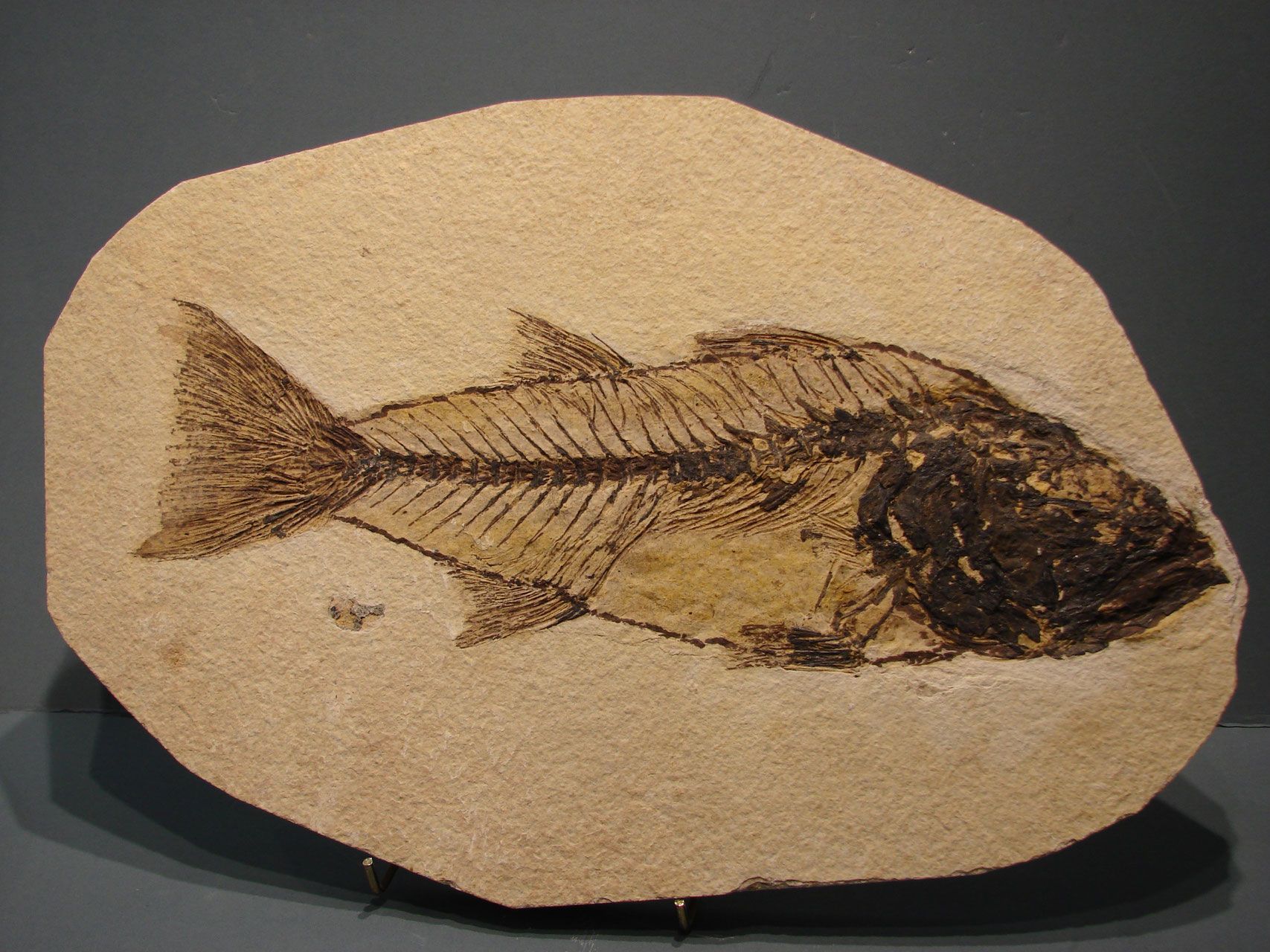
If a scientist found a fish fossil in the desert, what can they infer?
An animal ate the fish.
The water covered the area long ago.
Today's fish looks the same
The fish is endangered.
If you know the age of a fossil, you know the relative age of the ________________ it was found inside.
sticky tar
rock
amber
ice
Which of the following would be an example of absolute age?
Fossil A is older than Fossil B
Fossil A and Fossil B are the same age
Fossil A is 10 million years old
Fossils are most often preserved in what?
ice sheets
amber resin
igneous rock
sedimentary rock
Why is the fossil record incomplete?
Most organisms never became fossils.
Scientists don't like to work on it.
There isn't enough amber.
Scientist don't look for fossils anymore.

Which of the following is the oldest period of the Mesozoic Era?
Cretaceous
Jurassic
Triassic
Permian
In which time period are we currently living?
Precambrian Time
Paleozoic Era
Mesozoic Era
Cenozoic Era
Alex listed the typical steps of fossil formation.
1) An organism dies. 2) The remains fall to the bottom of the ocean. 3) The soft portions decay, and the hard portions remain. 4) The sediment becomes rock.
Which statement describes the missing step?
After step 3, layers of sediment cover the dead organism.
After step 1, minerals dissolve the dead organism.
After step 4, layers of sediment cover the dead organism.
After step 2, minerals dissolve the dead organism.
_________ dating is the process of putting events or fossils in order from oldest to youngest without using actual dates.
Relative
Absolute

The diagram shows fossils buried in layers of rock. Which conclusion is best supported by the diagram?
Trilobites and gastropods are the youngest fossils.
Crinoids and gastropods have lived during the same time period.
Ferns have existed for a longer period of time than coral.
Every ammonite fossil is older than the gastropod fossils.
Compared to absolute dating, what is an advantage of relative dating?
A single fossil can be dated by itself.
The actual age of a fossil can be determined.
Fossils do not need to be arranged in different layers of rock.
There is no limit to the age range of the fossils being dated.
Absolute dating relies on _________ elements, which are unstable elements that release energy as they break down.
Metallic
Radioactive
Noble Gases
Halogen
According to the fossil record, which of these evolved after amphibians?
Mammals
Sponges
Fish
Bacters
System of chronological measurement that relates rock layers to time
Rock Strata
Law of Superposition
Geologic Time Scale
Permanent disappearance of a species from earth
Petrification
Diversity
Extinction
Sedimentary Layers
True or False:
Fossils can be used to learn about animals and plants that lived a long time ago.
True
False
True or False:
Fossil evidence indicates that many modern species evolved from earlier species.
True
False
True or False:
Fossils found in the same layer of rock are about the same age.
True
False
A scientist claims that cheetahs are more closely related to wolves than to sharks because, unlike sharks, both cheetahs and wolves have fur, four-chambered hearts, and specialized teeth.
Which of the following types of evidence is the scientist’s claim based on?
molecular evidence
embryological evidence
anatomical evidence
fossil evidence
Which of the following methods would be best for determining the evolutionary relationships among a group of species?
comparing only the anatomical features of the species
examining each species’ lineage in the fossil record individually without comparing the lineages to each other
comparing the embryological anatomy and DNA sequences of the species

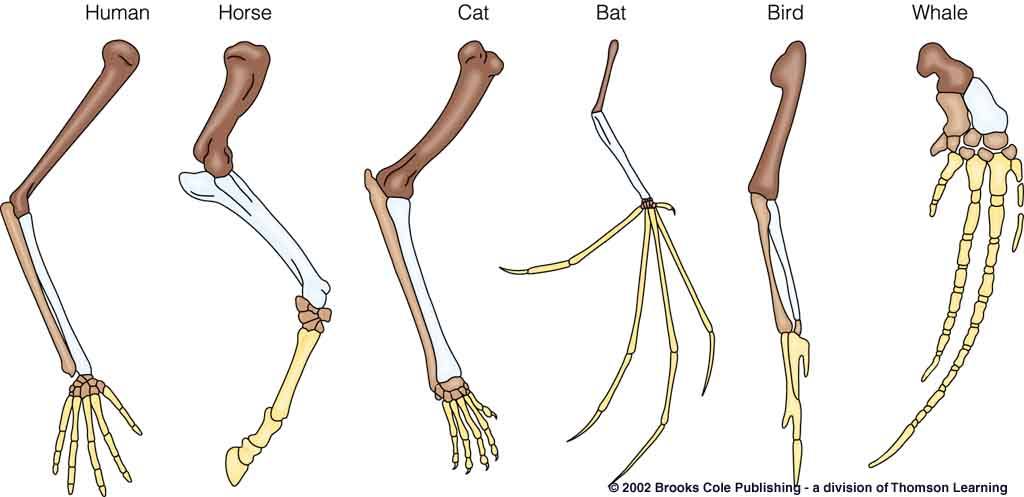
Comparing the bones pictured in this diagram can provide evidence to support which of the following conclusions?
The humerus bone evolved separately in many different lines of animals.
The size and position of various bones indicates how highly evolved an animal is.
Fossil evidence of bones provides the strongest evidence for evolution.
Humans, lions, and birds evolved from a common ancestor.
What is the benefit of a mass extinction?
It can make pets disappear.
It allows species to evolve.
I makes more space for humans.
It can create more ecosystems.
What was the name of the mass extinction in which dinosaurs became extinct?
Devonian
Triassic-Jurassic
Ordovician
Cretaceous-Tertiary
What is mass extinction?
when dogs will go extinct
when different plants and animals go extinct because of natural disasters or human activity
having different animals all together in one place
when the world will end
How many years ago did the Permian-triassic Extinction happen?
around 250 million years ago
around 365 million years ago
around 65 million years ago
6 years ago
There have been 5 mass extinctions in Earth's history. Which of the following answer choices was a cause of these extinctions? You may select more than one answer. Check all that apply.
increased carbon dioxide (CO2) levels in the atmosphere
an asteroid impact
melting of glaciers and rising sea levels
widespread volcanic activity
All of them
Which of the following is the BEST reason for why a species would become extinct?
environmental changes
biodiversity
migration
evolution (The ability to change a species over time)
Comparative anatomy is...
The study of how organisms develop certain traits over time.
The study of the differences and similarities between the anatomy of different organisms.
The study of parts of an organism and their functions.
The study of the differences between the male and female anatomy of the same species.
Could birds and whales share a common ancestor
No, because the species' structures perform different functions.
Yes, because they both don't live on land.
No, because the species don't look similar or the same.
Yes, because the fin/wing of the species are structurally homologous.
How do scientists use comparitive anatomy?
It is used as evidence for the evolution of organims, indicating that some organisms came from the same ancestor.
It is used to study how natural selection works.
It is used to see why some organisms have different traits than others.

Various species show similar developmental patterns as embryos.
DNA similarities
Anatomical Homology
Embryology
All of the above

Does the presence of homologous structures in genetically different animals suggest common ancestry?
Yes
No


A bat wing and a butterfly wing are both used for flying but they are made differently. What type of structure is this?
Homologous structure
Analogous structure
Vestigial structure
Fossil structure
A human arm and a whale fin have similar bone structure but the whale fin is used for swimming and the arm is used for reaching and grabbing. What type of structures are these?
Homologous structures
Analogous structures
Vestigial structures
Fossil structures
When comparing the DNA of two different organisms, the more differences in the DNA base pairs the more-
Closely related they are.
Distantly related they are.
It doesn't prove anything.
They look alike.
An anatomical feature that no longer seams to have a purpose in the current form of an organism
Homologous structure
Analogous structure
Vestigial structure
None of the above
During his journey on the HMS Beagle, Darwin's natural laboratory was the _________________.
Aleutian Islands
Hawaiian Islans
Galapagos Islands
Marshall Islands
The study of pre-birth organisms for evidence for evolution is called
Homology
Comparative Anatomy
Biochemistry
Embryology
Preserved remains of organisms for evidence of evolution are...
the Fossil Record.
the Geologic Timescale.
the Homologic Record.
the Embryonic Record.
In order for a trait to be passed to the next generation it must be
heritable
modified
embryonic
acquired
Earth is thought to be formed ______ years ago?
200 thousand
3 million
4.6 billion
who knows
During this Era Pangaea was being formed?
Paleozoic
Mesozoic
Cenozoic
Phanerozoic
Put the following units of geological time in order from largest to smallest unit of time.
Epoch, Eon, Era, Period
Epoch, Period, Era, Eon
Eon, Era, Period, Epoch
Period, Eon, Period, Era
Fossils provide evidence of __________.
how life and the environment has remained stable over time
how the climate and weather has remained stable over time
how life and the environmental conditions have changed over time
When did the Precambrian time end?
540 million years ago
65 million years ago
4.6 billion years ago
250 million years ago

