

Wayground logo

Free Printable Worksheets

Font size

S
M
L
XL
Worksheets

Astronomy Part 1 Review

Total questions: 41

Worksheet time: 47mins

Name
Class
Date
1.

What color are the hottest star?

a)

Red

b)

Orange

c)

Yellow

d)

Blue

2.

What color are the hottest star?

a)

Red

b)

Orange

c)

Yellow

d)

Blue

3.

What color are the coolest stars?

a)

Red

b)

Yellow

c)

Orange

d)

Blue

4.

What does the luminosity of a star indicate about its brightness?

a)

If it's a negative number, it's a bright star

b)

If it's a positive number, it's a dim star

c)

Its how many times brighter the star is compared to our sun
5.
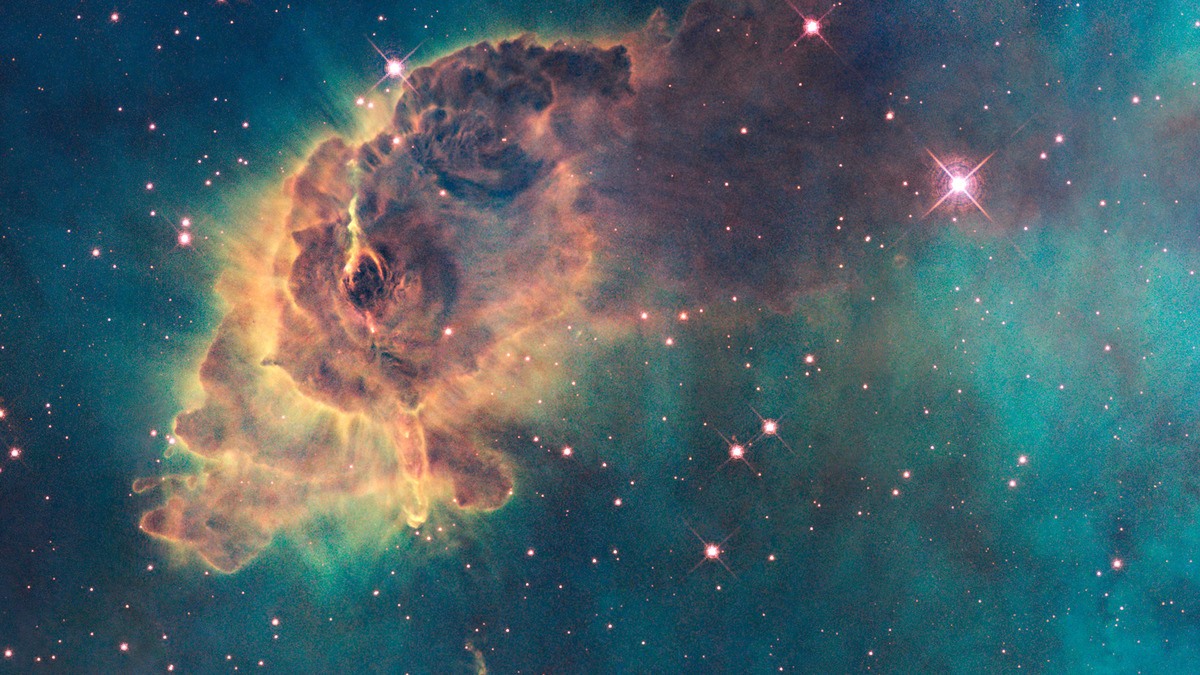
What is the name of the gas/dust clouds where all stars form?
a)
Nebulas
b)
Protostars 
c)
Supernova
d)
Neutron Star
6.
The life cycles of stars are determined by their:
a)
mass (size)
b)
color
c)
distance from Earth
d)
luminosity
7.
Our sun is currently in what star stage?
a)
Protostar
b)
Nebula
c)
Main Sequence
d)
Red Giant
8.
After the main sequence, a low mass star becomes a
a)
black dwarf
b)
protostar
c)
red giant
d)
supergiant
9.

After the main sequence, a high mass star becomes a

a)

black dwarf

b)

protostar

c)

red giant

d)

supergiant

10.

What small, hot, faint objects are found at B?

a)

neutron stars

b)

black holes

c)

white dwarfs

d)

brown dwarfs

11.
Most stars are made of which elements?
a)
Hydrogen only
b)
Hydrogen and Lithium
c)
Hydrogen and Sodium
d)
Hydrogen and Helium
12.
Our galaxy is called the
a)
Earth Nebula
b)
The Hubble Galaxy
c)
The Milky Way
d)
The Snickers
13.

Place these objects in order from smallest to largest.

a)

Planets, solar system, universe, galaxy

b)

Solar system, planets, galaxy, universe

c)

Planets, solar system, galaxy, universe

d)

Galaxy, solar system, planets, universe

14.

A Hertzsprung-Russell diagram (H-R diagram) is used to…

a)

classify stars by temperature and brightness

b)

illustrate various wavelengths of light

c)

show the distances between stars

d)

differentiate between stars and planets

15.

As galaxies move away from our galaxy

a shift on the electromagnetic spectrum is noticed. This phenomena is

called _____________.

a)

redshift

b)

blueshift

16.

Which EM waves have the longest wavelength?

a)

radio

b)

x-rays

c)

ultraviolet

d)

gamma rays

17.

Which EM waves have the shortest wavelength?

a)

radio

b)

x-rays

c)

ultraviolet

d)

gamma rays

18.

Which color waves have the shortest wavelength?

a)

red

b)

yellow

c)

green

d)

violet

19.

At which latitude will polaris be overhead?

a)

0º

b)

90º N.

c)

90º S

d)

23 ½ºN

20.

Compared to the temperature and luminosity of the star Polaris, the star Sirius is

a)

hotter and more luminous

b)

hotter and less luminous

c)

cooler and more luminous

d)

cooler and less luminous

21.
Which sequence of stars is listed in order of increasing luminosity?
a)
Spica, Rigel, Deneb, Betelgeuse
b)
Polaris, Deneb, 40 Eridani B, Proxima Centaurri
c)
Barnards Star, Alpha Centauri, Rigel, Spica
d)
Procyon B, Sun, Sirius, Betelgeus
22.
Which star is cooler and less luminous than the Sun?
a)
Proxima Centuri 
b)
Pollux
c)
Rigel
d)
40 Eridani B
23.
Which star has a surface temperature most similar to the surface temperature of Alpha Centauri?
a)
Polaris
b)
Betelgeuse 
c)
Procyon B
d)
Sirus 
24.
Barnard's Star has a surface temperature of about
a)
300ºC
b)
3000ºC
c)
5000ºC
d)
10,000ºC
25.

The life cycle of a star is determined by its

a)

temperature

b)

mass

c)

density

d)

color

26.

Which process allows stars to radiate visible light?

a)

radioactive decay

b)

nuclear fusion

c)

nuclear fission

d)

volcanic outgassing

27.
The period of the earth's orbit around the sun is ____.
a)
1 day
b)
1 year
c)
24 hours
d)
364 hours
28.
Which planet has an orbital eccentricity most like the orbital eccentricity of the Moon?
a)
Earth
b)
Saturn
c)
Mars
d)
Mercury
29.
The length of an Earth day is determined by the time required for approximately one 
a)
Earth rotation
b)
Earth revolution
c)
Sun rotation
d)
Sun revolution
30.
Which planet takes more time to complete one rotation on its axis than to complete one revolution around the Sun?
a)
Mercury
b)
Venus
c)
Mars
d)
Jupiter
31.
Which list shows four planets of the solar system in order from smallest to largest?
a)
Jupiter, Saturn, Uranus, Neptune
b)
Neptune, Uranus, Saturn, Jupiter
c)
Saturn, Jupiter, Neptune, Uranus
d)
Uranus, Neptune, Saturn, Jupiter
32.

Spinning of the Earth on its axis is known as

a)

Rotation

b)

Revolution

33.

The orbit of Earth around the Sun is known as

a)

Rotation

b)

Revolution

34.

What is the name of the North Star?

a)

Rigel

b)

Betelgeuse

c)

Polaris

35.
A planet moves __________ when it is farthest from the sun.
a)
faster
b)
slower
36.
The farther away a planet is from the sun, the _______ it takes it to orbit the sun once. 
a)
longer
b)
shorter
37.
Which planet is farthest from the Sun?
a)
Neptune
b)
Uranus
c)
Saturn
d)
Jupiter
38.
Which planet is the largest in Equatorial Diameter?
a)
Mercury
b)
Earth
c)
Jupiter 
d)
Saturn
39.
Which planet is the densest?
a)
Mars
b)
Venus
c)
Earth 
d)
Mercury
40.
What is the period of Revolution of Mercury?
a)
88 days
b)
88 years
c)
88 minutes
d)
224.7 days
41.
Which of these is not a planet anymore?
a)
Sirius
b)
Pluto
c)
Polaris
d)
Jiggly Puff
