
Font size
 Worksheets
MID QUIZ 6
Total questions: 90
Worksheet time: 47mins

The circulatory system works with the ___________ system to provide our body with oxygen.
respiratory
digestive
muscular
skeletal
As the blood reaches the lungs, what is removed from the blood?
oxygen
carbon dioxide
red blood cells
white blood cells
Arteries carry oxygen rich blood away from the heart.
True
False
Veins carry oxygen poor blood back to the heart.
False
True

State the general relationship between exercise and heart rate in humans.
If a person exercises, then their heart rate will not change
If a person exercises, then their heart rate will increase
If a person exercises, then their heart rate will decrease
Person exercising and heart rate are not related
A _____ is a blood vessel that carries blood to the heart
blood vessel
artery
vein
capillary
Arteries, Veins, and capillaries are 3 types of ____
systems
cells
organs
blood vessels
What is the function of the Circulatory System?
The system that helps your body breathe
Your body muscles
Your body nerves
The system transporting blood to different parts of the body

The job of the heart is to . . .
pump blood around the body.
send food to the small intestines.
break down food.
give energy to the body.
Which of the following is not part of the circulatory system?
veins
heart
stomach
arteries
How many types of blood vessels are there?
1
2
3
4
Put the types of blood vessels in order from "smallest" to "largest"
Capillaries, arteries, veins
Veins, capillaries, arteries
Arteries, veins, capillaries
Capillaries, veins, arteries
Which of the following is the main function of the respiratory system?
Obtains oxygen and remove carbon dioxide from the body
Transports oxygen and nutrients to the body cells
Protects the body from invading organisms
Openings that pull air from outside your body into your respiratory system.
sinuses
mouth and nose
bronchial tubes
lungs
Passage connecting your throat and lungs.
pharynx
bronchial tubes
diaphragm
trachea
Bones that surround and protect your lungs and heart.
ribs
diaphragm
pleura
larynx
Tiny air sacs in the lungs where the exchange of oxygen and carbon dioxide takes place.
bronchioles
lung lobes
alveoli
capillaries
Muscle that helps your lungs pull in air and push it out.
diaphragm
alveoli
heart
trachea
This condition occurs when the airway is narrowed due to inflammation of the bronchi.
lung cancer
asthma
emphysema
cystic fibrosis

What letter points to the lung?
A
B
C
D
What letter points to the trachea?
C
B
E
D
What letter points to the Alveoli?
C
D
E
F
What letter points to the Bronchi?
C
D
E
F
What happens to diaphragm when we breathe in?
2 answers.
Contracts
Relaxes
Move upwards
Move downwards
What happens to diaphragm when we breathe out?
2 answers.
Contracts
Relaxes
Move upwards
Move downwards
When does your lung volume increase?
Inhalation
Exhalation
What unit of measurement is used for mass in physics?
Liter
Kilograms
Meters
Newtons
What statement is true?
Mass never changes. Weight does.
Weight never changes. Mass does.
Both mass and weight change because they are affected by gravity.
Neither mass nor weight change. They are always the same.
What do you use to measure the mass of an object?


What is the name of this tool?
spring balance
Balance scale
measuring cylinder
thermometer
What is the symbol for weight?
m
M
W
p
Weight is the measure of the force of ______ on an object.
Density
Mass
Matter
Gravity
Velocity
What unit of measurement is used for mass in physics?
Liters
Kilograms
Meters
Kelvins
Newtons
Find the weight of a 20g object
~200N
~20g
~0.2N
~0.02kg
the weight of any body = ...
its mass
mass x 100
mass x 10
mass/ 10
The weight of any object ..... , by increasing its mass
decreases
increases
still constant
no correct answer
5000 grams is equal to .........
50kg
500kg
5kg
0.5kg
The measuring unit of weight is ........
gram
spring scale
newton
kilogram
The object's mass 2kg, so its weight on the earth is equal .......
2Newton
20 Newton
200 Newton
0.2 Newton
How many newtons are there in one kilogram?
10
20
30
Density is the amount of ________ per unit of volume
gravity
mass
motion
A helium balloon floats away because helium is _______ dense than air
more
less

Which word best describes the force from a liquid acting on a floating object?
Weight
Upthrust
Water resistance
Friction
When an object is floating in water, the object's weight and the upthrust of the water are ________ .
balanced
unbalanced
zero
dependent on other things

Objects in water feel _______ than in the air.
Hint: think of the upthrust in water compared to the upthrust in air and then the resultant force
the same
heavier
'weightless'
lighter
Bobby's blue bowling ball weighs 70N. Bobby puts his bowling ball in jelly (upthrust = 0.064N), will the bowling float or sink?
Float
Sink
Select all the forces acting on a pair of glasses sinking in water.
Weight of the glasses
Air resistance
Upthrust
Explosions
Light diffraction

Salty water has a _________ density compared to freshwater.
lower
similar
higher
If the weight of a fizzy drink can is 3.7N, and the resultant downward force in water is 3.5N, what is the size of the upthrust acting on the can?
0.2 N
7.2 N
3.6 N
0 N
Why can someone float in the Dead Sea but not in a swimming pool (without using inflatables!) ?
A big mystery
The density of the Dead Sea water is greater than for normal water and is high enough to keep a person floating
The density of the Dead Sea water is lower than normal water and low enough to keep a person floating
Swimming pool water is usually at 500°C and so is less dense than water in the Dead Sea

If the air in a balloon heats up, making the balloon bigger but still the same mass, what has happened to its density?
Less likely to pop!
No change
Decreased
Increased
Which planet is the smallest?
Jupiter
Neptune
Mercury
Pluto
Where is the asteroid belt located?
Between Earth and Mars
Between Mars and Jupiter
Beyond Pluto
Next to the sun
Which planet is Red in color?
Earth
Mars
Venus
Mercury
Choose the correct order of the outer gas giants
Jupiter, Saturn, Uranus, Neptune
Jupiter, Saturn, Neptune, Uranus
Uranus, Neptune, Saturn, Jupiter
Jupiter, Saturn, Neptunr, Pluto
This is the only planet with liquid water on it (so far as we know)
Mercury
Earth
Mars
Pluto
What does a comet look like?


Which planet is the hottest planet (860 degrees F)!
Venus
Mercury
Earth
Mars
What divides the solar system into inner and outer planets?
Asteroids
Kuiper Belt
Asteroid Belt
the sun

object in space made up of gases such as hydrogen and helium that produce light and heat
planets
stars
comets
asteroids

an object that revolves around a planet and reflects light from the sun
Moon
Star
Earth
Sun

What's the name of the mission that allowed the first landing and walk on the moon?
Apollo 1
Apollo 11
Apollo 101

What is this?
telescope
rover
satellite

Solar System?


Which information could help you decide that a planet is an inner planet?
It is made of gases.
It is made of solid rock.
It has lots moons.
It is giant.
Mars is also known as the ________ because of its color.
Red Planet
Blue Planet
Yellow Planet
Purple Planet
Earth has a shorter year than Jupiter because Earth ___________.
is farther from the Sun
spins faster as it rotates
has shorter days
is closer to the Sun
Which planets have similar rocky surfaces to Mercury’s? Choose TWO
Earth
Saturn
Jupiter
Venus
Which planets have similar surfaces to Saturn’s? Choose TWO
Earth
Jupiter
Uranus
Mars

The diagram shows the first five planets in the solar system with Earth labeled. Which planet is represented by the letter P?
Mercury
Venus
Jupiter
Neptune

Examine the solar system model with planets labeled A-H.
The surface of planets A, E, and H are rocky.
The surface of planets C, F, and H are rocky.
The surface of planets F, G, and H are rocky.
The surface of planets A, B, and D are rocky.
If Saturn were to move closer to the Sun, what effect would most likely occur?
Saturn's climate would be colder.
Saturn would become a frozen ball of ice.
Saturn's climate would be hotter.
Saturn would lose all its moons.
What are satellites?
objects that travel through space to collect data on the planets of our solar system
objects that destroy other planets
objects that are made of rock and ice
objects that travel on Earth


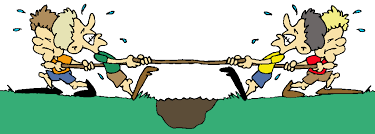


A type of friction that occurs when air pushes against a moving object it to decelerate.
surface area
air resistance
velocity
gravity
When an object is moving, friction acts in the _______ direction as the motion.
perpendicular
same
opposite
precise

The three examples pictured are of
Non-contact Forces
Contact Forces

The force between the phone and the mount is a
contact force
non-contact force

