wayground logo

Free Printable Worksheets

Font size

S
M
L
XL
Worksheets

Important Lines of Latitude

Total questions: 64

Worksheet time: 52mins

Name
Class
Date
1.
If you spill or break something during an experiment, what is the FIRST thing you should do?
a)
Tell the teacher.
b)
Clean it up. 
c)
Cover it with a paper towel.
d)
Leave it for someone else.
2.
Which of the following should NOT be worn during a lab investigation?
a)
Flip flops
b)
Loose, long hair
c)
Dangling jewelry
d)
All of the above
3.

This means

a)

pirates

b)

hazardous

c)

poison

d)

death

4.

Before starting an investigation or lab procedure, you should

a)

try an experiment on your own

b)

open all containers and packages

c)

read all directions and make sure you understand them

d)

handle all the equipment to become familiar with it

5.

If you get hurt or injured in any way, you should

a)

tell your teacher immediately

b)

find bandages or a first aid kit

c)

go to the principal's office

d)

get help after you finish the lab

6.

If your glassware is chipped or broken, you should

a)

use it for only solid materials

b)

give it to your teacher

c)

put it back in the materials area

d)

increase the damage so that it is obvious

7.
a)

40 mL

b)

50 mL

c)

38 mL

d)

42 mL

8.

How can you find the volume of a rectangular solid object?

a)

Length x width x height

b)

pour water over it

c)

put it on a scale

d)

paint it

9.

How many milliliters?

a)

36 mL

b)

28 mL

c)

34 mL

d)

39 mL

10.

How many milliliters?

a)

100 mL

b)

10 mL

c)

110 mL

d)

1000 mL

11.

Subatomic particles with a negative charge

a)

Electrons

b)

Neutrons

c)

Protons

d)

Quarks

12.
Subatomic particles with a positive charge
a)
neutrons
b)
atomic mass
c)
protons
d)
isotopes
13.
Subatomic particles that are neutral in charge
a)
Neutrons
b)
Protons
c)
Nucleus 
d)
Electrons
14.
What is the mass number?
a)
the number of protons
b)
the number of protons and neutrons
c)
the number of neutrons
d)
the number of protons and electrons
15.
What is the atomic number?
a)
the number of protons
b)
the number of protons and neutrons
c)
the number of neutrons
d)
the number of protons and electrons
16.
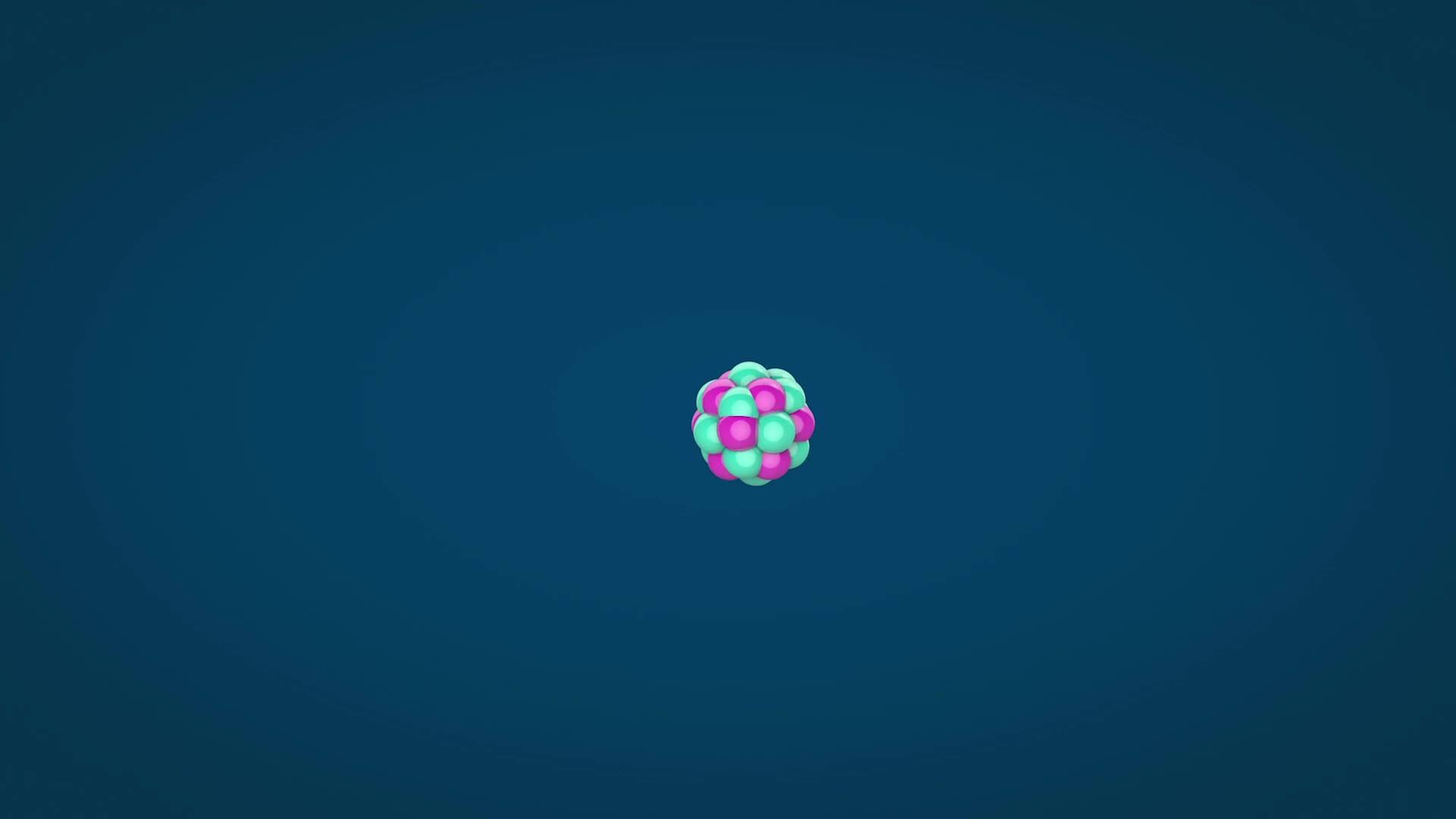
Which is an electron?
a)
A
b)
B
c)
C
17.
What is found in the nucleus of atoms?
a)
Protons and electrons.
b)
Protons, neutrons, and electrons.
c)
Protons and neutrons.
d)
Neutrons and electrons.
18.

The center of an atom is called the __________ ?

a)

neutron

b)

nucleus

c)

number

19.

Which subatomic particle is found outside of the nucleus?

a)

protons

b)

neutrons

c)

electrons

20.

How many neutrons are in one atom of Krypton?

a)

36

b)

48

c)

84

21.
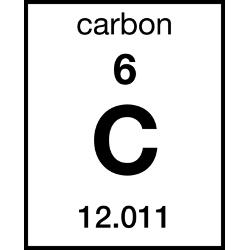
What does the 6 represent above the C
a)
Symbol 
b)
Name 
c)
Mass Number 
d)
Atomic Number 
22.

How many neutrons are in Tungsten

a)

110

b)

74

c)

183

d)

258

23.

How many electrons are in a gold atom?

a)

79

b)

196

c)

117

d)

275

24.
What does this number represent?
a)
Number of protons
b)
Number of neutrons
c)
Number of electrons
d)
Number of protons and neutrons
25.
How many elements are in C6H12O6?
a)
1
b)
2
c)
3
d)
4
26.
The red numbers in the image below represent ________
a)
subscripts
b)
coefficients
c)
I don't know, and don't want to try
d)
None of the answers are correct
27.
How many atoms are there TOTAL in:
H2SO4
a)
6
b)
5
c)
7
d)
3
28.

How many molecules of methane are there?

a)

0

b)

1

c)

2

d)

4

29.

How many phosphorus atoms are there?

a)

0

b)

1

c)

3

d)

4

30.

How many nitrogen atoms are there?

a)

4

b)

8

c)

10

d)

20

31.

How many TOTAL atoms are in:

H2SO4

a)

6

b)

5

c)

7

d)

3

32.
How many elements are represented in the compound?
Na2CO3
a)
1
b)
2
c)
3
d)
4
33.
Is water an element or a compound?
a)
Element
b)
Compound
34.
Is salt (NaCI) a compound or a element
a)
Compound
b)
element
35.
Which of the following is not a compound?
a)
HCl
b)
Cl
c)
NaCl
d)
CO2
36.

How many electrons are in the element Carbon?

a)

2 electrons

b)

6 electrons

c)

4 electrons

d)

None of the above

37.
Elements are made of 
a)
many types of atoms 
b)
the periodic table
c)
one type of atom 
d)
molecules 
38.
What is the basic unit of matter and is the smallest particle of an element?
a)
Atoms
b)
Elements
c)
Compounds
d)
Molecules
39.
Two or more atoms chemically bonded together are called a
a)
atom
b)
element
c)
molecule
d)
mixture
40.
Protons and neutrons clump together to form the __________ of an atom.
a)
nucleus
b)
centrosome
c)
outer shell
d)
orbital
41.

What does the number 3 represent in 4NH3?

a)

Subscript

b)

Superscript

c)

Coefficient

42.

What does the number 4 represent in 4NH3?

a)

Subscript

b)

Superscript

c)

Coefficient

43.

How many Nitrogen (N) atoms are in 4NH3?

a)

4

b)

1

c)

3

d)

12

44.

How many Hydrogen (H) atoms are in 4NH3?

a)

4

b)

1

c)

3

d)

12

45.

How many total molecules is 4NH3?

a)

4

b)

1

c)

3

d)

12

46.

How many total atoms make up 4NH3?

a)

4

b)

16

c)

3

d)

12

47.
A gas
a)
has a definite shape but no definite volume
b)
has a definite volume but no definite shape
c)
has fast-moving particles
48.
Define a liquid.
a)
Indefinite shape, indefinite volume
b)
Definite shape, definite volume
c)
Found in stars
d)
Definite volume, indefinite shape
49.
The state of matter that has no definite size or shape is
a)
Solid
b)
Liquid
c)
Gas
50.
What is condensation?
a)
gas to solid
b)
gas to liquid
c)
liquid to solid 
d)
solid to liquid 
51.

Evaporation is the change in state of a

a)

gas to a liquid

b)

gas to a solid

c)

solid to a liquid

d)

liquid to a gas

52.
a)

Solid

b)

Liquid

c)

Gas

53.
a)

Solid

b)

Liquid

c)

Gas

54.
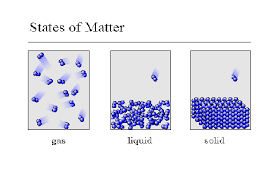
Which state of matter has particles arranged like this?
a)
solid
b)
liquid
c)
gas
55.

What are the 2 things that determine whether something is a solid, liquid, or a gas?

a)

the color of the matter

b)

the motion of the particles in the matter

c)

the forces between the particles of matter

d)

the matter's ability to react with other matter

56.
Liquids and gases are similar because __________________________.
a)
they both take the shape of their container
b)
they both have their own shape
c)
liquids pour and gases don't
d)
liquids take the shape of the container but gases have their own shape
57.
Gas particles have the ________ kinetic energy because they move the fastest.
a)
least
b)
most
58.

Phase change going from a Solid to a Gas...

a)

Deposition

b)

Sublimation

c)

Condensation

d)

Recombination

59.

Phase change going from a Gas to a Solid...

a)

Deposition

b)

Sublimation

c)

Condensation

d)

Vaporization

60.
All changes in the state of matter of a substance requires
a)
vibration
b)
water
c)
permission
d)
energy
61.
What happens to particles when they are heated?
a)
They speed up and spread out
b)
They slow down and compress
c)
They stop moving
d)
They move closer together and speed up
62.

If a rectangular prism has a length of 0.6 cm, width of 1 cm, and height of 2.4 cm, what is its volume?

a)

1.44 cm³

b)

2.4 cm³

c)

0.6 cm³

d)

3.0 cm³

63.

A box has dimensions of 15.5 cm, 9.2 cm, and 15 cm. What is the volume of the box?

a)

2139 cm³

b)

2134 cm³

c)

2140 cm³

d)

2135 cm³

64.

Calculate the volume of a box with dimensions 6.1 cm, 1 cm, and 1.5 cm.

a)

9.15 cm³

b)

9.10 cm³

c)

9.20 cm³

d)

9.25 cm³