
 Worksheets
DC CHEM - UNIT 4 REVIEW
Total questions: 67
Worksheet time: 6hrs 35mins
Which of the below is an ionic compounds?
Ni
MgCl2
H2O
CH4
Ionic bonds are formed between...
Non - metals
A metal and a non-metal
Metals
How is an ionic bond formed?
Sharing of electrons
Delocalised electrons
Transfer of electrons
An example of an ionic compound is Sodium Chloride, which is made from Na+ and Cl- ions. Why do these ions form an ionic bond?
They have like charges
They are from the same group
They are from the same period
They have opposite charges

Which properties are all characteristics of ionic compounds?
solids with high melting and boiling points
soft solids which are highly malleable
when solid, the ions are held in place so the compounds cannot conduct electricity
conduct electricity when dissolved or molten
What is the correct formula for aluminium oxide? Aluminium is in group 3 and oxygen is in group 6.
Al₂O₃
AlO
AlO₄
Al₂O
Al₃O₂




CO2



How many valence electrons does Tin (Sn) have?
8
7
5
4

According to the diagram below, how many bonds will this atom be able to make?
Which of these is incorrect?


Which of these is correct?


This atom would be considered stable.
False
True
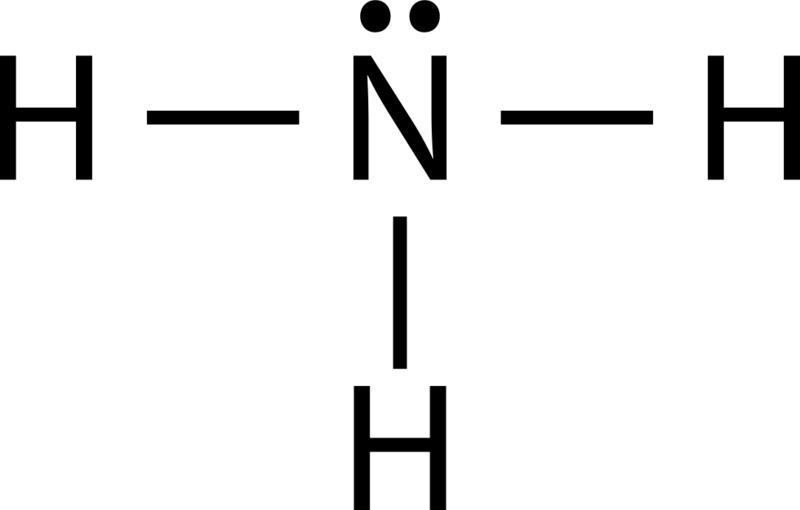
What is the correct Lewis Dot Structure for ammonia NH3


Which is the correct molecular structure for carbon dioxide?


NH3 has how many lone pairs?
0
1
2
3
3. Which is a correct Lewis structure for hydrogen cyanide, HCN?


Why is this Lewis Structure incorrect? Choose all that apply.
There are too many bonds around Si.
There should only be single bonds in this Lewis Structure.
The Structure is missing a triple bond.
Chlorine only has 6 electrons surrounding it.
What shape would CH4 have?
Trigonal planar
Pyramidal
Tetrahedral
Bent
It explains the shapes that electrons make around atoms when they repel
It explains how many electrons fit into an element's valent shell
It explains why electrons pair up
It explains why electrons repel each other
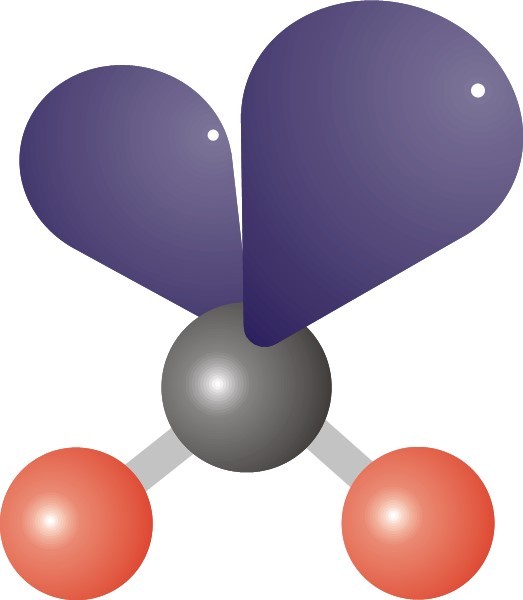
CO2
NH3
H2S
CH4
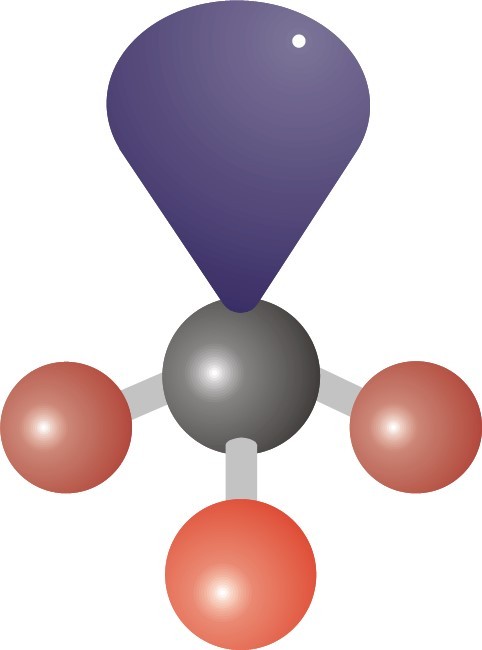
H2O
NH3
CO2
CH4
The atoms in a molecule of water adopt what kind of molecular geometry?
Linear
Tetrahedral
Bent
Trigonal planar

linear
Trigonal pyramidal
Bent
Tetrahedral
HBr
H2S
CBr4
PCl3

Is this molecule polar or non-polar?
Polar
Non-polar
transferred
gained
lost
shared

electrons are being transferred to Fluorine
electrons are less attracted to F than H
electrons are more attracted to F than H
Fluorine has formed a cation
A diatomic molecule like O2 is always_______ because electrons are shared ________.
nonpolar; equally
polar; equally
nonpolar; unequally
nonpolar; unequally

CO2 is...
polar
nonpolar

Water is...
polar
nonpolar

CF4 is...
polar
nonpolar
Carbon monoxide, a deadly gas, has a chemical formula of CO (one carbon atom with one oxygen atom). If you look at the total atomic mass of CO, does carbon or oxygen make up more of the mass?
carbon
oxygen
they are exactly the same
it is impossible to tell
What percentage of the total atomic mass of carbon monoxide (CO) is composed of carbon?
29%
43%
57%
73%
What percentage of the total atomic mass of carbon monoxide (CO) is composed of oxygen?
29%
43%
57%
73%
What percentage of the total atomic mass of magnesium bromide (MgBr2) is composed of magnesium?
13%
43%
63%
87%
What percentage of the total atomic mass of calcium nitrate (Ca(NO3)2) is composed of nitrogen? Hint - another way to think of calcium nitrate is Ca(NO3)(NO3).
17%
24%
29%
59%
Molecular Formula
Chemical Formula
Empirical Formula
Distance Formula
What is the empirical formula for C4H6?
CH
CH3
C2H3
C4H6
What is the empirical formula for N2S3?
NS
N3S2
N2S3
N1S1.5
NaCrO4 and Na2Cr2O7
C2H4O2 and C6H12O6
C3H6O3 and C2H6O2
CH4 and C2H6
What is the first step in calculating empirical formula?
convert grams to moles
change percent to grams
divide by smallest number of moles
multiply 'til whole
How many moles are in 83.65 g of carbon?
1,003.8
6.965
501.9
83.65
A formula with the lowest whole # molar ratio of elements in a compound is called
Glycerol has a molecular molar mass of 92.09g/mol. The empirical formula is C3H8O3. What is the molecular formula for glycerol?
A sample contains 36.95 g of mercury (Hg) and 13.05 g of chlorine (Cl). What is the empirical formula for this compound?
HgCl2
Hg3Cl
Hg17Cl36
HgCl
The Empirical Formula for a substance is CF2. The Molecular formula mass is 200. g/mol. What is the Molecular formula?

