
 Worksheets
Phys. Props, Chem Rxns, Compounds/Molec, Mixtures
Total questions: 116
Worksheet time: 2hrs 34mins

H₂O is a compound molecule.
TRUE
FALSE

O2 is a compound molecule.
TRUE
FALSE
Group of atoms bonded together
Mixture
Compouns
Atom
Molecules

What is the picture displayed?
atom
element molecule
compound molecule

Are these molecules also compounds?
YES
NO
Which of the following is NOT a compound?
HCl
Cl2
NaCl
CO2
Which of the following represents an element molecule?


Which is the property of matter in which a substance can transfer heat or electricity?
magnetism
conductivity
density
solubility
What happens when a substance undergoes a physical change?
Some physical properties change, but the substance keeps its identity.
No physical properties change, and the substance keeps its identity.
Some physical properties change, and the substance changes its identity.
No physical properties change, but the substance changes its identity.
What is an example of a physical change?
having less ash than the paper that was burned to form it
ice forming and then melting back into water
rust having a different identity than the iron it forms on
the irreversible reaction of vinegar and baking soda
The Statue of Liberty is made of copper that has turned green because it has undergone a change. What can be said about this change?
The change is a physical change because the copper in the statue is still there.
The change is a physical change because a new chemical is formed on the outside of the statue.
The change is not a physical change because the color of the statue has changed.
The change is not a physical change because a new chemical is formed on the outside of the statue.
Which of the following options provides evidence of a CHEMICAL change?
Wood is burned releasing ash and smoke
Rocks separate when soil is sifted
Water turns to ice when you put it in the freezer
Salt dissolves in water

Which is an example of a physical
change?
a candle burning
baking a cake
evaporating water
metal rusting

Mowing the lawn is an example of
Chemical Change
Physical Change
No Change
Which example provides evidence of a chemical change?
Wood releases ash and smoke when burned.
Rock particles separate when soil is being sifted.
Boiling water bubbles when being heated.
Sugar is not visible when dissolved in water.
When vinegar and baking soda are combined, bubbles and foam are produced.
What evidence demonstrates that a chemical change has occurred?
A color change occurs.
A gas is formed.
A solid is dissolved.
A precipitate is formed.

Which processes from the table can be used as evidence to identify the formation of a new substance?
Processes A, B, C, and D
Processes B, C, E, and F
Processes B, C, D, and F
Processes C, D, E, and F

Students performed investigations using water and three chemicals, baking soda, calcium chloride, and phenol red solution. The student observations are shown in the table.
Which investigations above provide supporting evidence that a new substance formed?
Investigations 1, 2, and 3
Investigations 1, 3, and 5
Investigations 2, 3, and 4
Investigations 3, 4, and 5
After an investigation, students were disposing of left over substances. One student poured all of the liquids down the sink drain. A few seconds later, a white cloud formed above the sink and the student’s eyes began to burn.
Which statement accurately describes what caused this occurrence?
The student did not wait two minutes in between pouring each liquid down the drain.
The student did not allow water to run in the sink after pouring each liquid down the drain.
A physical change occurred resulting in the formation of a new substance.
A chemical change occurred resulting in the formation of a new substance.

Students performed multiple investigations at different stations in the classroom. The data collected is listed in the table.
The observations from which investigations provide evidence that a new substance was formed?
Stations 1, 3, 4, and 5
Stations 2, 5, and 6
Stations 1, 3, and 4
Stations 1, 2, 3, and 4

Table salt is a compound made from two elements, sodium and chlorine.
Which statement best explains why the characteristics of table salt are so different from the characteristics of sodium and chlorine?
Salt is processed by the evaporation of seawater or mineral-rich spring water
Salt is processed from salt mines because pure sodium does not occur in na
When sodium and chlorine combine, a physical change occurs and a new substance is formed.
When sodium and chlorine combine, a chemical change occurs and a new substance is formed.

Students performed an investigation to see what would happen when sugar is exposed to heat. The students' observations are listed in the table.
Which students’ observations indicate that a new substance formed as a chemical change occurred?
Student A and Student C
Student B and Student C
Student A and Student D
Student B and Student D
Flour, sugar, cocoa, oil, and eggs are mixed together and placed in the oven to make brownies. When the brownies are removed from the oven, they no longer look like the original ingredients.
Which of the following describes why the ingredients changed?
A biological change occurred.
No change occurred.
A physical change occurred.
A chemical change occurred.
Two liquids are mixed together. Which of the following does NOT identify the formation of a new substance?
A gas is produced.
One liquid dissolves into the other.
The temperature changes.
A solid is formed.

Which column in the table includes only chemical changes?
A
B
C
D
During a science class investigation, a teacher places a small amount of sugar in a beaker and heats it over a candle. Which of the following would be the best evidence that a change in the chemical properties of the sugar has taken place?
The sugar gets hotter.
The sugar gets larger.
The sugar turns into a liquid.
The sugar turns black.
A student had a beaker with a small amount of baking soda. The student added a few drops of pickle juice to the baking soda and observed fizzing and bubbling. Based on observation, which of these can the student conclude?
A chemical reaction produced a solid.
No chemical reaction took place.
Only a physical change happened.
A chemical reaction produced a gas.
Nitrogen (N), Oxygen (O), Carbon (C) and Hydrogen are the most common example of ?
Molecules
Elements
Compounds
Substances
It is a combination of two or more substances.
Substances
Mixtures
Elements
Compound
In a solution this is the dissolving substance.
Powder
Solute
Liquid
Gas
Is water a element or compound?
Element
Compound
When substances are combined as a mixture, _______________.
they keep their physical properties
their physical properties combine
their physical properties change
they lose some of their physical properties
Salt can be separated from water by using
tweezers
sieve
magnet
evaporation
What tool can you use to BEST separate a mixture of sand and water?
paper filter
strainer
strainer

Is tea a mixture or a solution?
Mixture
Solution

Is soap a mixture or solution?
Mixture
Solution
What is a mixture?
The combination of two or more substances.
An ingredient.
A liquid.
A gas.

Is fruit salad a mixture or solution?
Mixture
Solution
What is a solution?
A type of mixture where one substance dissolves in another
An ingredient.
A liquid.
A gas.

Is Kool-Aid a mixture or a solution?
Mixture
Solution

Is salad a mixture or a solution?
Mixture
Solution
How can we remove sugar from a sugar water solution?
Melting
Magnet
Put it out in the sun / heat it up / Evaporation
Tweezers

Is oil and water a mixture or a solution?
Mixture
Solution
In a mixture, the properties of a substance ______________
do not change
change forms
turn into a liquid
become solid

Is cereal a mixture or solution?
Mixture
Solution

Is sand and iron filings a mixture or solution?
Mixture
Solution
When a substance dissolves, that means its particles _________.
spread out evenly
disappear
turn into water

Which of the following is NOT a mixture?
milk
lemonade
vegetable salad
carbon
Which of these is an element?
Salt (NaCl)
Water (H20)
Oxygen (O)
Carbon Dioxide (CO2)
Which of these is a compound?
Aluminium (Al)
Carbon Dioxide (CO2)
Nitrogen (N)
Sand
If I added 27 grams of salt to water and separated the solution with a hot plate (heating it up and evaporating the liquid), what amount of salt would be left behind?
20 grams
0 grams
27 grams
10 grams
A solution is a mixture of one or more substances ___________ evenly into another substance.
dissolved
evaporated
carried
split
A combination of two or more substances where each substance keeps its own properties and both can be easily separated
mixture
solution
substance
physical change
Increasing the ____________ will allow the particles to move faster
temperature
rate
catalyst
subscript
Breaking the reactant into smaller pieces is allowing for more _______________ which increases the rate of the reaction
temperature
surface area
chemical changes
sub reactants
How many total atoms are in 2H2O
2
4
6
8
How many elements are in this chemical formula?
NaOH
1
2
3
4
How many atoms are in the formula?
NaOH
4
3
2
1
How many elements are in this formula?
HNO3
1
2
3
4
How many elements are in this formula?
Li2O
1
2
3
4
How many elements and atoms are there in this formula?
CaClO3
1, 5
2, 4
3, 5
4, 4
How many elements are there in this formula?
H2COCH2
4
3
2
1
How many atoms are there in this formula?
H2COCH2
5
4
6
7
Are there any compounds on the periodic table?
yes there are many
no because only elements are on the periodic table
I think they are?
there is no way to tell
How many Hydrogen atoms are in 4H2O?
6
8
2
4
How many Oxygen atoms are in H2O?
1
2
0
4
How many Magnesium atoms are in 10MgCl2?
10
5
20
How many Sodium atoms are in 6NaCl?
1
12
6
What is C2H8O ?
Element
Letters
Numbers
Compound
How many Aluminum atoms are in Al2O3?
3
2
5
1
A subscript is the small number below the element symbol that tells the number of _______ of that element.
atoms
valence electrons
protons
elements
How many atoms are there TOTAL in H2SO4 ?
6
5
7
3
How many Nitrogen atoms are in (NH₄)₂CrO₄?
1
2
8
16
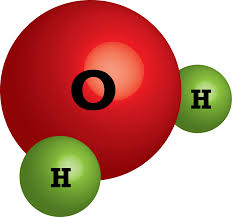
How many atoms of Hydrogen are in this compound?
1
2
3
4
How many Oxygen atoms are in Al₂(SO₄)₃?
4
12
7
24
How many Hydrogen atoms in 3(NH₄)₂CrO₄?
4
2
8
24
How many Nitrogen atoms are in the in H2C3O4N5?
2
3
4
5
How many elements are present in this compound? (Careful!)
Mg2As3COHNi2
2
4
6
10
How many atoms are present if there is no subscript following the element symbol?
0
2
only 1
1 million

