
 Worksheets
2025 Fall Semester USH Final
Total questions: 56
Worksheet time: 39mins

What was the effect of World War 2 activities such as those shown in this poster?
The enlistment of women into the armed forces
The establishment of women's suffrage
Changes in the traditional roles of women
An increase of elected female political leaders
Which of the following accurately demonstrate a real economic effect of the US involvement in World War 2?
An increase in labor union strikes
An increased number of women doing industrial work
A decrease in the nations debt
A surplus of consumer goods
Which of the following was a critical part of the Home Front during WW2?
Increasing the funding for Social Security and welfare programs
maintaining and even increasing the countries military and production levels
Outlawing many of the business hindering practices of labor unions
Insuring that trade and commerce continue with US allies such as germany

Programs such as the one in this poster sought to -
encourage a healthy diet for future soldiers
lower the cost of living by creating a surplus of food
support the war effort by reducing demand for commercially grown food.
increase the regulatory power of the war production board.

D-Day describes -
The day of the Allied invasion of Normandy France during World War II
During World War II, the Bracero Program -
was created to bring workers from Mexico to the
United States to help fill the labor needs on American farms in the West.
allowed internment camps to be set up to exclude
current residents believed to be a threat to security
allowed consumers to buy imported goods at discounted rates.
instituted a disaster-preparedness program for civilian population
Rationing practices such as ration books -
proved unsuccessful because of failures within the mail service leaving Americans disgruntled
was used as a method for government tracking of citizens and their spending
provided discounts to the families of deployed soldiers who were in the homefront
ensured the fair distribution of scarce goods such as sugar, coffee, meat, butter and canned food during WW2
Which of the following is a reason Japan attacked Pearl Harbor in 1941?
American hostility against Japan's allies: Italy and Germany
It was revenge for the Japanese defeat at Midway, Okinawa, and Iwo Jima
U.S. trade sanctions and embargos had caused shortages of oil, gas, and rubber for Japan
Japanese Americans had been relocated to internment camps.
What action prompted US involvement in WW2?
A Japanese act of aggression on a US naval base
The German invasion of Poland
A Japanese act of Aggression on Chinese Manchuria
Germany's invasion of the Soviet Union
The US strategy of "Island Hopping" in the Pacific Theater refers to -
protecting shipping routes for neutral countries
gaining access to vital natural resources.
the British defense system that stopped Hitler's air attacks on the British Isles
establishing military bases for use in further attacks by attacking some Pacific islands while bypassing others
The Bataan Death March in 1942 refers to -
The harsh treatment of captured German soldiers
An extended period of stalemate against Japanese forces in Guam
The forced march of allied forces in the Philippines that resulted in the death of 10,000
The exchange of Japanese prisioners of war for American ones
What US act provided financial and military aid to Great Britain during WW2?
The Lend Lease Act
The Homestead Act
The Sherman Antitrust act
The Pure Food and Drug Act
Which secret project would create a powerful weapon used to gain a strategic advantage over American enemies?
the Gutenberg project's survival manual
The Manhattan Project's atomic bomb
The Patriot Project's supersonic jet
The Winchester project's rapid fire machine gun
The rights of citizens under the 4th and 14th Amendments of the Constitution were violated during WW2 with-
The Patriot Act allowing the US government to use wiretaps on US citizens
Marcus Garvey's mail fraud court case
Executive Order 9066 allowing the Internment of Japanese Americans
Nuclear test sites in Nevada spreading radiation to American scientists

Dwight D Eisenhower -
was the Supreme Commander of the Allied Forces and led the D‐Day Invasion of Normandy on June 6, 1944.
increased the regulatory power of the war production board.
led the American forces in the Pacific Theatre during the Battle of Midway.
instituted a disaster-preparedness program for the civilian population
Which US combat group during WW2 decreased opposition to racially integrating the armed forces?
The Navajo Code Talkers
The Flying Tigers
The Tuskegee Airmen
Flappers

In 1948 ______ signed executive order 9981 which would desegregate the military.
John F. Kennedy
Harry Truman
Theodore Roosevelt
Dwight D. Eisenhower
Soldiers from the Navajo tribe during WW2 assisted the US and Allied forces by-
designing radar technology
flying bombing missions
encoding military communication
providing intelligence on enemy positions.
Which action did President Harry Truman claim would save American lives and shorten WW2?
Using atomic weapons against Japan
Launching a island offensive on mainland japan
Using submarines to eliminate the Japanese Navy
Retreating from the pacific and waiting for China and the Soviet Union to defeat Japan
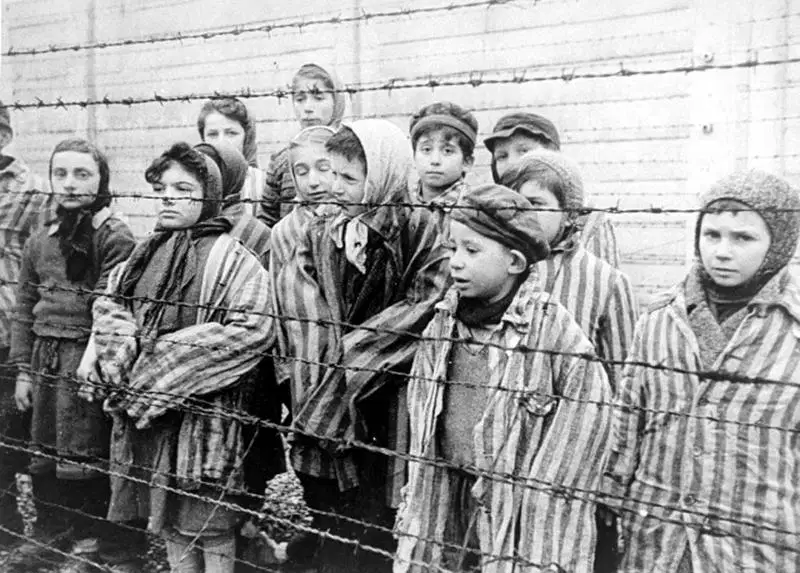
The Holocaust was -
The invasion and burning of Moscow in the Soviet Union
The genocide and extermination of European Jews during WW2
The German and Soviet invasion of Poland
The internment of Japanese Americans during WW2
The initiative, the referendum, and the recall were adopted by several states during the Progressive Era as ways to-
restrict the use of presidential vetoes
promote the formation of trusts
Gave Citizens a greater voice in government
limit immigration
Which statement BEST describes the economic effects of the Spanish-American War on the United States?
The acquisition of territory meant more resources and trade routes.
Women were regarded more highly as workers.
The loss of the Panama Canal meant higher shipping costs and longer shipping times.
Free trade with Spain increased the value of exported goods.
Why did the U.S. refuse to ratify the Treaty of Versailles after World War I?
The senate supported isolationism and would not support America's participation in the League of Nations thinking the US would be dragged into another war
The Senate believed the treaty did not punish Germany enough so we not participate.
The Senate thought the treaty did not have the power to prevent secret alliances like it claimed.
The Senate could not agree on military disarmament levels.
New dances, new music and new art all reflect -
the changing social norms of the Jazz Age.
the reaction to victory in the Spanish-American War.
the industrial progress of the post–World War I era.
the experiences of immigrant workers during the Gilded Age.
A major result of the Harlem Renaissance was -
restoration of cultural buildings in Chicago
end of racial segregation in the American South
increased appreciation of African American artists
More African Americans were elected to political positions
Large numbers of businesses closing down, a high unemployment rate, and an overall slowing economy are found in a period of
depression
prosperity
expansion
recovery
If the Court Packing Scheme had been a success for FDR, which branch of the government would become the strongest?
Executive
Judicial
Legislative
Democratic
The FDIC (Federal Deposit Insurance Corporation) -
Insures the money deposited into banks
Regulates the Stock Market
Provides old age and retirement insurance
Pays farmers to plant less crops
The Executive Branch is
The Supreme Court
Congress
The President
The Governor
choose the correct definition of a historical era
A genre of music specific to a region or country.
A piece of landmark legislation passed during a congressional session.
A period of time characterized by certain political, social, or economic events.
collection of Art by a world renowned artist.

Which trend of the late 1800s and early 1900s is BEST reflected in this photograph?
The emphasis on cultural assimilation
the restoration U.S. citizenship to American Indians
The desire to gain new territories
Encouraging the study of American Indian religious practices
One major reason for the growth in urbanization (cities) during the Gilded Age was -
politicians in major cities demanded fair working conditions for all laborers
the upper- middle class was prosperous and able to afford city dwellings.
many factory jobs were located in cities near transportation routes.
The Homestead Act gave away homes in major cities
The Transcontinental railroad was built mainly by -
Chinese and Irish immigrants
Native Americans
Free African Americans
Worker Unions

The Brooklyn Bridge was built during the Gilded Age. Its construction relied on the Bessemer Process which efficiently made _____ an important construction component.
Iron
Copper
Gold
Steel

During the Gilded Age, Political Machine Bosses, such as Boss Tweed, operated by -
Accepting bribes in return for favors.
Wasting money on military spending.
Discriminating against migrant workers.
Denying voting rights to the poor.

During the Gilded Age, _________ discriminated against immigrants.
Scientists
Nativists
Imperialists
Abolitionists

Laws such as the Sherman Antitrust Act and the Interstate Commerce Act protected small businesses by -
What is the Term used to describe the equal balance of power between the 3 branches of the Federal Government (Executive, Legislative, Judicial)
Laissez Faire
Checks and Balances
The Scales of Justice
Equality

What 2 acts did Upton Sinclair's The Jungle help establish?
Pendleton Act / the Hatch Act
Pure Food and Drug Act / Meat Inspection Act
Federal Reserve Act / Federal banking Act
Dawes Act / Homestead Act
Rapid industrialization during the late 1800s contributed to an increase in (a) to the United States
Match the following Amendments with these effects
16th Amendment
raised money for the government
17th Amendment
Put the public in control of congress
18th Amendment
increased organized crime in the US
19th Amendment
Increased the number of voting adults

Were all native Hawaiians supportive of the annexation of their Islands by the United States?

Based on the image, what assumption can we accurately make about the effects of the Gold Rush on the Natural Landscape of the United States?
What is founding principle found in both the Constitution and the Declaration of Independence?
The government gets its power from the people
It could be summarized that Social reforms like Jane Addams, Margret Sanger, and Jacob Riis wanted to see improvement in the lives of which Americans during the Progressive Era ?
Industrialists
Poor Americans
company shareholders
Coal Miners
(a) in the US fought to improve the lives of the urban (b) through addressing issues like low pay, lack of safety, and no time off.

Woodrow Wilson would address what cause of WW1 in his 14 Point speech?
Germany's practice of unrestricted submarine warfare
Colonial expansion at the hands of the French
Military alliances between USA and Canada
Economic sanctions on the losing countries
Which example best defines a historical era?
A collection of art by a world-renowned artist
A period of time characterized by certain political, social or economic events
A genre of music specific to a region of a country
A piece of landmark legislation passed during a congressional session

Why did many travel of the harsh mountain terrain and the long and arduous journy to the Yukon and Klondike Territories in the Northern Rocky Mountains?
To avoid heavy taxation in the Eastern states
Because of the opportunity to become rich mining for gold
because of economic opportunities with large bonanza farms
To get to Oregon it was required to pass this way

Why were so many woman working industrial jobs during WW2?
The government forced women by law to work in industrial jobs
It was the only work that women were allowed to have
Identify the following territorial acquisitions of 1898
Guam
The Philippines
Hawaii
Puerto Rico
Which territorial acquisition of 1898 would become a major naval base and refueling depot in the Pacific Ocean?
The Philippines
What government action distributed up to 160 acres of Federal Land to any American who would live and improve upon it?
The Dawes Act
The Homestead Act
The Lend Lease Act
The Chinese Exclusion Act
The New Deal created the idea that
Presidents have no power over the economy
the government must own the nation's major
industries
government is responsible for fixing
problems in the economy and protect the well being of their citizens
imperialism is the fastest method to get a country out of depression

