Worksheets
Unit 1 (Cells) Review
Total questions: 75
Worksheet time: 56mins
In a biology class, Avery is asked to identify the main difference between prokaryotic and eukaryotic cells. What should Avery answer?
Prokaryotic cells have a nucleus and Eukaryotic cells do not
Prokaryotic cells are unicellular and Eukaryotic cells are multicellular.
Prokaryotic cells do not have a nucleus, Eukaryotic cells do have a nucleus.
Prokaryotic cells are plant cells and Eukaryotic cells are animal cells.
Aria is studying how nutrients are absorbed by cells in the human body. What is the function of the cell membrane in this process?
To protect and support the cell
To perform different functions in each cell
To control what enters and leaves the cell
To form a hard outer covering for the cell
In a science class, Evelyn is asked to categorize animals based on their cellular structure. Animals like humans, which are composed of many cells, are called
Prokaryotic
Eukaryotic
Unicellular
Multicellular
In a science class, Isla is learning about different types of organisms. She is curious to know which types of organisms are Prokaryotes. Can you help her?
Animals
Plants
Fungi
Bacteria

Mia is observing a microscopic organism under a microscope in her biology class. Based on its characteristics, what type of cell is she likely observing?
Prokaryotic
Eukaryotic
Plant
Animal
In a science class, Liam and Abigail are learning about cells. They discover that both prokaryotic and eukaryotic cells have many differences, but also share some common features. Which of the following may be found in either type of cell?
Golgi bodies
ribosomes
mitochondria
nucleus
In a biology class, Ava and Samuel are discussing cells. They want to know which of the following would be found in both eukaryotic AND prokaryotic cells?
chloroplast
cytoplasm
nucleus
endoplasmic reticulum

During a biology class, Liam observed a slide under the microscope. The teacher asked, 'Type of cell shown?'
Bacterial
Prokaryotic
Eukaryotic
Red blood
In a biology class, Sophia is asked which of the following is NOT a characteristic of eukaryotic cells found in humans?
DNA is separated from the cytoplasm by a nuclear membrane
Large
Complex
Lack membrane-bound organelles
While studying microorganisms in a water sample from a local pond, Rohan observed various cells under the microscope. Which of the following characteristics would NOT be observed in a Prokaryotic cell found in the sample?
unicellular
floating DNA
very small
complexity
In a high school biology class, Noah, Mia, and Ava are examining cells under a microscope. They observe cells from animals, fungi, plants, and protists. These cells are all examples of which type of cell?
Eukaryotic
Prokaryotic
Both prokaryotic and eukaryotic
In a cell biology lab, Lily notices a cell under her microscope showing a cell wall, nucleus, and chloroplasts. Which of the following could the cell she is observing belong to?
oak tree
human
bacteria
cat hair
In a cell biology class, James is learning about cell organelles. He is particularly interested in the smooth endoplasmic reticulum. What are the primary characteristics of the smooth ER?
it does not have ribosomes on the membrane and makes lipids for the cell.
it has ribosomes on the membrane and makes proteins for the cell.
it has ribosomes on the membrane and makes lipids for the cell.
it does not have ribosomes on the membrane and make glucose for the cell.
In a biology class, Luna is learning about cell structures and comes across the rough endoplasmic reticulum. She understands that it
does not have ribosomes on the membrane and transports proteins for the cell.
does not have ribosomes and makes energy for the cell.
does not have ribosomes and makes proteins for the cell.
has ribosomes on the membrane and transports proteins for the cell.
During a science fair, Hannah explains a process to Scarlett and Grace, showing a diagram and saying:
'Sunlight +6H2O + 6CO2 --> C6H12O6 +6O2'
What process is being described here?
Cellular respiration
Human respiration
Photosynthesis
Solar energy
During a marathon, Nora's body breaks down glucose in the presence of oxygen to release water, carbon dioxide, and energy (ATP). This process is known as ___________________.
Human Respiration
Cellular Respiration
DNA Replication
Photosynthesis
During a biology class, Mia was asked about the pigment in chloroplasts that performs photosynthesis. What is the correct answer?
Chloroplast
Chlorophyll
ADP
Electron Transport
During a science fair, Isla demonstrates how plants produce products through photosynthesis. What are these products?
water and carbon dioxide
oxygen and glucose
oxygen and carbon dioxide
oxygen and water
David is running a marathon and his muscles are working hard. What process is primarily responsible for providing the energy his muscles need?
the breakdown of glucose to release ATP
the breakdown of glucose to release NADH
the breakdown of glucose to release FADH
the breakdown of glucose to release carbon
During a science project, Nora observed that all living things do which of the following all the time (24/7)?
Chemosynthesis
Cellular respiration
Photosynthesis
All of the answers
During a science project, Grace and Arjun observed that yeast cells produce carbon dioxide in sugar solution even in the absence of oxygen. What type of respiration is demonstrated by yeast under these conditions?
Aerobic
Anaerobic
In a marathon, which type of respiration does Abigail's body use to produce the most energy?
Aerobic
Anaerobic
Photosynthesis
Homeostasis
During a science project on energy production in cells, Noah asked William and Olivia, 'Where in the cell does aerobic respiration take place to produce energy for this experiment?'
Nucleus
Cytoplasm
Mitochondria
Cell membrane

In a science project, Noah and Abigail compared the energy output of two types of muscle cells: one in the presence of oxygen and the other in its absence. What conclusion can be drawn from their experiment?
Fermentation is more efficient because it produces a total of 34 ATP molecules.
Aerobic respiration is more efficient because it produces a total of 36 ATP molecules.
Aerobic respiration produces only 2 ATP molecules more than fermentation.
Fermentation and aerobic respiration both produce the same amount of ATP molecules.

Ethan is observing a cell under a microscope in a hypertonic solution. Which way is the water moving in this cell?
Water will move out of the cell
Water will move into the cell
In a crowded concert, Liam uses specific pathways to move through the crowd to the front without pushing anyone aside, similar to how Facilitated Diffusion uses __ to aid in diffusion, but it does not require energy to function.
Protein channels
Pumps
Vesicles

Active Transport __________ require energy and uses the help of __________ to move nutrients into a cell against its concentration gradient.
does, protein pumps
does, cytoplasm
does not, transport proteins
does not, sodium pumps

During a high school biology project, Liam, Maya, and Harper are examining the process of genetic variation in pea plants. They are particularly interested in the stage of MEIOSIS where crossing over occurs, which is the exchange of genetic material between chromosomes in a tetrad. At which stage does this happen?
Anaphase I
Metaphase I
Prophase I
Telophase I

During a biology class, Arjun learned that sea turtles have 56 chromosomes in their somatic cells. Curious, he asked, 'How many chromosomes are in their gametes?'
28
56
112
46

During a school science fair, Elijah demonstrates a cell model. At which stage of mitosis do the chromosomes line up in the middle of the cell?
Prophase
Metaphase
Anaphase
Telophase

During a school science fair, Grace and Mia presented a model of a cell division process. In which stage of the process do two nuclei form, each enclosed by its own nuclear membrane?
prophase
metaphase
anaphase
telophase

During a high school biology class, Anika observes under the microscope that chromosomes condense and become visible. At which stage of cell division is this happening?
prophase
metaphase
anaphase
telophase

During a school relay race, imagine teams as chromosomes. At which stage do the teams (chromosomes) pull away from each other and move to opposite ends of the track (cell)?
Prophase
Metaphase
Anaphase
Telophase

In the cell, the organelle responsible for breaking down lipids, proteins, carbohydrates, damaged machinery, and harmful bacteria is the ___.
Golgi Appaparatus
Vesicle
Vacuole
Lysosome
In a biology class, Arjun is learning about the central command center of both plant and animal cells, which houses DNA, oversees the creation of new cells, and manages cellular activities. What is this structure called?
Nucleus
Ribosomes
Mitochondria
Vacuoles
In a high school biology class, Avery, Isla, and William are learning about cell structures. They are particularly interested in the organelle known as the 'powerhouse of the cell,' which is the site of ATP (energy production) and cellular respiration in plants and animals. What is this organelle called?
Nucleus
Ribosomes
Mitochondria
Vacuoles
In a biology class, Noah is learning about where proteins are synthesized within a cell. Where does this process take place?
Nucleus
Ribosomes
Mitochondria
Vacuoles

Evelyn is studying the structure of a molecule in her biology class. She notes that it is made from amino acids. Which type of molecule is she studying?
lipids
proteins
carbohydrates
nucleic acids
hormones

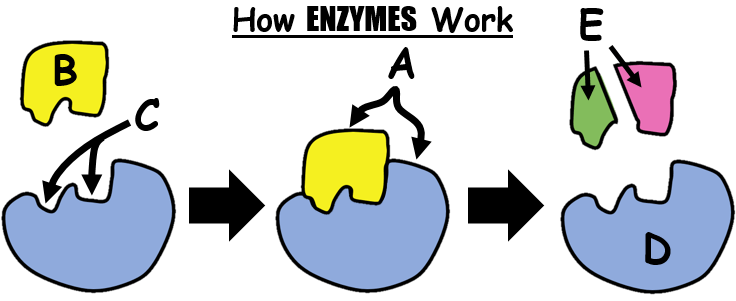
Enzymes belong to which class of macromolecules?
lipids
carbohydrates
proteins
nucleic acids


What type of asexual reproduction is it?
budding
regeneration
sporulation
binary fission
Asexual reproduction has
1 parent
2 parents
Sexual reproduction has
1 parent
2 parents
Asexual reproduction creates offspring that are
genetically identical to the parent
different from the parent
different from each other
formed by 2 parents
Budding, vegetative propagation, regeneration, and binary fission are all types of
sexual reproduction
asexual reproduction
The purpose of cell division is
growth
evolution
repair
reproduction
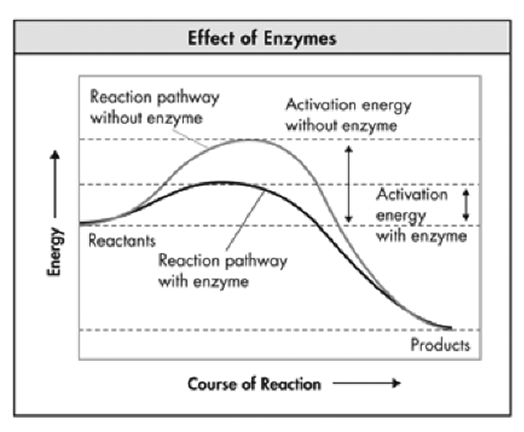
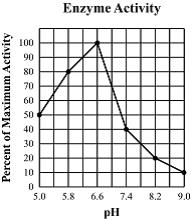
The shapes of the enzymes are altered and denature

Name this phase of Meiosis
Anaphase II
Anaphase I
Metaphase I
Metaphase II

Name this phase of Meiosis:
Telophase I
Prophase II
Telophase II
Anaphase II
The phase in Meiosis in which 2 daughter cells are formed:
Anaphase I
Anaphase II
Telophase I
Metaphase II
The phase of Meiosis in which chromatids separate:
Prophase II
Metaphase II
Telophase II
Anaphase II
The phase of Meiosis in which tetrads are formed:
Prophase I
Metaphase I
Anaphase I
Telophase I

Name this phase of Meiosis:
Prophase II
Metaphase I
Metaphase II
Anaphase II
The phase of Meiosis in which homologous chromosomes are moved to opposite sides:
Metaphase I
Prophase I
Telophase I
Anaphase I
The phase of Meiosis in which 4 daughter cells are formed:
Telophase I
Prophase II
Anaphase II
Telophase II
The phase of Meiosis in which homologous chromosomes are moved to opposite sides:
Metaphase I
Prophase I
Telophase I
Anaphase I
What is the basic unit of life?
Atom
Molecule
Cell
Tissue