wayground logo

Free Printable Worksheets

Font size

S
M
L
XL
Worksheets

Biology MCAS prep

Total questions: 70

Worksheet time: 1hrs 6mins

Name
Class
Date
1.
This molecule is a monomer of which group of organic molecules?
a)
carbohydrates
b)
lipids
c)
proteins
d)
nucleic acids
2.
What is this molecule?
a)
glucose
b)
polypeptide
c)
steroid
d)
triglyceride
3.
Which of the following is NOT TRUE about enzymes?
a)
they are proteins
b)
they can change shape when temperature or pH change
c)
they are used up in chemical reactions
d)
they speed up the rate of chemical reactions
4.
This picture is of which organic molecule
a)
nucleotide
b)
monosaccharide
c)
glycerol
d)
ATP
5.
Which of the following is NOT TRUE about DNA?
a)
It is a double stranded molecule
b)
it has four types of bases: adenine, guanine, cytosine and urasil
c)
deoxyribose is the sugar present
d)
sections of DNA that carry instructions to make proteins are called genes
6.
What is this molecule?
a)
nucleotide
b)
amino acid
c)
ATP
d)
monosaccharide
7.
A biological molecule is analyzed, and it is discovered that the molecule is composed of several amino acids. Which of these identifies the biological molecule?
a)
it is a lipid
b)
it is a protein
c)
it is an unsaturated fat
d)
it is a  monosaccharide
8.

What is the function of the cell membrane?

a)

Produces ATP

b)

Produces proteins and lipids

c)

Keep the organelles in place

d)

Control what enters and leaves the cell

9.
What is the function of the ribosomes?
a)
Transport proteins
b)
Make proteins
c)
Package and ship proteins
d)
Store water, food, and wastes
10.
What is the function of chloroplasts?
a)
Helps plants make food from the sun
b)
Protects plant cells
c)
Store food and water
d)
Make energy for the cell
11.
Which of the following organelles will you NOT find in an animal cell?
a)
Cell membrane
b)
Cell wall
c)
Golgi Apparatus
d)
Lysosome
12.
Which kingdom is prokaryotic?
a)
Animalia
b)
Archaebacteria
c)
Planta
d)
Fungi
13.
 Archaebacteria... 
a)
Are eukaryotic
b)
live in extreme environments 
c)
Are non-living 
d)
Are heterotrophic
14.
This kingdom includes complex, multicellular organisms that are usually green, have cell walls, and make sugar by photosynthesis
a)
fungi
b)
bacteria
c)
plantae
d)
archaea
15.
This kingdom includes non-green, non-moving eukaryotic organisms that break down substances outside their bodies and absorb the nutrients.
a)
Archaea
b)
Plantae
c)
Bacteria
d)
Fungi
16.
All organisms that do not fit into plant, fungi, and animal kingdoms but have a nucleus are:
a)
archaebacteria
b)
eubacteria
c)
protists
17.
The main source of energy for all life comes from ____.
a)
the Earth
b)
the moon
c)
the sun
d)
the food we eat/make
18.
Why do plants conduct photosynthesis?
a)
to make light
b)
to make ATP
c)
to make glucose
d)
to release carbon dioxide
19.
What gas is given off by a plant as a byproduct during photosynthesis?
a)
carbon dioxide
b)
nitrogen
c)
hydrogen
d)
oxygen
20.
Which gas is removed from the atmosphere during photosynthesis?
a)
hydrogen
b)
oxygen
c)
nitrogen
d)
carbon dioxide
21.
 Respiration's goal is to
a)
make water
b)
make ATP
c)
make glucose
d)
make  oxygen
22.
When a cell is not actively dividing, it is in what phase?
a)
interphase
b)
anaphase
c)
prophase
d)
telophase
23.
Before a cell can divide, what must happen?
a)
Nothing, it is always ready to divide
b)
The number of chromosomes must be cut in half
c)
The number of chromosomes must double
d)
The number of chromosomes must triple.
24.
When you start with 1 cell, at the end of mitosis, how many identical cells will you have?
a)
1
b)
2
c)
3
d)
4
25.
After meiosis is complete how many cells will there be?
a)
1
b)
2
c)
3
d)
4
26.
After meiosis is complete, the new cells:
a)
are all identical
b)
are all different
c)
are half identical and half different
d)
are all stretched out
27.
Why is sexual reproduction better than asexual reproduction?
a)
It gives an advantage to organisms to be different than the rest, if the environment changes.
b)
It is better for all organisms to be the same.
c)
It happens faster.
d)
It helps skin cells divide faster to heal wounds.
28.
The process on the left is:
The process on the right is:
a)
Left: meiosis
Right: meiosis
b)
Left: meiosis
Right: cloning
c)
Left: mitosis
Right: meiosis
d)
Left: mitosis
Right: mitosis
29.
What scientific process is being shown?
a)
Mixing
b)
Crossing under
c)
Crossing over
d)
square dancing
30.
The joining of a sperm cell and an egg cell is called...
a)
Fertilization
b)
Labor
c)
Zygote
d)
STOP ASKING ME THESE IMPOSSIBLE QUETSIONS!!
31.
A dog has 78 chromosomes in its body cells.  What is the diploid number?
a)
78
b)
39
c)
1
d)
100
32.
A Goat has 60 chromosomes in its body cells.  What is the haploid number?
a)
60
b)
30
c)
100
d)
120
33.
DNA has a ______ strand; RNA has a ______ strand.
a)
double/double
b)
double/triple
c)
double/single
d)
single/single
34.
Transcription is the production of ___ from ___.
a)
protein, RNA
b)
RNA , DNA
c)
DNA, RNA
d)
DNA, protein
35.
Identify the complementary DNA strand: ATTACGAT
a)
GAAGTGCA
b)
TAATGCTA
c)
TCTUCAAA
d)
CGGCACG
36.
The "central dogma" states that genetic information flows from 
a)
Protein-->mRNA-->DNA
b)
Protein-->DNA-->mRNA
c)
mRNA-->DNA-->Protein
d)
DNA-->mRNA-->Protein
37.
The backbone (sides) of the DNA and RNA molecules are made of alternating 
a)
nitrogen bases and phosphates
b)
sugars and nitrogen bases
c)
phosphates and sugars
d)
nitrogen bases
38.
The codon (set of 3 nitrogen bases) codes for 1 of 20
a)
endoplasmic reticulum
b)
RNA
c)
genes
d)
amino acids
39.
7. How does DNA in cells determine an organism’s complex traits?
a)
 DNA contains codes for proteins, which are necessary for the growth and functioning of an organism.
b)
DNA separates into long single strands that make up each part of an organism.
c)
DNA produces the energy an organism needs in order to grow.
d)
DNA folds into the nucleus of each of the cells of an organism.
40.
11. Checkpoints occur between the stages of the cell cycle. If a cell does not meet certain criteria at the end of a stage, it will not move to the next stage.

Which of these occurs just before the cell enters the G2 stage of the cell cycle?
a)
the nuclear membrane disinigrates
b)
DNA replicates
c)
centrioles form
d)
the nucleolus divides
41.
What is a phenotype?
a)
The expression of a trait; physical appearance.
b)
refers to the genetic makeup of an individual
c)
An organism that has the same genes for a trait (ex. TT or tt)
d)
the passing of traits from parent to offspring
42.
R=round seed
r=wrinkled seed.
Cross a homozygous round with a wrinkled. Which statement predicts the results?
a)
offspring will be Rr
b)
offspring will be RR
c)
round seeds will be recessive to wrinkled
d)
Wrinkled will be observed in half of offspring
43.
W=white hair
w= non-white hair
If you cross a horse with WW and a horse with ww what fraction of the offspring would be expected to have white hair?
a)
none
b)
3/4
c)
1/2
d)
all
44.
Colorblindness is a recessive, X chromosome sex-link disorder. Cross the parents to figure out which percentage of their offspring will be colorblind.
a)
25%
b)
0%
c)
75%
d)
50%
45.
This type of inheritance pattern shows BOTH traits in possible offspring
a)
complete dominance
b)
incomplete dominance
c)
co-dominance
d)
dominant pattern
46.
In fruit flies eye color is carried on the X chromosome. RED is dominant to WHITE. What is the sex and color of the following: XrY
a)
female red
b)
female white
c)
male red
d)
male white
47.
Which of the following is a term for a group of similar organisms that can reproduce fertile offspring?
a)
individual
b)
population
c)
species
d)
fossil
48.
All rabbits living in a particular area would be an example of a(n)
a)
population
b)
species
c)
fossil
d)
individual organism
49.
Some organisms that share a common ancestor have features that have different functions, but similar structures.  These are known as
a)
vestigial structures
b)
analogous structures
c)
homologous structures
d)
fossil structures
50.
If an organism has a vestigial structure, that structure likely once had a function in a(n)
a)
close relative
b)
early ancestor
c)
unrelated organism
d)
embryological stage
51.
What is speciation?
a)
combining of tow species to form one with different traits
b)
isolation that affects mating behaviors
c)
timing of mating that prevents normal sexual selection
d)
divergence of two or more species from an existing one
52.

Natural selection could not occur without

a)

geographic isolation

b)

variation in the population

c)

stable environments

d)

competition for unlimited resources

53.

Which body system's main function is to direct body activities by sending and receiving impulses?

a)

cardiovascular

b)

endocrine

c)

lymphatic

d)

nervous

54.

Which body system's main function is to exchange carbon dioxide for oxygen through the breathing process?

a)

reproductive

b)

sensory

c)

respiratory

d)

integumentary

55.

Which body system's main function is to carry oxygen and nutrients to body tissues and remove waste from them?

a)

cardiovascular

b)

nervous

c)

digestive

d)

muscular

56.

Which body system's main functions are to take in nutrients from food, absorb water, and eliminate solid waste?

a)

reproductive

b)

urinary

c)

digestive

d)

respiratory

57.
Homeostasis in the human body is often maintained by a: 
a)
neutral feedback loop 
b)
solar feedback loop
c)
positive feedback loop
d)
negative feedback loop
58.
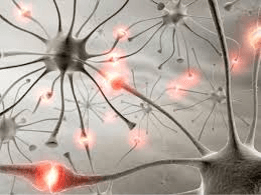
a body system that controls and coordinates all body activities through electric impulses/messages between brain, spinal cord and nerves.
a)
endocrine system 
b)
nervous system
c)
nerve
d)
neuron
59.
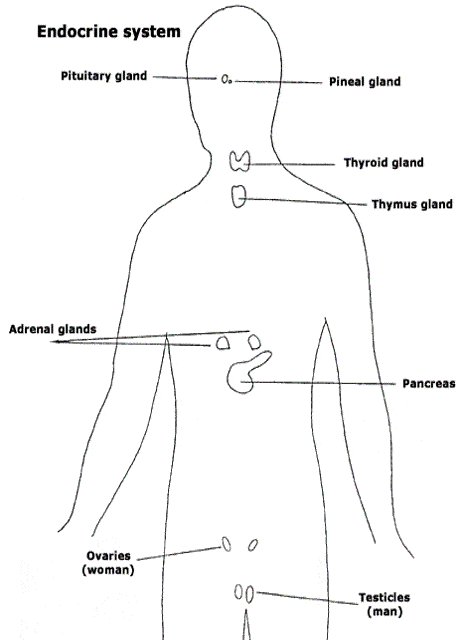
a body system that controls growth and homeostasis by secreting hormones from glands.
a)
skeletal system
b)
nervous system
c)
endocrine sytem
d)
integumentary system
60.
A living relationship between two species in which one organism is harmed is called...
a)
mutualism
b)
commensalism
c)
parasitism
d)
niche
61.
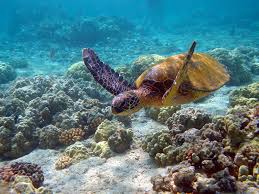
The image provided is an example of a(n):
a)
Carnivore
b)
Herbivore
c)
Producer
d)
Autotroph
62.
The amount of energy that usually transfers from one trophic level to the next...
a)
10%
b)
20%
c)
80%
d)
50%
63.
The rabbit in this food web would be considered a:
a)
Decomposer
b)
Producer
c)
Secondary Consumer
d)
Primary Consumer
64.
In the energy pyramid here, which organisms have the most energy available?
a)
Producers
b)
Carnivores
c)
Herbivores
d)
Top Predator
65.
The place where an organism lives in order to obtain its food, water, and shelter.
a)
species
b)
habitat
c)
niche
d)
community
66.
The maximum number of organisms that can survive in a particular ecosystem.
a)
carrying capacity
b)
birth rate
c)
limiting factor
d)
death rate
67.
If a disease destroying barley plants in a field swept through an ecosystem, what would happen to the barley eating bird population in the the field ?
a)
The bird population would stay the same
b)
The bird population would infinitely increase
c)
The bird population would decrease
68.
What is the carrying capacity of the graph?
a)
around 500
b)
more than 500
c)
less than 500
d)
around 600
69.
What do viruses need to reproduce?
a)
they need genetic material
b)
They need a host cell
c)
They need  bacteria
d)
They need insulin
70.
What do viruses have in common with living cells? They both...
a)
store genetic information
b)
have chloroplasts
c)
use glucose for cellular respiration
d)
have endoplasmic reticulum