
 Worksheets
Physical Science Physics Finals Review Quiz
Total questions: 122
Worksheet time: 3hrs 3mins
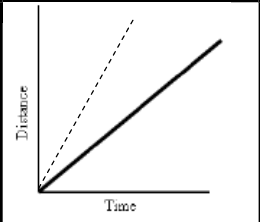
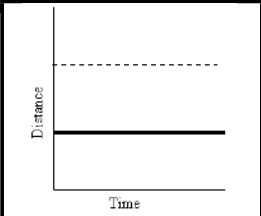


speed of an object in a particular direction
motion
velocity
speed
acceleration
the rate at which speed or velocity changes
acceleration
average speed
motion
reference point

What is happening at segment E?
acceleration
deceleration
constant speed
no motion/object at rest
What is happening at segment B?
acceleration
deceleration
constant speed
no motion/object at rest
At what speed would a car have to move in order to travel 20 kilometers in 2 hours.
5 km/hr
10 km/hr
20 km/hr
40 km/hr
Rank the following from most to least momentum?
a = a cheetah with a mass of 67 kilograms running at a speed of 52 m/h
b = a bighorn sheep with a mass of 136 kilograms running at a speed of 18 m/h
c = a chimpanzee running at a speed of 25 m/h that has a mass of 54 kilograms
a, b, c
a, c, b
b, a, c
b, c, a
c, b, a
The momentum of an object depends upon the object's ___________&_____________.
size and shape
mass and speed
mass and veloctiy
mass and energy

If I drop a large rock and a small rock from the same height at the same time, which one will hit the ground first?
the large rock
the small rock
both will hit at the same time

If you traveled to the moon you would __________.
weigh more than you did on Earth
weigh less than you did on Earth
weigh the same as you did on Earth
be killed by aliens
Free fall is any motion of a body where ____ is the only force acting upon it.
body attraction
tension
gravity
velocity
What should NOT be included in your evidence?
Observations from an investigation.
Numbers from your data table.
Opinions about the scientific data.
Why do you need to include reasoning in your CER?
It shows how or why the evidence supports the claim
It provides justification about why the evidence is important
It includes the scientific principle to support the claim
All of the above
A crayon has a mass of 10.0 g and volume of 5.0 mL. What is the density?
30 g/mL
15 g/mL
1.0 g/mL
2.o g/mL
54 km is equal to ______________ m.
5,400
54,000
540
.054
How many millimeters are there in 1 centimeter?
10 millimeters
100 millimeters
1,000 millimeters
How many centimeters are there in 3 meters?
30 centimeters
300 centimeters
3,000 centimeters
When a student runs and kicks a ball, they have applied an ___________ force to move the ball.
Balanced
Magnetic
Spring
Unbalanced
What Unit do we Measure Force in?
Newtons
Joules
Force
Kilograms

When there is a change in motion?
When forces are balanced
When the forces are unbalanced
Whe forces are equal
Never
An object in motion will stay in motion and an object at rest will stay at rest unless acted upon by an outside force. Which law does this describe
2nd law
1st law
3rd law
Object tendency to resist change
Friction
Inertia
Forcé
Gravity
What is another name for Newton’s 1st law?
Law of Inertia
Law of Acceleration
Law of Action/Reaction
A 20 kg bike accelerates at 10 m/s2. what was the force
F = m x a
25 Newtons
20 Newtons
200 Newtons
10 Newtons
Newton's third law states that any action will have a(n) _______ and ______ reaction
Equal and similar
Equal and opposite
Equal and different
Greater and opposite

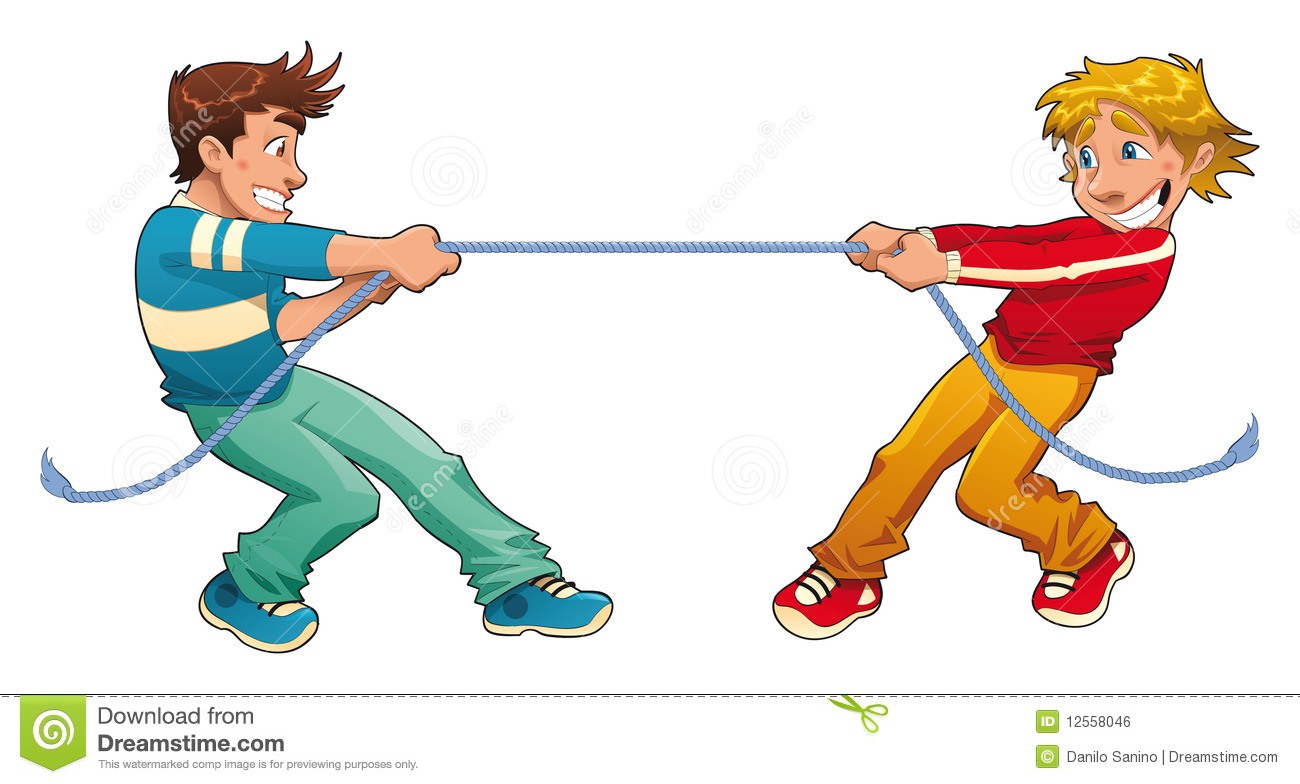
Which of Newton's laws is shown
1st law
3rd law
2nd law

If there is a big mass, it would need a stronger force to accelerate it. Which law does this describe?
3rd law
1st law
2nd law


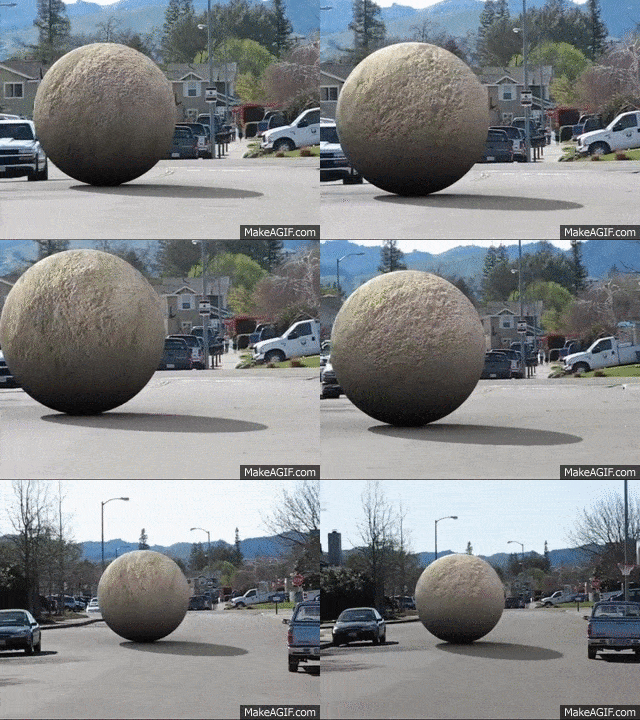
Earth exerts a stronger gravitational force than the moon because Earth has more________.
stuff
mass
density
gravity

The picture shows a weightlifter holding the barbell over his head.
The force of gravity pulling down on the barbell is 756 newtons.
How many newtons of force are exerted by the weightlifter to hold the barbell up?
No Newtons
756 Newtons
368 Newtons
14767 Newtons
What force slows objects down and keeps them from moving?
Acceleration
Gravity
Friction
Net Force


Why do we feel weightlessness?
we add more weight
we lose weight
absence of contact forces
______ is explained as a push or pull motion
Force
Friction
Gravity
Weight
Find the weight of a 5kg rock on Mercury with a gravitational pull of 3.59m/s/s.
5kg
17.95N
1.39N
0.718N
Find the mass of a 5kg rock on Mercury with a gravitational pull of 3.59m/s/s.
5kg
17.95N
1.39N
0.718N
Which formula would you use to calculate weight (Fg)?
mass/gravity
gravity/mass
weight-mass
mass x gravity
Gravity depends on two things:_____ and _______.
speed
mass
time
distance

Work causes a change in
Sweat
Energy
Calories
Force

Where does the pendulum have the least amount of potential energy?
A
B
C
D
E
Where is the kinetic energy of pendulum at its highest?
at the top of the swing
at the bottom of the swing
at 1/4 of the swing
at 3/4 of the swing

Where is kinetic energy at its maximum?
a
b
c
d
A man of mass 50 kg jumps to a height of 1 m. His potential energy at the highest point is(g = 10 m/s2)
(a) 500 J
(b) 50 J
(c) 5 J
(d) 5000 J
When an object is carried at a constant
velocity by a force,
no work is done on the
object.
the work done is maximum on the
object.
the work is done minimum on the
object.
the work done is 100 % on the
object.
A boy pushes a book kept on a table by applying a force of 4.5 N. find the work done by the force, if book is displaced through 0.3 m along the direction of push
1.10 J
1.25 J
1.35 J
None
The sum of kinetic and potential energy is called...
sum energy
nonmechanical energy
mechanical energy
space energy
The total amount of energy
varies
can cancel out to zero
goes out into space
remains constant
work is done when
the object you apply a force on moves
any force is applied to an object, regardless if it moves or not
the force is zero
the force and direction of motion are perpendicular
What is the rate at which energy is converted?
potential energy
kinetic energy
mechanical energy
power
The equation for work is
W= fd
W= fN
W=mv
W=wh

Total energy = 200J
Useful energy = 20J
Workout the efficiency of this lightbulb.
efficiency = total energy inuseful enegy ×100
100%
80%
40%
10%
A kettle uses 100J of electrical energy to produce 7J of sound energy and 93J of thermal energy. How efficient is the kettle?
100%
7%
93%
95%
The rate of electron flow in a circuit
Voltage
Resistance
Current
Power
Opposition to the flow of electrons
Current
Voltage
Resistance
Power
Energy used or gained across two points in a circuit
Current
Voltage
Resistance
Power
Which of the following charge pairs would repel each other? (Choose all that apply)
positive and negative
negative and negative
positive and positive
negative and positive

What type of circuit is this?
Series
Parallel
Simple
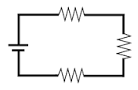
In a series circuit, how is the brightness of a light bulb affected when another bulb is connected?
It gets brighter
It stays the same
It gets dimmer
It goes out
Two unlike charges_________
Attract each other
Neutralize each other
Repel each other
Have no effect on each other
What energy changes take place to make a fan spin?
Electrical energy changes to heat energy.
Electrical energy changes to mechanical energy.
Wind energy changes to electrical energy.
Heat energy changes to mechanical energy.
What is the energy conversion provided by a generator?
thermal to electrical energy
mechanical to electrical energy
nuclear energy to mechanical
thermal energy to mechanical energy
Electric current moves from areas of positive charge to areas of _____________.
positive charge
negative charge
What is one benefits of using a parallel circuit?
It gets confusing.
There are no problems.
If one goes down, it does not affect theothers.
It has no benefits
What is one problem with using a series circuit?
If one device goes down, they all go down!
It doesn't work properly.
It has a lot of series.
There are no problems.
Which does electric current flow naturally?
insulators to conductors
high-voltage areas to low-voltage areas
low-voltage areas to high-voltage areas
low-resistance areas to high-resistance areas
What is the stanadard voltage difference of electrical energy entering homes in the US?
220 V
1200 V
120 V
12 V
A light bulb has a resistance of 7Ω with a potential difference of 21V across it. What is the current flowing through the light bulb?
147 A
28 A
3A
30A
A light bulb has a resistance of 7Ω with a potential difference of 21V across it. What is the current flowing through the light bulb?
147 A
28 A
3A
30A
Which equation can be used to calculate the resistance R of a resistor?
V = I / R
I = V x R
R = V x I
V = I x R
What is the equation to calculate electric power?
P = V÷I
P = V x I
P = I ÷ V
P = V x R
A circuit breaker is
power factor correcting device
a device to neutralize the effect of transients
a waveform correcting device
a current interrupting device.
To prevent overload and overheating of wires
fuses are used
circuit breakers are used
fuses and circuit breakers are used
fuses and resistor are used
The function of the circuit breaker is
To safeguard the circuit
On and off the circuit
To save human life
None of these
Where is the force of a magnet the strongest?
at the magnet's poles
in the middle of the magnet
far away from the magnet
which of the following is magnetic?
Iron
Copper
Plastic
Wood
Which metal is NOT magnetic?
copper
iron
cobalt
nickel

Which of the following shows the magnetic field correctly around a bar magnet?
Diagram A
Diagram B
Diagram C
Diagram D

We know the substance in the image is magnetized because ___.
All the domains are at right angles to each other.
All the domains are aligned.
All the arrows are drawn in red.
All the domains are not aligned.
If you cut a bar magnet into 4 pieces, each piece will
be either a North or South Pole
no longer be magnetic
still be a complete magnet
If you break a magnet in half you will have created.
1 north and 1 south magnet
2 new magnets
2 demagnetized magnets
1 giant magnet

