
 Worksheets
Unit 4 Electricity Review
Total questions: 91
Worksheet time: 2hrs 9mins


What kind of charge is this?
Positive charge
Negative charge
Neutral charge

What kind of charge is this?
Positive charge
Negative charge
Neutral charge

How will these charges interact?
Repel
Attract
No interaction

How will these charges interact?
Repel
Attract
No interaction

How will these charges interact?
Repel
Attract
No interaction
Repel means
To pull toward each other.
To push away from each other.
Neither positive nor negative.
Either a negative (-) or positive (+) charge.
Attract means
To pull toward each other.
Either a negative (-) or positive (+) charge.
To push away from each other.
Neither positive nor negative.
Which sign is associated with a positive charge?
-
+
=
$
Which sign is associated with a negative charge?
=
+
-
$

What is the net charge of the balloon in the picture?
-1
+1
-2
0

What is the net charge of the balloon?
-1
+1
0
+2

How will the two balloons interact?
Attract
Repel
No interaction

How will the two balloons interact?
Attract
Repel
No interaction
The area around an electric charge that experiences the force exerted by the electric
charge.
Electric Field
Electric Force
Electric Poles
Electric charge

the negative charges in the blue circle will .......the positive charges in the red circle
repel
attract
nothing happens
in a............electrical charges can move easily
insulator
conductor
nothing
in an...........electrical charges cannot move easily
conductor
insulator
nothing
A repelling force occurs between two charged objects when the charges of are of __________.
like signs
unlike signs
equal magnitude
unequal magnitude
An attracting force occurs between two charged objects when the charges are of _______________.
like signs
unlike signs
equal magnitude
unequal magnitude
What happens when a neutral material becomes attracted to a negatively charged object that is brought near it?
It doesn't become attracted.
The charges in the neutral object move around because of the nearby charged object.
The neutral material will repel the negatively charged object.
The neutral material loses some of it's positive charges.
The ___________ _____________ is the force of attraction or repulsion between objects due to their charges.
electric charge
electric force
distance
variable
What is the effect of an electric field surrounding every charged object.
Electrons move from one object to another.
Electric force is applied to other charged objects.
An unbalanced charge forms on the object.
A flash of light, called lightning, occurs.
What is the effect of electrons moving from one object to another.
Electrons move from one object to another.
Electric force is applied to other charged objects.
An unbalanced charge forms on the object.
A flash of light, called lightning, occurs.
An electric field causes any charged particle in it to experience an electric force.
True
False
According to Coulomb's Law, The greater the separation distance between two charges the greater the magnitude of the electric force. True or False?
True
False

A balloon has a negative charge. A glass rod has a positive charge. What will happen when the rod is brought near the balloon?
the balloon will be attracted to the rod
the balloon will remain in place
the balloon will be repelled by the rod
the balloon will spin in circles
Two charges are near each other. The magnitude of both charges is doubled. By what factor will the Coulomb force change?
2
4
1/2
1/4
If the distance between two charges triples, by what factor will the force between them change?
3
9
1/3
1/9

Two small hollow metal spheres hung on insulating threads attract one another as shown. It is known that a positively charged rod will attract sphere A. Which statements can be correctly concluded about the charge on the spheres?
A has a positive charge
B has a negative charge
A and B have opposite charges
A is neutral
If the distance between two positive charges increases by a factor of 2, what happens to the force between those charges?
It decreases by a factor of 2.
It does not change.
It increases by a factor of 4.
It decreases by a factor of 4.
The electric field lines for a positive charge is always directed away from the charge. True or False?
True
False
The coulomb is the unit for:
electric charge
electric force
distance
electric potential
electric power
A body can be negatively charged by
Giving excess of electrons to it
Removing some neutrons from it
Removing some electrons from it
Giving some protons to it
Which of the equations below is the Coulomb's law?


A potential difference of 24 V is applied to a 150 resistor. How much current flows through the resistor?
0.15 A
3600 A
6.25 A
0.16 A

What is a current?
A rate of charges flow through a cross-sectional area of a wire
A closed path that a current can flow along
The amount of energy used to move one coulomb of electrons through the circuit is its
current
voltage
resistance
An electric current that continually reverses direction over time is known as a(n)
direct current
alternating current
simple current
An electric current that has constant magnitude and direction over time is known as a(n)
direct current
alternating current
simple current
A potential difference of 24 V is applied to a 150 resistor. How much current flows through the resistor?
0.15 A
3600 A
6.25 A
0.16 A

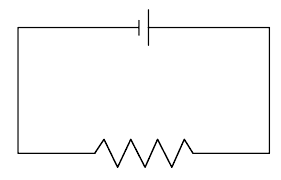
This is an example of a _______ circuit
open
series
parallel
square

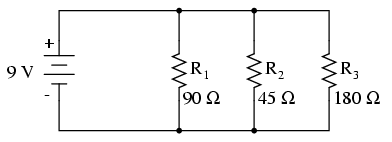
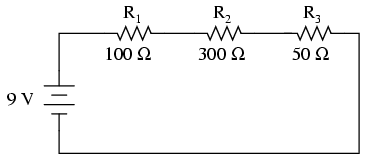
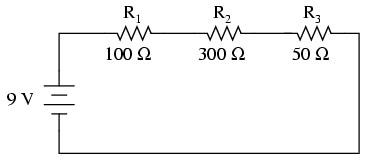
This is an example of a ______ circuit
Series
Parallel
Open
Dihexihedral

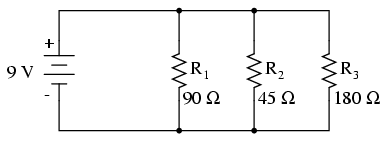
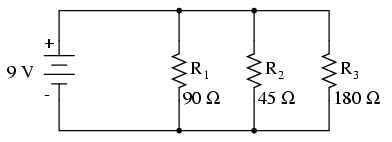


What is the unit of electrical power?
watt, W
volt, V
ampere, A
ohm, Ω
Remember: I=P/V
80 W
200 W
2.5 A
4.55 A

Remember: I=V/R and P=VI
200 W
40 W
2.5 A
79.20 KJ
When you take your clothes out from the dryer, sometimes there is static electricity on the clothes. This is caused by:
Induction
Conduction
Friction
None of the above

What is this symbol?
Cell
Switch
Bulb
Resistor

What is this symbol?
Switch
Fuse
Bulb
Resistor

What is this symbol?
Switch
Fuse
Bulb
2 cell battery

This switch is open.
True
False
If the switch is open in a circuit, then...
...electricity will flow.
....electricity will NOT flow.
What is the unit of Electrical Power?
Joule
Watt
Where
Amp
The unit of energy is?
Amp
Joule
kiloWatt
Volt
A kilowatt (kW) is how many watts?
10
50
100
1000
Calculate the voltage applied when a 60 watt light-bulb uses a current of 5 amps
300 volts
30 volts
12 volts
0.08 volts


Coffee Pot @
120 V What is the amperage?
10 Amps
12 Amps
10 Watts
12 Ohms
What is the power of a circuit that has 2 ohms of resistance with a current of 2.6 A?
13.52 watts
5.2 watts
3.38 watts
0.296 watts
What is the total resistance in the circuit if there are 6 A flowing through with a power of 100 watts
16.67 ohms
2.78 ohms
600 ohms
1667 ohms
If the power in a circuit is 60 watts, and the resistance is 13 ohms, what is the voltage?
27.93 volts
780 volts
0.355 volts
16.64 volts
What is the power of a circuit that has a battery of 13 volts with a resistance of 3.5 ohms?
48.28 watts
1.06 watts
3.714 watts
1.93 watts

