Font size
 Worksheets
Fall APES Final Review
Total questions: 60
Worksheet time: 44mins
Place the ecology levels of organization in proper order (smallest to largest)
organism > population > community > ecosystem > biosphere
community > organism > ecosystem > biosphere > population
organism > community > biosphere > population > ecosystem
population > biosphere > ecosystem > community > organism
A tapeworm lives in the small intestines where it feeds and grows, robbing the human of essential nutrients. This is a _____ type of relationship.
Commensalism
Parasitism
Symbiotic
Mutualism
The cattle egret follows herds of cattle and eat the insects that the cattle stir up as they move through the grassland. The cattle appear to be unaffected by the egrets. This is a _____ type of relationship.
Commensalism
Parasitism
Symbiotic
Mutualism
Which is a biotic factor?
producers
pH
energy
humidity
What law best relates to energy loss within an ecosystem?
First law of thermodynamics
Second law of thermodynamics
Third law of thermodynamics
Law of conservation of matter
Which best describes the concept of net primary production?
total amount of energy available from the Sun
total amount of cellular respiration conducted within an ecosystem
energy captured minus energy lost
total amount of energy available from the producer

In which biome would you expect to find an area with an average temperature of 10oC and 200 cm of precipitation annually?
Temperate seasonal forest
Temperate rainforest
Woodland/shrubland
Tropical seasonal forest
Terrestrial biomes are defined by ____ and ____ variables.
temperature; precipitation
temperature; animals
precipitation; plants
animals; plants
A keystone species is best defined as
an organism that eats all others
an organism that runs the fastest
an organism that keeps the food web stable
an organism that has the most advantages
The direction of an arrow in a food chain represents
the flow of energy from organism B to A
the movement of organisms
the directionality of the sun
the flow of energy from organism A to B
Why do living things need nitrogen?
To get energy
To make amino acids
To make proteins
To make proteins AND amino acids
Where is the largest reservoir for the phosphorus cycle?
rocks and minerals
the ocean
the atmopshere
fossil fuels
What is the largest reservoir for nitrogen?
the ocean
rocks and minerals
the atmosphere
bacteria
What is the largest reservoir for water?
the ocean
rocks and minerals
the atmosphere
glaciers
Which of the following is NOT a source of nitrates and phosphates into a river?
Fertilizers
Animal waste
Wastewater
Burning fossil fuels
What can be a source of nitrates for eutrophication in rivers?
fertilisers
plastic bottles
paper
sewage
What is the very next thing that happens after fertilisers enter a river in eutrophication?
Fish die due to a lack of oxygen
Plants below the surface die due to a lack of sunlight
The number of aerobic bacteria increases
Fast growth of plants
In eutrophication, what directly causes the death of fish?
The plants use up oxygen in respiration
The fish are poisoned by high CO2 levels
Bacteria use up oxygen in respiration
The fish use up oxygen in respiration

If there is 1000 Kcal available in the producers in trophic level 1, how much energy is available in the herbivores in trophic level 2?
10Kcal
1Kcal
100Kcal
1000Kcal
High biodiversity is a sign of a healthy ecosystem.
True
False

Image "B" shows more biodiversity than image "A". Why?
Because "B" shows more different species than image "A"
Because image "B" has less different species than "A"
"A" has a greater number of same species plants so this statement is wrong.
Both images show the same biodiversity

an evolutionary event in which a significant percentage of a population or species is killed or otherwise prevented from reproducing
population bottleneck
mutation
genetic resistance
differential reproduction
genetic recombination
An example of a K-strategist (-selected) species is
a cockroach
a housefly
a rabbit
an elephant
none of these
An example of a r-strategist (-selected) species is
an elephant
a human
a whale
an eagle
a dandelion
The factor that likely poses the greatest threat of extinction of species worldwide is
black market trade in endangered species
aggressive collecting of specimens by museums and zoos
increasing loss of habitat
weakening of environmental legislation
Characteristics that tend to increase the risk of a species becoming endangered include which of the following?
Having a very limited distribution
Being a specialist at the end of a long food chain
Having a small population size
All of these are correct
Eutrophication in lakes is frequently the direct result of
nutrient enrichment
industrial poisons
a diminished supply of nitrates
an increase in predators
Which of the following statements about ecological succession is correct?
Secondary succession is followed by primary succession.
Primary succession occurs over a shorter time span than secondary succession.
Succession is influenced by competition for limiting resources such as available soil, moisture, and nutrients.
In forest succession, less shade-tolerant trees replace more shade-tolerant trees.
The theory of island biogeography suggests that species richness is affected by which of the following factors?
Island distance from mainland
How the island is formed
Island size
All of these are correct
After a forest fire, a badly damaged ecosystem recovered rapidly. This ecosystem has
high resistance.
low resistance.
high resilience.
low resilience.
HIPPCO means what?
A cool nickname for Mr. Hipp
A law that protects grasslands
Different invasive species
Threats faced by ecosystems & biomes

Which of the following characteristics is most closely associated with a country that demonstrates the age structure diagram show above?
There is a low infant mortality rate
A high percentage of the population has access to medical care
There is a low population growth
There is a high total fertility rate
What type of age structure diagram represents a population with negative growth rate?


Represents the biotic potential of the species
A
B
C
D
E

Represents the maximum number of individuals that can be supported by a particular ecosystem on a long-term basis
A
B
C
D
E
Which of the following is a true statement about the total fertility of a society?
The total fertility of a society is the difference between the crude birth rate and the crude death rate.
The total fertility of a society is the number of children necessary for a couple to replace themselves in the next generation.
The total fertility of a society is positively correlated with the average education of women.
The total fertility of a society is negatively correlated with the number of women of child-bearing age.
The total fertility of a society decreases as the society progresses through the demographic transition.
Which of the following is most typically associated with the transition from a rural to an urbanized society?
Reduced birth rates
Reduced need for sewage-treatment facilities
Increased rates of population growth
Increased air quality in urban areas
Increased stabilization of microclimate in urban areas
If a country has a crude birth rate of 24 per 1,000 and a crude death rate of 8 per 1,000, the natural annual percent increase of its population is
0.6%
1.6%
3%
16%
32%

The total fertility rate in country A was 6.8 in 1980. Which of the following statements best supports the change in the total fertility rate in country A between 1980 and 2015?
The total fertility rate increased as a result of improved health care and better nutrition.
The total fertility rate remained constant even though there was improved access to clean water.
The total fertility rate decreased as a result of a delay in age of first marriage and increased contraceptive use.
The total fertility rate decreased as a result of increased infant mortality rate.
Members of an r-selected species characteristically
grow slowly
produce few offspring
reach sexual maturity quickly
have long life spans
are very protective of their offspring

Which of the following characteristics in the table best supports the claim that:
Country A is a more developed country and that Country
B is a less developed country?
population size
land area
infant mortality rate
net migration rate
The crude growth rate, r , of a population is calculated by
multiplying the existing population size by life expectancy
dividing the crude birth rate by 2
dividing the doubling time by 70
adding the crude birth rate to the crude death rate
subtracting the crude death rate from the crude birth rate

Cycads are gymnosperms that were diverse and abundant during the Mesozoic era. Extant species of cycads share many traits with those from the Mesozoic era. Cycads bear cones, are long-lived with slow growth rates, show late reproductive maturity, and have very few offspring. Based on this description, the cycads are
K-strategists with a Type I survivorship curve.
r-strategists with a Type III survivorship curve.
K-strategists with a Type III survivorship curve.
r-strategists with a Type II survivorship curve.

During which stage of the demographic transition shown above does a population begin to experience an explosive increase in growth?
Stage 1
Stage 2
Stage 3
Stage 4
After Stage 4
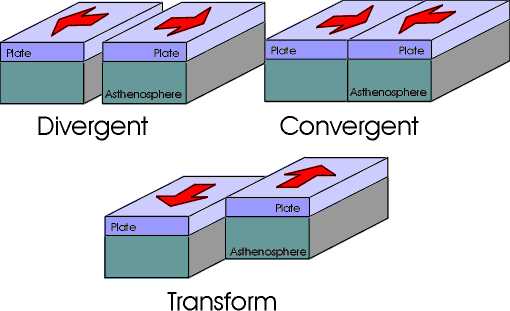
The type of plate boundary where two plates come together is a .....
Convergent Boundary
Divergent Boundary
Transform Boundary
Plate Boundary

What type of event will occur at this boundary?
Earthquake
Volcano Eruption
Tornado
Mountain Building
A divergent boundary occurs when plates ....
Pull apart
Come together
Slide past each other
subducting
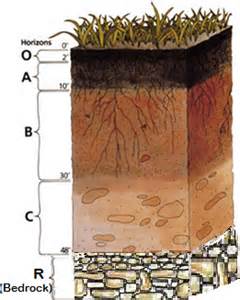


The rate at which water flows through the soil is called soil percolation or ______.
Groundwater
Permeability
Soil Pores
Porosity
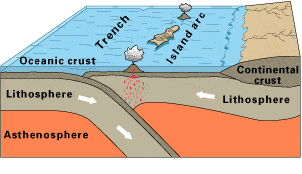
Observe this diagram of a plate boundary. One statement BEST describes what is happening. It is that
the oceanic crust is melting.
the denser ceanic crust is subducting under the less dense oceanic crust
volcanic islands are forming.
the tectonic plates are moving away from each other.

What are the proportions of sand, silt, and clay for the soil at point X ?
5% Sand, 95% Silt, 5% Clay
5% Sand, 20% Silt, 5% Clay
65% Sand, 30% Silt, 10% Clay
60% Sand, 30% Silt, 10% Clay

What type of plate boundary is shown here?
Convergent
Subduction
Divergent
Transform
What type of plate boundary is most likely to cause earthquakes?
Convergent
Subduction
Divergent
Transform
Which soil particle is largest in diameter?
Clay
Silt
Sand
Loam