
 Worksheets
Marine Science Exam Review
Total questions: 135
Worksheet time: 2hrs 19mins
the branch of science that deals with the physical and biological properties and phenomena of the sea
Oceanography
marine chemistry
marine biology
mammology
Of or related to the sea
biology
physics
oceanic
marine
He is considered the first marine biologist
Jacques Cousteau
Aristotle
Bill Nye
Francis Crick

At 36,198 feet on western side of South America, this is the deepest spot in the ocean
Mariana's Trench
Mauna Kea
Mid-Atlantic Ridge
Murrell's Inlet
An underwater volcanic mountain
seamount
guyot
trench
rift valley

Identify letter D in the image
mid-ocean ridge
seamount
abyssal plain
continental slope

Identify letter C in the image
continental slope
abyssal plain
mid-ocean ridge
guyot

Identify letter A in the image
Continental slope
guyot
continental shelf
seamount
Which of the following would decrease the salinity of a body of water?
coastal erosion
evaportation
transpiration
percipitation
The property of water that allows molecules stick to other water molecules
cohesion
adhesion
polarity
solubility
The vertical zone in the oceanic water column in which salinity changes rapidly with depth, located below the well-mixed, uniformly saline surface is the ____________
halocline
halosphere
thermocline
archeocline
This benthic zone is always underwater, on continental shelf, with the most variety of benthic life, including coral and sponges
intertidal
sublittoral
bathyal
abyssal
This benthic zone starts at continental slope and extends to 4000 m. It has little or no sunlight. It is very cold, has very high pressure, and contains organisms such as crinoids and sea cucumbers
intertidal
sublittoral
bathyal
abyssal
This benthic zone has no sunlight at 4000 – 6000m, and contains organisms such as tube worms
intertidal
sublittoral
bathyal
abyssal
This benthic zone is located at 6000m -11,000m, typically in a Trench
intertidal
sublittoral
bathyal
hadal
This pelagic zone is close to the surface – 200 meters. It has plenty of Sunlight and is warm.
Epipelagic
Mesopelagic
Bathypelagic
Abyssopelagic
Air moving in a curved path because of the Earth spinning on its
axis and the Earth spining fastest at the equator,
and slowest near the poles is called the __________
Coriolis effect
Current effect
Metropolis effect
Climate effect
When water levels are at their highest it is called _______
high tide
low tide
Tides are caused by ______
the gravitational pull of the sun and moon
the coastlines moving in and out
water flowing in and out of undersea caverns
plate tectonics
______ tides occur twice a month during the full and new moon phases when the Earth, sun, and moon are all aligned.
Spring
Neap
Fall
Winter
______ tides have the greatest tidal ranges
Spring
Neap
Fall
Winter
______ tides occur when the Earth, Sun, and moon are all at a 90 degree angle with each other.
Spring
Neap
Fall
Winter
Coastal areas experience _____ tides, which is two nearly equal high tides and two nearly equal low tides per day.
Spring
Neap
Semidiurnal
Diurnal
What is a typical type of organism that make up the Phylum Porifera classification?
trees
mammals
sponges
fish
How do Phylum Porifera protect themselves?
They release a sort of poison that deters predators
They do not fight back they simply accept their fate
They attack by growing out rapidly
They swim away confusing the predator
True or False: Mimic octopus can camouflage by changing its skin color and how it moves its tentacles to take on the shape of other sea creatures
True
False
Which of these is a member of phylum mollusca
Gorilla
Sea hare
Seahorse
Whale
Which of the following is not a member of phylum annelida
Earthworms
leeches
Polychaetes
squirrels
Phylum Nematodes have a round body cavity with one long tube of intestines running through it
true
false
What Phylum is the Sea Urchin in?
echonodermata
mollusca
porifera
The word Phytoplankton means
plant plankton
portable plankton
pacific plankton
Unlike bony fish, sharks have no bones- their skeleton is made of _______,which is a tough, fibrous substance, not nearly as hard as bone.
cartilage
myelin
actin
plastic
About what percent of the ocean has been explored?
10%
80%
50%
40%
Different wavelengths of light are absorbed by water the deeper it travels into the water. What color is typically the first absorbed?
red
blue

Edge of the continent covered by water
Continental shelf
Continental slope
Abyssal plain
Volcanic island

Steep incline at the edge of the continental shelf
Submarine canyon
Continental slope
Abyssal plain
Volcanic island
Flat bottom of the ocean floor
Submarine canyon
Continental slope
Abyssal plain
Volcanic island

A seamount that rises above the surface of the water
Submarine canyon
Continental slope
Abyssal plain
Volcanic island
During seafloor spreading, where is new seafloor created?
mid-ocean ridge
trench
continental margin
guyot
During seafloor spreading, where is old seafloor subducted (destroyed)?
mid-ocean ridge
trench
continental margin
guyot
What was the name of the super continent that existed 250 million years ago?
Pangea
Eurasia
Wegenerland
Disneyland

The absolute location for point A is...
60°N, 90°W
0°, 150°W
50°N, 70°E
60°S, 60°E
The absolute location for point D is...
60°N, 90°W
0°, 150°W
50°N, 70°E
60°S, 60°E
These organisms drift or float through ocean currents
Plankton
Nekton
Benthos
None of these
These organisms live in or on the bottom of the ocean
Plankton
Nekton
Benthos
None of these
These organisms are able to swim
Plankton
Nekton
Benthos
None of these
This ocean zone is splashed by water, but is not fully submerged
Littoral zone
Sublittoral zone
Low tide zone
Spray zone
The pelagic zone is split into two sections. The oceanic zone and the section including the shoreline, called the:
Epipelagic zone
Benthic zone
Neritic zone
Photic zone
The deepest zone, where trenches are located
mesopelagic zone
bathypelagic zone
abyssopelagic zone
hadalpelagic zone
More diversity of organisms would be found in this zone
Photic zone
Aphotic zone
The total amount of salt dissolved in a solution is called...
Salinity
Saltiness
Pressure
NaCl
Water that has more salinity than fresh water, but not as much as seawater is called...
Brackish water
In between water
River water
Semi-sea water
Which ocean is on the East Coast of the US?
Pacific
Atlantic
Arctic
Indian
The highest part of the wave is called the...
trough
crest
lift
breech
the distance between two identical points in the adjacent cycles of a wave
frequency
wavelength
period
wave speed
the time it takes to complete one cycle of the wave
frequency
wavelength
period
wave speed
the number of wave cycles in a second
frequency
wavelength
period
wave speed
The rhythmic pattern of rising and falling sea surfaces is known as
waves
tides
currents
A full tidal cycle takes.....
~12 hours
~25 hours
~46 hours
~8 hours
Why is the moons pull stronger than the suns?
the sun is much bigger
the moon is closer
the heat of the sun repels gravitational forces
gravitational pulls are stronger at night
High tides and low tides occur at the same time every day
true
false
When the Sun and the Moon are in line with each other, which happens at the full and new moons, their gravitational effects
negate eachother
add together
what type of tide do we have here on the east coast?
semidiurnal
mixed semidiurnal
diurnal
Tides are ONLY affected by the moon
true
false
Which aspects of the Oceans do Oceanographers study?
abiotic
biotic
Upwelling is important because it brings ___________ to the surface
warm water
dimethyl sulfide
nutrients
carbon dioxide
a transition zone between warm surface water and cold water below
helocline
thermonote
thermocline
hydronote
hydrocline
at 4°C water is
solid
liquid
gas
On average, it takes the waters in the ocean's mixed layer and deep ocean about _______years (or more) to completely mix.
100
1,000
100,000
1,000,000
water has a _____ heat capacity
low
high
Invertebrates are animals....
with a back bone
without a backbone
animals that have a backbone
invertebrates
vertebrates
Bilateral means it can be divided equally by
bottom and top halves
left and right halves

what type of symmetry does this organism show?
bilateral symmetry
radial symmetry
asymmetry

what type of symmetry does this organism show?
bilateral symmetry
radial symmetry
asymmetry

what type of symmetry does this organism show?
bilateral symmetry
radial symmetry
asymmetry

what type of symmetry does this organism show?
bilateral symmetry
radial symmetry
asymmetry
sessile means
immobile
highly mobile
floats in the water column
Seaweed and algae are.....
prokaryotes
eukaryotes
instead of leaves, seaweed has
holdfasts
blades
thallus
stipes
the "roots" are called the
holdsteady
holdfast
strongholds
gripfast
salt tolerant plants are called
sporophyte
angiosperm
halophyte
shallow bays and estuaries where rivers meet oceans, with lots of grasses
salt marsh
rocky intertidal
continental shelf
swamp
All eukaryotic unicellular organisms belong to
Monera
Protista
Bacteria
Fungi
Organisms living in saline areas will be called
heliophytes
halophiles
methanogens
thermoacidophiles

Into which Kingdom would you put this organism?
Plant
Animal
Fungi
Bacteria
Protist
Taxonomy hierarchical classification consist of how many taxon?
7
9
8
6
An organism was given scientific name based on what system?
Binomial nomenclature
Taxonomy
Hierarchical
Nomenclature
This taxon is between Kingdom and Class in hierarchical classification.
Family
Phylum
Domain
Genus

Which of the following scientific names is written correctly? Assume all are in italics!
Homo Sapien
Homo sapien
homo sapien
Homosapien

Organisms with radial symmetry and stinging tentacles would most likely be
mollusks.
roundworms.
squid.
cnidarians.

The symbiotic algae found in the tentacles of anthozoan cnidarians are called
chelicerae.
chromatophores.
zooxanthellae.
setae.
Phylum Platyhelminthes
Bryozoans
Flatworms
Hydra, Portuguese Man-of-war
Leeches
Sponges
Phylum Annelida
Flatworms
Hydra, Portuguese Man-of-war
Ribbon Worms
Segmented Worms
Tapeworms
which is a medusa?


flatworms have a brain
yes
no
What do you think Annelids are?
crabs
segmented worms
fish
snails
All chordates contain vertebrae.
True
False
humans are chordates
yes
no
vertebrae are always made of bone
true
false
What Phylum are fish a part of?
Animalia
Agnatha
Chordata
Osteichthyes
which group is jawless fish called?
cartolichthyes
agnatha
chondrichthyes
osteichthyes
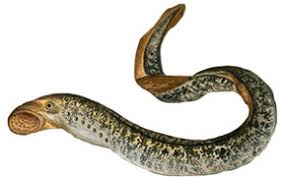
Which fish class would a lamprey be classified in?
Chondrichthyes
Agnatha
Osteichthyes
Amphibia
Cartilaginous fishes that include sharks, skates, and rays
Superclass Agnatha
Class Osteichthyes
Class Chondrichthyes
Superclass Gnathostomata

This shark is the most long lived vertabrate, well over 500 years.
Iceland
Greenland
Great white
megladon
The fish class name "Osteichthyes" means:
Jawless
Cartilage fish
Bony fish
Spiny
what is osmoregulation?
Control of water and salt in the body
Control of blood pressure in the body
Control of blood glucose in the body
which fish would pee more?
freshwater
saltwater
What does a crustacean do to grow larger?
Attach itself to substrates
Reproduce
Molt
Use jointed appendages
All crustaceans:
have stinging tentacles
are soft-bodied
have jointed appendages
are bioluminescent

What device do you use to measure pH? Click all that apply.
pH meter
bioindicators
chemical indicators
thermometer
What device do you use to measure salinity?
refractometer
CO2 meter
chemical indicators
thermometer
If I wanted to find the edge of a best temperature to keep a Greenland shark, what device would be necessary to have a scientist?
refractometer
CO2 meter
chemical indicators
thermometer
turbidity
Mr. Wills need you to look after his salt water fish tank over break. You measure the salinity and it is 48 ppt, you should slowly add
fresh water till the salinity reaches 35ppt
brackish water until it reaches 8.2 ppt
salt water until it reaches 100 ppt
fresh water till it reaches 25 degree C
If you want to create a Finding Nemo fish tank. What pH should you aim for?
8.3
7.5
7.0
6.5
9.2
Mr. Wills was having difficulty with one of his marine fish tanks. He changed the water and the pH would normalize and the rapidly change. His friend suggested that he crushed coral to act as a _______. The coral stopped the pH from changing because because the coral interacted with the H+ ions.
buffer
holotype
acid
base
neutralizer
Matthew went jet skied to Newport RI from Providence RI. He pulled up to the beach at high tide and pulled the jet ski out of the water. After lunch he fell asleep and woke up at low tide. Approximately how much lower should the water level be
3-5 ft
3-5 m
1ft
10ft
6 m
Matthew went jet skied to Newport RI from Providence RI. He pulled up to the beach at high tide and pulled the jet ski out of the water. After lunch he fell asleep and woke up at low tide. Approximately how long was it between high and low tide?
1 hr
3 hr
6 hr
9 hr
12 hr
Which marine oil spill was the largest in human history as of 2020?
Exxon Valdez
Bp Horizon
Amoco Cadiz
Bouchard Barge #120
All around the world corals are turning white in a process called coral bleaching. This occurs when mutualistic symbiotic algae called zooxanthellae are forced to leave their host coral animal causing the corals to starve. Which of the following can cause coral bleaching?
sedimentation
fishing with poisons
high temperatures
all of these reasons
How many arms does a squid have?
10
2
8
0
On the mantle of a squid they have little tiny dots all over. The dots allow squids to change colors. What are those dots called?
Siphon
Tentacles
Chromatophores
Chloroplast

