
 Worksheets
Environmental Nutrient Cycles
Total questions: 130
Worksheet time: 1hrs 16mins
How does water leave the ocean?
Precipitation
Transpiration
Evaporation
Vapor transport
What is the 10% rule?
(a)
What is trophic collapse?
An ecosystem collapses due to human intervention
Climate change
Too many predators
Changing a trophic level damages the ecosystem
What is an invasive species?
A non-native species
A non-native species that damages the ecosystem
A non-native species with no predators
A native species
Which of these is NOT part of the nitrogen cycle?
Combustion
Decomposition
Fixation
Nitrification
Where does nitrogen fixation happen?
The atmosphere
In the body
In the soil
In the roots of a plant
Are you Trick or Treating this year?
Yeah, I totally will.
Nahhh... I'm too old for that.
Which cycle does cellular respiration fit into?
The water cycle
The carbon cycle
The nitrogen cycle
Which cycle does photosynthesis fit into?
The water cycle
The carbon cycle
The Nitrogen cycle
How do humans alter the carbon cycle?
Fossil fuels
Eating
Destroying decomposers
Respiration
How does water leave the atmosphere?
Condensation
Transpiration
Precipitation
Percolation
How would surface runoff contribute to pollution in a lake?
Water washes pollutants into the lake
It wouldn't. Pollutants don't move through the water cycle.
Pollutants are already present in the lake
Which substance in the nitrogen cycle would be in excess if there were no decomposers?
Nitrates
Nitrites
Ammonia
N2

The carbon in coal, oil, and natural gas came from
the combustion of fossil fuels
the remains of dead organisms
carbon-fixing bacteria in swamp soil
carbon dioxide dissolved in ocean water
What cycle are fossil fuels part of ?
carbon
oxygen
nitrogen
phosphorus
What is the largest reservoir for water?
the ocean
rocks and minerals
the atmosphere
glaciers
What is the largest reservoir for nitrogen?
the ocean
rocks and minerals
the atmosphere
bacteria
In an ecosystem, what happens to the atoms of certain chemical elements, such as carbon, oxygen, and nitrogen?
They move into and out of living systems.
They are only found in abiotic factors.
They move out of living systems and do not return.
They move into living systems and remain there.
The carbon in coal, oil, and natural gas came from
the combustion of fossil fuels
the remains of dead organisms
carbon-fixing bacteria in swamp soil
carbon dioxide dissolved in ocean water
Nitrogen fixation is the process in which certain bacteria convert nitrogen gas into
liquid nitrogen
nitrates
nitrites
ammonia
The water cycle is driven by
water
wind
the sun
Earth's rotation
A place where matter/nutrients are collected/stored.
A lake
A reservoir
A cloud
The atmosphere
Law of conservation of mass states that
matter is neither created nor destroyed
matter is destroyed
matter is created
matter does not change
A mosquito with a mass of 2.5 grams dies and is decomposed. How much of its matter is either used by the decomposer or returned to the Earth?
10%
0%
100%
50%
What is a Biogeochemical Cycle?
How energy flows through ecosystems.
How the sunlight is transform into heat.
The ways in which an element moves in the Biosphere.
None of these.

Photosynthesis is an important part of the ______ cycle
Carbon
Water
Phosphorus
Nitrogen

In evaporation, water _______
turns from a liquid state to vapor (gas)
falls from the sky like rain or snow
forms clouds
gets locked into ice


In the food web above, what organism is a tertiary consumer?
Fox
Frog
Vole
Grass


The amount of energy stored by the primary consumers is 54,000 joules..
Based on this model, how much of the energy was provided to the secondary consumers?
53,460 joules
5,400 joules
540 joules
54 joules
Eutrophication is defined as a change that occurs to an aquatic ecosystem. This change is mainly due to what?
Newly introduced fish
Depletion of the ozone layer
Increased nutrient concentration
Increase in atmospheric carbon dioxide.
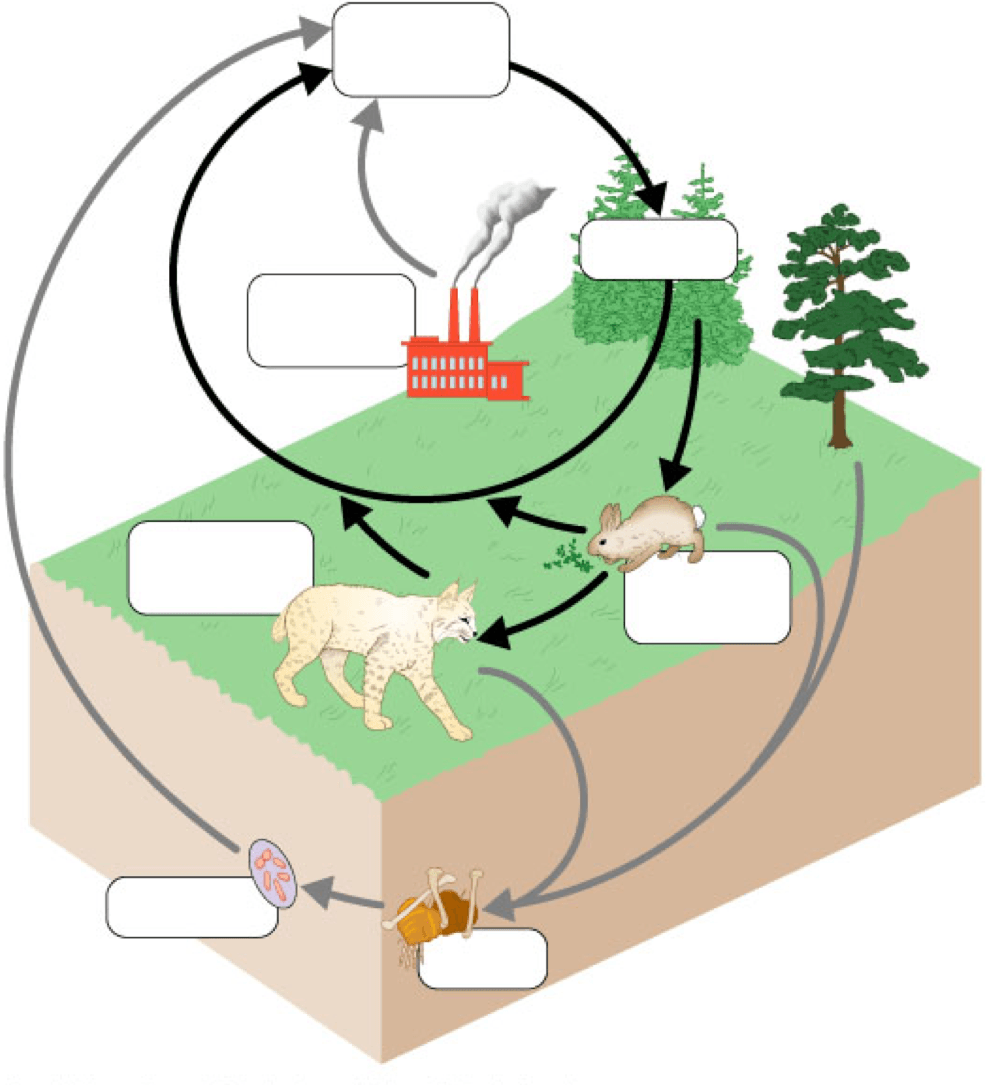
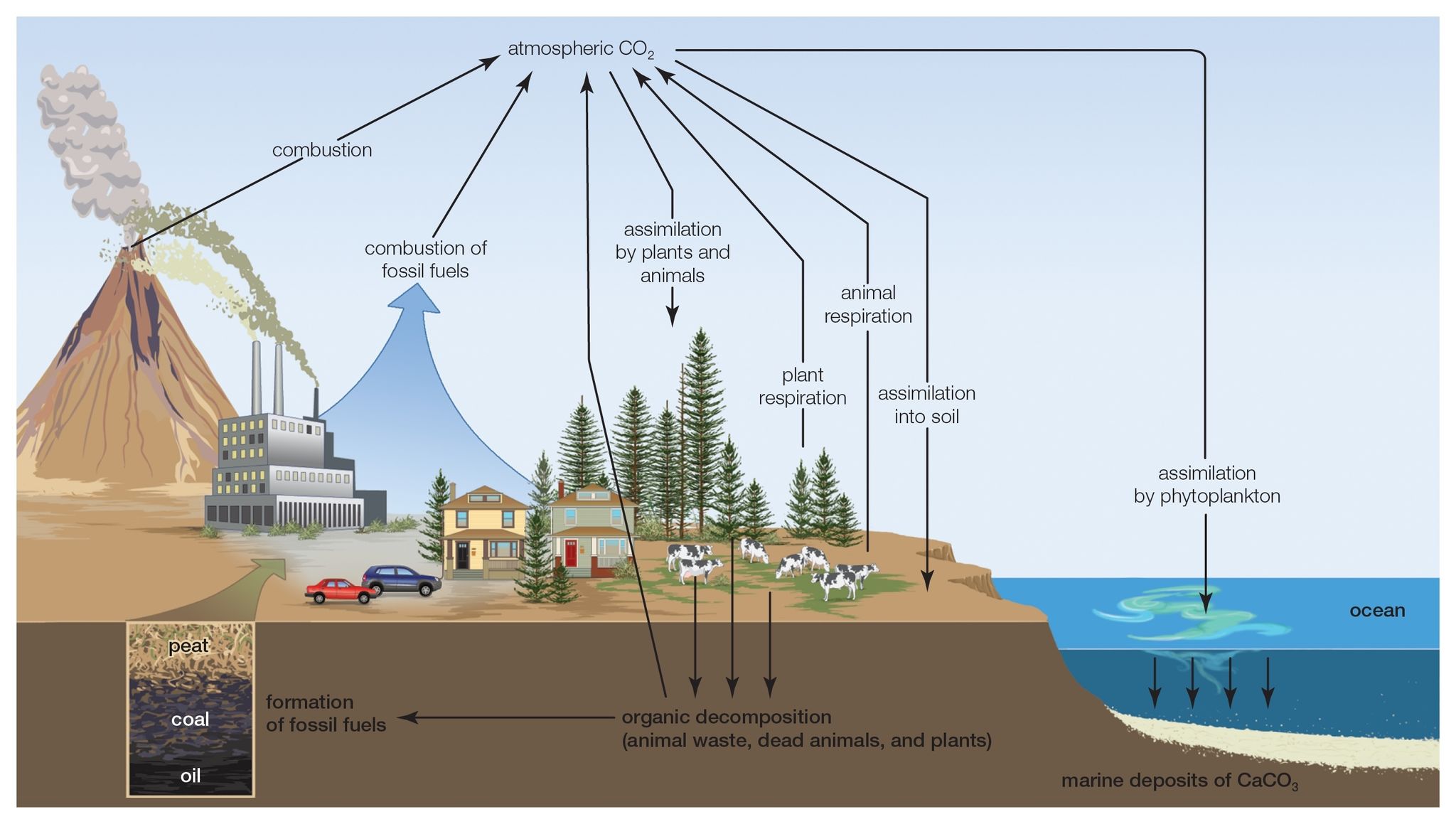

How does carbon in a grass plant get into a lion?
The lion breathes in carbon given out by the plant.
Carbon from grass doesn't end up in a lion.
The carbon ends up in the food the lion eats.


Which of the following has the levels of organization in the correct order?
Population - Species - Community - Ecosystem - Biome - Biospehere
Species - Population - Community - Ecosystem - Biome - Biosphere
Species - Community - Population - Biome - Ecosystem - Biospehre
Community - Population - Species - Biome - Ecosystem - Biosphere
A group of the same species living in the same area.
Individual
Ecosystem
Population
Community
Many species living together and interacting in the same area.
Individual
Community
Ecosystem
Population
What do we call the region of the globe that supports life?
atmosphere
geosphere
biosphere
aquasphere
All of the interacting living species in an area make up a biological
population
ecosystem
community
biome
A close relationship between two species where on benefits and the other is harmed is referred to as
mutualism
parasitism
commensalism
egotism
The nonliving things in an environment on which the living things depend are called ___________ factors
ecological
nicnhe
biotic
abiotic
A(n)_____________ is made up a biological community and all of the abiotic factors that affect it.
biosphere
ecosystem
population
organism
The complex role of a species or an organism in an environment is referred to as its___________________
habitat
habit
niche
biome
An organism that cannot make its own food and gets its nutrients from feeding on other organisms is called a(n)______________.
autotroph
herbivore
omnivore
heterotroph
An organism that uses the energy of sunlight or inorganic chemicals to produce its own "food" is called a(n)____________.
autotroph
heterotroph
omnivore
carnivore
A heterotroph that feeds primarily on living plant material is called a(n)_______________.
omnivore
carnivore
herbivore
detritivore
A deer that feeds on the acorns from an oak tree is an example of a(n)_______________.
First order consumer
Second order consumer
Third order consumer
Producer

Why do plants and animals need nitrogen?
To produce proteins
To store energy
To digest food
To conduct photosynthesis
Where does the carbon come from that plants use?
Animals
Water
Air
Wisconsin

The Mayfly is a food source for which 3 organisms?


Most of the nitrogen on earth is atmospheric nitrogen gas. Nitrogen gas cannot be used by most life. What process converts it into usable nitrogen and which organisms do this?
Predation, wolves
Digestion, all animals
Nitrogen Fixation, bacteria
Denitrification, bacteria

Pseudoscorpions often hitch rides on the backs of large beetles or true bugs. What is the ecological relationship?
Mutualism
Commensalism
Parasitism
Competition


True or False: Halloween sells more candy than Valentine's Day
True
False
Trick-or-treating was popularized as a way to reduce town-wide pranking and vandalism.
More than 93% of kids under the age of _____ go trick or treating.
15
10
11
12

What is the most popular candy in the United States?
Reese's Peanut Butter Cups
Skittles
Twix
Snickers

Which state produces the most amount of pumpkins per year?
California
New York
Illinois
Hawaii
The first Jack-O-Lanterns were made with____
Turnips
pumkins
potato
pinapple

On average, how many licks does it take to get to the center of a tootsie pop?
50
75
150
252

What percentage of parent's steal their kid's halloween candy?
50%
75%
90%
0%
The word Halloween means_________
tiny pumkins
All hallow's eve
Scary monsters
the night of fright

How many times do you have to say Beetlejuice to get him to show up?
1
2
3
4
Is a pumpkin a fruit or a vegetable?
Vegetable
Fruit



