
 Worksheets
Chapters 4 and 5 Genetics
Total questions: 63
Worksheet time: 48mins
Who is Gregor Mendel
an Austrian Monk from the mid 1800s who contributed to the study of Genetics
The scientist who discovered the structure of DNA
a British scientist who discovered penicillin
The scientist who used X-Ray Crystallography to shed light on the structure of DNA
What specifically about Pea Plants did Mendel Study?
Color of Pea Flower
Colors of individual Peas
Texture of Peas
All of these
Why were pea plants perfect a study on Heredity?
Pea plants are complex
They were easy to study
One gene controlled one trait. (i.e. it was simple)
One gene was controlled by multiple traits
What did Mendel notice?
Most pea flowers were tall, and some were purple.
Most of the pea flowers were white, but a few were purple.
Most of the pea flowers were purple, but a few were white.
Most pea flowers were short, and some were white.
Which of the following is a Homozygous Dominant Genotype?
Yy
XX
zz
Which of the following is a homozygous recessive genotype?
HH
dd
Aa
Which of the following is a heterozygous genotype?
Gg
UU
pp
In a Punnett Square, 1 box is equal to 25%. How much are 3 boxes equal to?
25%
50%
75%
100%
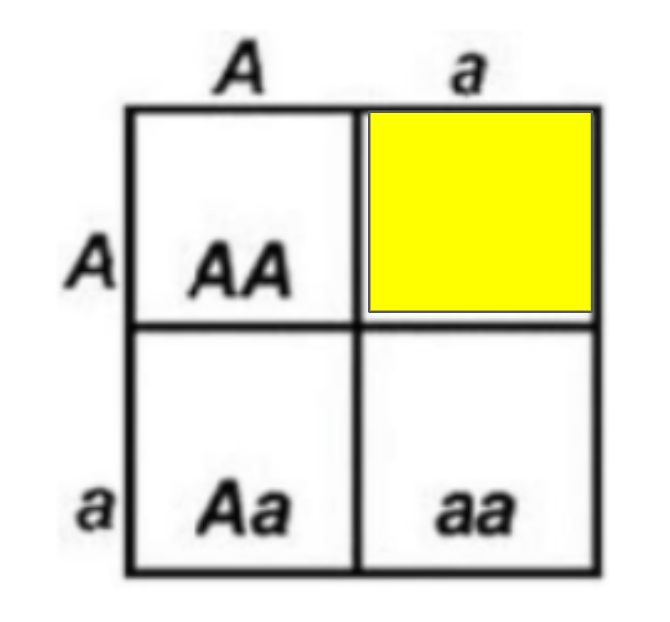
Fill in the Yellow Box
AA
Aa
aa
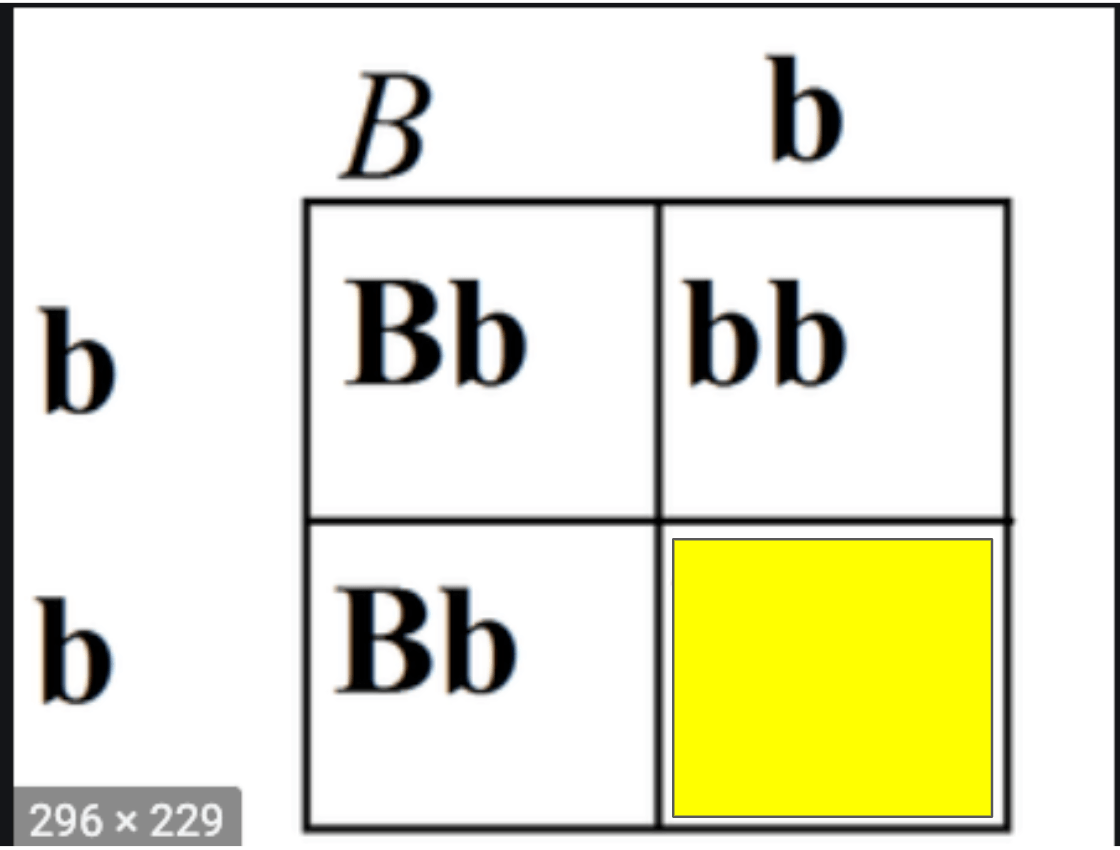
Fill in the Yellow Box
Bb
BB
bb
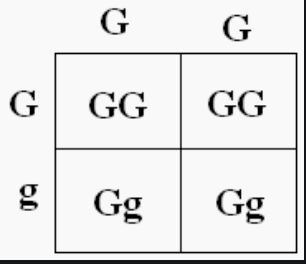
How chance the offspring born from this cross will have a homozygous dominant genotype?
25%
50%
75%
100%
The punnett square is used to tell the color of a frogs skin. "G" means green skin and "g" means brown skin. What is the chance the baby frogs will have brown skin?
0%
25%
50%
100%
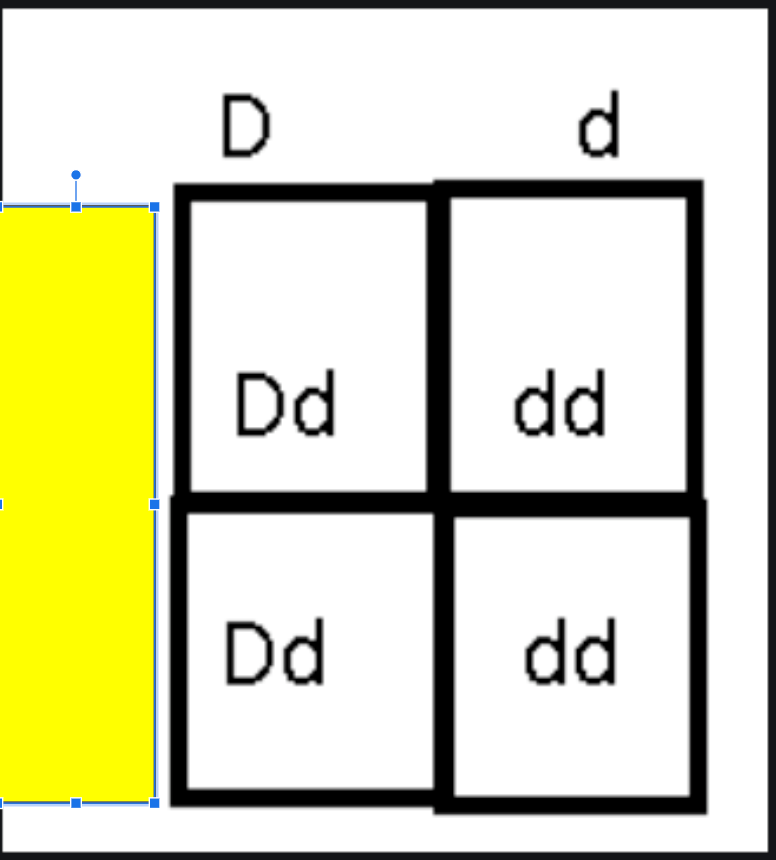
What is the mother's genotype?
DD
Dd
dd
tt
Dd

P= purple
p= white


In the punnett square, what is the probability for white fur?


This means different alleles.
BB

If this pedigree shows a recessive disorder, what MUST the genotype of individual 4 be?
HH
Hh
hh
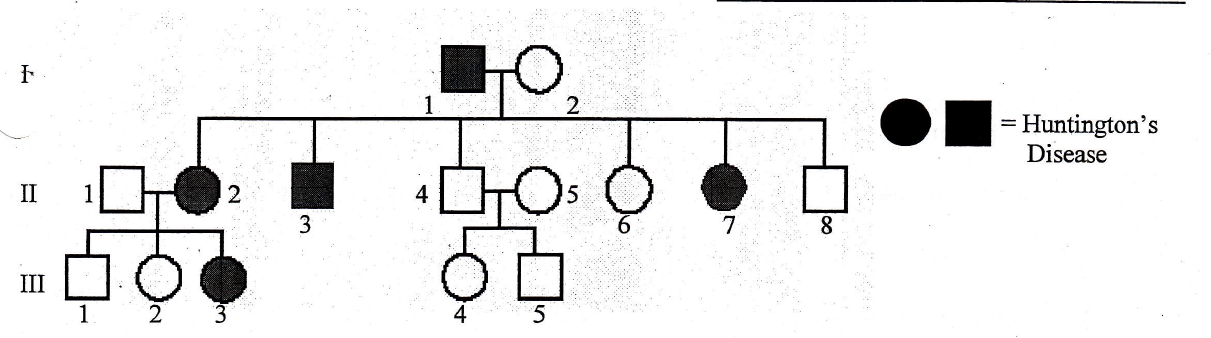

What is the correct genotype for individual I-2?


Generation 2 individuals 5 and 6 are
brother and sister.
cousins.
married.
not related.
How many alleles does a person carry for a trait?
1
2
3
4
How many alleles does a child get from each parent for a trait?
1
2
3
4
Aa, DD, Bb, yy are all examples of ---
genotypes.
phenotypes.
In a heterozygous genotype, the _____ allele takes over in the phenotype.
recessive
dominant
both
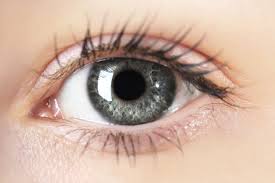
What you see, or the physical appearance of an organism, is called the ---
genotype.
phenotype.
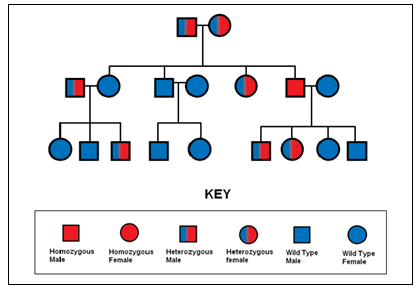
In a pedigree, which shape represents a male?
circle
square
Which gender has an X and a Y chromosome?
male
female

On a pedigree, this symbol represents a ---
not affected female.
not affected male.
affected male.
affected female.

On a pedigree, this symbol represents a ----
not affected male.
not affected female.
affected male.
affected female.

How many individuals are there in the 3rd generation?
1
2
4
6

How are individuals III-2 and II-4 related?
Brother and sister
Dad and daughter
Uncle and niece
Grandfather and granddaughter
Known as the father of modern genetics:
Watson
Crick
Darwin
Mendel
Why did Mendel pick pea plant to study
He used pea plant because grow everywhere
He used pea plant because all monastery growth peas
He used pea plant because they are resistance to plages.
He used pea plant because the grow very easily
When Gregor Mendel cross fertilized pea plants that had purple flowers with pea plants that had white flowers, the white flower trait disappeared in the offspring. This is because the purple flower trait is ___________________ over the white flower trait.
dominant
recessive
masked
hidden
What did Mendel use to represent the "factors" pass on by parent to offspring?
Capital and lower case letters
Letters and numbers
Large and small numbers
A color scale
In the Parent (or P) generation, Gregor Mendel cross fertilized pea plants that had purple flowers with pea plants that produced white flowers. In the F1 generation, all the plants produced purple flowers, but Mendel predicted that the white flower factor was still present hidden on the flowers. Mendel used the letters Pp to represent the factors that the F1 generation plants had for flower color. Which term is used to describe the genotype Pp?
Homozygous dominant
Heterozygous
Homozygous recessive
Heterogeneous mixture
What does Homozygous dominant mean?
That both alleles for a gene are recessive, so the recessive form of the trait will be expressed.
That one allele is dominant and one is recessive, which mean the dominant trait will be expressed in the offspring.
That both alleles for a gene are dominant, so the dominant form of the trait will be expressed.
That no alleles are present.
The hybrid seeds from the F1 generation pea plants were collected, planted, and then allowed to self-fertilize. Mendel called this generation the F2 generation. What ratio of traits did Mendel observe in the F2 generation?
1:1
2:1
3:1
4:1
Which word means to be masked or hidden?
dominant
recessive
In pea plants, tall height is dominant to short height. Can a short pea plant ever be a hybrid? Why?
Yes because the genotype of a short pea plant is Tt.
No because since short is recessive, the genotype must be tt.
No because since short is recessive, the genotypes must be TT.
Yes because the genotype of a short pea plant must be heterozygous for the offspring to get the trait.
In Mendel's cross of tall and short pea plants, what percentage of the F1 generation always showed the dominant trait?
25%
50%
75%
100%
What proportion of plants in the F2 generation had a trait that was absent in the F1 generation?
25%
50%
75%
100%
Mendel's P generation
purebred
hybrid
Mendel's F1 generation
purebred
hybrid

