wayground logo

Free Printable Worksheets

Font size

S
M
L
XL
Worksheets

Science 1 Final Review

Total questions: 85

Worksheet time: 1hrs 13mins

Name
Class
Date
1.
a)

Beaker

b)

Flask

c)

Graduated Cylinder

d)

Test Tube

2.
a)

Beaker

b)

Flask

c)

Graduated Cylinder

d)

Test Tube

3.
a)

Beaker

b)

Flask

c)

Graduated Cylinder

d)

Test Tube

4.

Which equipment is used to measure the mass?

a)

balance in grams

b)

scale in pounds

c)

beaker in milliliters

d)

ruler in millimeters

5.

Find the mass.

a)

5 g

b)

0.5 g

c)

0.2 g

6.
Which is the more accurate piece of glassware for determining the volume of a liquid?
a)
graduated cylinder
b)
beaker
7.
What is the volume of the liquid in this graduated cylinder?
a)
19 mL 
b)
35 mL 
c)
24 mL 
d)
1.9 mL
8.
What is the volume of the liquid in this graduated cylinder?
a)
19 mL 
b)
35 mL 
c)
24 mL 
d)
1.9 mL
9.

Which month had the greatest number of books read?

a)

November

b)

December

c)

January

d)

February

10.

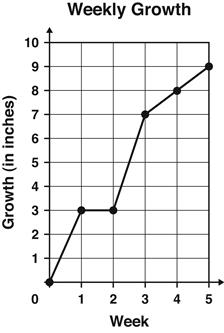
The graph shows the number of inches a plant grew each week.

Between which 2 weeks did the plant grow the MOST?

a)

Week 1 and Week 2

b)

Week 2 and Week 3

c)

Week 3 and Week 4

d)

Week 4 and Week 5

11.

According to the graph, how many mice will be born in week 5 if the trend continues?

a)

100

b)

90

c)

160

d)

180

12.

What amount of sales make the company $2000 in profit?

a)

3000

b)

6000

c)

9000

d)

12000

13.
In a controlled experiment, how many variables can be worked with at a time? 
a)
one
b)
none
c)
two or more
d)
how ever many makes sense.
14.
Mr. S. sets up an experiment to see how the mass of a ball affects the distance it rolls off a ramp.  Identify the independent variable.
a)
distance traveled by the ball
b)
height of the ramp
c)
mass of the ball
d)
weight of the ball
15.

Which type of apple has the most water in it?

Which is the dependent variable?

a)

The size of the apple

b)

The age of the apple

c)

The amount of water

d)

The type of apple

16.

How much water does a plant need to grow?

Which are the constant variables?

a)

The type of plant

b)

How much water you use

c)

Location of plant

d)

How much the plant grows

e)

How long you grow the plant

17.
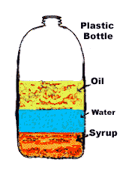
Which liquid is the least dense?
a)
oil
b)
water
c)
syrup 
d)
plastic bottle
18.
Jack has a rock. The rock has a mass of 14 g and a volume of 2 cm3. What is the density of the rock?
a)
7 mL
b)
7 g/cm3
c)
28 g/cm3
d)
1/7 g/cm3
19.
Why do some substances float on water?
a)
they are warmer than water
b)
they are cooler than water
c)
they are more dense than water
d)
they are less dense than water
20.

If an object has a density of 0.6 g/mL and you put it into water, will it sink or float?  

a)

sink

b)

float

21.
If an object has a density of 3.6 g/mL and you put it into water, will it sink or float?  
a)
sink
b)
float
22.

All matter is made of _________.

a)
energy 
b)
atoms 
c)
electrons 
d)
compounds 
23.
What does the nucleus of an atom contain?
a)
Electrons and neutrons
b)
Protons and neutrons
c)
Neutrinos and positrons
d)
DNA and RN
24.

__________ are negatively charged particles that are in the orbitals around the nucleus.

a)

protons

b)

nucleus

c)

neutrons

d)

electrons

25.

How many atoms of Hydrogen are in H2O

a)

1

b)

2

c)

3

d)

more than 3

26.
What is the mass of an atom if it has 11 protons, 12 neutrons, and 11 electrons?
a)
22
b)
11
c)
34
d)
23
27.
If an atom has 10 protons, 10 neutrons, and 10 electrons, what is the mass of the atom?
a)
10
b)
20
c)
30
28.
What particle uniquely identifies an element?
a)
Number of Valence Electrons
b)
Number of Protons
c)
Number of Electrons
d)
Atomic Mass
29.
Which one of these is NOT located in the element square on the Periodic Table?
a)
Atomic Number
b)
Atomic Mass
c)
Room Temperature
d)
Chemical Symbol
30.
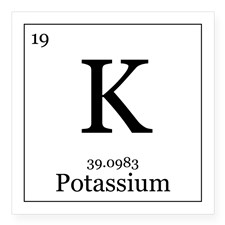
How many neutron are in the atom "K"?
a)
7
b)
2
c)
39
d)
20
31.
What is the atomic number for an element with three protons?
a)
2
b)
1
c)
3
d)
6
32.
What is the number of protons that the element in this image contain?
a)
14
b)
7
c)
15
d)
18
33.

LiBr is called

a)

lithium bromine

b)

lithium (I) bromine

c)

lithium bromide

d)

lithuim (I) bromide

34.

Name the following ionic compound: Cs2S

a)

cesium sulfide

b)

cesium sulfate

c)

cesium II sulfate

d)

cesium II sulfide

35.
In most cases, when naming you change the ending of the second element to ________.
a)
-ate.
b)
-ite.
c)
-ide.
d)
-ine.
36.
Name this compound: 
KF
a)
Potassium fluoride
b)
Potassium fluorite
c)
Fluorine potasside 
d)
Potassium fluorate
37.

Covalent: What is the name of N2O3

a)

Nitrogen trioxide

b)

Dinitrogen oxide

c)

Dinitrogen trioxide

d)

Nitrogen oxide

38.

Covalent: What is the chemical formula for Tetrasulfur pentoxide?

a)

SO

b)

S4O

c)

S4O5

d)

S5O4

39.
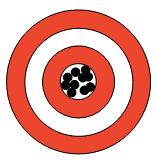
This bullseye demonstrates...
a)
High Accuracy & High Precision
b)
High Accuracy & Low Precision
c)
Low Accuracy & High Precision
d)
Low Accuracy & Low Precision
40.

This bullseye demonstrates...

a)

High Accuracy & High Precision

b)

High Accuracy & Low Precision

c)

Low Accuracy & High Precision

d)

Low Accuracy & Low Precision

41.

A student's measured length during a science experiment was 12.00 cm. The actual size was 14.25 cm.

What was the percent error?

actual value  measured valueactual value×100\frac{actual\ value\ -\ measured\ value}{actual\ value}\times100

a)

15.79%

b)

18.75%

c)

2.25%

42.

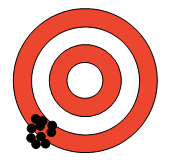
Describe the accuracy and precision of the image

a)

Very accurate and somewhat precise

b)

Very accurate but not precise at all

c)

Not accurate at all but very precise

d)

not accurate and not very precise

43.
Which type of radiation releases an electron?
a)
Alpha radiation
b)
Beta radiation
c)
gamma radiation
44.
What type of radiation can be stopped by clothing or a piece of paper?
a)
Alpha radiation
b)
Beta radiation
c)
gamma radiation
45.
Which process involves the splitting of large nuclei?
a)
alpha decay
b)
nuclear fusion
c)
beta decay
d)
nuclear fission
46.
What type of nuclear reaction occurs in the Sun?
a)
Nuclear fission
b)
beta decay
c)
alpha decay
d)
Nuclear fusion
47.
Which is NOT a characteristic of gamma radiation?
a)
High energized photon of light
b)
Can be stopped by a sheet of aluminum foil
c)
Is the most harmful type of radiation to humans
d)
Our use of protection is concrete, or several inches of lead
48.
The rate at which a radioactive element decays is its ____.
a)
quarter life
b)
whole life
c)
wonderful life 
d)
half life
49.

The three types of nuclear radiation in order of decreasing penetrating power are

a)

alpha, beta, gamma

b)

alpha, gamma, beta

c)

beta, alpha, gamma

d)

gamma, alpha, beta

50.
If the half life of a radioactive element is 100yrs, how long would it take for the radioactivity to reduce by one half?
a)
200yrs
b)
100yrs
c)
50yrs
d)
300yrs
51.

A certain radioactive sample has a half life of 2 years. After 6 years, how much of the sample is left?

a)

1/2

b)

1/3

c)

1/16

d)

1/8

52.
Radon gas is most harmful to which part of the body?
a)
Eyes
b)
Lungs
c)
Heart
d)
Kidneys
53.
Which of the following substances is an colorless, odorless, tasteless, radioactive gas?
a)
carbon monoxide
b)
radon
c)
ozone
d)
asbestos
54.
The primary source of radon is
a)
electronics
b)
indoor fires
c)
rocks and soils
d)
household chemical fumes
55.
In a nuclear reactor, electricity is produced from what element?
a)
Plutonium
b)
Uranium 235
c)
Radon 220
d)
Lead 232
56.

Newton said that any two masses will...

a)

combine into a larger mass.

b)

attract each other.

c)

create gravitational fields.

d)

push each other apart.

57.

The atmosphere is held to the earth by:

a)

Winds

b)

gravity

c)

clouds

d)

None of these

58.

Gravitational forces are:

a)

always attractive

b)

always repulsive

c)

sometimes attractive and sometimes repulsive

d)

None of these

59.

Weight is _________.

a)

the quantity of matter in an object.

b)

the measure of an object's inertia.

c)

the force exerted by gravity on an object's mass.

d)

equal to the mass of an object.

60.
The amount of matter in an object is 
a)
pressure
b)
weight
c)
mass
d)
force
61.

What would be the weight of a 10 kg object on earth?

a)

1 N

b)

10 N

c)

0.1 N

d)

100 N

62.

What statement is true?

a)

Mass never changes. Weight does.

b)

Weight never changes. Mass does.

c)

Both mass and weight change because they are affected by gravity.

d)

Neither mass nor weight change. They are always the same.

63.
The mass of an object ___________ as it moves away from the center of Earth
a)
stays the same
b)
decreases
c)
increases
d)
doubles
64.

6) Which measurement would be different if you were on the Moon versus on Earth?

a)

Mass

b)

Weight

65.
The heavier objects fall to the ground more quickly than lighter objects
a)
True
b)
False
66.
In a vacuum, a rock and a feather will have a gravitational acceleration rate:
a)
both are 9.8m/s2
b)
the rock's is greater
c)
the feather's is greater
d)
Both are 0 m/s2
67.

Which letter shows the ball when it has THE MOST potential energy?

a)

A

b)

B

c)

C

d)

F

e)

G

68.

Which letter shows the ball when it has NO potential energy?

a)

B

b)

C

c)

D

d)

E

e)

F

69.

Which letter shows the ball when it has THE MOST kinetic energy?

a)

B

b)

C

c)

D

d)

E

e)

F

70.
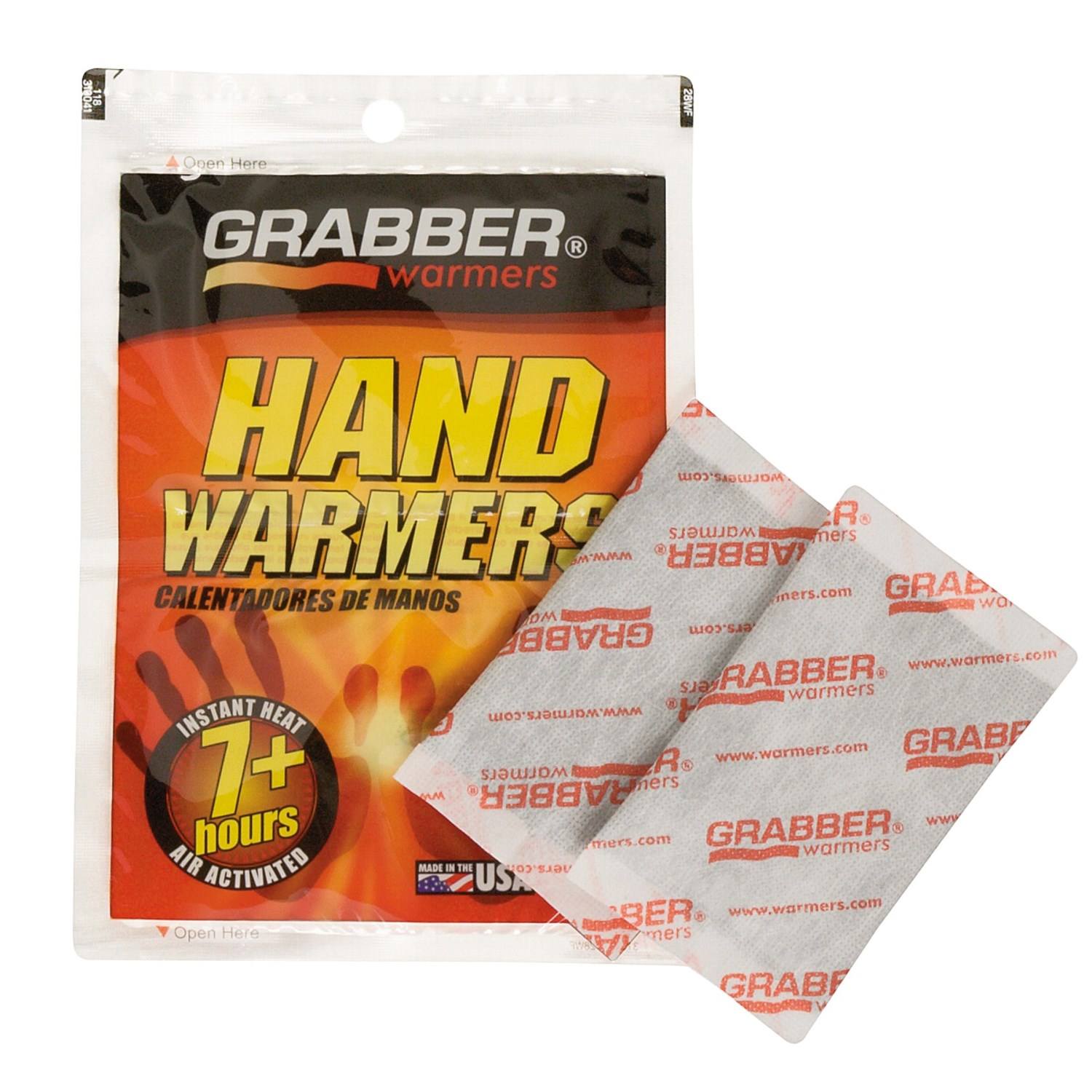
What type of reaction occurs in a hand warmer
a)
exothermic
b)
endothermic
71.
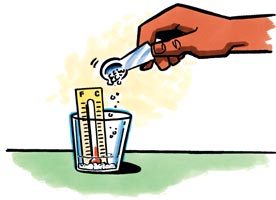
Exothermic reactions...
a)
Absorb energy
b)
Release energy
c)
Release Color
d)
Absorb Color
72.
In an endothermic reaction, heat is ...
a)
taken in or absorbed
b)
given out or released 
73.

What do all waves transfer?

a)

Matter

b)

Heat

c)

Electricity

d)

Energy

74.

What are the two types of waves?

a)

longitudinal and transverse

b)

sound and light

75.

Which type of waves have the longest wavelength?

a)

Visible light

b)

Radio waves

c)

X-rays

d)

Gamma-Rays

76.

Shorter wave lengths can carry more energy. Which of these probably carries the MOST energy:

a)

Infrared light

b)

Visible light

c)

X-rays

d)

UV light

77.
What term refers to the time needed for a wave to make one complete cycle?
a)
period
b)
frequency
c)
amplitude
d)
velocity
78.
Which term refers to the distance between successive, identical parts of a wave?
a)
period
b)
frequency
c)
Option 3
d)
wavelength
79.
Which diagram has both amplitude (A) and wavelength (l) labeled correctly?
a)
Option 1
b)
Option 2
c)
Option 3
d)
Option 4
80.
When two or more waves are at the same place at the same time, what is the resulting effect called?
a)
interference
b)
refraction
c)
diffraction
d)
reflection
81.
The picture below shows a light wave changing direction as it moves from air to water and back in to air. What wave behavior is being demonstrated?
a)
reflection
b)
refraction
c)
diffraction
d)
interference
82.
What law does the picture below represent?
a)
The Law of Reflection
b)
The Law of Refraction
c)
The Law of Interference
d)
The Law of Diffraction
83.
The bending of a water wave through a small opening is observed in a ripple tank. Which wave property is being demonstrated?
a)
reflection
b)
refraction
c)
diffraction
d)
interference
84.

Light can have different behvaiors. It can act as both ...

a)

a light and a sound

b)

a particle and a wave

c)

a quantum and a photon

d)

a transverse and a longitudinal

85.

What does the photoelectric effect demonstrate?

a)

the particle nature of light, as photons

b)

the wave nature of light, as electrons

c)

the color frequency of light, as a rainbow

d)

the radioactive effect of light, as gamma rays