
 Worksheets
Organic 1 revision
Total questions: 106
Worksheet time: 1hrs 5mins


Alkenes have the general formula:
CnH2n
CnH2n+1
CnH2n+2
CnHn
Alkanes have the general formula:
CnH2n
CnH2n+1
CnH2n+2
CnHn

What chemical is this? (C5H10)
Pentene
Pentane
Hexane
Heptene
Complete the equation C16H34 ---> __________ + C2H4
C16H34
C2H30
C10H20
C14H30
When testing for alkenes (unsaturation) bromine water turns from...
orange --> blue/black
colourless --> pink
orange --> colourless
orange --> clear
Fill in the blank:
What are the Reactants of the combustion reaction?
_______ + _______ --> CO2 + H2O + Energy
Carbon Dioxide (CO2) + Water (H2O)
Fuel (C2H6) + Oxygen (O2)
Carbon Dioxide (CO2) + Oxygen (O2)
Fuel (C2H6) + Water (H2O)
Compounds that are composed of the same number and type of atoms but have them arranged in different ways are ___________.
isomers
isotopes
polymers
alkanes

What is this process called?
Distillation
Fractional Distillation
Reverse Distillation
Destructive Distillation

This process is based of the fact that all compounds being separated have
A boiling point
Same boiling points
Different boiling points
No boiling points

Which homolgous series contains only C-C single bonds?
alkanes
alkenes
alcohols
carboxylic acids
Which type of polymerisation uses only one monomer?
addition polymerisation
condensation polymerisation

Classify the compound based on the functional group present.
alkane
alkene
alkyne
aromatic

What is the name of this compound
Pentane
dibromopropane
2,2-dimethylpropane
1,2-dimethylpropane
A hydrocarbon is:
A compound made up of oxygen and hydrogen only.
A compound made up of carbon and hydrogen only
A compound made up of hydrogen and nitrogen only.
A compound made up of carbon and oxygen only.
Saturated hydrocarbons have all ...
Single bonds.
Double bonds.
Triple bonds.
Quadruple bonds.
A chain of repeating units (called monomers)
monomer
dimer
replicate
polymer
What happens in an Addition Polymerisation
Two different functional groups bond together and expel a small molecule (often water)
A small molecule is added
All atoms used up when monomers join together


What term describes alkene molecules that contain a C=C double bond?
saturated
unsaturated
Where in the fractionating column are shorter chain hydrocarbon molecules obtained?
At the top
At the bottom
Molecules collected at the bottom of the fractionating column tend to be...
more viscous, less flammable and less volatile
less viscous, more flammable and more volatile
more viscous, more flammable and less volatile
less viscous, less flammable and more volatile
Molecules collected at the top of the fractionating column tend to be...
more viscous, less flammable and less volatile
less viscous, more flammable and more volatile
more viscous, more flammable and less volatile
less viscous, less flammable and more volatile
What are the 2 products of complete combustion?
carbon dioxide + hydrogen
carbon dioxide + water
carbon monoxide + water
carbon monoxide + hydrogen
Which are possible products of incomplete combustion?
carbon monoxide
water
carbon
hydrogen
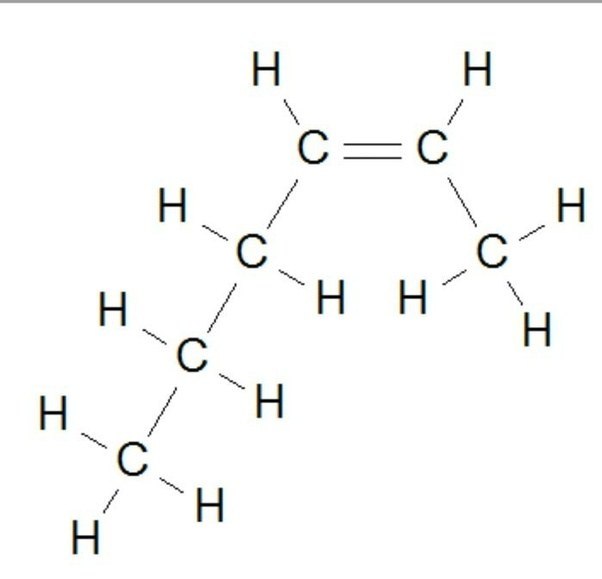
Name the following hydrocarbon
butane
hexane
heptane
hexene
When testing for alkenes (unsaturation) bromine water turns from...
orange --> blue/black
colourless --> pink
orange --> colourless
orange --> clear
Which of these isn't a fraction produce through fractional distillation?
Bitumen
Naptha
Fuel oil
Ethanol
What is crude oil formed from?
Remains of shale gas trapped under the sea bed
Remains of gases trapped in the ozone layer
Remains of plants and animals that died millions of years ago
Remains of animal faeces from millions of years ago
Which bond breaks during cracking?
C-C bond
C-C double bond
C-H bond
C-OH bond
What is cracking?
Process of breaking long chain alkenes into shorter chain alkanes, alkenes and hydrogen
Process of breaking long chain alkanes into shorter chain alkanes, alkenes and hydrogen
Process of separating long chain alkanes into shorter chain alkanes, alkenes and hydrogen
Process of breaking long chain haloalkanes into shorter chain haloalkenes
Which of these fractions are most in demand?
LPG
Bitumen
Petrol
Gas oil
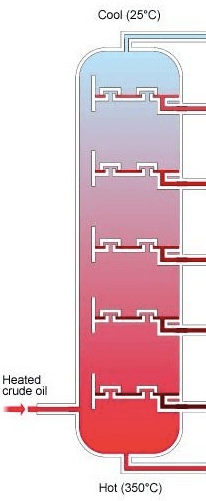
What process happens at each level in the fractionating column?
Evaporation
Condensation
Combustion
Crude oil is made up of:
Ethane
Butane
A mixture of different hydrocarbons
Extremely large hydrocarbons which are broken up once extracted
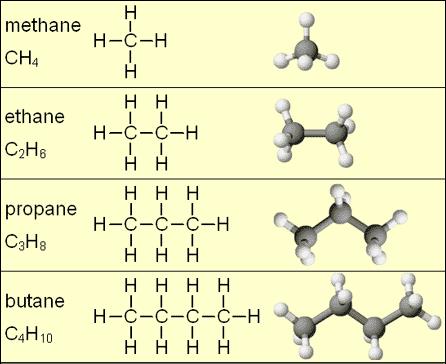
Which of these substances is not a hydrocarbon?
methane
ethane
propane
butane
ammonia
Which is NOT a property of a long chain hydrocarbon?
Viscous
Flammable
Not very volatile
High boiling point
Cracking is a process used to break up hydrocarbon chains because the products are more (a) than the reactants.
Which of these is not a condition of catalytic cracking?
High temperature
600C degrees
Rhodium catalyst
Alumina - Silica (Zeolite) catalyst
What is the name given to the small molecules that join together to make a polymer
(a)
What would the polymer formed from ethene monomers be called?
polyethene
poly(ethene)
poly(propene)
polyene
Which one of these could polymerise to make poly(propene)


What are the key points to remember when writing an equation for polymerisation?
Monomer has a C=C
Repeat Unit has C-C
Brackets (with stalks)
n before monomer and after bracket of repeat unit

What monomer forms this polymer chain?


What monomer forms this polymer chain?
Which one of these monomers would form poly(1,2-difluoroethene)?


Which repeat unit would be formed by the polymerisation of propene?


Polymerisation in which double bonds in monomers break and a polymer with single bonds only is called...
(a)

True of false - this is the repeat unit for poly(propene)?
True
False
What is cracking?
A process that turns long chain hydrocarbons into short chain hydrocarbons
A process that turns short chain hydrocarbons into long chain hydrocarbons
Why do we use cracking to get petrol?
The supply of petrol from cracking is larger than the demand
The supply of petrol from fractional distillation is larger than the demand
The supply of petrol from fractional distillation is smaller than the demand
The supply of petrol from cracking is smaller than the demand
What is always produce during cracking?
Alkane + alkane
Alkane + alkene
Alkene + alkene
Octane (8 carbons) is cracked into hexane (6 carbons) and an alkene. What is the name of this alkene?
Ethene
Propene
Butene
Pentene
Decane (10 carbons) is cracked into hexane (6 carbons) and an alkene. What is the name of this alkene?
Ethene
Propene
Butene
Pentene
What type of reaction is cracking?
Addition
Displacement
Thermal decomposition
Neutralisation
In the following fractions, which contains the longest hydrocarbons?
Refinery Gases
Gasoline
Kerosene
Fuel oil
Octane (8 carbons) is cracked into pentane (5 carbons) and an alkene. What is the name of this alkene?
Ethene
Propene
Butene
Pentene
What is the test for alkenes?
Adding Br2(aq), if alkene is present it will turn orange
Adding Br2(aq), if alkene is present it will turn colourless
Adding Br2(aq), if alkane is present it will turn orange
Adding Br2(aq), if alkane is present it will turn colourless
What is the temperature and catalyst for cracking?
60oC and Silica or Alumina catalyst
600-700oC and Bromine Water catalyst
900oC and Phosphoric Acid catalyst
600-700oC and Silica or Alumina catalyst
What type of chemical reaction is this:
C3H8 + 5O2 --> 3CO2 + 4H2O
Incomplete combustion
Substitution with oxygen
Complete combustion
Substitution with chlorine
What type of chemical reaction is this:
C3H8 + Br2 --> C3H7CBr + HBr
[it requires UV light]
Incomplete combustion
Substitution with chlorine
Complete combustion
Substitution with bromine
The following could be a product of the reaction between propane and chlorine in the presence of UV light: C3H7Cl
TRUE
FALSE
The following is a product of the reaction between propene (C3H6) and chlorine: C3H6Cl2
TRUE
FALSE
The following is a product of the reaction between propane and chlorine: C3H7Cl
TRUE
FALSE
The following is a product of the reaction between propane and chlorine: HCl
TRUE
FALSE
What is the condition needed for substitution reaction with chlorine?
presence of sunlight
presence of red light
presence of UV light
all of the above
Which of the following is a product formed when methane reacts under the needed conditions with chlorine?
CH3Cl
CH2Br2
CHCl4
CCl5
Which of the following is true about incomplete combustion?
It takes place because there is too much oxygen
It takes place because there is insufficient oxygen
The products are soot and propane
The products are hydrogen and water
What happens if an alkane reacts with limited oxygen?
Produces carbon dioxide and water
Produces carbon monoxide and water
Produces oxygen and water
Produces water only
The name of the 4th member of the alkane family is (a)
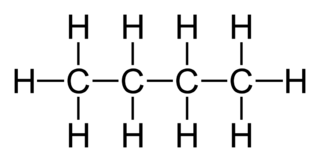
C3H8
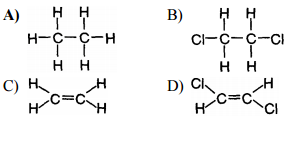
Which of the following shows the structure of ethene?


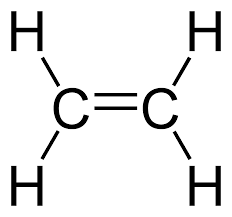
Name this molecule
Methane
Ethane
Methene
Ethene
Hydrocarbons are compounds that contain
Carbon only
Carbon and Hydrogen only
Carbon, Oxygen and Hydrogen only
Carbon, Oxygen, Hydrogen and Nitrogen only
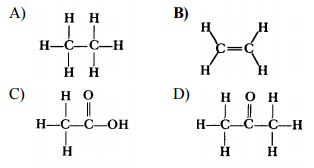
Which molecule is an example of an unsaturated hydrocarbon?


All of the following diagrams show C5H12, but which two show the SAME molecule rather than different isomers?


This molecule is called...
butene
but-1-ene
but-2-ene
but-3-ene

