wayground logo

Free Printable Worksheets

Font size

S
M
L
XL
Worksheets

Unit 4 Review

Total questions: 87

Worksheet time: 1hrs 1mins

Name
Class
Date
1.

What is the correct Lewis Dot Structure for ammonia NH3

a)
b)
c)
d)
2.

Which is the correct molecular structure for carbon dioxide?

a)
b)
c)
d)
3.
According to the octet rule most elements need _______ valence electrons.
a)
2
b)
8
c)
6
d)
18
4.
Which of the following is the correct Lewis dot structure for the molecule fluorine (F2)?
a)
A
b)
B
c)
C
d)
D
5.
Which of the following is the correct Lewis structure for water?
a)
A
b)
B
c)
C
6.
 A lone pair is defined as
a)
A pair of bonding electrons
b)
One non-bonding electron
c)
A pair of non-bonding electrons
d)
A pair of electrons on the central atom
7.

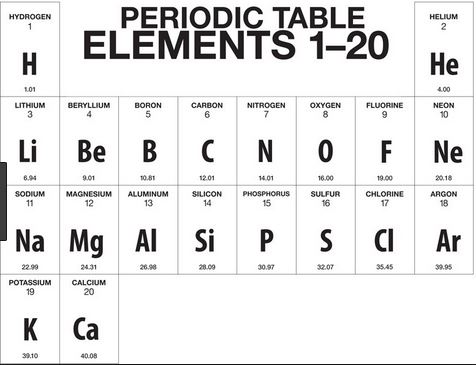
How many valence electrons does Hydrogen Have?

a)

1 Valence electron

b)

2 Valence electron

c)

3 Valence electron

d)

4 Valence electron

e)

5 Valence electron

8.

How many valence electrons does Nitrogen Have?

a)

1 Valence electron

b)

2 Valence electron

c)

3 Valence electron

d)

4 Valence electron

e)

5 Valence electron

9.

How many valence electrons does Magnesium Have?

a)

1 Valence electron

b)

2 Valence electron

c)

3 Valence electron

d)

4 Valence electron

e)

5 Valence electron

10.

How many valence electrons does Aluminum Have?

a)

1 Valence electron

b)

2 Valence electron

c)

3 Valence electron

d)

4 Valence electron

e)

5 Valence electron

11.

How many valence electrons does Potassium Have?

a)

1 Valence electron

b)

2 Valence electron

c)

3 Valence electron

d)

4 Valence electron

e)

5 Valence electron

12.

How many valence electrons does Phosphorus Have?

a)

1 Valence electron

b)

2 Valence electron

c)

3 Valence electron

d)

4 Valence electron

e)

5 Valence electron

13.

How many valence electrons does Silicon Have?

a)

1 Valence electron

b)

2 Valence electron

c)

3 Valence electron

d)

4 Valence electron

e)

5 Valence electron

14.

How many valence electrons does Lithium Have?

a)

1 Valence electron

b)

2 Valence electron

c)

3 Valence electron

d)

4 Valence electron

e)

5 Valence electron

15.

How many valence electrons does Boron Have?

a)

1 Valence electron

b)

2 Valence electron

c)

3 Valence electron

d)

4 Valence electron

e)

5 Valence electron

16.

How many valence electrons does Sodium Have?

a)

1 Valence electron

b)

2 Valence electron

c)

3 Valence electron

d)

4 Valence electron

e)

5 Valence electron

17.

How many valence electrons does Beryllium Have?

a)

1 Valence electron

b)

2 Valence electron

c)

3 Valence electron

d)

4 Valence electron

e)

5 Valence electron

18.

How many valence electrons does Neon Have?

a)

4 Valence electron

b)

5 Valence electron

c)

6 Valence electron

d)

7 Valence electron

e)

8 Valence electron

19.

How many valence electrons does Fluorine Have?

a)

4 Valence electron

b)

5 Valence electron

c)

6 Valence electron

d)

7 Valence electron

e)

8 Valence electron

20.

How many valence electrons does Argon Have?

a)

4 Valence electron

b)

5 Valence electron

c)

6 Valence electron

d)

7 Valence electron

e)

8 Valence electron

21.
Why do bonds form?
a)
To fill the valence shell of electrons for the elements involved
b)
to release energy stored in the bonds
c)
because whenever you mix two chemicals, there will be a reaction
d)
because of attraction
22.
What type of bond occurs between a metal and a non-metal element?
a)
Ionic
b)
Covalent
c)
Metallic
d)
Sliding-Pair
23.
What type of bond occurs between a positive and a negative ion?
a)
Ionic bond
b)
covalent bond
c)
metallic bond
d)
p-n bond
24.
What type of bond occurs when two or more elements share electrons?
a)
Ionic
b)
Covalent
c)
Metallic
d)
Caring
25.
What type of bond is present when electrons are freely shared between metal atoms?
a)
Metallic
b)
Ionic
c)
Covalent
d)
Hippie
26.
What type of bond is illustrated above?
a)
Metallic
b)
Ionic
c)
Covalent
d)
Wiggly
27.
What type of bond is illustrated above?
a)
Covalent
b)
Metallic
c)
Ionic
d)
Oxygen
28.
Which formula represents an ionic compound?
a)
CaCl2
b)
CH3OH
c)
CH4
d)
H2
29.

Antimony tribromide

a)

AnBr3

b)

AtBr3

c)

Sb1Br3

d)

SbBr3

30.

Hexaboron silicide

a)

B5S

b)

B6S

c)

B6Si

d)

Br6Si1

e)

Br6Si

31.

Chlorine dioxide

a)

Cl1O2

b)

CO2

c)

ClO2

d)

CrO2

32.

Hydrogen iodide

a)

H1I1

b)

HI

c)

HyIo

d)

HIo1

33.

Iodine pentafluoride

a)

I1P6

b)

I1F5

c)

IF5

d)

IFl5

34.

Dinitrogen trioxide

a)

NO3

b)

N2O3

c)

N4O6

d)

2N3O

35.

Phosphorus triiodide

a)

KI3

b)

P1I3

c)

PhI3

d)

PI3

36.

Pentaphosphorus hexasulfide

a)

K5S6

b)

P5S6

c)

P6S5

d)

6P5S

37.

P4S5

a)

phosphorus sulfide

b)

quadphosphorus hexasulfide

c)

tetraphosphorus pentasulfur

d)

tetraphosphorus pentasulfide

38.
P3F4
a)
Phosphorous fluoride
b)
Triphosphorous tetrafluoride
c)
Phosphate Fluoride
d)
Trifluoride hexafluoride
39.
NO
a)
Mononitrogen monoxide
b)
nitrogen oxide
c)
nitrogen monoxide
d)
nitrate monoxide
40.
BrP
a)
Bromide phosphide
b)
Bromide phosphate
c)
Monobromide monophosphide
d)
Bromide monophosphide
41.
SiCl6
a)
Monosilicon hexachloride
b)
Silicon hexachloride
c)
Silicon heptachloride
d)
Monosilicon heptachloride
42.
SO3
a)
Monosilicon Trioxide
b)
Sulfate trioxide
c)
Sulfur trioxide
d)
Monosulfate oxide
43.
N2O5
a)
Nitrogen Oxide
b)
Dinitrogen pentaoxide
c)
Nitrate pentaoxide
d)
Dinitrate pentaoxide
44.
HCl
a)
Polar 
b)
Nonpolar 
45.
N2
a)
Polar 
b)
Nonpolar 
46.
F2
a)
Polar 
b)
Nonpolar 
47.
H2O
a)
Polar 
b)
Nonpolar 
48.
NF3
a)
Polar 
b)
Nonpolar 
49.
Which of the following is a polar molecule?
a)
CH4
b)
Xe
c)
H2O
d)
CO2
50.
Which of the following geometries could be nonpolar?
a)
bent
b)
tetrahedral
c)
trigonal pyrimidal
d)
none of the above
51.
What geometry will this molecular structure have?: H2S
a)
bent
b)
tetrahedral
c)
linear
d)
trigonal pyramidal
52.
Choose the correct shape for this molecule:
a)
Trigonal planar
b)
Trigonal pyramidal
c)
Tetrahedral
d)
Linear
53.
Choose the correct shape for this molecule:
a)
Trigonal planar
b)
Trigonal pyramidal
c)
Bent
d)
Linear
54.
Choose the correct shape for this molecule:
a)
Bent
b)
Trigonal pyramidal
c)
Trigonal planar
d)
Linear
55.
Choose the correct shape for this molecule:
a)
Trigonal planar
b)
Trigonal pyramidal
c)
Bent
d)
Tetrahedral
56.
Choose the correct shape for this molecule:
a)
linear
b)
Trigonal pyramidal
c)
Bent
d)
Tetrahedral
57.
Choose the correct shape for this molecule:
a)
Bent
b)
Linear
c)
Tetrahedral
d)
Trigonal pyramidal
58.

What is the name of the following ternary ionic compound:

NaMnO4 ?

a)

Sodium Permangante

b)

Sulfur Permanganate

c)

Sodium Manganese Oxide

59.

What is the name of the following ternary ionic compound:

Al2(SO3)3

a)

Aluminum Sulfite

b)

Aluminum sulfate

c)

aluminum sulfur oxide

60.

What is the name of the following ternary ionic compound:

Ba(OH)2 ?

a)

Barium Hydroxide

b)

Boron Hydroxide

c)

Beryllium Hydroxide

61.
What is the charge on the hydroxide ion?
a)
0
b)
-1
c)
-2
d)
-3
62.
KCl
a)
Krypton Chloride
b)
Potassium Chlorine
c)
Potassium Chloride
d)
Potassium Monochloride
63.
LiBr is called
a)
lithium bromine
b)
lithium (I) bromine
c)
lithium bromide
d)
lithuim (I) bromide
64.
Name that Compound:
MgF2
a)
magnesium fluoride
b)
manganese Phosphide
c)
magnesium(III) fluoride
d)
magnesium fluoride(II)
65.
Name this compound: 
BaBr2
a)
Bromide Baride
b)
Barium bromide
c)
Barium bromate
d)
Boron bromite
66.
Rb2O
a)
rubidium oxalate
b)
rubidium oxide
c)
rubidium (II) oxide
d)
rubidium oxygen
67.
What is the name of this compound: Li3N?
a)
Lithium Nitrogen
b)
Lithium nitride
c)
Lithium nitrite
d)
Lithium (III) nitride
68.
If I am in group 17 how many valence electrons do I have?
a)
17
b)
1
c)
7
d)
none, I am a noble gase
69.
Name the following ionic compound: BeCl2
a)
beryllium chlorine
b)
beryllium II chloride
c)
beryllium chloride
d)
beryllium dichloride
70.
Name the following ionic compound: MgSO4
a)
magnesium sulfoxide
b)
magnesium sulfide
c)
magnesium sulfate
d)
magnesium oxide
71.
What is the name of the compound Li2S?
a)
Lithium sulfide
b)
Lithium sulfuride
c)
Lithium (I) sulfide
d)
Lithium sulfure
72.

What is the charge of a sodium ion?

a)

1+

b)

2+

c)

1-

d)

2-

73.

What is the charge of a potassium ion?

a)

1+

b)

2+

c)

1-

d)

2-

74.

What is the charge of a chloride ion?

a)

1+

b)

2+

c)

1-

d)

2-

75.

What is the charge of an oxide ion?

a)

1+

b)

2+

c)

1-

d)

2-

76.

What is the charge of a sulphide ion?

a)

1+

b)

2+

c)

1-

d)

2-

77.

What is the charge of a magnesium ion?

a)

1+

b)

2+

c)

1-

d)

2-

78.

What is the charge of a calcium ion?

a)

1+

b)

2+

c)

1-

d)

2-

79.

What is the charge of a fluoride ion?

a)

1+

b)

2+

c)

1-

d)

2-

80.

What is the charge of an aluminium ion?

a)

1+

b)

2+

c)

3+

d)

1-

e)

2-

81.

What is the formula for Calcium nitride?

a)

CaN

b)

Ca2N3

c)

Ca3N2

d)

None of these

82.
How do the following two elements bond together?
Al3+  O2-         
a)
AlO
b)
Al2O3
c)
Al3O6
d)
Al3O2
83.

Balance the compound the following ions will form: Ammonium and Oxygen

a)

NH4O

b)

(NH4)2O

c)

ONH4

d)

O(NH4)2

84.

How would you balance the following ions in a compound: Magnesium and Chlorate

a)

MgClO3

b)

Mg2ClO3

c)

Mg(ClO3)2

d)

Mg(ClO3)3

85.

What compound would the following form: Beryllium & Sulfate

a)

Be2(SO4)

b)

Be(SO4)

c)

Be2(SO4)2

d)

BeSO4

86.
The chemical compound for sodium phosphate would be:
a)
NaPO4
b)
Na2PO4
c)
Na3PO4
d)
Na(PO4)3
87.
An example of a polyatomic ion is:
a)
O2-
b)
Na+
c)
CO32-
d)
Ag+