
 Worksheets
Astronomy Review
Total questions: 95
Worksheet time: 7hrs 27mins
What is at the middle of a Geocentric system?
Sun
Neptune
Earth
The Universe

What is the name of this model?
Heliocentric Model
Kepler Model
Galileo Model
Geocentric Model
What is Kepler's 1st law?
The planets orbit in an ellipse
The plants move faster when they are closer to the sun and slower when they are further from the sun
The farther a planet is from the sun the slower the orbit
(P2 = a3)
Ptolemy used epicycles to explain the motions of the sun, moon, and planets in his ____ model of the solar system. that had everything orbiting Earth.
heliocentric
geocentric
orrery
This astronomer confirmed the heliocentric theory with his telescope and discovered 4 moons of Jupiter.
Which astronomer developed the first detailed heliocentric model of the solar system?
Newton
Ptolemy
Copernicus
Galileo
Which astronomer believed that gravity and inertia keep the planets in orbit?
Kepler
Copernicus
Galileo
Newton
Which of the following astronomers believed in a geocentric model of the solar system?
Ptolemy
Kepler
Galileo & Copernicus
All astronomers
What was the missing force in Kepler's 3 Laws of Planetary Motion that Newton later discovered?
Eccentricity
Weight
Mass
Gravity
which astronomer discovered sunspots and the sun's rotational period?
Copernicus
Newton
Kepler
Galileo
At what point in orbit will a planet speed up?
aphelion
perihelion
epicycle
eccentricity
What is the eccentricity of a perfect circle?
1
0.5
100
0
What two factors affect the gravitational pull of an object?
weight
mass
distance
eccentricity
An astronomical unit is the distance from the __________ to ______________.
Earth; moon
Earth; Sun
Earth; Jupiter
Earth; Pluto
Which of the planets has the shortest orbital period?
Earth
Venus
Mercury
Mars
Every object attracts every other object. This is....
Newton's Law of Universal Gravitation
Kepler's 1st Law of Planetary Motion
Kepler's 2nd Law of Planetary Motion
Kepler's 3rd Law of Planetary Motion
Which of the following is constant, meaning it does not change based on location?
mass
weight
gravity
Which astronomer was the first to say that the Earth is shaped like a sphere?
Aristarchus
Aristotle
Copernicus
Kepler
Rate yourself on your knowledge of early astronomy, models, planetary laws and gravity.
I'm ready for the test!
I'm ready to teach it!
I'm ready for an open-notes quiz!
I'm ready to study more!
An area on the surface of the Sun that appears darker than other areas on the Sun
solar energy
corona
sunspot
solar flare
What are large loops on the surface of the sun that release a large amount of energy?
Corona
Photosphere
Sunspiots
Prominences

Label part 6
#6 Prominences
#6 Corona
#6 Sunspots
#6 Photosphere
This is the suns outer atmosphere
Corona
Chromosphere
Photosphere
Convection Zone
Most of the sun’s energy is a result of
nuclear fusion
nuclear fission
atomic reactions
coronal mass ejection

Label part 1
#1 Core
#1 Radiation zone
#1 Convection zone
#1 Photosphere

Label part 5
#5 Chromosphere
#5 Radiation zone
#5 Convection zone
#5 Photosphere

Label Part 3
#3 Chromosphere
#3 Radiation zone
#3 Convection zone
#3 Photosphere

Label Part 2
#2 Core
#2 Radiation zone
#2 Convection zone
#2 Corona
Energy is created in the core when two _____________ atoms join together to form a ______________ atom.
helium, hydrogen
carbon, hydrogen
nitrogen, helium
hydrogen, helium
Because of the tilt of the Earth, as it revolves around the sun, this happens
Inertia
Gravity
Neap Tides
Seasons
The amount of light you see on the moon as it goes around the Earth
Spring Tides
Neap Tides
Moon Phases
Eclipses

Which type of Eclipse is shown in the picture?
Lunar
Solar

Which type of Eclipse is shown in the picture?
Lunar
Solar
Less than average tide occurring 1st and 3rd quarters of the moon
Neap Tides
Spring Tides
Seasons
Moon Phases
Highest tides when the Earth, sun and moon are lined up in a row
Spring Tides
Neap Tides
Gravity
Eclipse
What is the center, darker part of an eclipse shadow called?
Perinumbra
Hyperumbra
Penumbra
Umbra
What is the lighter part of an eclipse shadow, where the light is only partially blocked, called?
Perinumbra
Hyperumbra
Penumbra
Umbra

Which letter or letters in the picture identify the umbra?
A
B
C

Which letter or letters in the picture identify the penumbra?
A
B
C
Earth is tilted at _____________ degrees.
23.5
90
0
25.3
On which of the following days the day and night are of equal duration throughout the world?
28th March and 21st September
21st March and 21st September
21st June and 21st December
23rd March and 22nd December
1 Revolution for Earth
365 days
1 Rotation for Earth
24 hours
1 Season for Earth
3 months
When the moon waxes, it
goes froma new moon to a ful moon
seems to get bigger in size
goes from a new moon to a full moon
B and C only
When the moon wanes, it
goes from a new moon to a full moon
goes from a full moon back to a new moon
seems to get smaller in size
B and C only

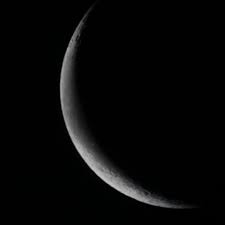
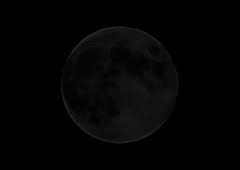
Which moon is shown in the picture?
new
crescent
quarter
gibbous

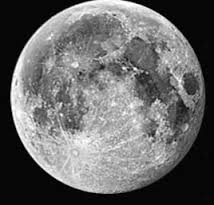
Which phase of the moon is shown in the picture?
full
gibbous
quarter
crescent
What planet is closest to the sun?
Mercury
Mars
Jupiter
What are the four inner planets?
Earth, Uranus, Mercury, Venus
Mercury Venus Earth Saturn
Mars, Earth , Mercury, Venus
Which planet below is farthest from the sun?
Mars
Earth
Jupiter
What are the outer planets?
Jupiter, Saturn, Earth, Neptune
Uranus, Saturn, Neptune, Jupiter
Saturn, Neptune, Mars, Uranus
The outer planets are considered the Gas Planets
True
False
The Inner Planets are rocky and have craters on the surface
True
False
Pluto is considered a (a) planet
What is the name of the only planet that supports life?
Jupiter
Earth
Uranus
The sun is a ___________.
Star
Comet
Planet
The Planets do not rotate around the sun.
True
False
Which planet is known as Earth's twin because it is a similar size?
Mercury
Saturn
Venus
Which planet do scientists think we may be able to walk on in 20 years?
Mars
Pluto
Neptune
What is the smallest planet in the solar system?
Earth
Saturn
Mercury
Which planet is known as the Red Planet because of it's red rocky surface?
Mars
Earth
Jupiter
Stars are formed from big clouds of gas and dust is known as:
dust cloud
space fog
neutron clouds
nebulae
The main force acting on a nebula is:
thermal expansion
singularities
gravity
microscopic adhesion
A star is born when:
nuclear fusion starts
a nebula becomes a protostar
gases in a nebula condense
hydrogen is used up in fusion processes
The two forces battling it out for the stability of a star are gravitational forces and:
singularity expansion
chemical bonding forces
tidal currents
thermal forces (heat) through convection
A star that has ignited and has used up all of the hydrogen is called:
Neutron Star
White Dwarfs
Red Giants
Black Holes
When the core of a Red Giant collapses it becomes a:
White Dwarf
Supernova
Red Supergiant
Black Hole
When a massive star begins to cool and expand it is known as a:
Black Dwarf
Red Giant
Red Supergiant
White Dwarf
When the core of a Red Supergiant collapses, a bright event occurs, known as:
white dwarf
supernova
big bang
black hole
After a supernova, the core can collapse into a neutron star, or if massive enough it can become a:
Black Hole
White Dwarf
Red Supergiant
Black Dwarf
When a Red Giant's outer atmosphere drifts away it is now known as:
planetary cloud
White dwarf cloud
planetary nebula
expanding nebula
One possible outcome that is left after a supernova is a super dense core called a:
Neutron Star
White Dwarf
Red Giant
Black Dwarf
A black hole is black because:
there is nothing in it
it is too small to see
it is inherently evil
even light cannot escape its gravity
Our sun is currently in what star stage?
Protostar
Nebula
Main Sequence
Red Giant

Main sequence stars are made primarily of which elements?
Hydrogen only
Helium and Carbon
Carbon and Iron
Hydrogen and Helium
A star that has begun nuclear fusion will last for:
millions or even billions of years
a few thousand years
as long as the universe survives
forever
When a nebula condenses and takes on a shape it is called:
a red supergiant
a black hole
a white dwarf
a protostar
The stable and longest lasting period of a star’s life cycle is called:
The birth of a star
Nebula
Neutron star
Main Sequence
What fuel do main sequence stars use?
Oxygen
Hydrogen
Carbon
Iron
Neutron stars that emit radiowaves are called:
Nebula
Pulsars
Galaxys
Planets



