wayground logo

Free Printable Worksheets

Font size

S
M
L
XL
Worksheets

Ks3 revsion 2023 year 8

Total questions: 147

Worksheet time: 2hrs 58mins

Name
Class
Date
1.
Light travels in a straight line
a)
True
b)
False
2.
Which explains why the fork looks different under water?
a)
light can't pass through the glass
b)
the wavelength of light lengthens
c)
the amount of light increases when going through water
d)
light is refracted at an angle
3.
Why do we see objects as white?
a)
They absorb all light
b)
They reflect all light
c)
They absorb some light and reflect some light
4.
Another name for light bending is ....
a)
Reflaction
b)
Absorbing
c)
Refraction
d)
mirror
5.
The Law of Reflection:
The angle of incidence is _________ the angle of reflection
a)
bigger than
b)
the same as
c)
smaller than
6.
Luminous means...
a)
Gives out its own light
b)
Reflects light from other things
7.
The color you see is the color that is ___.
a)
reflected
b)
absorbed
8.
White light is made up of _________________ colors.
a)
10
b)
3
c)
7
d)
70
9.
If light strikes a mirror at a 50⁰ angle, what angle will it come off of the mirror?
a)
50⁰
b)
70⁰
c)
45⁰
d)
30⁰
10.
Which color absorbs all light?
a)
White
b)
Black
c)
Orange
d)
Green
11.
Which color reflects all light?
a)
White
b)
Black
c)
Orange 
d)
Green
12.

Which type of wave does light travel in?

a)

Ocean wave

b)

Compression wave

c)

Transverse waves

d)

Radio wave

13.
Material that allows light to pass through allowing you to see "clearly" to the other side
a)
opaque
b)
translucent
c)
transparent
14.
 Refraction can separate white light into
a)
a. infrared waves.
b)
b. different colors.
c)
c. ultraviolet light.
d)
d. longer wavelengths.
15.

In the diagram, which letter represents the angle of incidence?

a)

A

b)

B

c)

C

d)

D

16.
Law of reflection state that - The angle of incidence is .................. to the angle of reflection.
a)
equal
b)
double
c)
half
17.
a)
Reflection
b)
Refraction
18.
Which color travels the quickest and has the shortest wavelength?
a)
Red
b)
Violet
19.
The distance between two crests or two troughs is the...
a)
Crest/Peak
b)
Trough
c)
Wavelength
20.
Which color travels the slowest and has the longest wavelength?
a)
Violet
b)
Red
21.
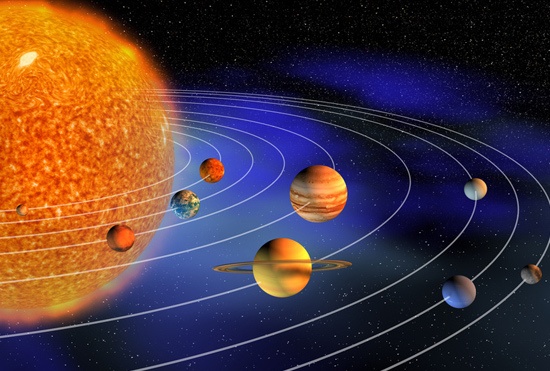
Mercury, Venus, Earth, and Mars are called.....?
a)
Jovian Planets
b)
Awesome Sauce Planets
c)
Gas Giants
d)
Inner Planets
22.
What do we call Jupiter, Saturn, Uranus and Neptune?
a)
Outer Planets
b)
Terrestrial Planets
c)
Inner Planets
d)
Oort Cloud
23.
What is the only planet known to contain life?
a)
Mars
b)
Earth
c)
Neptune
d)
Uranus
24.
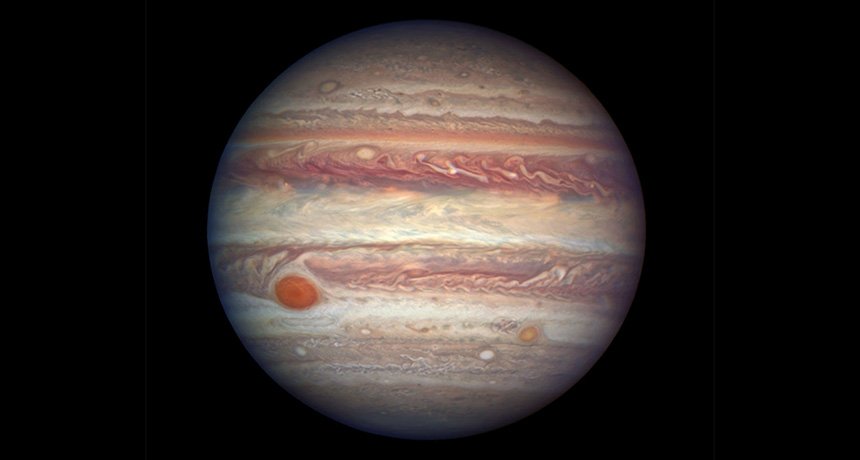
What characteristic is Jupiter known for?
a)
Rings of ice and dust
b)
Great Red Spot
c)
Olympus Mons
d)
Fire
25.
Which planet is now characterized as a dwarf planet?
a)
Neptune
b)
Pluto
c)
Miss Best
d)
Coca-cola
26.
What is one factor that makes life on Earth possible?
a)
Water
b)
High gravity
c)
Elliptical Orbit
d)
Hydrogen
27.
Which is the largest object in our solar system?
a)
Sun
b)
Jupiter
c)
Earth
d)
Pluto
28.
Which planet is closest to the sun?
a)
Uranus
b)
Mercury
c)
Neptune
d)
Earth
29.
Which is the second closest planet to the sun?
a)
Earth
b)
Saturn
c)
Venus
d)
Mercury
30.
Which planet is third from the sun?
a)
Mars
b)
Pluto
c)
Venus
d)
Earth
31.
Which is the fourth planet from the sun?
a)
Mars
b)
Saturn
c)
Earth
d)
Jupiter
32.
Which planet is fifth from the sun?
a)
Saturn
b)
Jupiter
c)
Mars
d)
Earth
33.
Which is the sixth planet from the sun?
a)
Earth
b)
Uranus
c)
Saturn
d)
Neptune
34.
Which planet is seventh from the sun?
a)
Saturn
b)
Earth
c)
Venus
d)
Uranus
35.

These are the 4 planets (Mercury, Venus, Earth, Mars) are known as

a)

terrestrial planets

b)

gas giants

c)

dwarf planets

d)

solar planets

36.

These are the four planets the Sun; Jupiter, Saturn, Uranus, and Neptune are classified as

a)

terrestrial planets

b)

gas giants

c)

solar planets

d)

the best planets

37.

Where is the Asteroid Belt located in the Solar System?

a)

near Neptune

b)

between Mercury and Venus

c)

between Mars and Jupiter

d)

around the Sun

38.
What is similar about all of the Outer Planets?
a)
small
b)
large
c)
few moons
d)
takes a short amount of time to go around the sun
39.
What is a planet?
a)
a group of stars that forms a pattern in the sky
b)
a large ball of hot gases that gives off heat and light
c)
a large ball or rock or gas that moves around the sun
d)
a toy aliens play with
40.
The sun goes around the Earth.
a)
True
b)
False
41.

It divides the earth into ___________ and ___________ hemispheres.

a)

eastern and western

b)

northern and southern

42.

What imaginary line is drawn around the earth’s center and separates the Northern & Southern hemispheres?

a)

equator

b)

axis

c)

prime meridian

43.
The hemisphere where you live 
a)
equator
b)
southern
c)
northern
d)
eastern
44.

How long does it take earth to make one revolution around the sun?

a)
12 hours
b)
24 hours 
c)
365 days
d)
30 days
45.
Day & night are caused by the ______________ of earth on its axis
a)
revolution
b)
orbit
c)
rotation
d)
tilt of the axis
46.
What are the reasons for the season?
a)
Earth's tilt & rotation
b)
Earth's tilt & revolution
c)
Earth's rotation & rovolution
d)
Earth's tilt & resolution
47.
What happens when the area in which you live tilts away from the sun?
a)
It is summer.
b)
It is spring.
c)
It is winter.
d)
It is fall.
48.
Why does the area around the equator stay the same temperature all year?
a)
The equator rotates slower than the poles.
b)
The equator remains the same distance from the sun.
c)
The equator always receives direct sunlight.
d)
The equator has 18 hour days.
49.

Which season is taking place in the Northern Hemisphere in Position 1?

a)
Winter
b)
Spring
c)
Summer
d)
Fall
50.

Which season is taking place in the Northern Hemisphere in Position 3?

a)
Winter
b)
Spring
c)
Summer
d)
Fall
51.

Which  of the following best describes the tilt of the earth during the spring and fall equinoxes?

a)
The earth is tilted away from the sun (Northern hemisphere)
b)
The earth is tilted neither toward or away from the sun (tilt is side to side)
c)
The earth is tilted toward the sun (Northern hemisphere)
d)
The earth is not tilted during spring and fall
52.

Which season is taking place in the Northern Hemisphere in Position 4?

a)
Winter
b)
Spring
c)
Summer
d)
Fall
53.

Which season is taking place in the Northern Hemisphere in Position 2?

a)
Winter
b)
Spring
c)
Summer
d)
Fall
54.

The further the distance between objects, the ...

a)

the stronger the gravitational attraction becomes

b)

the weaker the gravitational attraction becomes

c)

the gravitational attraction stays the same

55.

Which statement is true?

a)

An object will have the same mass on different planets but a different weight

b)

An object will have a different mass on different planets but the weight will stay the same

c)

An object will have the same mass and weight on different planets

56.

What unit is weight measured in?

a)

Grams

b)

Kilograms

c)

Newtons

d)

N/Kg

57.

What unit is mass measured in?

a)

Grams

b)

Kilograms

c)

Newtons

d)

N/Kg

58.

The sun is at the centre of our solar system, it is a ....

a)

planet

b)

star

c)

galaxy

d)

moon

59.

How many planets orbit around the sun?

a)

7

b)

9

c)

8

d)

10

60.

What planet is closest to the sun?

a)

Neptune

b)

Earth

c)

Mercury

d)

Venus

61.

How long does it take for the Earth to complete one rotation about its axis?

a)

24 hours

b)

1 month

c)

1 year

62.

How long does it take for the Earth to orbit the sun once?

a)

24 hours

b)

1 month

c)

365 1/4 days

63.

What causes the seasons?

a)

The Earths rotation

b)

The Earths tilt

c)

The moon

d)

The weather

64.
The force of gravity acting on an object is the object's ______.
a)
mass
b)
matter
c)
weight 
d)
friction 
65.
The amount of matter in an object is 
a)
pressure
b)
weight
c)
mass
d)
force
66.
Which of the following never changes no matter where in the universe?
a)
weight
b)
force
c)
mass
d)
pounds
67.
A person would weigh less on on the Moon than on the Earth because . . .
a)
Moon has more mass, and therefore more gravity
b)
Moon has less mass, and therefore more gravity
c)
Moon has more mass, and therefore less gravity
d)
Moon has less mass and therefore less gravity
68.
If Earth's mass was cut in half, what would happen to your mass?
a)
increase because gravitational force increases
b)
decrease because gravitational force decreases
c)
decrease because gravitational force increases
d)
nothing, mass is not affected by gravitational force
69.
The force of gravity on Jupiter is a little more than 2 times the gravitational force on Earth. If an object has a mass of 50 kg and a weight of 490 N on Earth, what would be the object's approximate mass and weight on Jupiter?
a)
50 kg and 490 N
b)
100 kg and 490 N
c)
50 kg and 980 N
d)
100 kg and 980 N
70.
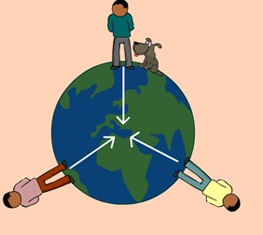
Gravity attracts all objects towards one another.
a)
False
b)
True
c)
It depends
71.
What is gravity?
a)
A force
b)
Energy
c)
A push
d)
All of them
72.
If an object mass =30 Kg on the Earth, what would be it's weight on Earth?
a)
30 N
b)
300 kg
c)
3000N
d)
300 N
73.
If the mass of an object is 1000 kg on Earth, what is it's mass on the moon?
a)
10kg
b)
100kg
c)
1000kg
d)
10,000kg
74.

What is missing?

a)

D

b)

N

c)

W

d)

L

75.
Two factors effecting the magnitude of the force of gravity between 2 objects are...
a)
mass and distance 
b)
mass and matter
c)
distance and weight 
d)
weight and mass
76.
If a bowling ball and a feather were dropped at the same time, in a room with no air resistance (vacuum), which object will hit the ground first?
a)
Bowling Ball
b)
Feather
c)
Both would hit at the same time
d)
Neither one would hit the ground because air is what pushing things down.
77.
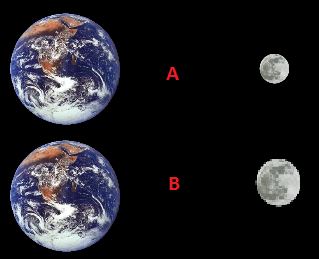
Which system has the greater gravitational attraction between the two objects (if any)?
a)
System A
b)
System B
c)
Same gravitational attraction fro System A and System B
78.
Which model has greater gravitational attraction (if any)
a)
Model A
b)
Model B
c)
Both Model A and Model B (same gravity)
79.

Why do all of the planets orbit the sun rather than Earth?

a)

the sun has more mass

b)

the sun is a star

c)

the Earth is heavier

d)

the sun is in the middle of the milky way

80.

Weight is constant.

a)

True

b)

False

81.

You have a ball with a weight of 76N. What is the mass of the ball?

a)

76N

b)

76kg

c)

7.6kg

d)

7.6N

82.

What do you use to measure the weight of an object?

a)
b)
c)
d)
83.

If the weight of a body on the Earth's surface is 600 N, what would be it's weight in the space?

a)

600 N

b)

less than 600 N

c)

more than 600 N

84.

Who is this?

a)

WG Grace

b)

Mendeleev

c)

Rasputin

d)

Karl Marx

85.

What phrase best describes his approach to the periodic table?

a)

Tickets please!

b)

Mind the gap!

c)

Feet off the seats!

d)

Standing room only!

86.

What do we find in the grey section?

a)

metals

b)

non-metals

c)

solids

d)

liquids

e)

gases

87.

What do we find in the yellow section?

a)

metals

b)

non-metals

c)

solids

d)

liquids

e)

gases

88.

What are the two elements that are liquid at room temperature?

a)

Hg & Br

b)

water & ethanol

c)

Hg & B

d)

Hg & Cl

89.

What do we call elements with both metallic and non-metallic properties?

a)

metallites

b)

metalloids

c)

metallies

d)

metallibits

90.

What does ductile mean?

a)

Will make a ringing sound when struck

b)

Can be bent into shape

c)

Can be drawn into wires

d)

Capable of neutralising an acid

91.

What does malleable mean?

a)

Will make a ringing sound when struck

b)

Can be bent into shape

c)

Can be drawn into wires

d)

Capable of neutralising an acid

92.

What does sonorous mean?

a)

Will make a ringing sound when struck

b)

Can be bent into shape

c)

Can be drawn into wires

d)

Capable of neutralising an acid

93.

What does basic mean?

a)

Will make a ringing sound when struck

b)

Can be bent into shape

c)

Can be drawn into wires

d)

Capable of neutralising an acid

94.

What group is Argon in?

a)

Group 1

b)

Group 7

c)

Group 0

d)

Group 4

95.

What group is Potassium in?

a)

Group 1

b)

Group 7

c)

Group 0

d)

Group 4

96.

What group is Iodine in?

a)

Group 1

b)

Group 7

c)

Group 0

d)

Group 4

97.

What group is Caesium in?

a)

Group 1

b)

Group 7

c)

Group 0

d)

Group 4

98.

What group is Astatine in?

a)

Group 1

b)

Group 7

c)

Group 0

d)

Group 4

99.

What group is Xenon in?

a)

Group 1

b)

Group 7

c)

Group 0

d)

Group 4

100.

My elements become progressively more reactive as you move down the group. Which group am I?

a)

Group 1

b)

Group 7

c)

Group 0

d)

Group 4

101.

My elements become progressively less reactive as you move down the group. Which group am I?

a)

Group 1

b)

Group 7

c)

Group 0

d)

Group 4

102.

My elements are generally unreactive. Which group am I?

a)

Group 1

b)

Group 7

c)

Group 0

d)

Group 4

103.

My elements elements have the lowest boiling points of all the elements. Which group am I?

a)

Group 1

b)

Group 7

c)

Group 0

d)

Group 4

104.

My elements elements have the lowest boiling points of all the elements. Which group am I?

a)

Group 1

b)

Group 7

c)

Group 0

d)

Group 4

105.

Group 1 metals reaction with water and a gas is given off. What is the gas?

a)

Hydrogen

b)

Oxygen

c)

Nitrogen

d)

Carbon dioxide

106.

What is the name of the process by which the body breaks down food?

a)

Composition

b)

Digestion

c)

Deposition

d)

Absorption

107.

What is the muscular organ in the body where chemical and mechanical digestion take place?

a)

Pancreas

b)

Liver

c)

Stomach

d)

Oesophagus

108.

Which organ is a long folded tube inside the body attached to the stomach where nutrients in the food are absorbed?

a)

Large intestine

b)

Small intestine

c)

Oesophagus

d)

Rectum

109.

What is the opening at the end of the digestive tract where faeces exits the body?

a)

Large intestine

b)

Small intestine

c)

Rectum

d)

Anus

110.

What fluid is produced by the salivary glands?

a)

Stomach acid

b)

Sweat

c)

Saliva

d)

Bile

111.

Which word describes the muscular tube that helps move food from the mouth to the stomach?

a)

Oesophagus

b)

Trachea

c)

Small intestine

d)

Gall bladder

112.

Which organ provides additional enzymes to help nutrients get absorbed by the small intestine?

a)

Liver

b)

Kidneys

c)

Gall bladder

d)

Pancreas

113.

Where is food taken into the body?

a)

Oesophagus

b)

Mouth

c)

Rectum

d)

Anus

114.

In which organ is water absorbed?

a)

Large intestine

b)

Small intestine

c)

Rectum

d)

Stomach

115.

Which word describes a substance such as fat, protein, or carbohydrates, that a living thing needs to survive?

a)

Saliva

b)

Carrots

c)

Nutrients

d)

Minerals

116.

Which organ of the digestive system makes chemicals to help the body break down fats and rid itself of harmful substances?

a)

Oesophagus

b)

Mouth

c)

Liver

d)

Stomach

117.

What do we call the series of wave-like muscle contractions that moves food to different organs in the digestive tract?

a)

Adduction

b)

Primary wave

c)

Peristalsis

d)

Inversion

118.

Where is waste stored before it leaves the body?

a)

Rectum

b)

Anus

c)

Sall intestine

d)

Large intestine

119.

Which organ is this?

a)

Pancreas

b)

Oesophagus

c)

Stomach

d)

Liver

120.

Which organ is this?

a)

Oesophagus

b)

Liver

c)

Stomach

d)

Pancreas

121.

Which organ is this?

a)

Stomach

b)

Pancreas

c)

Large intestine

d)

Small intestine

122.

Which organ is this?

a)

Pancreas

b)

Trachea

c)

Liver

d)

Oesophagus

123.

Which organ is this?

a)

Large intestine

b)

Small intestine

c)

Rectum

d)

Oesophagus

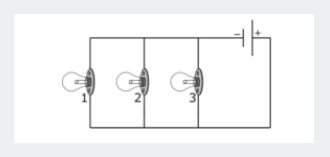
124.
What kind of circuit is this?
a)
series
b)
parallel
125.
If bulb 1 burns out, what will occur?
a)
bulbs 2 and 3 will go out
b)
bulbs 2 and 3 receive more volts
c)
bulbs 2 and 3 will stay lit
d)
nothing will happen
126.
Does this statement best describe a parallel or a series circuit.
 
When more light bulbs are added they all remain bright. 
a)
Parallel circuit
b)
Series circuit
127.
Does this statement best describe a parallel or a series circuit.
 
Different currents flow through each resistor.
a)
Parallel circuit
b)
Series circuit
128.
This is the symbol for a _____?
a)
switch
b)
light 
c)
battery
d)
wires
129.
A small device that stores energy in a chemical form
a)
Complete circuit
b)
Switch
c)
Power source
d)
Battery
130.
The unit for current is the 
a)
Volt
b)
Ohm
c)
Electron
d)
Amp
131.
You measure a potential difference with..
a)
a voltmeter
b)
An Ammeter 
132.
the tendency for a material to oppose the flow of electrons
a)
current
b)
circuit
c)
resistance
d)
difference
133.

What is this component?

a)

LED

b)

Resistor

c)

Diode

d)

LR

134.

What is this component?

a)

Variable Resistor

b)

Thermistor

c)

Fuse

d)

Resistor

135.

This component measures the (a)   in a circuit.

136.

What component measures potential difference?

a)

Ammeter

b)

Voltmeter

c)

LED

d)

LDR

137.

a _______ is designed to melt and break the circuit if the current gets too high.

a)

Fixed resistor

b)

Diode

c)

Cell

d)

Fuse

138.

What is the unit for potential difference?

(a)  

139.

What type of current comes from a battery?

a)

Alternating Current (AC)

b)

Direct Current (DC)

140.

What is the name for something that allows the flow of ELECTRICITY?

a)

Board game

b)

Circuit

c)

Parallel

d)

Lamp

141.

True or False

An Ammeter must be connected in SERIES

a)

TRUE

b)

FALSE

142.

TRUE or FALSE

A VOLTMETER must be connected in PARALLEL

a)

FALSE

b)

TRUE

143.

Which answer best describes the voltage of a battery?

a)

how long it will last for

b)

how strongly it can push the current

c)

how fast the current will be

d)

how large the battery is

144.

What is the ammeter measuring?

a)

the size of the current flowing through the bulb

b)

the brightness of the bulb

c)

the voltage of the battery

d)

the size of the current that the bulb uses up

145.

Which is the correct description of how current flows in a circuit?

a)
b)
c)
d)
146.

Which bulb will be the brightest and why?

a)

A because it is designed for torches

b)

B because it has the most electricity in it

c)

C because it has the largest voltage so it pushes the biggest current

d)

they are all the same because the bulbs are the same

147.

A circuit consists of 2 batteries and a bulb.

The bulb is lit very brightly.


What will happen to the brightness of the bulb and why?

a)

the bulb gets brighter because there is less resistance

b)

the bulb gets dimmer because there is a lower voltage, so it pushes a smaller current round

c)

the bulb gets dimmer because there is less energy than before