
 Worksheets
Grade 11 Biology — Semester Review Worksheet (Transcribed MCQs)
Total questions: 148
Worksheet time: 1hrs 14mins
In aerobic respiration, how does glycolysis proceed?
One glucose molecule splits into two pyruvate and yields 2 ATP and 2 NADPH
One glucose molecule splits into two pyruvate and yields 2 ATP and 2 NADH
One glucose molecule splits into two pyruvate and yields 2 ADP and 2 NADH
One glucose molecule splits into two pyruvate and yields 2 ATP and 1 NADH
After glycolysis, two pyruvate molecules enter the mitochondrial matrix and are converted into which set of products?
3 acetyl‑CoA, 2 NADH, 1 CO2
1 acetyl‑CoA, 2 NADH, 3 CO2
1 acetyl‑CoA, 1 NADH, 1 CO2
2 acetyl‑CoA, 2 NADH, 2 CO2
What are the final products of the Krebs cycle?
2 CO2, 3 NADH, 1 FADH2, 1 ATP
2 CO2, 3 NADH, 1 FADH2, 2 ATP
2 CO2, 2 NADH, 2 FADH2, 1 ATP
2 CO2, 2 NADH, 1 FADH2, 2 ATP
Under anaerobic conditions without oxygen, pyruvate produced by glycolysis is converted to which compounds?
Ethanol or lactose
Ethanol or lactate
Ethanol or glucose
Ethanol or uric acid
Fermentation yields how many ATP?
1
4
2
3
Which stage is common to both aerobic respiration and fermentation?
Glycolysis
Methylation
Krebs cycle
Pyruvate oxidation
Regarding roles of aerobic respiration compared with fermentation in cell activity, which statement is incorrect?
The oxygen requirement of aerobic respiration is lower than that of fermentation
Aerobic respiration products such as CO2 and H2O do not harm the cell
For the same energy yield, aerobic respiration consumes organic matter more efficiently
Aerobic respiration is common in many plant tissues
Which statement is not correct about digestion of food in parts of the human alimentary canal?
The stomach conducts mechanical and chemical digestion
The large intestine performs both mechanical and chemical digestion
The mouth performs mechanical and chemical digestion
The small intestine performs mechanical and chemical digestion
In animals with a gastrovascular cavity, food is digested by which process?
Extracellular digestion (enzymes hydrolyze complex nutrients in the cavity) and intracellular digestion
By muscular squeezing of the cavity wall only, turning complex nutrients into simple ones
Only intracellular enzymatic hydrolysis of complex nutrients into simple nutrients that are absorbed
Extracellular digestion by enzymes acting in the cavity alone
In animals with an alimentary canal, as food passes through the canal it undergoes what changes?
Mechanical changes only, becoming simple nutrients absorbed into blood
Mechanical and chemical changes, becoming simple nutrients absorbed into blood
Chemical changes only, becoming simple nutrients absorbed into blood
Mechanical and chemical changes, becoming simple nutrients absorbed into lymph throughout the body
Absorption of nutrients is best described as which process?
Nutrients moving after chemical digestion from the alimentary canal into blood only
Nutrients moving after digestion from organs of the canal into the circulatory system and then to the heart
Nutrients moving out from digestive organs into the bloodstream and lymphatic system
Nutrients moving after digestion from the canal into lymph only
In animals with an alimentary canal, chemical digestion occurs mainly in which organ?
Esophagus
Stomach
Small intestine
Large intestine
In animals, which sequence lists the stages of nutrition in the correct order?
Food intake → digestion → absorption of nutrients → assimilation of substances
Food intake → digestion → assimilation of substances → absorption of nutrients
Food intake → digestion of substances → absorption of nutrients
Food intake → absorption of nutrients → digestion → assimilation of substances
Regarding digestion in animals with an alimentary canal, which statement is correct?
Food is digested only extracellularly
Food is digested only intracellularly
Food enters the body cavity then is digested only by lysosomal enzymes
Food is digested both extracellularly and intracellularly
In animals with a gastrovascular cavity, digestive enzymes are secreted from where?
Lysosomes on the cavity wall
Muscle cells on the cavity wall
Gland cells on the cavity wall
The cavity lumen
In humans, which order correctly lists the organs that form the alimentary canal?
Mouth → small intestine → stomach → pharynx → large intestine → anus
Mouth → esophagus → stomach → small intestine → large intestine → anus
Mouth → stomach → small intestine → large intestine → anus
Mouth → small intestine → stomach → esophagus → large intestine → anus
In humans, specialization of digestive tract parts serves what purpose?
To achieve the highest efficiency of digestion
To allow sufficient time for cellulose digestion
To minimize energy use
To contain many organisms with many digestive enzymes
Which statement is correct about modes of food capture in animals?
Animals capture food in two ways only: filtering and sucking
Many animals must search for food and migrate to find it
Animals that capture food by sucking have mouthparts suited to filtering and sucking fluids
Animals capture food only according to habitat type
Which statement about stages of food digestion is correct?
In animals without specialized digestive organs, food is digested extracellularly
In animals with an alimentary canal, food is digested only extracellularly
In intracellular digestion, food is digested extracellularly and intracellularly
Intracellular digestion refers to digestion of food outside the body by enzymes acting on skeletons
In intracellular digestion, what happens to small food particles after being engulfed by phagocytic cells?
They are immediately absorbed into body tissues
Food digested extracellularly aids absorption
Lysosomal enzymes of the phagocytic cells break them down into simple nutrients usable by the body
They are expelled from the cell to be digested in the cavity
The diagram shows stages of food digestion in the gastrovascular cavity of Hydra. Match each numbered label (1–5) with the corresponding description a–e. What corresponds to label 1?
Mouth
Food
Cells on the cavity wall secreting digestive enzymes
Partly digested food continues to be digested intracellularly
Gastrovascular cavity
The diagram shows stages of food digestion in the gastrovascular cavity of Hydra. Match each numbered label (1–5) with the corresponding description a–e. What corresponds to label 2?
Mouth
Food
Cells on the cavity wall secreting digestive enzymes
Partly digested food continues to be digested intracellularly
Gastrovascular cavity
The diagram shows stages of food digestion in the gastrovascular cavity of Hydra. Match each numbered label (1–5) with the corresponding description a–e. What corresponds to label 3?
Mouth
Food
Cells on the cavity wall secreting digestive enzymes
Partly digested food continues to be digested intracellularly
Gastrovascular cavity
The diagram shows stages of food digestion in the gastrovascular cavity of Hydra. Match each numbered label (1–5) with the corresponding description a–e. What corresponds to label 4?
Mouth
Food
Cells on the cavity wall secreting digestive enzymes
Partly digested food continues to be digested intracellularly
Gastrovascular cavity
The diagram shows stages of food digestion in the gastrovascular cavity of Hydra. Match each numbered label (1–5) with the corresponding description a–e. What corresponds to label 5?
Mouth
Food
Cells on the cavity wall secreting digestive enzymes
Partly digested food continues to be digested intracellularly
Gastrovascular cavity
Match organs of the human alimentary canal (column A) to their functions (column B). What is the function of the mouth?
Moves food along the canal and absorbs nutrients
Eliminates feces
Stores water and some mineral salts and forms feces
Grinds and mixes food with saliva; tongue mixes food and teeth are wetted by saliva
Match organs of the human alimentary canal (column A) to their functions (column B). What is the function of the esophagus?
Moves food from the mouth down to the stomach
Eliminates feces
Stores water and some mineral salts and forms feces
Grinds and mixes food with saliva; tongue mixes food and teeth are wetted by saliva
Match organs of the human alimentary canal (column A) to their functions (column B). What is the function of the stomach?
Moves food along the canal and absorbs nutrients
Eliminates feces
Stores water and some mineral salts and forms feces
Contracts to grind and churn food with gastric juice
Match organs of the human alimentary canal (column A) to their functions (column B). What is the function of the small intestine?
Continuously moves food along, absorbs nutrients
Eliminates feces
Stores water and some mineral salts and forms feces
Moves food from the mouth down to the stomach
Match organs of the human alimentary canal (column A) to their functions (column B). What is the function of the large intestine?
Continuously moves food along, absorbs nutrients
Eliminates feces
Absorbs water and some mineral salts and forms feces
Moves food from the mouth down to the stomach
Match organs of the human alimentary canal (column A) to their functions (column B). What is the function of the anus?
Continuously moves food along, absorbs nutrients
Eliminates feces
Stores water and some mineral salts and forms feces
Moves food from the mouth down to the stomach
Respiration ensures animals obtain which gases?
O2 only
CO2 only
O2 and CO2
O2 intake and CO2 release
Crocodiles exchange gases with the environment by which structure?
Body surface
Tracheal (air tube) system
Gills
Lungs
Animals such as cnidarians, roundworms, and flatworms carry out gas exchange by which method?
Across the body surface
Via tracheal tubes
Using gills
Using lungs
Grasshoppers exchange gases by which method?
Across the body surface
Via tracheal tubes
Using gills
Using lungs
Which animal exchanges gases with the environment through its skin?
Sea turtle
Lion
Field mouse
Frog
Amphibians most commonly exchange gases by which method?
Across the body surface
Via tracheal tubes
Using gills
Using lungs
Mollusks exchange gases by which method?
Across the body surface
Via tracheal tubes
Using gills
Using lungs
Which animal carries out gas exchange using gills?
Wildcat
Shrimp
Tree sparrow
Frog
When a fish exhales, which sequence is correct?
Mouth closes; operculum lifts; operculum opens
Mouth closes; operculum lifts; operculum closes
Mouth opens; operculum lowers; operculum opens
Mouth opens; operculum lowers; operculum closes
In animals, what is the main role of respiration?
Taking in O2 from the environment to supply cellular respiration, producing energy for life activities
Taking in CO2 from the environment to supply cellular respiration, producing energy for life activities
Excreting CO2 generated by external chemical reactions to balance the external environment
Taking in O2 and releasing CO2 to help balance the external environment
In animals, the structure or organ that performs exchange of O2 and CO2 with the environment is called what?
Gas-exchange organ
Respiratory surface
Gas-exchange pressure
Gas-exchange volume
In insects, gas exchange belongs to which type?
Exchange of gases through gills
Exchange of gases through the tracheal system
Exchange of gases through the skin
Exchange of gases through lungs
Which statement correctly describes the respiratory system of insects?
The largest air tube is the trachea, forming a large respiratory surface
There are many ducts; movement of air is by diffusion only, not through spiracles
The respiratory tubes open at spiracles and can be actively ventilated
Air flows into a closed cavity so gases cannot exit through spiracles into tracheae
In fish, which structure carries out gas exchange?
Gills receive blood from the heart, including filament and lamella
Each gill arch bears two hemibranchs; each hemibranch has many filaments with lamellae
The gill consists of two arches, each arch has four filaments, each filament has many lamellae
The branchial system on the operculum exchanges O2 and CO2 with water via the opercular cavity
Thanks to the activity of respiratory muscles that change the volume of the mouth and opercular cavities, fish achieve what kind of water flow across the gills?
Water rich in O2 moves along the gills in a single direction simultaneously with blood flow, not interrupted
Water rich in O2 moves along the gills in one continuous direction, not interrupted
Water rich in CO2 moves along the gills in one direction simultaneously with blood flow, not interrupted
Water rich in CO2 moves along the gills in a continuous single direction, not interrupted
Why can amphibians both breathe in water and live on land?
Because they have lungs, so they can live in water and also jump on land
Because they have skin with many glands, so they can breathe in water and hop on land
Because they have both lungs and moist skin capable of respiration
Because they have gills, so they can breathe in water and crawl on land
In humans, the site with the largest gas-exchange surface area is which part of the respiratory system?
Alveoli create hundreds of millions of alveolar sacs
The bronchial tree creates thousands of bronchioles
The lungs have many lobes and fissures
The respiratory system has many branches and divisions
Which muscle activity commonly triggers a normal inspiration in humans?
Intercostal muscles and diaphragm
Abdominal wall and shoulders
Neck muscles and scapular muscles
Intercostal muscles and back
In mammals, which components form the circulatory system?
Circulatory fluid, heart and blood vessels
Circulatory fluid, heart and lymph
Heart, blood and the hematopoietic system
Blood, lymph and the immune system
Which feature is not characteristic of the closed circulatory system?
The heart pumps blood into arteries under high pressure
Blood flows continuously in a closed vascular network; arteries → capillaries → veins → heart
Blood flows continuously in a closed vascular network; heart → arteries → capillaries → veins → heart
Blood moves directly from the heart to tissues and returns to the heart without vessels
In vertebrates with double circulation, which animals possess this type of circulation?
Fish, lampreys, hagfish
Frog, lizard, crocodile
Birds, cats, cows, rabbits
Clam, snail, crab
What is the key structural difference between human circulation and fish circulation?
Humans have oxygenated blood flowing through the gills
Humans have two circuits of circulation while fish have only one circuit
Humans have a closed system while fish have an open system
Humans have no valves in the heart while fish do
Which statement about heart chambers is incorrect?
The atrium receives blood returning to the heart
The ventricle connects to arteries
Between atria and ventricles as well as at the bases of large arteries are valves
The heart wall is built from cardiac muscle cells
In the human heart, the conduction pathway operates in which order?
Sinoatrial node → atrioventricular node → bundle of His → Purkinje network → ventricles and ventricular myocardium
Atrioventricular node → sinoatrial node → bundle of His → Purkinje network → ventricles and ventricular myocardium
Sinoatrial node → bundle of His → atrioventricular node → Purkinje network → ventricles and ventricular myocardium
Sinoatrial node → Purkinje network → atrioventricular node → bundle of His
For an average adult, one cardiac cycle lasts about 0.8 s. What is the approximate duration of atrial systole, ventricular systole, and total diastole?
Atrial systole 0.3 s; ventricular systole 0.1 s; total diastole 0.4 s
Atrial systole 0.1 s; ventricular systole 0.3 s; total diastole 0.4 s
Atrial systole 0.1 s; ventricular systole 0.4 s; total diastole 0.3 s
Atrial systole 0.4 s; ventricular systole 0.1 s; total diastole 0.3 s
Which statement about blood pressure is correct?
Blood pressure is the speed of blood flow measured per minute
Blood pressure is the force of the heart contracting against arteries
Blood pressure is highest in the aorta and large arteries, decreasing across smaller arteries and capillaries
Blood pressure is lowest in the aorta and higher in capillaries
Which feature of capillaries best suits their function in exchange with tissues?
Few capillaries, so diffusion is faster
Very numerous capillaries creating a large surface area for exchange
Thick, multilayered walls to prevent leakage
Very fast blood flow to speed exchange
In humans, circulatory regulation occurs mainly through which mechanism?
Nervous and endocrine regulation
Endocrine and cellular regulation
Nervous regulation
Body fluids regulation
In humans, which organ secretes adrenaline and noradrenaline into the blood to help regulate heart activity?
Liver
Kidney
Lung
Pancreas
Which component belongs to the circulatory system of humans?
Lung
Heart
Liver
Kidney
In open circulation, blood flows in arteries under what condition compared with closed circulation?
High pressure, fast flow
Low pressure, slow flow
High pressure, slow flow
Low pressure, fast flow
In a closed circulatory system, the path of blood flow is which of the following sequences?
Heart → arteries → capillaries → veins → heart
Veins → capillaries → arteries → heart
Arteries → veins → capillaries → heart
Capillaries → arteries → veins → heart
Which animals have double circulation?
Worms, snails, grasshoppers
Birds, cats, cows
Insects, fish, worms
Fish, frogs, reptiles
In organisms with closed circulation, substances are exchanged with tissues through which vessels?
Arteries
Capillaries
Veins
Cardiac chambers
Which sequence correctly describes the cardiac conduction pathway?
Sinoatrial node → atrioventricular node → bundle of His → Purkinje network
Atrioventricular node → sinoatrial node → bundle of His → Purkinje network
Sinoatrial node → Purkinje network → atrioventricular node → bundle of His
Bundle of His → sinoatrial node → Purkinje network → atrioventricular node
During exercise, how does blood pressure change in the vascular system?
Highest in capillaries, lowest in veins
Highest in arteries, lowest in capillaries
Highest in arteries, lowest in veins
Highest in veins, lowest in arteries
When discussing the direction of blood flow in a closed circulatory system of animals under normal conditions, which statement is incorrect?
From veins through capillaries
From arteries through capillaries
From the atrium to the ventricle
From the ventricle to the atrium
When discussing blood pressure, which statement is correct?
Blood flow rate is affected by pressure and the action on the vessel wall
The circulatory system of insects consists of two main parts: heart and vessels
Venous blood pressure is lowest
Negative pressure is well matched to the lowest value
The circulatory fluid of animals consists of blood or a mixture of blood and tissue fluid.
True
False
In open circulatory systems, which statement is correct?
Blood in arteries flows at low pressure and slow speed
Groups of animals that are very active usually have open circulation
Open circulation does not directly participate in transporting O2 and CO2
Open circulation does not directly contact body cells
Regarding the human circulatory system, how many statements are correct? I. The human circulatory system has one large circulation. II. Blood in arteries is dark and rich in CO2. III. Veins have the lowest total pressure. IV. The highest flow rate is in arteries.
2
1
3
4
Compared to the respiratory system, which statement about the circulatory system is incorrect?
Blood flows in arteries at high pressure
Blood directly contacts tissue cells
High flow rate enables long-distance transport
Capillaries are thin with one cell layer, allowing efficient exchange
Innate immunity acquired at birth is called what?
Adaptive immunity
Cell-mediated immunity
Humoral immunity
Non-specific immunity
When pathogens invade the body, the general response is called what?
Adaptive immunity
Natural immunity
Innate immunity
Non-specific immunity
Barriers that protect the digestive system include which component?
Acidic mucus in the stomach; low pH
Lysosomes in saliva and pepsin enzymes in the stomach
Drinking water helps wash away pathogens
Beneficial bacteria always compete with harmful bacteria
Barriers that protect the respiratory system include which component?
Acidic mucus; low pH in airways
Lysosomes in saliva and pepsin enzymes in the stomach
Body heat in sweat; fungus, viruses and bacteria develop
Beneficial bacteria always compete with harmful bacteria
What causes the body to produce an immune response to an antigen?
Toxin
Antibody
Antigen
Hormone
Proteins on foreign cells that trigger the immune response are called what?
Antigen
Antibody
Antigenic determinant
Allergen
B lymphocytes secrete specific antibodies against invading bacteria. This is which type of immunity?
Adaptive immunity
Cell-mediated immunity
Humoral immunity
Natural immunity
Which statement about cell-mediated immunity is incorrect?
Plays a key role in T cell responses
T cells produce proteins that destroy foreign antigens
Important in viral diseases; T cells play an important role
Occurs in all organisms and even plants
Which statement about non-specific immunity is incorrect?
Natural barriers of skin and mucosa
Secretions like mucus, tears, saliva
Preventive methods treat diseases for the body
Do not depend on the number of pathogens
Which defense is considered the third line of defense in humans and animals?
Natural defenses of skin and mucosa
Phagocytic white blood cells and complement proteins
Specific immune response
Non-specific immune response
People with weakened immunity easily acquire opportunistic infections because
They cannot produce antibodies to fight pathogens
Their phagocytes are reduced; they cannot trap bacteria
White blood cells are destroyed, reducing non-specific immunity
T helper cells are destroyed, reducing both cell-mediated and humoral immunity
Why must influenza vaccines be produced and updated every year?
Virus resistance always changes so T cells become cytotoxic and secrete toxic substances
Viral antigens frequently mutate causing T cytotoxic cells to lose function
Viral antigens frequently mutate so B cells cannot recognize viral strains
Viral antigens frequently mutate so both cytotoxic T cells and B cells cannot recognize different influenza strains
Vaccination helps prevent diseases caused by viruses and bacteria because
It creates primary immune responses so, upon re-exposure to the antigen, memory B cells trigger a secondary response
It creates primary cell-mediated responses so, upon re-exposure, the antigen triggers T memory cells
It creates primary humoral responses so, upon re-exposure, an adaptive cell-mediated response is formed
It creates primary cell-mediated responses so, upon re-exposure, an adaptive humoral response is formed
In humans, which process removes metabolic wastes that the body cannot reuse?
Digestion
Circulation
Excretion
Cellular respiration
Which organ is the main site for forming urine?
Intestine
Skin
Lungs
Kidneys
Which organ helps remove carbon dioxide from the body?
Intestine
Skin
Lungs
Kidneys
Which organ helps remove sweat from the body?
Intestine
Circulatory system
Skin
Lungs
Which main product is expelled from the lungs?
Oxygen
Urea
Bilirubin
Carbon dioxide
Blood is considered an internal environment because it is made from plasma, blood and tissue fluid.
True
False
Which first-line respiratory defense acts when dust or droplets enter the respiratory tract?
The immune system immediately produces lysosomal enzymes
Mucus in the airway traps particles; cilia sweep them to the pharynx and stomach
Airway and lung pH is low, inhibiting pathogens
Nasal hairs and tight epithelial junctions in the nasal cavity prevent entry
Which is not a non-specific immune response?
Phagocytosis
Fever
Inflammation
Formation of antibodies
Which statement is correct about the function of antibodies?
Cytotoxic T cells circulate and secrete proteins that kill antigens
They recognize signals from bacteria; are living substances
They weaken phagocyte activity
They inhibit bacteria and viruses from forming toxins
Which statement best distinguishes non-specific immunity from specific immunity?
Adaptive immunity acts quickly like bone marrow; non-specific has no effect
Specific immunity acts slower initially but gives a stronger response; non-specific gives immediate response
Specific immunity is effective against diverse pathogens whereas non-specific is not
Specific immunity happens within each individual’s lifetime, non-specific exists from birth
T helper cells become active when
T helper cells need cytokines from interactions with B cells
T helper cells need cytokines from interactions with antigen-presenting cells
T helper cells need cytokines from interactions with macrophages
T helper cells need cytokines from interactions with cytotoxic T cells
Memory B cells allow the body to produce faster, stronger immune responses during re-exposure, making disease prevention more effective.
True
False
Which statement about allergies is incorrect?
Occurs when the immune response is too strong to harmless antigens
Symptoms are mainly due to histamine
All allergic responses are anaphylactic shock
Degree of allergic reaction depends on the dose of allergen
Which process describes cancer metastasis?
Cells leave the original site and are removed by other body organs
Cells detach and are carried via blood or lymph to other sites forming malignant tumors
Cells detach and destroy other pathogens at the site
Cells move to other organs and enhance immune capacity of that organ
People living with HIV/AIDS often get tuberculosis because
They cannot produce antibodies against Mycobacterium tuberculosis
Phagocytes are reduced; they cannot trap bacteria
White blood cells are destroyed, reducing non-specific immunity
T helper cells are destroyed, reducing cell-mediated and humoral immunity
Homeostasis is the maintenance of stability of the internal environment of the
cell
tissue
organism
organ
In describing homeostasis, the internal environment is best characterized as
static, with indicators fixed at one exact value
dynamic, with indicators tending to change and oscillate around a set point
static, with indicators tending to change and oscillate around many values
dynamic, with indicators tending to change and oscillate around many values
Which organ below does not participate in maintaining homeostasis?
kidney
lung
liver
eye
Which component below is an effector in homeostatic regulation?
nervous system and endocrine glands
organs such as kidneys, liver, and blood vessels
receptors or sense organs
muscles and glands
The pancreas secretes insulin and glucagon to contribute to which regulatory mechanism?
regulating water reabsorption in the kidney
maintaining normal blood glucose concentration
regulating Na+ reabsorption in the kidney
regulating blood pH
For the mechanism maintaining homeostasis, which order is correct for the negative-feedback loop?
receptor → control center → effector → receptor
effector → control center → receptor → effector
control center → receptor → effector → control center
receptor → effector → control center → receptor
When body water decreases, which phenomenon will occur?
osmotic pressure increases and blood pressure decreases
osmotic pressure increases and blood pressure increases
osmotic pressure decreases and blood pressure increases
osmotic pressure decreases and blood pressure decreases
How many of the following conditions are diseases of the urinary system in humans: (I) nephritis, (II) fatty degeneration of the kidney, (III) renal failure, (IV) kidney stones, (V) essential hypertension?
2
3
4
5
In homeostatic regulation, negative feedback occurs when
the internal environment is stabilized after the controller acts, sending a reversed influence to the receptor
the internal environment is stabilized before the controller acts, sending a reversed influence to the receptor
the effector changes conditions opposite to those before control, sending reversed influence to the receptor
the internal environment returns to normal before control, sending reversed influence to the receptor
We feel thirsty when
blood osmotic pressure increases
blood osmotic pressure decreases
blood pH decreases
blood glucose concentration decreases
Insulin lowers blood glucose by
increasing glucose excretion in urine
storing glucose as lipid to prevent diffusion out of cells
enhancing glucose release from cells
enhancing glucose transport into cells
The bicarbonate buffer system NaHCO3/Na2CO3 has the role of
maintaining body temperature homeostasis
maintaining blood glucose homeostasis
maintaining blood pH homeostasis
maintaining blood osmotic pressure homeostasis
If toxic substances and excess wastes accumulate in the body, they will
disturb homeostasis
damage cells and organs
lead to diseases
all of the above
Each nephron is composed of
renal corpuscle (glomerulus) and tubule
cortex and medulla
renal pedicle and Bowman’s capsule
glomerulus and renal pelvis
Which statement below corresponds to the filtration stage in the formation of urine in a nephron?
Water, nutrients, and necessary ions in the filtrate are reabsorbed by tubular cells back to the blood
Blood pressure pushes water and solutes from blood through filtration slits into Bowman’s capsule, creating glomerular filtrate
Toxins and some ions remaining are actively secreted by tubular cells into the filtrate
Urine is concentrated by reabsorbing water and solutes in the renal pelvis
On average, how many liters of primary filtrate are formed per day?
1700 – 1800 L
170 – 180 L
15 – 20 L
1.5 – 2 L
A homeostatic control system contains which components?
effector and receptor only
receptor, effector, and external stimulus
receptor, control center, and effector
control center and effector only
Which statement about a homeostatic control system is correct?
The receptor receives a stimulus from the external environment of the body
The receptor converts the signal that causes the response at the effector
The control center transmits signals as neural impulses or hormones for the effector to produce a response
If a component of the homeostatic system malfunctions, normal activity will still maintain homeostasis
The liver’s role in homeostasis is to
regulate concentrations of solutes such as proteins and glucose in plasma
regulate water and salt balance via filtration pressure of body fluids
maintain blood pH by secreting H+ into filtrate and reabsorbing HCO3− into blood
regulate blood gases by adjusting O2 and CO2
Which structure carries urine from the renal pelvis to the urinary bladder?
ureter
urethra
collecting duct
glomerulus
Kidney functions include
filtering blood and reabsorbing nutrients
regulating the amount of water and salts reabsorbed
removing toxic substances and excess wastes from the body
all of the above
In a homeostatic mechanism, which is the effector component?
receptors or sense organs
central nervous system
endocrine glands
organs such as kidneys, liver, lungs, heart, and blood vessels
When blood glucose increases, the regulatory order proceeds as
pancreas → insulin → liver and body cells → blood glucose decreases
liver → insulin → pancreas → body cells → blood glucose decreases
pancreas → body cells → insulin → blood glucose decreases
insulin → liver and body cells → pancreas → blood glucose decreases
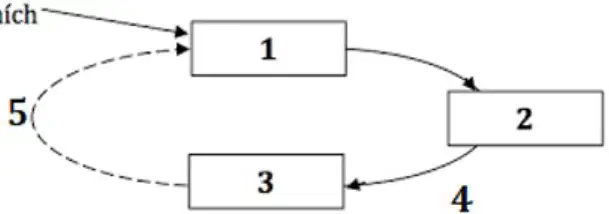
The diagram shows a generic homeostatic regulation pathway with labeled boxes [1]–[5] from stimulus to response. Which statement about this diagram is false?
Regulation is carried out by the central nervous system or endocrine glands
[1] is the control center, [2] is the receptor, and [3] is the effector
Signals are transmitted from [2] to [3] as neural impulses or hormones
[5] is the feedback that reverses the influence back to the receptor
Select all correct statements describing the inhalation and exhalation movements in fish. 1) During exhalation the mouth closes, the buccal floor rises, and the operculum opens. 2) During exhalation the mouth closes, the buccal floor rises, and the operculum closes. 3) During inhalation the mouth closes, the buccal floor lowers, and the operculum opens. 4) During inhalation the mouth opens, the buccal floor lowers, and the operculum closes.
During exhalation the mouth closes, the buccal floor rises, and the operculum opens.
During exhalation the mouth closes, the buccal floor rises, and the operculum closes.
During inhalation the mouth closes, the buccal floor lowers, and the operculum opens.
During inhalation the mouth opens, the buccal floor lowers, and the operculum closes.
Select all correct statements about gas exchange in insects compared with birds. 1) Insects lack capillary networks around their tracheae while birds have capillary networks around their air tubes. 2) Respiratory movements in insects and birds both rely on expansion and contraction of respiratory muscles to increase air volume. 3) In insects, cellular gas exchange occurs directly with the environment without involvement of a circulatory system, making exchange less efficient. 4) Insects lack respiratory pigments, whereas birds have respiratory pigments in the circulatory fluid.
Insects lack capillary networks around their tracheae while birds have capillary networks around their air tubes.
Respiratory movements in insects and birds both rely on expansion and contraction of respiratory muscles to increase air volume.
In insects, cellular gas exchange occurs directly with the environment without involvement of a circulatory system, making exchange less efficient.
Insects lack respiratory pigments, whereas birds have respiratory pigments in the circulatory fluid.
Given the animal groups: amphibians, reptiles, insects, fishes, earthworms, birds, and mammals, how many groups have a double circulatory system?
2
3
4
5
Given the animal groups: roundworms, flatworms, insects, amphibians, reptiles, crustaceans, and cnidarians, how many groups have an open circulatory system?
1
2
3
4
Given the animal groups: amphibians, reptiles, insects, fishes, earthworms, birds, and mammals, how many groups have a single circulatory system?
2
3
4
5
Given the animal groups: roundworms, flatworms, insects, amphibians, reptiles, fishes, and cnidarians, how many groups have a closed circulatory system?
3
4
5
6
Select all correct statements about the activity of the heart. 1) In most animals the heart has four chambers: two ventricles and two atria. 2) A cardiac cycle has three phases: atrial systole, ventricular systole, and joint diastole. 3) The heart works throughout life without fatigue because it has an intrinsic conduction system that generates rhythmic impulses. 4) Each cardiac cycle includes a joint diastole phase, allowing the heart to work for life without tiring.
In most animals the heart has four chambers: two ventricles and two atria.
A cardiac cycle has three phases: atrial systole, ventricular systole, and joint diastole.
The heart works throughout life without fatigue because it has an intrinsic conduction system that generates rhythmic impulses.
Each cardiac cycle includes a joint diastole phase, allowing the heart to work for life without tiring.
Among the following causes: viruses, bacteria, genetic disorders, age-related degeneration, and fungi, how many are internal causes of disease in humans and animals?
1
2
3
4
Among the following causes: biological agents, chemical agents, physical agents, genetic disorders, age-related degeneration, dietary regime, and environmental pollution, how many are external causes of disease in humans and animals?
3
4
5
6
Select all correct statements about the functions of nonspecific immunity. (1) It blocks invasion by disease-causing agents. (2) It recognizes and secretes proteins that kill diseased cells. (3) It specifically recognizes, eliminates, and remembers particular pathogens. (4) It performs phagocytosis and breaks down pathogens.
It blocks invasion by disease-causing agents.
It recognizes and secretes proteins that kill diseased cells.
It specifically recognizes, eliminates, and remembers particular pathogens.
It performs phagocytosis and breaks down pathogens.
Select all correct statements about homeostasis. 1) Homeostasis maintains stability of the internal environment of the body. 2) Homeostasis is a dynamic equilibrium. 3) The homeostatic state is maintained by regulatory systems of homeostasis. 4) In homeostasis, indicators such as blood pressure, body temperature, and blood glucose remain fixed constants.
Homeostasis maintains stability of the internal environment of the body.
Homeostasis is a dynamic equilibrium.
The homeostatic state is maintained by regulatory systems of homeostasis.
In homeostasis, indicators such as blood pressure, body temperature, and blood glucose remain fixed constants.
Given the organs: skin, liver, heart, kidneys, and lungs, how many are the main excretory organs in humans?
2
3
4
5
Approximately how many liters of glomerular filtrate (primary urine) are formed in the human body per day?
120 liters
150 liters
180 liters
200 liters
Which statement best defines photosynthesis?
The conversion of chemical energy in glucose into ATP by mitochondria.
The process by which green plants use light energy to synthesize organic matter from carbon dioxide and water, releasing oxygen.
The uptake of nutrients from soil through roots.
The breakdown of organic matter in the presence of oxygen.
Which balanced equation represents the overall process of photosynthesis?
6O2+C6H12O6→6CO2+6H2O
6CO2+6H2O→C6H12O6+6O2
C6H12O6→2C2H5OH+2CO2
NADPH+ATP→glucose
Which statement best describes the role of photosynthesis in ecosystems?
It converts light energy into chemical energy, produces organic matter, and releases oxygen that supports aerobic life.
It only provides minerals to plants through the soil.
It removes carbon dioxide without affecting oxygen levels.
It is responsible solely for plant respiration at night.
Which statement best describes the role of pigment systems in photosynthesis?
Pigments block light from reaching chloroplasts to prevent damage.
Pigments absorb light of different wavelengths and transfer energy to reaction centers for photosynthesis.
Pigments store glucose produced during photosynthesis.
Pigments catalyze the Calvin cycle reactions directly.
Which dietary practice best ensures adequate nutrition for the body?
Eating primarily one favorite food group to simplify meals.
Maintaining a balanced, varied diet with limited sugar and fats while including vegetables, fruits, and whole grains.
Skipping breakfast to reduce daily calories.
Eliminating all carbohydrates from the diet.
Why should a person diversify foods in their diet to ensure adequate nutrition?
Different foods supply different essential nutrients, so variety helps meet all requirements.
Diversity increases taste only, not nutrient intake.
A varied diet reduces water needs.
Eating many different foods always lowers calorie intake.
Select all effective strategies to prevent obesity and malnutrition.
Combine healthy eating with regular physical activity.
Limit sugary, fatty, and ultra-processed foods while increasing vegetables, fruits, and whole grains.
Avoid all protein sources to reduce calories.
Maintain consistent meal patterns and portion control.
Which statement best explains the phenomenon of allergy to stimuli or foods?
It is caused by a deficiency of red blood cells.
It is an overreaction of the immune system to harmless substances, leading to mediator release such as histamine and symptoms like itching or swelling.
It results from normal digestion of proteins and fats.
It is due to the body’s inability to produce insulin.
Why is an antibiotic skin test performed before injection in some patients?
To measure the antibiotic’s effectiveness immediately.
To detect hypersensitivity to the antibiotic and reduce the risk of anaphylactic reactions.
To check blood glucose before treatment.
To improve absorption of the drug.
What is the main objective of a practical survey on vaccination implementation in schools?
To punish students who skip classes.
To assess vaccination coverage and compliance, identifying gaps in disease prevention.
To advertise pharmaceutical products to students.
To replace all health classes with surveys.

