wayground logo

Free Printable Worksheets

Font size

S
M
L
XL
Worksheets

Earth Science - CSA

Total questions: 60

Worksheet time: 46mins

Name
Class
Date
1.
Which type of rock results from melting and cooling of magma?
a)
Igneous
b)
Metamorphic
c)
Sedimentary
d)
Extrusive
2.
Which type of rock forms from extreme heat and pressure?
a)
Igneous
b)
Sedimentary
c)
Organic
d)
Metamorphic
3.
A metamorphic rock changes into an igneous rock by what two processes?
a)
Melting and cooling
b)
Extreme heat and pressure
c)
Compaction and cementation
d)
Weathering and erosion
4.
Wind, water, and ice breaking down rock is called
a)
Erosion
b)
Deposition
c)
Compaction
d)
Weathering
5.
When sediments are pressed together tightly, this is called ____________.
a)
Compaction
b)
Cementation
c)
Weathering
d)
Erosion
6.
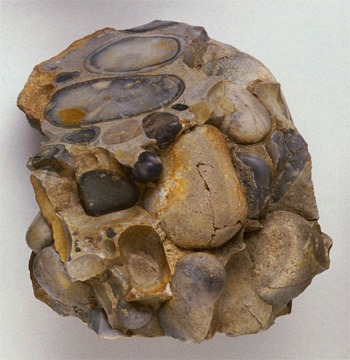
This rock was formed by smaller pieces of rock that settled at the bottom of a lake millions of years ago. What type of rock is this?
a)
Sedimentary
b)
Igneous
c)
Metamorphic
7.
What are the 3 major types of rocks?
a)
Igneous, Metamorphic, Sedimentary
b)
Metamorphic, Igneous, Cementation
c)
Brown, Red, Gray
d)
Streak, Hardness, Breakage
8.
This rock started as lava that cooled and then was heated and put under pressure over time. What type of rock is this?
a)
Sedimentar
b)
Igneous
c)
Metamorphic
9.
Fossils are often found in ____________ because it is formed from the remains of once living things.
a)
metamorphic
b)
magma
c)
igneous
d)
sedimentary
10.
Each rock type can follow only one pathway of the rock cycle.
a)
True
b)
False
11.
The process when rocks break into smaller pieces due to exposure to natural elements is called
a)
erosion
b)
weathering
c)
sediments
12.
This rock was another type of rock that was heated and compressed over time. What type of rock is this?
a)
Sedimentary
b)
Igneous
c)
Metamorphic
13.
This rock was formed by smaller pieces of rock that settled at the bottom of a lake millions of years ago. What type of rock is this?
a)
Sedimentary
b)
Igneous
c)
Metamorphic
14.
What is small pieces of rock material?
a)
grain
b)
lava 
c)
magma
d)
sediment
15.
What is molten or liquid rock material that is deep beneath the Earth's surface?
a)
grain
b)
lava
c)
magma
d)
rock
16.
The process by which sediment is moved from one place to another.   Can be caused by water, wind, ice, and gravity.
a)
Rock Cycle
b)
Uplift
c)
Deposition
d)
Erosion
17.

What type of resource is wood?

a)

Renewable

b)

Nonrenewable

c)

None

d)

lumber

18.

Which of the following is coal used for?

a)

Gasoline

b)

Electricity generation

c)

Fertilizer

19.

What can we do to prevent water from running out?

a)

Drink and misuse all the water

b)

Use water wisely and stop misusing it.

c)

Nothing

20.

What does renewable mean?

a)

Cannot be replaced once used

b)

Can be replaced again

21.

Which resources are renewable?

a)

Solar, Wind, Hydroelectric

b)

Coal, Wind, Hydroelectric

c)

Solar, Geothermal, Nuclear

d)

Coal, Wind, Nuclear

22.

Wind Energy is described as:

a)

photovoltaic cells turning sunlight into electricity

b)

the act of taking the kinetic energy of wind to make electricity

c)

the use of moving water to make electricity

d)

the use of heat from inside the earth to make steam to generate electricity

e)

the use of materials that came from living things like wood which are burned to make electricity

23.

Hydroelectric Energy is described as:

a)

photovoltaic cells turning sunlight into electricity

b)

the act of taking the kinetic energy of wind to make electricity

c)

the use of moving water to make electricity

d)

the use of heat from inside the earth to make steam to generate electricity

e)

the use of materials that came from living things like wood which are burned to make electricity

24.

Solar Energy is described as:

a)

photovoltaic cells turning sunlight into electricity

b)

the act of taking the kinetic energy of wind to make electricity

c)

the use of moving water to make electricity

d)

the use of heat from inside the earth to make steam to generate electricity

e)

the use of materials that came from living things like wood which are burned to make electricity

25.

Which renewable resource is presented in the image provided?

a)

Solar

b)

Wind

c)

Hydroelectric

d)

Biomass

e)

Geothermal

26.

Which of the following are Non-Renewable energy resources? (Check all that apply.)

a)

coal

b)

wind

c)

solar

d)

nuclear

27.

Renewable or Nonrenewable: Natural Gas

a)

nonrenewable

b)

renewable

28.

Renewable or Nonrenewable: Oil

a)

Nonrenewable

b)

Renewable

29.

Renewable or Nonrenewable: Sunlight

a)

Renewable

b)

Nonrenewable

30.

Renewable or Nonrenewable: Water

a)

Nonrenewable

b)

Renewable

31.

Renewable or Nonrenewable: Wind

a)

Renewable

b)

Nonrenewable

32.

Which of these is non renewable

a)

natural gas

b)

water in a dam

c)

solar power

d)

wind energy

33.

__________ is an energy resource that WILL run out in the next several hundred years.

a)

Renewable Energy Resource

b)

Non-renewable Energy Resource

34.

Which of the following is a renewable resource?

a)

Oil

b)

Solar

c)

Coal

d)

Natural Gas

35.

Coal is a __________ energy resource.

a)

Renewable

b)

Non-renewable

36.

Oil is a __________ energy resource.

a)

Renewable

b)

Non-renewable

37.

Nonrenewable resources are replaced quickly.

a)

True

b)

False

38.

A renewable source of energy is____________

a)

coal

b)

natural gas

c)

solar

d)

oil

39.
Why is solar energy considered renewable energy?
a)
It's cheaper than fossil fuels
b)
The sun's energy would not run out for billions of years
c)
Solar energy recharges batteries
d)
All of them
40.
Water is renewable because it.......
a)
can be frozen
b)
important to all life
c)
can be replaced constantly
d)
can evaporate
41.

The hardened remains of a living thing that died long ago.

a)

fossil

b)

extinct

c)

endangered

d)

minerals

42.

Which type of rock are most fossils found?

a)

sedimentary rock

b)

metamorphic rock

c)

igneous rock

d)

fossils

43.

This can show how organisms and environment have changed over time.

a)

Tree sap

b)

Carbon film

c)

Fossil Record

d)

Replacement fossil

44.

Which rock layer most likely contains fossils of the oldest organisms?

a)

1

b)

2

c)

3

d)

4

45.

According to the law of superposition, the youngest fossils are found...

a)

Just under the top of the rock layers

b)

Near the bottom of the rock layers

c)

In the middle of the rock layers

46.
By determining the age of fossils, scientists can reconstruct the history of life on Earth
a)
True
b)
False
47.
In layers of sedimentary rock, the _________ layer is usually at the bottom. Each higher layer is _________ than the layers below it.
a)
oldest, younger
b)
youngest, older
c)
youngest, younger
d)
oldest, older
48.
Which layer formed first?
a)
Rock Layer W
b)
Rock Layer X
c)
Rock Layer Y
d)
Rock Layer Z
49.
What are the remains of once living things called?
a)
amber
b)
fossils
c)
species
d)
extinct
50.
Index fossils help determine relative age through correlating rock layers.
a)
True
b)
False
51.
The Law of Superposition helps scientists to determine what?
a)
The absolute age of rock layers
b)
The age of fossils
c)
The relative age of rock layers
d)
the super powers of rocks
52.
To be considered an index fossil, it had to have lived for a relatively short period of time.
a)
True
b)
False
53.

What is the best reason that fossil #4 is NOT a good index fossil?

a)

It is not widespread

b)

it is not short-lived (in numerous layers)

c)

It is in half of the outcrops

54.

The principle superposition says that

a)

populations change as their environments change

b)

if a rock layer crosscuts another layer it is younger than the layers it crosscuts.

c)

older rock layers are on the bottom of a rock formation

d)

half life can be used to give fossils an exact age

55.

What is the longest unit of time on the geologic time scale?

a)

eon

b)

era

c)

period

d)

epoch

56.

Which is the youngest?

a)

I

b)

D

c)

E

d)

H

57.

What is the correct order of the layers from oldest to youngest?

a)

I, A, E, D, H, C, G, B, F

b)

E, I, D, H, B, F, A, C, G

c)

G, C, A, F, B, H, D, I, E

d)

A, E, I, D, C, G, B, F, H

58.

The earth is ______________of years old

a)

Hundreds

b)

Millions

c)

Billions

d)

Trillions

59.

The categories of time into which Earth's history is usually divided by geologists and paleontologists: eons, eras, periods, epochs

a)

Law of Supersposition

b)

Geologic Time Scale

c)

Relative Age

d)

Fossil Record

60.
Which fossil is relatively the oldest?
a)
Trilobite
b)
Ammonite
c)
Crinoid
d)
Gastropod