
 Worksheets
Y9 T1 Revision Quiz: Unit 2
Total questions: 94
Worksheet time: 47mins
Subatomic particles with a negative charge
Electrons
Neutrons
Protons
Quarks


What type of charge does an electron have?
positive
no charge/neutral
negative
Turbo Charge
What is the center of the atom called?
nucleus
electron cloud
energy level
neutron
What type of charge does a proton have?
negative
positive
no charge/neutral
RM 50
What two sub-atomic particles can you find in the nucleus of an atom?
electrons and protons
protons and neutrons
electrons and neutrons
Magic beans
What type of charge does a neutron have?
negative
positive
no charge/neutral
electrical charge
Where are electrons located in an element?
nucleus
energy shells
elements don't have electrons
The empty space

The number 18 represents the
Atomic number
Neutrons
Element Name
Element symbol
In the modern periodic table, elements are arranged by:
atomic mass
atomic number
valence electrons
number of isotopes
An atom with atomic number 6 would have how many protons
6
12
3
cannot be determined
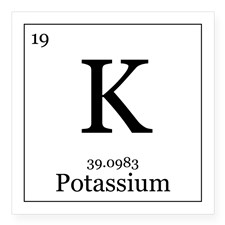
How many neutrons are in the atom "K"?
7
2
39
20
what is the name of group number 1
halogens
noble gases
alkali
alkaline earth
what is the name of group number 2
transition metals
halogens
metaloids
alkaline earth
what is the big group of metals called found within the metals
transition metals
nonmetals
noble gases
halogens
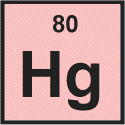


What are the vertical columns on the periodic called?
groups
periods
nonmetals
metals
metalloids
What do the vertical columns on the periodic table tell us?
The number of orbitals
The number of valence electrons (electrons on the outer most shell)
What are the horizontal rows on the periodic table called?
periods
groups
metals
nonmetals
metalloids
What do the horizontal rows on the periodic table tell us?
The number of orbitals
The number of valence electrons (the electrons on the outer most shell)
What happens to the atomic numbers as you move from left to right on the periodic table?
Increase
Decrease
Stay the same
Nothing
Which of the following elements is most likely to have similar properties to those of sodium (Na)?
Magnesium (Mg)
Sulfur (S)
Lithium (Li)
Titanium (Ti)

Which element has 3 electrons at the outermost shell?
A
B
E
C

To which group does this atom belong?
1
3
13
11


The reactivity of the Group I elements ______________ as they go down the group.
decreases
increases
does not change
The melting and boiling points of the Group I elements ______________ as you go down the group.
decrease
increase
do not change

Fluorine and Chlorine are ____________at room temperature.
gases
liquids
solids
edible

The melting and boiling points of halogens:
decrease down the group
increase down the group
remain constant
none

Halogens have _________ electrons in their outermost shell.
2
7
8
18
As you move down the group, halogens' reactivity...
increases
decreases
doesn't change
shows no trend.
Which halogens is a solid at room temperature?
iodine
fluorine
bromine
chlorine
What is a molecule?
two elements bonded together (sharing electrons)
a mixture of different substances
smallest individual particles
salt mixed in water
What is an ion?
a charged atom
an atom with different neutrons
atoms with no protons
atoms with no electrons

Which statement correctly describes an electron in an atom?
Electrons stay inside the nucleus and carry a neutral charge.
Electrons circle the nucleus and have a positive charge.
Electrons move around the nucleus and have a negative charge.
Electrons stay inside the nucleus and have a negative charge.
What is the charge of a sodium ion?
+2
+1
-1
-2


The diagram above gives information on elements X and Y.
Which of the following is the electron arrangement of the compound formed when element X and Y react?


What charge does an atom have when it GAINS electrons?
Positive
Negative
Neutral
Ionic bonds are between...
non-metals and non-metals
carbon and oxygen
metals and non-metals
hydrogen and chlorine
What kind of bond forms between two non-metals?
ionic
covalent
metallic

Which statement is true about the picture?
The bond is ionic because electrons are being shared.
The bond is ionic because electrons are being transferred
The bond is covalent because electrons are being shared.
The bond is covalent because electrons are being transferred.
Which of the following compounds is formed by transfer of electrons?
Sodium chloride, NaCl
Hydrogen peroxide, H2O2
Ethanoic acid, CH3COOH
Water, H2O
Why do atoms get involved in the formation of a chemical bond?
To get a neutral charge
To increase density
To achieve a stable electron arrangement
To increase heat energy
An atom that gains or loses an electron becomes
an isotope
a new element
an ion
a molecule
Which type of bond occurs between non metals?
ionic bonds
covalent bonds
metallic bonds
all types of bonds
What happens when an atom loses an electron?
It becomes Negatively Charged
It becomes Positively Charged
It remains neutral because the proton also leaves.
It stays the same.
What type of compound soluble in water?
ionic compound
covalent compound
Ionic bonds are form between ...
nonmetals and nonmetals
metals and nonmentals
carbon and oxygen
hydrogen and chlorine
Covalent bonds are formed between ...
two or more nonmetals
sodium and chlorine
metals and metals
metals and nonmetals

Which of the following is true about Ionic Bonds?
High melting point
Cannot dissolve in water
Can dissolve in water
Can conduct electricity
Low melting point
When does chemical bond occur?
when an electron is transferred into another atom
when an atom share its electron with another atom
when the valence electrons of the atom is complete
when the atom has an equal number of protons and electrons
What are valence electrons?
sum of the protons and neutrons
protons minus electrons
electrons in the inner shells
electrons in the outer shell

Diamond is an example of a
simple covalent molecule
giant covalent structure
ionic compound
giant ionic lattice

The regular arrangement of ions in an ionic substance.
Ionic lattice
Ionic pattern
Ionic bonding
Ionic material

What do we call large structures that contain only covalent bonds?
Giant covalent molecule
(Macromolecular)
Ionic lattice
Simple molecular structure

Why is graphite so soft and slippery?
It is made of layers of atoms with weak forces between them
It is made of small molecules
It is an ionic compound
The covalent bonds are weak
What type of structure is diamond, graphite and silicon dioxide?
Giant ionic
Giant covalent
Simple molecule
Giant metallic
Monatomic
High Melting point
simple molecular
Why does graphite conduct electricity?
Ions are free to move to carry the charge
Atoms can move
Free electrons that can carry the charge

