
Font size
 Worksheets
Life Cycle of Stars Review 2
Total questions: 61
Worksheet time: 41mins
nuclear fisson


What is a light year?
How far light travels in a year.
How long it takes light to die out.
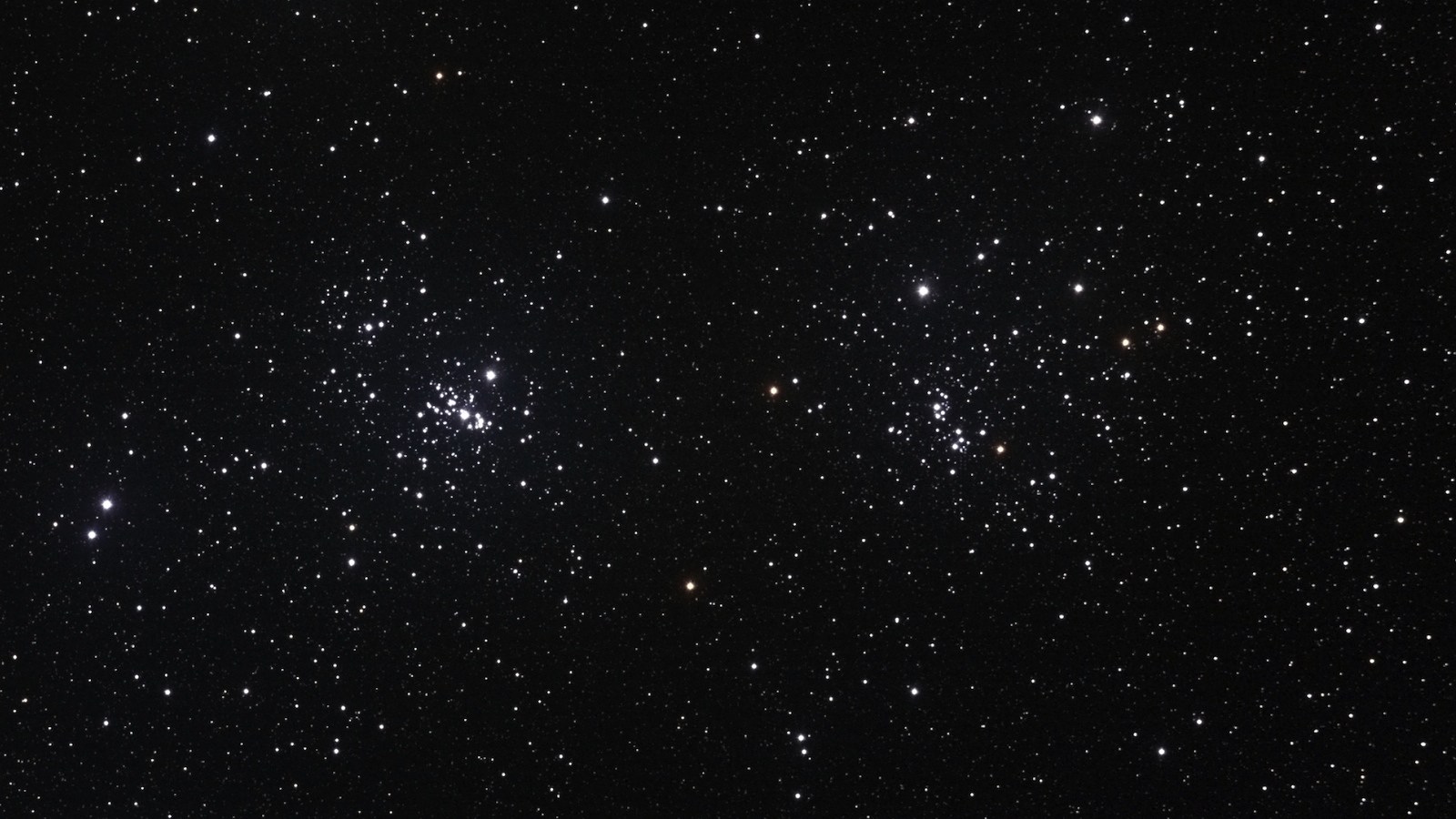
Why do other stars appear so much smaller than the sun?
They are actually much smaller
They are so far away
They are not as bright

Most stars are made of which gases?
Hydrogen only
Hydrogen and Sodium
Hydrogen and Helium


According to the diagram, the life-cycle path followed by a star is determined by the star's initial
mass and size
luminosity and structure

A star is 10,000 degrees and has a luminosity of 100,000 times greater than our Sun. What classification is this star?
White Dwarf
Main Sequence
Giant
Supergiant


In which sequence are the celestial objects correctly listed in order from the smallest mass to the largest mass?
Saturn, solar system, Milky Way, universe
Milky Way, Saturn, solar system, universe

What is the final stage of a low mass star?
White Dwarf
Black Hole
Red Giant
Neutron Star
What is the final stage of a high mass star?
White Dwarf
Black Hole
Red Giant
Neutron Star

Which star is likely to be the hottest? Use the H-R diagram
Type B Star
White Dwarf
Red Giant
Type G Star (Sun)

Which mass of star will have the shortest life span?
Low Mass Star
Medium Mass Star
High Mass Star
Very High Mass Star

A stellar nebula will eventually condense into a hot ball of mostly hydrogen called a __________. At this point, nuclear fusion has not yet started but it will soon.
Protostar
White Dwarf
Brown Dwarf
Main Sequence
What is the final stage of a low mass star?
White Dwarf
Black Hole
Red Giant
Neutron Star
What is the final stage of a high mass star?
White Dwarf
Black Hole
Red Giant
Neutron Star
What is the final stage of a very high mass star?
White Dwarf
Black Hole
Red Giant
Neutron Star
Which star is likely to be the hottest? Use the H-R diagram
Type B Star
White Dwarf
Red Giant
Type G Star (Sun)
Which mass of star will have the shortest life span?
Low Mass Star
Medium Mass Star
High Mass Star
Very High Mass Star

What is the name of the cosmic cloud of dust and gas that is the first stage in the birth of a star?
Protostar
Spiral Galaxy
Quasar
Stellar Nebula
In a very high mass star, a supernova triggers the formation of a __________ which has a gravitational pull so strong that even light cannot escape.
White Dwarf
Neutron Star
Stellar Nebula
Black Hole

Which elements are found in a main sequence star?
Hydrogen (H)
Helium (He)
Carbon (C)
Oxygen (O)

Which is one of the heaviest element found in a red giant star?
Nitrogen (N)
Iron (Fe)
Sulfur (S)
Magnesium (Mg)
Has a higher temperature during it's main sequence phase.
Low mass stars
High mass stars
Spends a longer time in it's main sequence phase.
Low mass stars
High mass stars
Creates elements heavier than Fe
Low Mass Stars
High Mass Stars
Process stars make light and energy
Fission
Fusion
Confusion
Diffusion
Fusion means .......
join heavier elements to lighter elements
stick elements together randomly
join lighter elements into heavier elements
Massive stars and super massive stars end their lives as..............., respectively
Black holes and black dwarfs
neutrons stars and black holes
white dwarf and black dwarf
A star is born when:
nuclear fusion starts
a nebula becomes a protostar
gases in a nebula condense
hydrogen is used up in fusion processes
When a massive star begins to cool and expand it is known as a:
Black Dwarf
Red Giant
Red Supergiant
White Dwarf
Stars are formed from big clouds of gas and dust is known as:
dust cloud
space fog
neutron clouds
nebulae
After a supernova, the core can collapse into a neutron star, or if massive enough it can become a:
Black Hole
White Dwarf
Red Supergiant
Black Dwarf
A star that has begun nuclear fusion will last for:
millions or even billions of years
a few thousand years
as long as the universe survives
forever


What are the inner layers of the Sun?
Core, Radiative zone, and Convection zone.
Crust, mantle, and core.
Core, Photosphere, and Radiative Zone.
The Sun doesn't have inner layers.
What are the outer layers of the Sun?
The Sun has only inner layers.
Photosphere, Chromosphere, and Corona.
Core, Radiative zone, and Convection zone.
Crest, Corona, Mantle.
Why is the sun brighter then other stars?
Its bigger
Its yellow
Its closer to Earth
Its hotter then other stars

