
 Worksheets
Exam 3 Practice
Total questions: 126
Worksheet time: 1hrs 12mins
This releases neurotransmitters which are sent into the synaptic gap
axon
axon terminal
gene
neuron
axon
neuron
dendrite
neurotransmitter
neuron
myelin sheath
dendrite
neurotransmitter
synapse
axon terminal
impulse
myelin

Dendrite
Axon
Axon Terminal
Cell Body

E
Synapse
Cell Body (Soma)
Axon
Dendrite
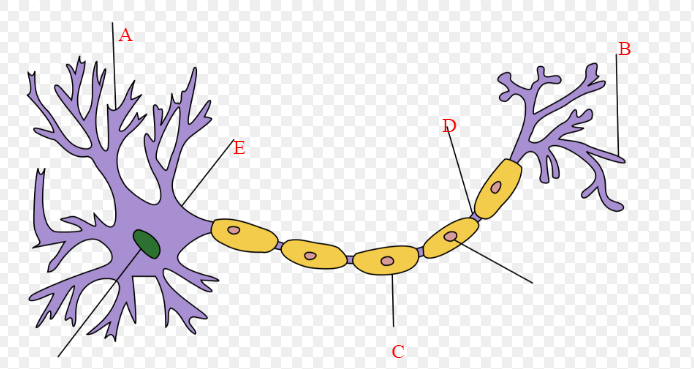
Dendrite
Axon
Axon Terminal
Cell Body
Neurons that carry information from the sensory receptors to the CNS:
Sensory, afferent
Sensory, efferent
Moror, afferent
Motor, efferent
Type of neuron located only in the brain and spinal cord that pass impulses from one neuron to another.
Motor Neuron
Interneuron
Sensory Neuron
Type of neuron that perceive information about your environment.
Motor Neuron
Interneuron
Sensory Neuron
autonomic
somatic
sympathetic
parasympathetic
coccygeal
cauda equina
lumbrosacral
femoral
autonomic
somatic
sympathetic
parasympathetic
brachial
cervical
optic
sciatic
The is not a part of the reflex arc
receptor
motor neuron
medulla oblongata
effector
What is the areas on the skin supplied by sensory fibers of the spinal nerves
dermatitis
free nerves
dermatomes
bronchi
What part of the brain stem controls vital functions?
corpus collosum
midbrain
medulla oblongata
pons
The 2 ions that are important in nerve conduction and action potential are:
Potassium and calcium
Sodium and potassium
Sodium and calcium
Sodium, calcium, and potassium
Which of the 3 layers of the meninges is closest to the brain?
Dura Mater
Arachnoid Mater
Pia Mater
Serous Mater
What nerve in the hand is associated with Carpal tunnel syndrome?
Radial Nerve
Median Nerve
Ulnar NErve
Sciatic Nerve
hills/ridges on the brain
sulci
gyri
sensory
motor
valleys/indentations on the brain
sulci
gyri
sensory
motor
supporting cell in CNS that braces and anchors neurons to their nutrient supply lines (capillaries)
astrocyte
oligodendrocytes
microglia
ependymal
pick which of the following is Multiple Sclerosis
myelin sheath damages
possible paralysis
loss of social skills
messages delayed or blocked
area which has no myelin
axon
myelin sheath
dendrite
Nodes of Ranvier
consists of dense collection of myelinated fibers
white matter
tracts
gray matter
nerves
bundles of nerve fibers in CNS
white matter
tracts
gray matter
nerves
mostly unmyelinated fibers and cell bodies
white matter
tracts
gray matter
nerves
allows conscious control of skeletal muscles
synaptic cleft
neurilemma
axon terminal
somatic
increased volume of cerebrospinal fluid within the ventricle of the brain
concussion
contusion
encephalitis
hydrocephalus
inflammation of the lining of the brain and spinal cord, can be viral or bacterial
poliomyelitis
meningitis
Huntingtons
hematoma
disturbance in voluntary muscles due to brain damage usually at birth
Cerebral palsy
bells palsy
Reye's syndrome
Rabies
divides cerebrum into two hemispheres
central
lateral
longitudinal
parieto-occipital
transverse
divides the cerebrum and cerebellum
central
lateral
longitudinal
parieto-occipital
transverse
Which of the following is a function of the bone?
internal support and protection
provide attachment for muscles
calcium and phosphate storage
red blood cell formation
Tendons
are surrounded by connective tissue called peritendineum
are composed of collagen fibers oriented in the same direction
are produced bu lacunae cells
cause tendinitis
Chondrocytes are mature cartilage cells found within in the _______ and they are derived from ________
perichondrium, fibroblasts
perichondrium, chondroblasts
lacunae, fibroblasts
lacunae, chondroblasts
Cartilage
often occurs in thin plates or sheets
receives nutrients and oxygen by diffusion
grows as a result of chondroblast formation by the perichondrium
none of the choices
Which of the following substances make up the major portion of bone?
collagen
hydroxyapatite
osteocytes
osteoblasts
The flexibility of bone is due to
osteoclasts
ligaments
calcium salts
collagen fibers
Which of the following connective tissue membranes cover the surface of mature bones?
periosteum
perichondrium
hyaline cartilage
fibroblasts
A fracture in the shaft of a bone would be a break in the
epiphysis
perichondrium
diaphysis
articular cartilage
The portion of the long bone that stores yellow marrow in adults is the
medullary cavity
spongy bone
compact bone
epiphysis
The ossification regions formed during embryonic development are
secondary ossification centers
primary ossification centers
cartilage at the ends of bones
medullary cavities
Articular cartilage
is found in the ends of bone
is hyaline catilage
is embryonic cartilage that does not ossify
is at the diaphysis
Growth in the length of bone occurs
at primary ossification center
beneath the periosteum
at the diaphysis
at the epiphyseal plate
The prime function of OSTEOCLASTS is to
prevent osteoblats from forming
breakdown bone
secrete calcium salts and collagen fibers
form compact bone
Destruction and remolding of bone may occur
as bones change shape during growth
as bones are subjected to varying patterns of stress
during and following the healing of fractures
when a bone is no longer growing
Which is NOT a component of the skeletal system?
bones
ligaments and tendons
cartilage
muscles
What is hematopoiesis?
production of blood cells
blood clotting
an oxygen-carrying compound found in red blood cells
a unit that measures the amount of hemoglobin in your blood

On this diagram, what is H?
diaphysis
epiphysis
spongy bone
periosteum
What is the purpose of articular cartilage?
covers the ends of long bones
prevents two bones from rubbing on each other at a joint
supports a tendon or ligament
provides a structure for new bone growth
What are freely movable joints called?
Suture Joints
Synovial Joints
Hinge Joints
Saddle Joints
A decrease in bone density due to loss of calcium.
Osteoarthritis
Sprain
Osteoporosis
Dislocation
It takes on average _________________ for new cells in the bottom layer of the epidermis to move to the top.
1-2 Days
2-4 Weeks
4-5 Hours
7 Years
What 2 types of tissue make up the Subcutaneous Layer (Hypodermis)
Areolar
Adipose
Dense Irregular CT
Stratified Squamous
What is the correct order of epidermal layers from superficial to deep?
Lucidum, Basale, Spinosum, Corneum, Granulosum
Corneum, Lucidum, Granulosum, Spinosum, Basale
Lucidum, Corneum, Granulosum, Spinosum, Basale
Corneum, Lucidum, Basale, Granulosum, Spinosum
Millions of __________ rub off your skin everyday.
Keratinocytes
Carotenocytes
Melanocytes
Leukocytes

What layer of the skin is D
Epidermis
Dermis
Hypodermis
Subcutaneous Layer
What is the name of the muscle that is responsible for goosebumps?
Pilo Errector
Arrector Pili
Goosus Bumpus
Foliculi Arisor
Which tissue makes up the epidermis?
Simple Squamous
Stratified Squamous
Adipose Tissue
Reticular Connective Tissue
Which tissue makes up the epidermis?
Simple Squamous
Stratified Squamous
Adipose Tissue
Reticular Connective Tissue
Which 2 of the following skin layers make up the DERMIS?
Papillary Layer
Reticular Layer
Stratum Basale
Subcutaneous Layer
Stratum Corneum
____burns involve only the epidermis. Symptoms are redness, pain, and swelling.
first degree
fourth degree
second degree
third degree
______burns involve the epidermis and dermis. Symptoms include redness, pain, swelling, and blisters.
first degree
no degree
second degree
Fourth degree
______burns involve the epidermis, dermis, and hypodermis. Symptoms include charring and no pain at the burn site.
2nd degree
third degree
fourth degree
1st degree
Which type of skin cancer is the most common?
Kaposi's sarcoma
melanoma
psoriasis
basal cell carcinoma
squamous cell carcinoma
The layer of the epidermis in which there is the greatest amount of mitotic activity.
stratum granulosum
stratum corneum
stratum lucidum
stratum spinosum
stratum basale
Plasma membrane .....
is selectively permeable
consist of triglyceride and cholesterol
separate cytoplasm and extracellular fluid
have proteins embedded the phospholipid bilayer

Choose correct statement(s) about structure R
makes membrane less fluid by restrain phospholipid movement
lower the temperature required for mombrane to solidify
is a type of lipid
can be found higher in plant compared to animals

How molecule in the figure can be transported across plasma membrane? (can be more than one answer)
Down concentration gradient
Using channel protein
Using carrier protein
Diffuse through phospholipid bilayer
A major function of glycoproteins and glycolipids in the membane is to
glue cells together to form tissues
allow cells to identify each other
attach membrane to cytoskeleton
help retain shape

Which statements are true about active transport?
molecules move from low concentration to high concentration.
molecules move from high concentration to low concentration.
ATP is required
Uses channel proteins
Small polar molecules like O2 and CO2enter a cell through
simple diffusion
osmosis
facilitated diffusion
phagocytosis

The animal cell on the left is in a(n) __________________ environment
Hypertonic
Hypotonic
Isotonic
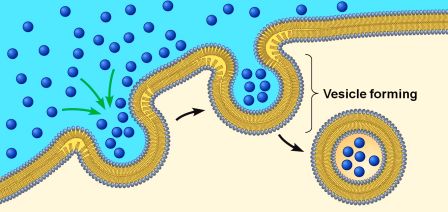
Which form of active transport is being shown?
Facilitated Diffusion
Exocytosis
Endocytosis
Proton pump
Name small compartment enclosed by a membrane formed to transport of material during bulk transport.
vesicles
large vacuole
mitochondria
lysosome
What type of protein fibers are present in areolar CT?
Collagen
Reticular fibers
Elastic Fibers
All three
What is the function of areolar CT?
Binds skin and epithelia to deeper tissue.
Attach bone to bone or bone to muscle.
Withstands stress.
Provides supportive framework.
What cell type is present in reticular CT?
Fibroblasts
Adipocytes.
Mesenchymal cells.
Macrophages.
What is the function of dense regular CT?
Binds skin and epithelia to deeper tissue.
Attach bone to bone or bone to muscle.
Withstands stress.
Provides supportive framework.
What cell type is present in dense regular CT?
Fibroblasts
Adipocytes.
Mesenchymal cells.
Macrophages.
What type of protein fibers are present in dense irregular CT?
Collagen
Reticular fibers
Elastic Fibers
All three
What is the function of dense irregular CT?
Binds skin and epithelia to deeper tissue.
Attach bone to bone or bone to muscle.
Withstands stress.
Provides supportive framework.
What type of protein fibers are present in elastic CT?
Collagen
Reticular fibers
Elastic Fibers
All three
What is the function of elastic CT?
Provides supportive framework.
Allows for stretching and recoiling.
Withstands stress.
Transport


occipital foramen
vertebral foramen
foramen magnum
occipital arch

mastoid process
styloid process
external auditory meatus
zygomatic arch


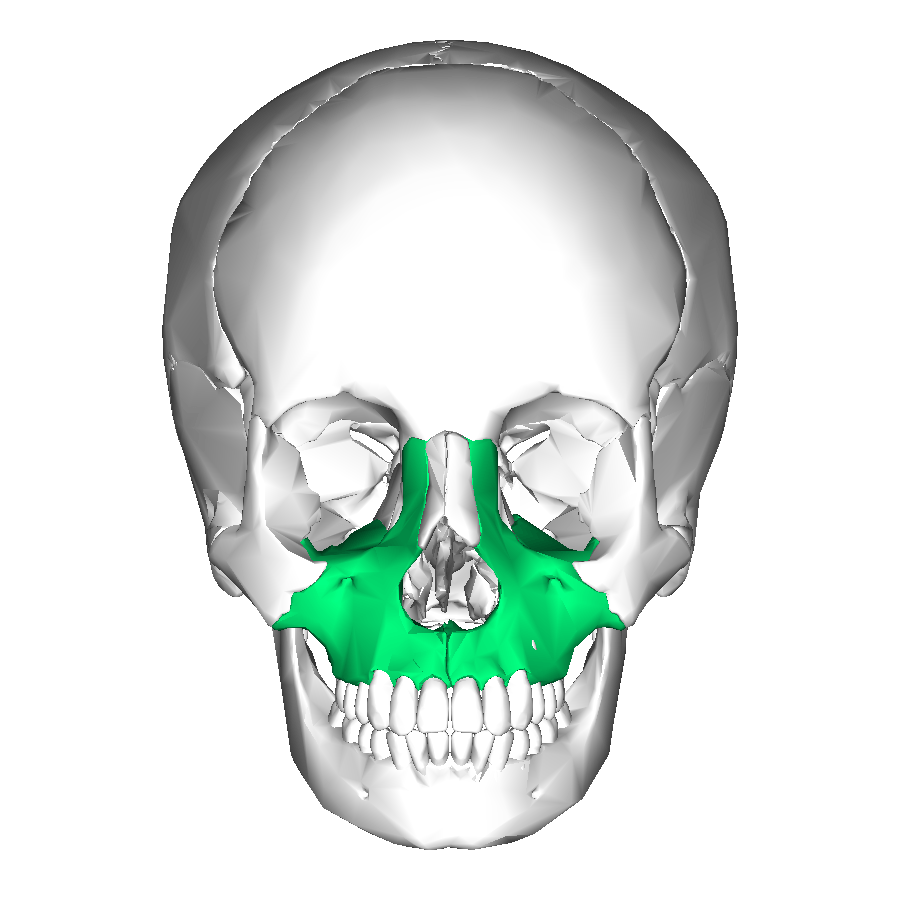
Which bone is being indicated by the arrow?
Cribriform plate
Crista galli
Sella Turcica
Mental foramen
What is an axon?
cell body of a neuron
an ion used to send an electrical impulse
the expressed portion of a gene
the long cytoplasmic extension of a neuron
What is a ganglion?
a cell that supports a neuron
a nerve cord in an invertebrate
a specialized neuron that monitors the body's external conditions
a cluster of neuron cell bodies that function as an integrating center
Histology is ____ while Cytology is ____
study of tissues: study of cells
Study of cells: study of tissues
Which is the correct biological organization?
chemical-organelle-celluar-tissue-organ-organ system-organism-population-community-ecosystem
chemical-cellular-organelle-organ-tissue-organsystem-organism-population-community-ecosystem
feedback loops
receptors-control center-effectors
control center-receptors-effectors
Lung Membrane
Parietal Pleura
Pleural Cavity
Visceral Pleura
Parietal Pericardium
Heart Membrane
Visceral Pleura
Parietal Pericaridum
Pericardial Cavity
Visceral Pericardium
When you are hot, your body sweats to cool you down. This means your temperature went above normal and your body sweats to counteract that change to bring you back to normal. What kind of feedback loop would this be?
Negative Feedback Loop
Positive Feedback Loop
Neutral Feedback Loop
Opposite Feedback Loop
Homeostasis is maintained by:
neutral feedback loops
solar feedback loops
positive feedback loops
negative feedback loops
Which biomolecular group carries and passes on the hereditary information of the organism?
a. carbohydrates
b. lipids
c. nucleic acids
d. proteins
Which organic molecule gives fast source of energy?
a. carbohydrates
b. lipids
c. nucleic acids
d. proteins
Which of the following is considered as the building blocks of protein?
a. amino acids
b. nucleic acids
c. nucleotides
d. polypeptides
What is the name of the bond that joins two amino acids together?
Ester bond
Glycosidic bond
Peptide bond
Nucleic bond
What's the digestive organelle which uses enzymes to break down molecules and cell junk?
mitochondria
ribosome
lysosome
nucleolus

