
 Worksheets
Ecology Part 1&2
Total questions: 75
Worksheet time: 1hrs 28mins

Identify ALL the abiotic factors.
Air
Butterfly
Cloud
Sun
Frog

This is a food web from Shenandoah National Park, a forest ecosystem in Virginia. Which two of the following organisms are omnivores?
pine vole
gray fox
black bear
persimmion tree
silver maple
This is a food web from Shenandoah National Park, a forest ecosystem in Virginia. Which two of the following organisms are secondary consumers in this food web?
pine vole
beaver
black bear
persimmion tree
swallowtail caterpillar
What does biotic mean?
Living
Non living
Man made
What are plants that convert energy from the sun called?
decomposer
primary consumer
secondary consumer
producer

What is the carrying capacity of this graph?
1-15 days
2300 individuals
21 days
500 individuals

When the zooplankton eats the phytoplankton, matter begins to move through this food chain. This matter then becomes food for a consumer further up the food chain. In this food chain, matter moves from prey to a predator when the zooplankton is eaten by the
phytoplankton
zooplankton
bay anchovy
great egret


Barnacles are animals that cannot move. In order to get food, they attach to whales and catch any floating plankton in the water. The whale is neither helped nor harmed in the interaction. What type of symbiosis is this?
Mutualism
Commensalism
Parasitism
Neutralism

This food chain shows organisms in an ocean ecosystem. If the population of leather stars decreases, what most likely will result?
The population of morning stars will likely decrease.
The population of giant green anemones will likely decrease.
The population of giant green anemones will likely increase.
The population of morning stars will likely increase.

The largest number of individuals that an environment can support long term is...
carrying capacity
emigration
immigration
population density


All of the biotic and abiotic factors in an area that interact with each other are called a/an ______.
community
habitat
population
ecosystem
Which limiting factor is density dependent?
(Due to the number of individuals in a population)
Drought
Hurricane
Births
Disease
Which limiting factor is density independent?
(Not dependent on the number of individuals in a population)
Competition
Parasitism & Disease
Food
Tornadoes


Organisms that chemically breaks down and absorbs nutrients from dead organisms
consumer
trophic level
decomposer
species
Which one of these factors is not an abiotic factor?
Water
Sunlight
Soil
Fungi
What is the level of the biological organizations, in order?
Organism, population, ecosystem, community
Organism, population, community, ecosystem
Organism, community, population, ecosystem
Organism, ecosystem, population, community

What is the carrying capacity for this sheep population?
1.8 million
1.6 million
1.25 million
1 million
Coyotes are opportunistic predators that are found throughout most of North America. They typically feed on small mammals, insects, and fruits and vegetables. They are known for their dietary adaptability. The best description of their role in the food web would be:
An herbivore
A carnivore
An omnivore
A primary producer

A team of ecologists observed feeding patterns of several populations in the desert. The energy pyramid shown below depicts the feeding patterns the ecologist observed. Which of the following best explains the difference in the amount of available energy in the trophic levels of the desert ecosystem?
There is less energy available in the producers because their tissues are less dense than those at higher trophic levels
There is more energy available in the second trophic level because less energy is needed for hunting compared to the higher trophic levels.
There is more available energy in the birds of prey because they have greater muscle mass for storing energy than organisms in lower trophic levels have.
There is less available energy in the fourth trophic level because of the loss of energy through metabolism in each of the lower trophic levels.
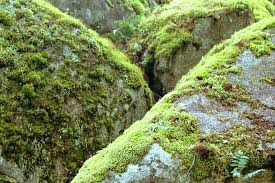
What are examples of pioneer species in a primary succession?
Bushes and Shrubs
Oak trees
Mossess and Lichens
A rose Bush
After a volcanic eruption, lava covers the land. What is the order that plants grow to repopulate the area?
Lichens → Shrubs → Grasses → Trees
Lichens → tree → shrubs→Grasses
Grasses → Lichens → Shrubs → Trees
Lichens → Grasses → Shrubs → Trees

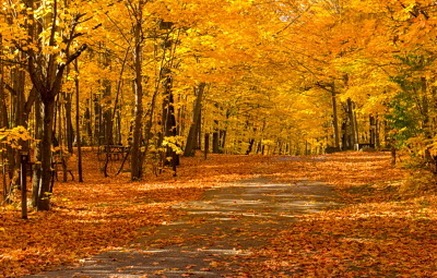
The forest in panel #8 is a...
pioneer species
climax community
tertiary community
intermediate species
Which of the following is not a possible cause of ecological succession?
A. fire
B. flood
C. earthquake
D. change of season
What is a keystone species?
An animal that is a predator
An animal that helps keep balance in the environment
An animal that builds wetlands
A habitat is ___________________.
the place or kind of place in which an animal or plant naturally lives.
is how plants produce their own food.
is an animal that only eats meat.
the place where only one animal lives.
A niche ________________.
is the function that an organism performs in the food web of that community.
includes everything else the organism does and needs in its environment.
is specific to each individual animal and plant.
All of the above.
What is a Niche of a honeybee?
Pollenating Flowers
A Honeycomb
Eating other insects.
Swimming.
There must be a certain amount of abiotic factors in an ecosystem to allow organisms to survive. Factors that are too low or too high cause the organisms to die
range of tolerance
limiting factors
zone of intolerance
zone of physiological stress
Zone where a stable healthy population survives
zone of intolerance
optimal range
zone of physiological stress
limiting factors
The ____ states that two species cannot coexist if they occupy the exact same niche.
Competitive Exclusion Principle
Competitive Niche Law
Niches gone wild principle
Which is NOT an example of mimicry:
The fur of an arctic fox turns white in winter to match the snow
An alligator snapping turtle's tonge looks like a worm, so he lures fish to his mouth
A bad tasting butterfly & a good tasting butterfly look similar, so birds don't eat either kind

Organisms that eat secondary consumers are
Producers
Primary consumers
Tertiary consumers
Secondary consumers
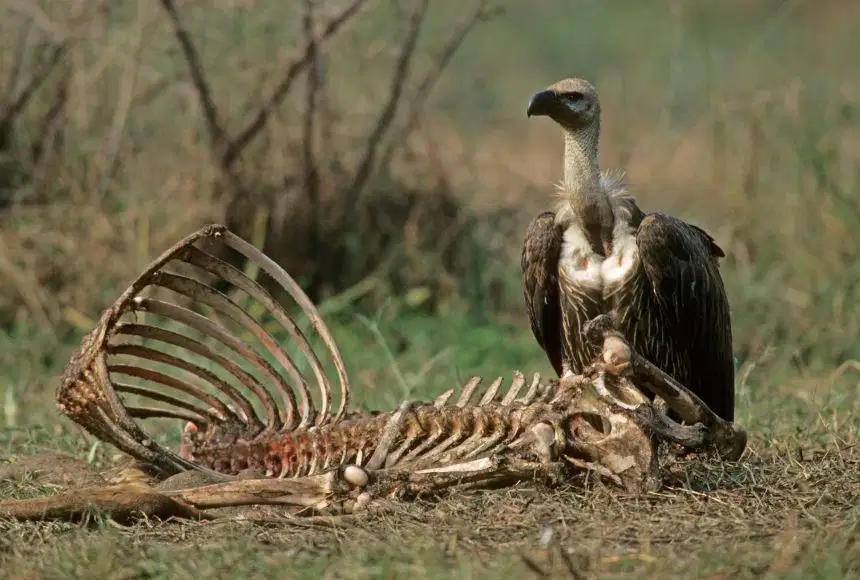
A vulture is an example of a
Herbivore
Detritivore
Omnivore
Scavenger
How can detritivores be beneficial to the environment?
provide food for autotrophs
facilitate photosynthesis in plants
allow predation to occur
get rid of waste and dead matter

What eats fragments of dead matter and retrun nutrients to the soil, air, and water?
herbivore
carnivore
omnivore
detritivore

In this Food Web Pyramid, which type of consumer gets only 10% of the energy stored in plants?
Herbivore
Carnivore
Omnivore
Secondary Consumer

In the energy pyramid here, how much of the energy in each level gets lost as heat or used by the organism for survival?

Why must nitrogen fixation take place?
Atmospheric nitrogen is unusable to plants and animals
Nitrogen must be returned to the atmosphere
Animals must breathe in nitrogen
Nitrogen gets "stuck" in the soil and must be untrapped

Based on this graph, you can infer that
CO2 absorbs heat which makes global temperature rise as CO2 concentration increases.
CO2 levels do not affect the global temperature because the graph shows no correlation between the two.
Global temperature is going to increase so much that the ice caps and glaciers will melt in a few years.
Global temperature is increasing which means CO2 concentration will decrease in the next few years.
Carbon is stored in the soil and when disturbed it will release it.
Carbon is stored in the clouds and when disturbed it will release it.
Carbon is stored in the water and when disturbed it will release it.
All are true!


What do Photosynthesis and Cellular respiration have in common?
they both need sunlight
they both need nitrogen
they both happen in animals
they both involve oxygen and carbon dioxide

This is NOT a part of the phosphorus cycle.
Phosphate is incorporated into sedimentary rocks
Phosphate bound to soil
Atmospheric phosphate
Phosphate is absorbed from the soil by plants
The phosphorus cycle occurs much more quickly than the carbon and nitrogen cycles.
true
false
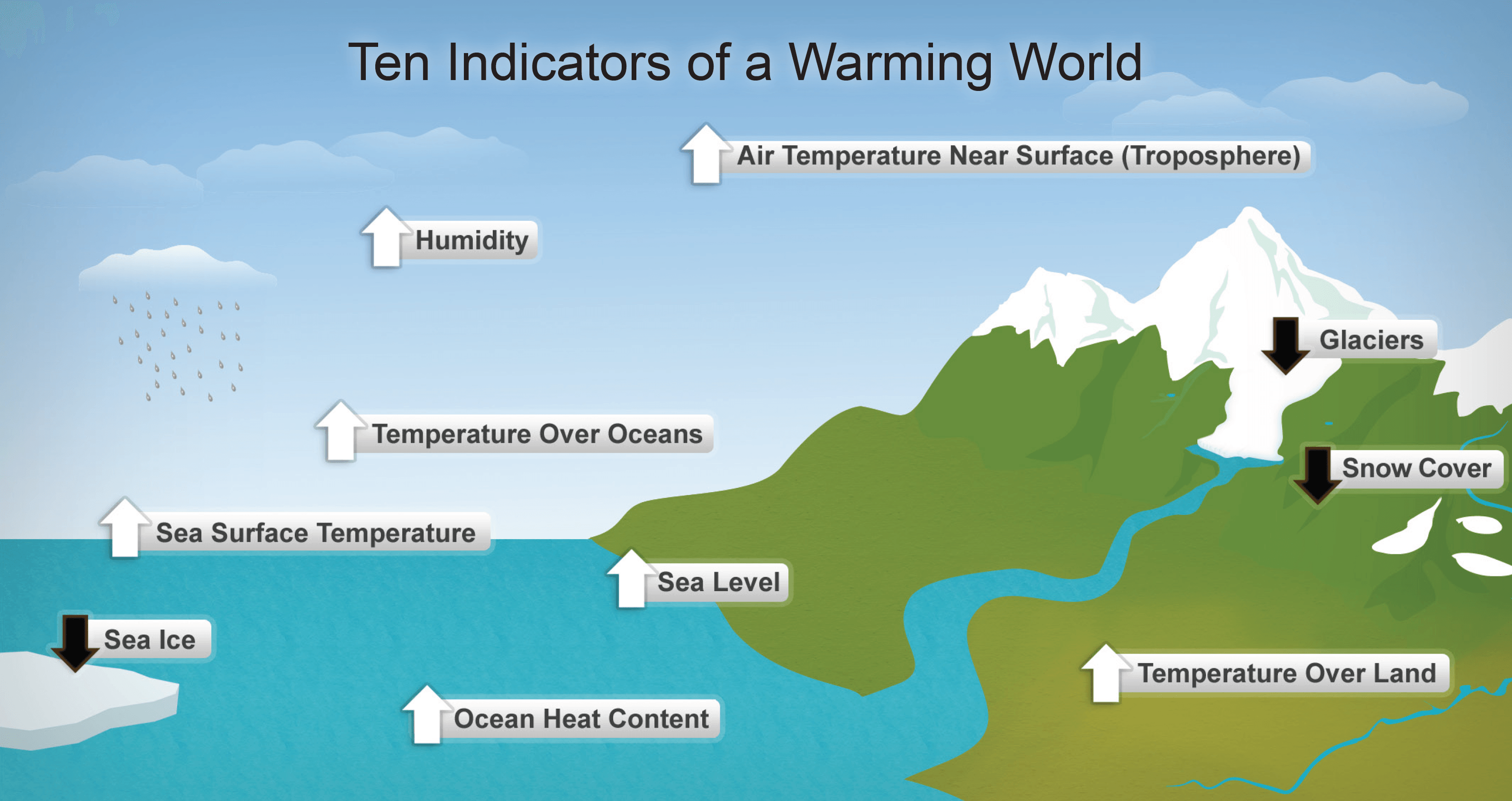


How are a greenhouse and Earth's atmosphere most alike?
Both prevent harmful radiation from reaching Earth.
Both trap heat inside and prevent it from escaping.
Both lower the temperature to be suitable for life
Both contain large amounts of carbon dioxide


